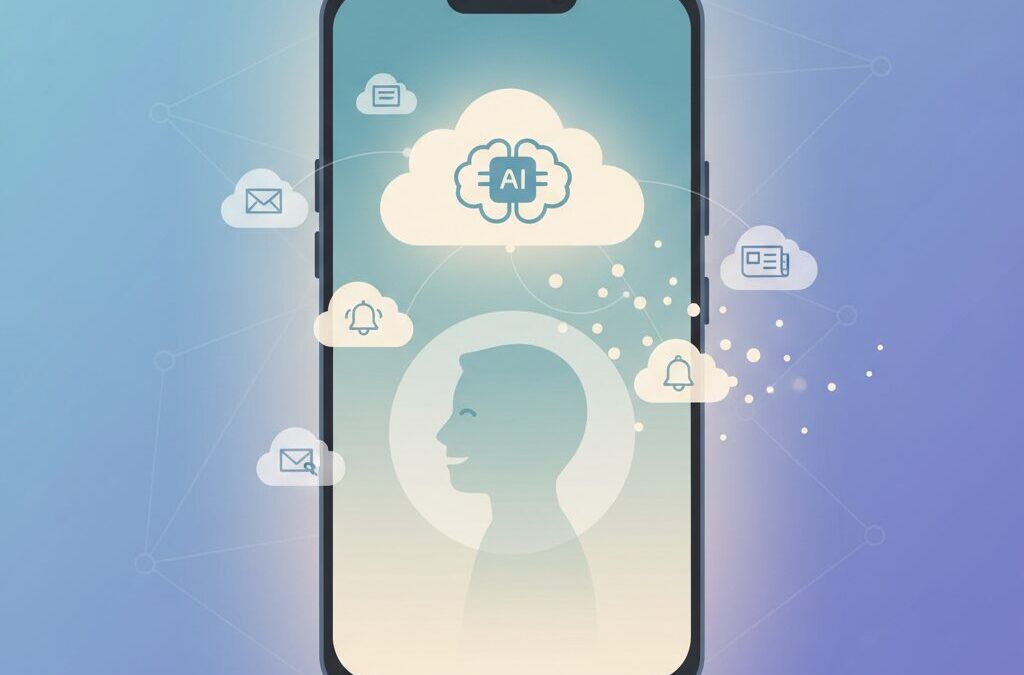
Have you ever felt exhausted just by looking at your phone, even before you start using it? Many tech-savvy users around the world recognize this feeling, as endless notifications, alerts, and recommendations constantly compete for attention.
Smartphones were meant to make life easier, yet for many people they have quietly become a major source of mental fatigue. Messages arrive late at night, news updates interrupt work, and social notifications create invisible pressure to respond immediately.
This article focuses on how Google Pixel 10 approaches this problem from a completely different angle. Instead of asking users to rely on self-control or digital detox, Pixel 10 uses advanced on-device AI to intelligently organize, summarize, and filter notifications.
By combining the new Tensor G5 chip, real-time AI processing, and a calmer design philosophy, Pixel 10 aims to protect attention rather than exploit it. You will learn how these technologies work, how they compare with competing smartphones, and why they matter for the future of digital wellbeing.
If you are passionate about gadgets and care about how technology shapes daily life, this article will help you understand why Pixel 10 is more than just another flagship phone, and how it could change the way we interact with information every day.
- Why Notification Overload Has Become a Global Tech Problem
- The Rise of Digital Wellbeing and the Limits of Digital Detox
- Tensor G5 Explained: The Hardware Powering Pixel 10’s AI
- On-Device AI and Privacy: Why Local Processing Matters
- Notification Organizer: How Pixel 10 Sorts Information in Real Time
- AI Summaries and Reduced Cognitive Load
- Magic Cue and Context-Aware Assistance Across Apps
- Designing for Calm: Material 3 Expressive and User Psychology
- Pixel 10 vs iPhone 17: Two Different Visions of Smart Notifications
- Language and Regional Challenges in AI-Powered Features
- What Pixel 10 Signals About the Future of Smartphones
- 参考文献
Why Notification Overload Has Become a Global Tech Problem
Notification overload has become a global tech problem because smartphones have quietly shifted from optional tools to always-on cognitive environments. **What once delivered essential information now continuously competes for human attention**, fragmenting focus in ways that scale across societies. Research discussed by the Center for Humane Technology explains that modern platforms operate within an attention economy, where notifications are deliberately engineered to maximize engagement rather than user well-being. This design logic does not stop at national borders and has made notification fatigue a shared global experience.
Empirical data supports the severity of this shift. Large-scale fatigue surveys in Japan during the mid-2020s show that nearly four out of five working-age adults report chronic fatigue, with notification-driven attention fragmentation identified as a major contributor. Similar patterns are observed in North America and Europe, where sleep researchers have repeatedly linked nighttime notification exposure to disrupted circadian rhythms and reduced sleep quality. **The problem is therefore physiological as well as psychological**, turning notification overload into a public health concern rather than a mere usability issue.
| Factor | Design Intent | Human Impact |
|---|---|---|
| Push notifications | Increase app return frequency | Interrupted concentration and task switching |
| Unread badges | Create urgency and anticipation | Persistent low-level stress and FOMO |
| Irregular rewards | Stimulate dopamine response | Habitual checking behavior |
Former Google design ethicist Tristan Harris has long warned that these mechanisms undermine user autonomy by encouraging unintentional use. His arguments resonate globally because the same behavioral patterns appear regardless of culture. However, cultural contexts can amplify the damage. In Japan, for example, messaging norms such as immediate replies and read receipts intensify social pressure, making it harder to ignore notifications even temporarily. **Technology designed for engagement collides with social expectations**, accelerating mental exhaustion.
The scale of the issue has grown alongside smartphone centrality. Governments now rely on mobile devices for emergency alerts, payments, and identity verification, making complete disconnection unrealistic. As a result, notification overload persists not because users lack discipline, but because modern life demands constant connectivity. This tension explains why notification overload is now framed by experts as a systemic tech problem. **When every alert claims importance, human attention becomes the scarce resource**, and its depletion is felt worldwide.
The Rise of Digital Wellbeing and the Limits of Digital Detox
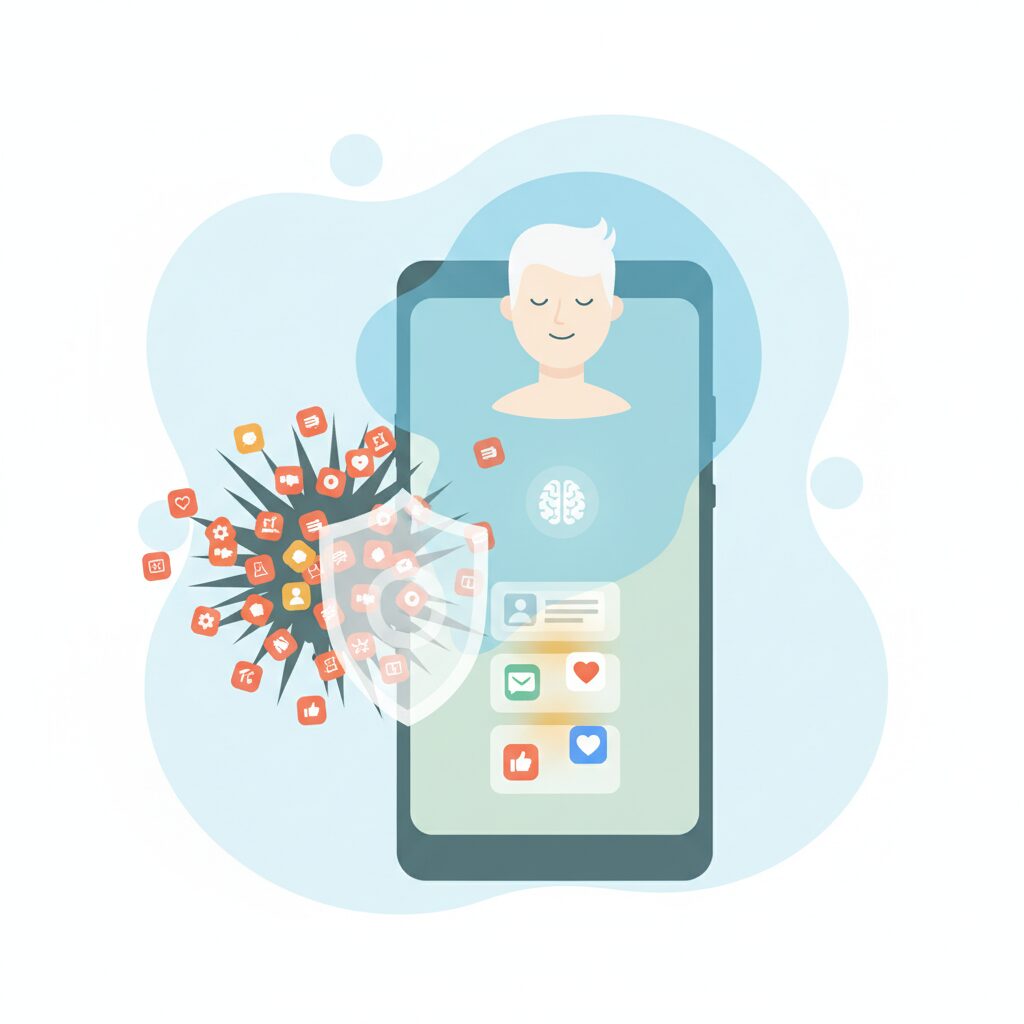
In recent years, digital wellbeing has risen from a niche concept to a central theme in technology discourse, driven by growing evidence that constant connectivity exhausts human attention. According to the Japanese Recovery Association’s large-scale 2025 survey, nearly eight out of ten working-age adults report chronic fatigue, with notification overload identified as a major contributor. This context explains why digital wellbeing is no longer about self-control alone, but about systemic design choices.
For a long time, the dominant solution was digital detox, encouraging people to turn devices off or step away entirely. However, in a society where smartphones function as infrastructure for payments, administration, and emergency alerts, complete disconnection is increasingly unrealistic. Researchers in human–computer interaction, including voices associated with the Center for Humane Technology, have argued that detox places the burden on users rather than addressing the incentives of the attention economy.
| Approach | Core Idea | Practical Limitation |
|---|---|---|
| Digital Detox | Reduce or stop device use | Low feasibility in daily life |
| Digital Wellbeing | Manage attention quality | Requires intelligent systems |
This shift marks a clear boundary between detox and modern digital wellbeing. Instead of limiting screen time, wellbeing-focused design emphasizes filtering, prioritization, and cognitive protection. Sleep researchers have shown that fragmented attention and nighttime alerts disrupt circadian rhythms, which explains why simple “time limits” often fail to improve recovery.
As a result, the rise of digital wellbeing reflects an acceptance of technology’s permanence. The limits of digital detox have become evident, and the conversation has moved toward how devices can actively defend human attention rather than compete for it.
Tensor G5 Explained: The Hardware Powering Pixel 10’s AI
The intelligence behind Pixel 10’s AI features is not abstract software alone but the very concrete silicon of Google Tensor G5. This custom system-on-a-chip is the first Tensor fully manufactured by TSMC, using an advanced 3nm-class process, and this shift fundamentally changes how AI workloads behave on a Pixel device.
Moving from Samsung Foundry to TSMC is widely regarded by industry analysts as a turning point for Tensor. According to Google’s own engineering disclosures, the new process delivers markedly better power efficiency and thermal stability, two areas where earlier Pixel generations were often criticized.
This matters because Pixel 10 keeps AI running constantly in the background. Notification analysis, language understanding, and summarization are not burst tasks but sustained ones, and Tensor G5 is designed to handle that without overheating or aggressive performance throttling.
| Aspect | Tensor G4 | Tensor G5 |
|---|---|---|
| Manufacturing | Samsung Foundry | TSMC (3nm-class) |
| AI Accelerator | TPU Gen 4 | TPU Gen 5 |
| On-device LLM | Limited | Gemini Nano optimized |
At the core of Tensor G5 is a significantly upgraded TPU. Google states that AI throughput has increased by up to 60 percent compared to the previous generation, enabling Gemini Nano to run fully on-device. This allows sensitive notification data to be processed locally, without being sent to the cloud.
On-device AI is not only about privacy but also about speed. Because there is no round-trip to remote servers, summaries and priority judgments appear almost instantly, even in low-connectivity environments. Researchers in mobile computing have long shown that latency below human perception thresholds directly improves trust in AI systems.
Energy efficiency is the other silent advantage. Tensor G5 is engineered so that AI cores can remain active while consuming minimal power, which supports Google’s claim of all-day battery life despite continuous intelligence. For users, this means AI that feels always available yet never intrusive.
In short, Tensor G5 is less about headline benchmarks and more about sustained, reliable intelligence. It is the hardware foundation that allows Pixel 10’s AI to stay present, private, and responsive throughout the day.
On-Device AI and Privacy: Why Local Processing Matters
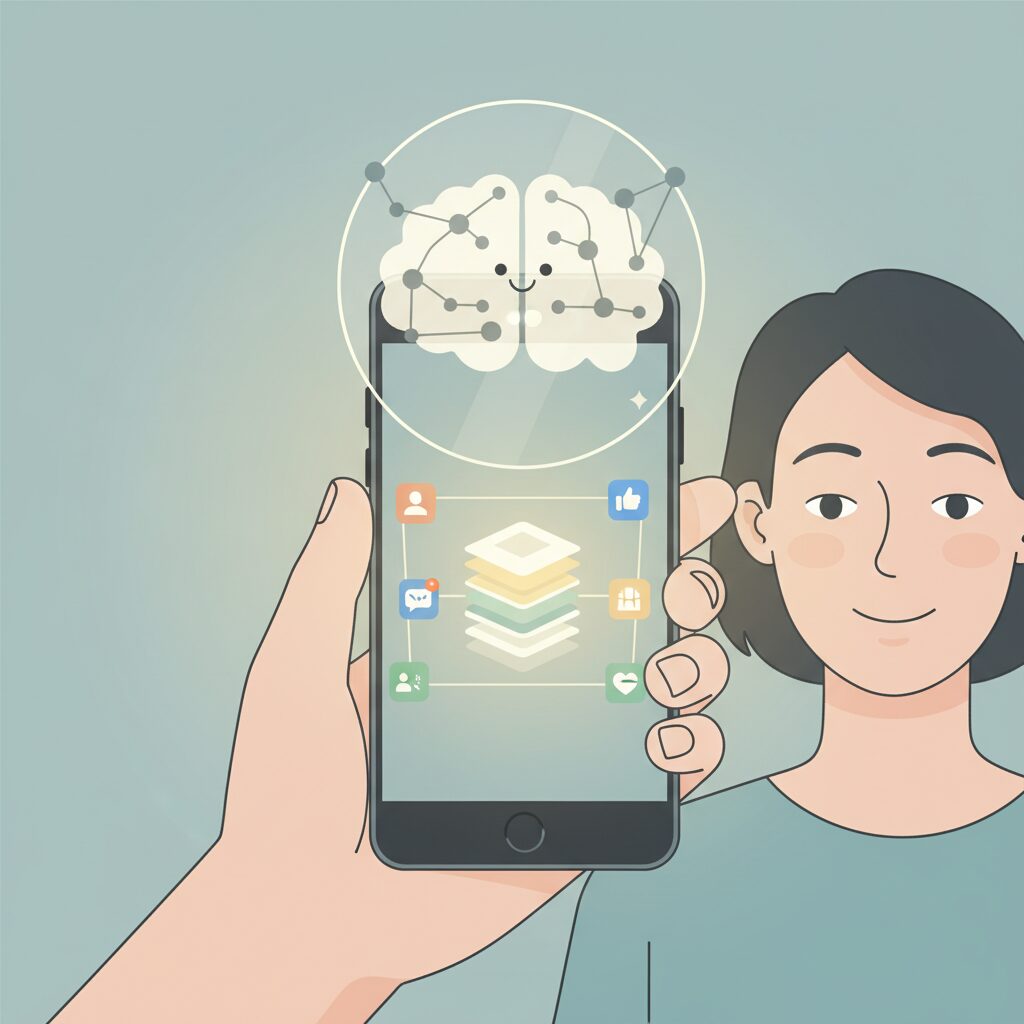
As smartphones take on the role of personal AI assistants, the question of where data is processed becomes critically important. **On-device AI fundamentally changes the privacy equation by keeping sensitive information on the phone itself**, rather than sending it to remote servers. For users who care deeply about gadgets and digital trust, this architectural choice matters as much as raw performance.
Notifications are among the most intimate data streams on a device. Messages from family, work chats, payment alerts, and health-related reminders all pass through the notification layer. According to Google’s Pixel engineering documentation, the Pixel 10 processes notification classification and summarization locally using the Tensor G5 chipset, meaning the content does not need to leave the device for interpretation.
Local processing minimizes data exposure by design, not by policy. Even if cloud servers are secure, data that never leaves the device cannot be intercepted, logged, or repurposed.
This approach aligns with long-standing guidance from privacy researchers at institutions such as MIT and Stanford, who have repeatedly pointed out that data minimization is one of the most effective privacy protections. By reducing external data transfer, the attack surface is inherently smaller, regardless of encryption strength.
| Aspect | On-Device AI | Cloud-Based AI |
|---|---|---|
| Data Location | Processed locally on the phone | Sent to external servers |
| Privacy Risk | Very low data exposure | Depends on network and policies |
| Response Time | Immediate, no network latency | Variable, network-dependent |
Latency is another underappreciated benefit. When AI runs locally, analysis happens in milliseconds, without waiting for an internet round trip. Google engineers note that this is especially important in unstable network conditions. **The user experience remains consistent whether the phone is online, offline, or under congestion**, which is difficult to guarantee with cloud-first designs.
There is also a regulatory dimension. In regions with strict data protection frameworks, such as those influenced by GDPR principles, local processing simplifies compliance. Because personal data is not transmitted externally, questions around cross-border data transfer become largely irrelevant. This makes on-device AI particularly attractive for global products like Pixel.
Security researchers have also highlighted resilience as a key advantage. During natural disasters or large-scale outages, cloud services can become unreachable. With on-device AI, the system continues to function, ensuring that critical alerts are still filtered and surfaced correctly. For a device positioned as an everyday companion, this reliability directly contributes to user trust.
Finally, there is a psychological aspect. Surveys conducted by organizations such as the Pew Research Center consistently show that users are more comfortable with AI features when they understand that their data stays local. **Perceived privacy strongly influences feature adoption**, and on-device AI lowers the mental barrier to enabling advanced functions.
In this sense, local processing is not only a technical optimization but a strategic choice. By embedding intelligence directly into the hardware, the Pixel 10 demonstrates how AI can be both powerful and respectful, offering advanced assistance without demanding constant access to the cloud.
Notification Organizer: How Pixel 10 Sorts Information in Real Time
Notification overload has become one of the most tangible sources of daily stress for smartphone users, and Pixel 10 approaches this problem with a clear design philosophy: information should arrive already organized. The Notification Organizer works in real time, using on-device AI to evaluate incoming alerts the moment they appear, rather than asking users to clean up the chaos afterward.
This shift from manual control to AI-assisted triage is crucial. According to surveys by the Japan Recovery Association, constant interruptions fragment attention and directly correlate with poor sleep quality and chronic fatigue. Pixel 10 treats notifications not as equal signals, but as information with different cognitive weights.
At a technical level, the organizer analyzes notification text, sender patterns, frequency, and contextual cues. Because this processing runs locally on Tensor G5, classification happens instantly and without sending sensitive message content to the cloud. Google’s official Pixel documentation emphasizes that this on-device approach improves both privacy and responsiveness.
| Category | Typical Content | User Impact |
|---|---|---|
| Promotions | Sales alerts, coupons, campaigns | Deferred viewing, reduced distraction |
| News | Breaking headlines, article updates | Batch consumption at chosen times |
| Social | Likes, mentions, follows | Lower dopamine-driven checking |
Instead of stacking dozens of alerts vertically, Pixel 10 bundles notifications by meaning. This visual consolidation is not merely cosmetic. Human–computer interaction research, cited by organizations such as the Center for Humane Technology, shows that reducing visual noise lowers perceived urgency and helps users regain a sense of control.
Real-time sorting also changes behavior. When promotional and recommendation alerts are quietly grouped, users are less likely to react impulsively. They can decide when to engage, aligning notification consumption with their own schedule rather than the app’s growth strategy.
Another important aspect is adaptability. The organizer learns from user actions over time. If certain alerts are consistently opened or ignored, the system adjusts future prioritization. This learning loop mirrors Google’s broader AI philosophy: assist without demanding constant configuration.
Industry reviewers at outlets like Tom’s Guide and 9to5Google have noted that this immediacy sets Pixel apart from scheduled summary models. Because sorting happens as notifications arrive, users can instantly see what deserves attention and what can wait, without missing time-sensitive personal messages.
In practice, this means fewer micro-interruptions during work, deeper focus during rest, and less anxiety about unseen alerts. Pixel 10 does not silence information; it filters it intelligently. The result is a notification system that respects human attention as a finite resource, pointing toward a future where smartphones support mental clarity instead of eroding it.
AI Summaries and Reduced Cognitive Load
AI Summaries directly addresses one of the most exhausting aspects of modern smartphone use: the constant need to interpret raw information. Instead of forcing users to read every notification in full, Pixel 10 uses on-device AI to convert fragmented messages into concise, meaningful narratives, which significantly reduces cognitive load in daily interactions.
Cognitive load theory, first formalized by educational psychologist John Sweller, explains that human working memory is limited. When users are repeatedly interrupted by long emails, group chats, and layered notifications, this limited capacity is quickly overwhelmed. Google’s approach with AI Summaries is not about speeding up reading, but about reducing the amount of mental processing required in the first place.
AI Summaries shift the burden of interpretation from the user to the device, allowing attention to be spent on decisions rather than decoding information.
According to Google’s Pixel documentation and early expert reviews, AI Summaries analyze incoming notifications locally using Gemini Nano on Tensor G5. This ensures that message context, sender intent, and conversational flow are interpreted without sending data to the cloud. From a digital wellbeing perspective, this matters because latency and privacy concerns are removed from the decision-making loop.
The impact becomes especially clear in high-volume communication scenarios. For example, group messaging apps often generate dozens of short replies that individually feel trivial but collectively demand attention. AI Summaries condense these into a single, readable statement that communicates outcomes rather than chatter.
| Scenario | Without AI Summaries | With AI Summaries |
|---|---|---|
| Group chat planning | Scroll through 30+ messages to find conclusions | One summary stating the final decision |
| Long email thread | Open inbox and parse multiple replies | Key points shown directly in notification |
Neuroscience research cited by institutions such as the Center for Humane Technology has repeatedly shown that task-switching carries a measurable cognitive cost. Each time a user opens an app just to “check quickly,” attention residue lingers and reduces focus on subsequent tasks. By allowing users to judge relevance directly from the notification shade, AI Summaries help prevent unnecessary context switching.
This design choice also has a subtle psychological effect. When users feel that information is already organized and understandable, anxiety linked to missing out decreases. Instead of reacting reflexively to every buzz, users can make intentional choices about when and how to engage.
Another notable effect is the reduction of social pressure. In messaging platforms where read receipts influence expectations, being able to grasp content without opening the app offers emotional breathing room. Behavioral scientists have long pointed out that perceived urgency, not actual urgency, is a major driver of stress. AI Summaries quietly recalibrate that perception.
Experts in human-centered design, including former Google ethicist Tristan Harris, have argued that technology should respect attention as a finite resource. Pixel 10’s AI Summaries align closely with this philosophy by treating attention as something to be protected, not exploited.
Rather than demanding discipline or willpower from users, AI Summaries redesign the information flow itself. By transforming raw notifications into digestible insights, Pixel 10 demonstrates how AI can act as a cognitive buffer, making everyday digital life calmer, clearer, and more humane.
Magic Cue and Context-Aware Assistance Across Apps
Magic Cue represents a clear shift from reactive notifications to proactive, context-aware assistance that works seamlessly across apps. Instead of waiting for users to search, copy, and switch between applications, the system anticipates intent based on on-screen content, recent actions, time, and location. This design directly targets cognitive load caused by constant context switching, a problem long highlighted in human–computer interaction research.
For example, when a message mentions meeting for lunch, Magic Cue can surface calendar availability, past restaurant searches, and transit estimates at the moment they are needed. According to Google’s official product documentation and engineering blog posts, this processing is handled on-device, reducing latency and protecting sensitive personal data. The result is assistance that feels immediate rather than intrusive.
Research from the field of digital well-being, including studies cited by organizations such as the Center for Humane Technology, shows that task fragmentation significantly increases perceived mental fatigue. Magic Cue addresses this by connecting information silos without forcing the user to manually navigate them. The value lies not in doing more, but in doing fewer steps, which aligns with calm technology principles.
| User Action | Traditional Workflow | With Magic Cue |
|---|---|---|
| Planning a meetup | Open messages, calendar, maps separately | Relevant info suggested in one place |
| Checking reservations | Search email history manually | Contextual prompt from current screen |
What makes Magic Cue particularly notable is its cross-app intelligence. Emails, messages, maps, and calendars are treated as connected signals rather than isolated tools. This approach reflects Google’s long-standing research in contextual computing, where usefulness is defined by timing and relevance, not by volume of features.
Importantly, Magic Cue does not constantly interrupt. Suggestions appear only when contextual confidence is high, a design choice consistent with guidance from usability experts who warn against overzealous automation. By acting as a quiet connector of information, Magic Cue reduces friction while preserving user autonomy, pointing toward a future where smartphones support attention instead of competing for it.
Designing for Calm: Material 3 Expressive and User Psychology
Material 3 Expressive is not only a visual refresh but a deliberate attempt to redesign how users emotionally experience their devices, and this intention becomes especially clear when viewed through the lens of user psychology. Google positions this design language as an evolution toward Calm Technology, a concept advocated by researchers at Xerox PARC and later discussed by organizations such as the Center for Humane Technology, where technology supports human focus instead of constantly demanding it.
One of the most important shifts lies in color and contrast. **Highly saturated alert colors that previously triggered urgency are intentionally reduced**, replaced by muted tones and layered surfaces. According to research in color psychology cited by the American Psychological Association, softer color palettes can lower perceived stress and reduce involuntary attention capture. In practical terms, notifications and system UI no longer compete aggressively for the user’s gaze, which aligns with Google’s broader goal of reducing attention fragmentation.
| Design Element | Prior Android UI | Material 3 Expressive Impact |
|---|---|---|
| Color usage | High-contrast, alert-driven | Muted, emotionally neutral |
| Component shape | Rigid geometry | Organic, approachable forms |
| Visual hierarchy | Information-dense | Breathing space and clarity |
Shape language also plays a psychological role. Rounded corners, flexible containers, and subtle motion cues reduce what cognitive scientists describe as cognitive friction. Nielsen Norman Group has repeatedly shown that interfaces perceived as visually forgiving improve users’ sense of control and self-efficacy. **When interactions feel predictable and gentle, users report less mental effort even when performing the same tasks**, an effect that compounds over repeated daily use.
Equally significant is what Material 3 Expressive chooses not to emphasize. Animations are shorter and more purposeful, avoiding the dopamine-driven micro-rewards that dominate attention-economy design. This restraint supports emotional regulation rather than stimulation. Google’s redesign of the Digital Wellbeing interface, reported by Android Police, demonstrates this philosophy clearly: progress indicators are informative but non-judgmental, helping users reflect on behavior without inducing guilt or anxiety.
Ultimately, Material 3 Expressive reframes UI as an emotional environment rather than a control panel. **By lowering visual noise and emotional intensity, the design quietly encourages slower, more intentional interaction**, which is essential in an era where information overload has become a public health concern. The result is a user experience that feels less like a constant conversation demanding replies, and more like a calm presence that speaks only when necessary.
Pixel 10 vs iPhone 17: Two Different Visions of Smart Notifications
When comparing Pixel 10 and iPhone 17 through the lens of smart notifications, two fundamentally different philosophies become clear. Both aim to reduce information overload, yet their approaches reflect distinct beliefs about how humans should interact with technology.
Pixel 10 treats notifications as a real-time cognitive problem that must be solved instantly, while iPhone 17 views them as something that can be postponed and revisited on a schedule. This difference may sound subtle, but in daily use it creates a very different psychological experience.
| Aspect | Pixel 10 | iPhone 17 |
|---|---|---|
| Timing of processing | Immediate, at arrival | Scheduled summaries |
| AI execution | On-device (Tensor G5) | Hybrid, device and cloud |
| User control model | Context-aware filtering | Time-based batching |
Google’s Notification Organizer and AI Summaries operate the moment a message arrives. Thanks to on-device processing with Tensor G5, the system can instantly decide whether a notification deserves attention or should be quietly bundled. According to Google’s own documentation, this minimizes attention fragmentation by letting users judge importance without opening apps.
Apple’s Scheduled Summary, introduced and refined through iOS 18 and 19, takes a calmer but more rigid stance. Notifications are held back and delivered at predefined times, encouraging intentional consumption. Apple positions this as a digital wellbeing feature, and reviewers from outlets such as TechRadar note that it helps preserve focus during work hours.
However, early analyses by technology journalists, including commentary from 9to5Google, point out a trade-off. When summaries arrive too late or miss context, users may feel detached from time-sensitive conversations. Pixel 10’s real-time summaries prioritize situational awareness over strict boundaries, which can be critical for messaging-heavy users.
Another key difference lies in privacy perception. Pixel 10 emphasizes fully local analysis, an approach aligned with broader discussions on ethical design highlighted by the Center for Humane Technology. Apple also stresses privacy, yet its notification intelligence still relies partially on cloud-assisted workflows, depending on region and feature.
For users who receive dozens, sometimes hundreds, of notifications per day, these philosophies matter. Pixel 10 feels like an always-on assistant quietly sorting the noise, whereas iPhone 17 behaves more like a gatekeeper with office hours. Neither approach is universally better, but they reveal how Google and Apple envision the future relationship between attention, AI, and the human mind.
Language and Regional Challenges in AI-Powered Features
AI-powered features promise universal convenience, but in practice they are deeply shaped by language and regional constraints, and this gap becomes especially visible in advanced notification intelligence. In the case of Pixel 10, please note that several headline AI functions require the system language to be set to English, even when the device is sold and used in supported regions such as Japan.
This requirement creates a usability paradox. While the region itself is officially supported, everyday users must accept an English-only system interface to activate features like AI-based notification organization and summaries. According to Google’s own Pixel support documentation, this limitation is not cosmetic but fundamental to how the on-device language models currently operate.
| Aspect | Supported | Limitation |
|---|---|---|
| Region setting | Japan | No issue |
| System language | English only | Japanese UI not supported |
| Notification summaries | English text | Japanese text unreliable |
The challenge goes beyond menus and settings. Japanese is a high-context language with flexible word order and implicit subjects, which makes accurate summarization far more difficult than in English. Researchers in computational linguistics have long pointed out that models trained primarily on English corpora struggle with nuance, politeness levels, and omitted subjects common in Japanese.
This becomes critical in real-world apps such as LINE. Even when notifications are technically readable, AI may fail to classify or summarize them correctly, sometimes ignoring them entirely. Industry analysts note that misclassification risks undermine trust, especially when personal messages are grouped alongside promotions.
Google’s past rollout history suggests that full localization often arrives months or years later, as seen with Call Screen and scam detection features. While multilingual Gemini models are improving rapidly, users in non-English markets are currently experiencing a preview rather than the intended final form of AI-powered convenience.
What Pixel 10 Signals About the Future of Smartphones
Pixel 10 sends a clear signal that the future of smartphones is no longer about doing more, but about helping users think less. By placing AI-driven notification organization at the center of the experience, Google is reframing the smartphone as a cognitive filter rather than a constant source of stimulation. This shift aligns with what researchers in digital well-being have long argued: reducing attention fragmentation is more impactful than simply limiting screen time.
What stands out is the move from user-controlled discipline to system-level intelligence. Instead of asking people to manually mute apps or practice digital detox, Pixel 10 delegates prioritization to on-device AI. According to Google’s own documentation, notifications are analyzed locally and grouped in real time, which suggests a future where smartphones actively protect mental bandwidth by default.
| Past Smartphone Paradigm | Pixel 10 Direction | Future Implication |
|---|---|---|
| More apps, more alerts | AI-based notification filtering | Reduced cognitive overload |
| User self-control | On-device contextual judgment | Default digital well-being |
This approach echoes concerns raised by experts such as Tristan Harris, who has warned that attention-based design erodes user autonomy. Pixel 10 appears to respond directly to that critique by embedding ethical design into the operating system itself. The reliance on on-device processing also reflects a broader industry trend toward privacy-preserving AI, an area where Google is signaling long-term commitment.
Seen from this perspective, Pixel 10 is less about incremental hardware gains and more about redefining what a “smart” phone should optimize for. The device suggests a future where calm, relevance, and trust become primary metrics of innovation, and where smartphones evolve into quiet partners that respect human limits.
参考文献
- Google Pixel Phone Help:Use AI to manage your notifications
- Google Blog:5 reasons why Google Tensor G5 is a game-changer for Pixel
- Center for Humane Technology:The Attention Economy
- 9to5Google:Google Pixel’s notification summaries are better than the iPhone’s, but to what end?
- PhoneArena:iPhone 17 vs Pixel 10: The most heated $799 flagship battle in a decade
- Android Police:Google gives Digital Wellbeing a fresh look to enhance clarity and ease of use