Have you ever felt eye strain, headaches, or unusual fatigue after using your smartphone in a dark room? You are not alone. As daily screen time continues to rise across all age groups, visual discomfort has become a serious concern for tech-savvy users worldwide.
In 2026, smartphone display technology is no longer just about peak brightness or pixel density. Major brands such as Apple, Samsung, Google, Oppo, Vivo, and Honor are competing to redefine visual health through advanced dimming technologies, ultra-high-frequency PWM, and new eye comfort certifications.
In this article, you will discover how PWM dimming actually affects your eyes, what recent medical research says about digital eye strain and intraocular pressure, how the latest flagship models compare, and which display technologies are setting the new global standard for eye-friendly smartphones. If you care about performance and long-term eye comfort, this guide will help you make a smarter choice in 2026.
- Why 2026 Marks a Turning Point for Smartphone Display Technology
- How PWM Dimming Works and Why Flicker Can Cause Eye Strain
- DC Dimming vs Hybrid and High-Frequency PWM: Engineering Trade-Offs Explained
- Medical Evidence on Digital Eye Strain, Tear Film Stability, and OLED Screens
- Screen Use and Intraocular Pressure: What Meta-Analyses Reveal
- Apple iPhone 17 and Display Pulse Smoothing: Can OLED Finally Go Flicker-Free?
- Samsung Galaxy S26 Ultra: Efficiency-First Strategy and Its Impact on PWM
- Google Pixel 10 Pro: Software-Driven Eye Protection and Its Limits
- Chinese Brands Leading the Race: 2160Hz to 3840Hz Ultra-High PWM
- TÜV Rheinland Eye Comfort 3.0: What 5-Star Certification Really Means
- Multi-Screen Lifestyles and the Growing Global Concern Over Visual Fatigue
- What to Expect Beyond 2026: Tandem OLED, CoE, and AI-Powered Adaptive Dimming
- 参考文献
Why 2026 Marks a Turning Point for Smartphone Display Technology
In 2026, smartphone display technology enters a decisive new phase. Until recently, competition centered on resolution, peak brightness, and refresh rate. Now, the industry shifts its focus toward something far more personal: visual health. Display engineering is no longer just about sharper images. It is about how those images interact with the human eye over hours of daily use.
The trigger for this shift is clear. Global research on Digital Eye Strain (DES), summarized in peer‑reviewed studies indexed by the NIH, shows prevalence rates ranging widely but reaching strikingly high levels depending on population and methodology. Symptoms such as headaches, ocular pain, photophobia, and neck strain are no longer niche complaints. They are mainstream public health concerns in a screen-dominated society.
2026 marks the moment when display specifications move from “how bright” to “how safe.”
The most controversial battleground is PWM dimming in OLED panels. PWM controls brightness by rapidly switching pixels on and off. While technically efficient, lower frequencies have been associated with discomfort for a significant portion of users. Android Central and multiple technical analyses explain how deeper modulation at low brightness intensifies perceived flicker, especially in dark environments.
Medical evidence reinforces the urgency. A randomized controlled study published via PubMed Central found that two hours of reading on OLED screens significantly reduced tear film stability compared to eInk displays. A separate meta-analysis on intraocular pressure reported measurable increases after sustained screen use, particularly among glaucoma patients. These findings elevate display modulation from a preference issue to a physiological one.
| Old Priority | 2026 Priority | Why It Matters |
|---|---|---|
| Peak Brightness | Flicker Mitigation | Reduces strain at low luminance |
| Resolution Race | Adaptive Dimming | Aligns output with human sensitivity |
| Color Vividness | Eye Comfort Certification | Standardized health benchmarks |
Major brands respond differently, but the strategic signal is unmistakable. Apple introduces a toggle to smooth or disable PWM behavior in low brightness scenarios. Chinese manufacturers push ultra‑high‑frequency PWM into the thousands of hertz. Even conservative players prioritize reflectivity reduction and efficiency trade‑offs to manage visual fatigue. The competitive axis has rotated.
Certification bodies also reshape the landscape. TÜV Rheinland’s Eye Comfort 3.0 framework evaluates 16 indicators across flicker, color accuracy, refresh rate, ambient adaptation, and blue light control. What began in professional monitors now becomes a marketing and engineering benchmark in flagship smartphones. Consumers increasingly interpret certification as a proxy for biological safety, not just quality.
Another structural reason 2026 becomes pivotal is usage intensity. Hybrid work, short‑form video, and AI-driven content loops extend daily screen time across all age groups. When exposure multiplies, even subtle physiological stressors compound. In this environment, incremental improvements in dimming algorithms or modulation frequency can meaningfully alter long-term comfort.
The turning point is not defined by a single breakthrough panel, but by a redefinition of value. Displays are no longer passive output layers. They are dynamic interfaces interacting with tear film stability, circadian rhythm, accommodative stress, and neural perception. Engineering teams now collaborate not only with color scientists, but also with vision researchers.
For enthusiasts and early adopters, this shift changes what it means to buy a flagship device. The most important specification in 2026 may not be visible on a demo loop in a brightly lit store. It becomes apparent late at night, at 10% brightness, when your eyes either relax—or protest. That lived experience is precisely why 2026 stands as a technological inflection point.
How PWM Dimming Works and Why Flicker Can Cause Eye Strain
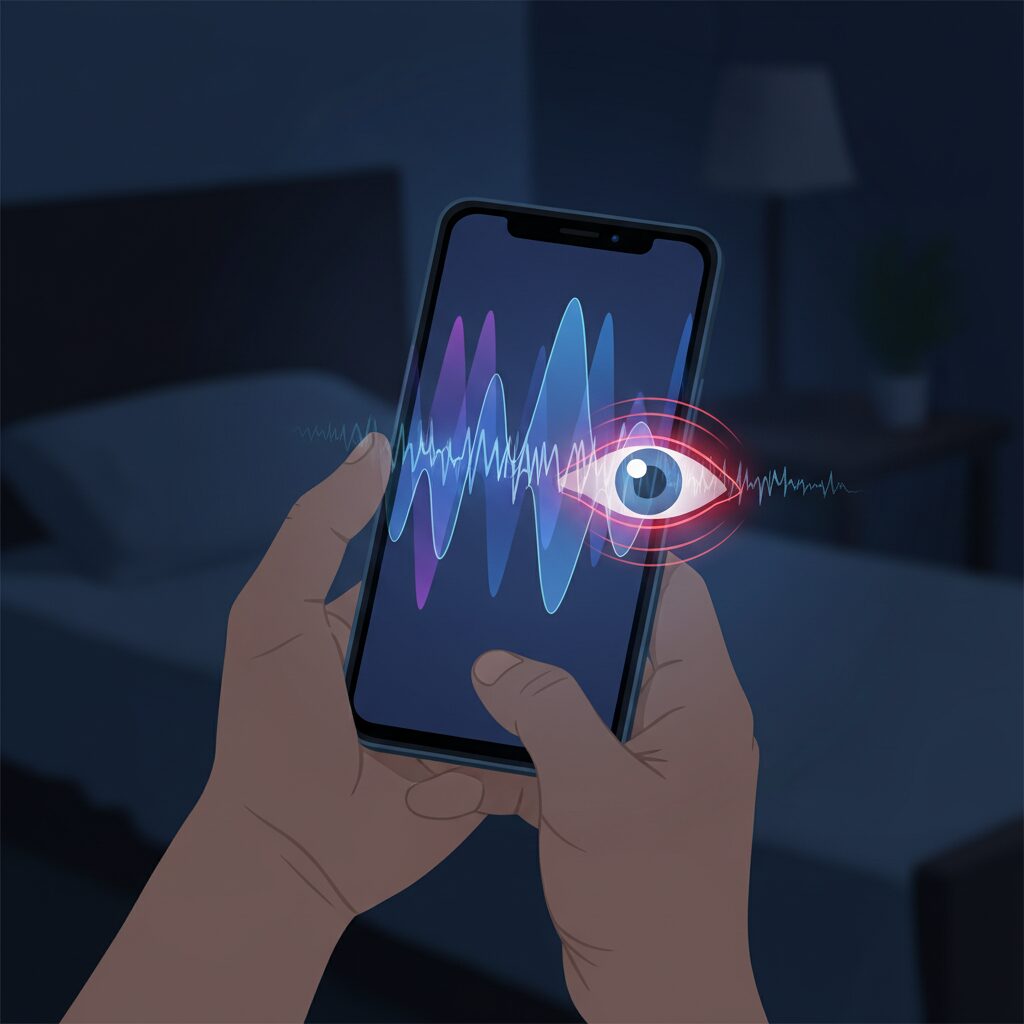
PWM dimming, or Pulse Width Modulation, is a brightness control method widely used in OLED smartphones. Instead of lowering the actual power smoothly, the display rapidly turns pixels on and off at high speed. The perceived brightness changes depending on how long the pixel stays on during each cycle, a ratio known as the duty cycle.
When brightness is set high, the “on” time dominates and flicker is minimal. At low brightness, however, the off time becomes longer, creating a more pronounced strobe-like effect. Although this switching happens hundreds of times per second, the human visual system can still react to it.
PWM does not reduce light continuously; it reduces the time light is emitted. This temporal modulation is the root cause of flicker-related discomfort.
From an engineering perspective, PWM is attractive because it preserves color accuracy and panel stability, especially in OLED displays. By contrast, reducing current directly can introduce color shifts or uneven luminance. That is why many manufacturers historically preferred PWM despite its side effects.
However, medical research has clarified why flicker can become a problem. A review on Digital Eye Strain published in PubMed Central reports prevalence rates ranging from 22% to over 50%, depending on population and criteria. Symptoms commonly include headaches, eye pain, photophobia, and difficulty focusing.
The mechanism is not purely psychological. The visual cortex and retinal cells continuously adapt to light changes. Repeated micro-contrast fluctuations caused by PWM flicker increase neural workload, even when the flicker is not consciously perceived. Sensitive individuals, often described in user communities as “PWM sensitive,” may experience dizziness or nausea at lower frequencies.
| Brightness Level | PWM Behavior | Potential Visual Impact |
|---|---|---|
| High (70–100%) | Short off-time, shallow modulation | Low perceived flicker |
| Medium (30–70%) | Balanced on/off cycles | Mild strain in sensitive users |
| Low (0–30%) | Long off-time, deep modulation | Higher risk of discomfort |
Another important factor is frequency. Industry discussions often reference IEEE 1789 guidance, which suggests that higher modulation frequencies reduce biological risk. Yet many smartphones historically operated in the several-hundred-hertz range, particularly at low brightness. For a subset of users, this is sufficient to trigger symptoms.
In practical terms, flicker-related eye strain tends to worsen in dark environments. When pupils dilate, more light variation reaches the retina, amplifying sensitivity to modulation. This explains why some users report discomfort mainly during nighttime reading.
Understanding how PWM works allows you to interpret display specifications more critically. It is not only the presence of PWM that matters, but its frequency, modulation depth, and behavior at low brightness. Flicker is a time-based phenomenon, and the eye is highly sensitive to time-based light changes, even when they are invisible to the naked eye.
DC Dimming vs Hybrid and High-Frequency PWM: Engineering Trade-Offs Explained
When engineers choose between DC dimming, hybrid systems, and high-frequency PWM, they are not simply tuning brightness. They are balancing electrical efficiency, color stability, thermal behavior, and human visual response. Each method solves one problem while creating another, which is why no flagship in 2026 relies on a single strategy across the entire brightness range.
According to technical analyses from Android Central and display engineering reviews, PWM controls brightness by rapidly switching pixels on and off, preserving color accuracy even at low luminance. DC dimming instead reduces the driving current itself, eliminating flicker but altering the OLED’s emission characteristics. Hybrid systems attempt to dynamically combine both approaches depending on luminance thresholds.
| Method | Primary Advantage | Key Engineering Cost |
|---|---|---|
| DC Dimming | Near flicker-free output | Color shift, mura at low brightness |
| High-Frequency PWM | Color stability, panel efficiency | Higher driver complexity, power overhead |
| Hybrid | Balanced visual comfort | Algorithm tuning, transition artifacts |
DC dimming’s core weakness lies in OLED physics. At very low current levels, subpixels do not scale linearly, leading to gamma deviation and uneven luminance. As described in AMOLED-focused technical papers, this can produce visible mura and reduced color accuracy in dark scenes. Manufacturers must recalibrate color matrices dynamically, which increases processing overhead and validation cost.
High-frequency PWM, particularly in the several-thousand-hertz range adopted by some 2026 Chinese flagships, pushes flicker beyond typical human sensitivity thresholds. The IEEE 1789-2015 guidance indicates that higher modulation frequencies significantly reduce health risk. However, raising PWM frequency increases switching losses and driver circuit demands, which can affect battery efficiency and thermal headroom.
Hybrid dimming is therefore not merely a marketing term. It requires precise luminance mapping so that the transition between DC-like behavior and PWM does not introduce banding or temporal instability. Some implementations activate DC-style control below roughly 25–30% brightness, while maintaining PWM in higher ranges for efficiency and color fidelity. If poorly tuned, users may notice subtle brightness jumps.
Another overlooked factor is panel longevity. Sustained low-current DC operation can alter aging patterns across subpixels, whereas PWM distributes stress differently over time. Engineers must model degradation curves carefully to maintain uniformity over years of use.
Ultimately, the trade-off is multidimensional: visual comfort, chromatic precision, battery life, thermal stability, and long-term durability. No dimming technology is universally superior; the optimal choice depends on how a manufacturer prioritizes human perception versus electrical efficiency within a constrained mobile power budget.
Medical Evidence on Digital Eye Strain, Tear Film Stability, and OLED Screens
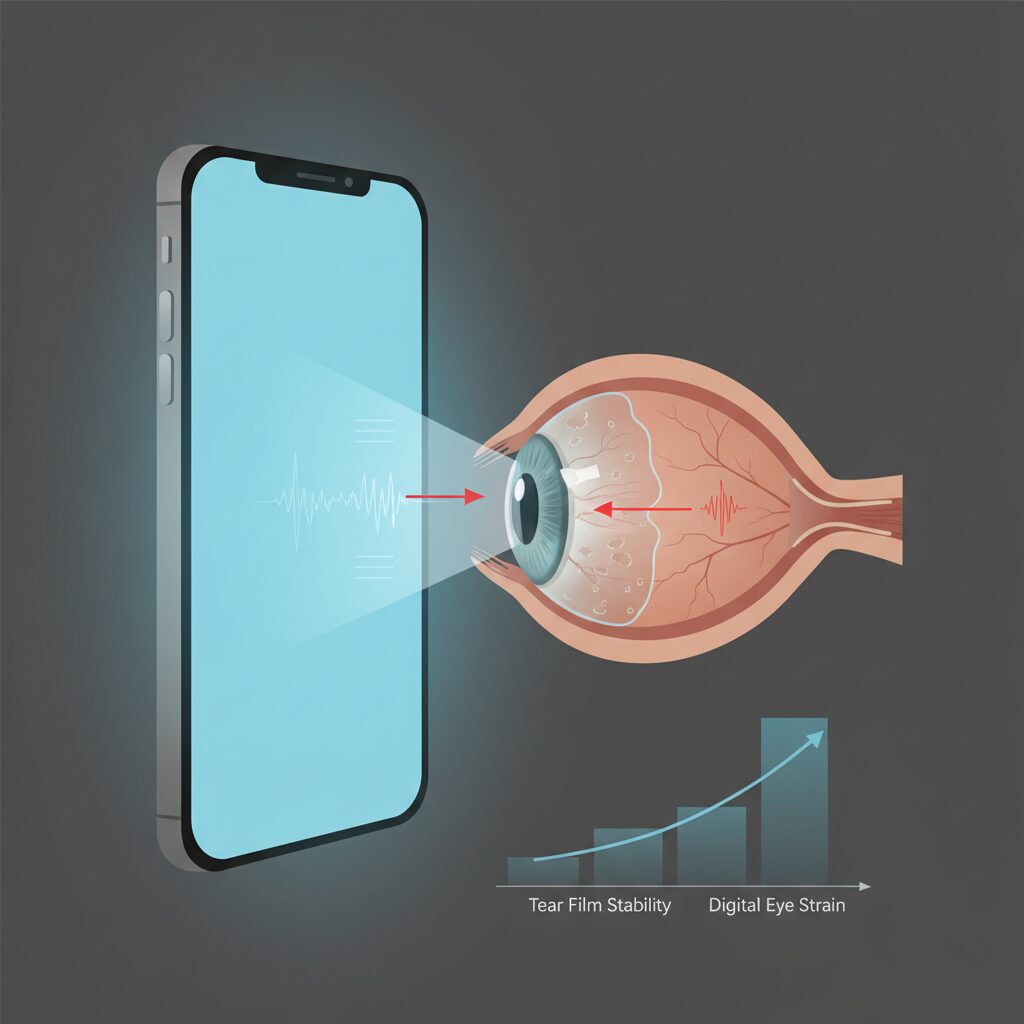
Medical research over the past few years has moved the discussion around OLED screens and eye strain from anecdotal complaints to measurable physiological changes. Digital Eye Strain (DES), sometimes referred to as Computer Vision Syndrome, is now widely recognized in peer-reviewed literature as a multifactorial condition linked to prolonged screen exposure.
According to a comprehensive review published on PubMed Central, the reported prevalence of DES ranges from approximately 50% to over 70% depending on population and diagnostic criteria. Common symptoms include ocular dryness, headache, blurred vision, photophobia, and neck or shoulder pain. Importantly, these are not merely subjective impressions; several biomarkers of ocular surface stress have been objectively quantified.
One prospective randomized controlled study indexed by the NIH compared reading on OLED smartphones versus eInk displays for two continuous hours. The OLED group demonstrated a statistically significant reduction in both non-invasive tear break-up time (NIBUT) and fluorescein tear break-up time (FBUT). In practical terms, this means the tear film became unstable more quickly, a hallmark of dry eye progression.
| Parameter | OLED Reading | eInk Reading |
|---|---|---|
| NIBUT | Significant decrease | Relatively stable |
| FBUT | Significant decrease | Relatively stable |
| Subjective Discomfort (CVS-Q) | Higher scores | Lower scores |
The same study reported higher scores on the CVS-Q symptom questionnaire among OLED users. Researchers suggested that the self-emissive nature of OLED panels, combined with luminance modulation such as PWM, may alter blink patterns and increase ocular surface evaporation. Reduced blink completeness and frequency are well-documented contributors to tear film instability.
Beyond the ocular surface, intraocular pressure (IOP) has also been investigated. A recent systematic review and meta-analysis on PubMed found that digital screen use led to a measurable short-term increase in IOP after approximately 25 minutes in healthy individuals, with even greater elevations observed in patients with glaucoma. While the absolute increase was modest, the consistency across studies raises important questions about cumulative exposure in heavy smartphone users.
This suggests that screen-induced stress is not limited to dryness or fatigue, but may transiently influence ocular biomechanics. Proposed mechanisms include accommodative tension during sustained near focus and possible light-induced effects on aqueous humor dynamics.
From a physiological standpoint, tear film stability, blink behavior, accommodative load, and luminance fluctuation interact as a system. OLED displays that rely on lower-frequency PWM at reduced brightness levels may introduce micro-flicker that is not consciously perceived yet still processed by the visual cortex. For sensitive individuals, this can amplify symptoms such as headache or photophobia even when objective luminance appears stable.
Importantly, not all users respond equally. The medical literature emphasizes inter-individual variability, influenced by baseline dry eye status, refractive error, working distance, and environmental humidity. This variability explains why some TÜV-certified or high-refresh-rate OLED devices still provoke discomfort in certain populations, as reported in patient communities.
In summary, current evidence does not claim that OLED screens are inherently harmful. However, peer-reviewed data clearly demonstrate that prolonged use can measurably reduce tear film stability, increase subjective symptom burden, and transiently elevate intraocular pressure under specific conditions. For heavy users and visually sensitive individuals, these findings reinforce the importance of display technologies and dimming strategies that minimize unnecessary visual stress.
Screen Use and Intraocular Pressure: What Meta-Analyses Reveal
Beyond dry eye and visual fatigue, researchers have begun to examine a more structural parameter: intraocular pressure (IOP). IOP is the fluid pressure inside the eye and is a key risk factor for glaucoma. Even small, repeated fluctuations may matter for people who already have optic nerve vulnerability.
A recent systematic review and meta-analysis published on PubMed in 2025 analyzed controlled studies measuring IOP before and after digital screen use. The pooled data show that IOP rises measurably within a short period of screen exposure, even in healthy participants.
On average, IOP increased about 25 minutes after starting screen use in healthy subjects. In individuals with glaucoma, the elevation was more pronounced, suggesting that susceptible eyes may respond differently to sustained near work and visual concentration.
| Population | Screen Exposure | Observed IOP Change |
|---|---|---|
| Healthy adults | ~25 minutes continuous use | Significant mean increase from baseline |
| Glaucoma patients | Similar duration | Larger elevation than healthy controls |
The mechanisms are not fully settled, but the authors suggest several plausible pathways. Sustained accommodation and convergence during near viewing may alter ciliary body tension. Reduced blink rate and sympathetic activation during intense screen engagement may also influence aqueous humor dynamics.
This is not evidence that smartphones cause glaucoma. However, it does indicate that acute IOP spikes can occur during relatively short sessions of digital device use. For heavy users who accumulate several hours daily, the cumulative physiological load deserves attention.
Importantly, the meta-analysis highlights heterogeneity among studies. Device type, viewing distance, posture, and lighting conditions varied widely. That means the magnitude of IOP change is context-dependent rather than fixed.
For gadget enthusiasts who routinely test displays at low brightness or in dark rooms, the combination of prolonged fixation and reduced blinking may amplify short-term pressure fluctuations. Periodic breaks and conscious blinking are simple behavioral countermeasures supported by broader digital eye strain literature.
As screen technologies evolve toward higher refresh rates and smarter dimming systems, understanding their interaction with ocular physiology becomes critical. IOP response offers a measurable biomarker that moves the discussion beyond subjective discomfort and into quantifiable eye health metrics.
The key takeaway from current meta-analytic evidence is nuanced: digital screen use is associated with short-term IOP elevation, particularly in vulnerable populations. For most healthy users this rise appears transient, but for those with glaucoma or ocular hypertension, informed usage habits and medical consultation are advisable.
Apple iPhone 17 and Display Pulse Smoothing: Can OLED Finally Go Flicker-Free?
With the iPhone 17 lineup, Apple takes an unprecedented step in OLED history by introducing an accessibility toggle called Display Pulse Smoothing. Unlike incremental increases in PWM frequency, this feature fundamentally changes how brightness is controlled at low levels.
According to MacRumors and FlatpanelsHD, Apple allows users to effectively disable traditional PWM dimming behavior under certain brightness thresholds. Instead of relying on rapid on–off modulation, the system smooths the output curve to reduce perceptible flicker.
This is particularly significant because OLED flicker has long been considered an unavoidable trade-off for accurate color reproduction at low brightness.
How Display Pulse Smoothing Changes the Game
| Aspect | Previous iPhones | iPhone 17 (Smoothing ON) |
|---|---|---|
| Low-brightness control | Conventional PWM | PWM behavior smoothed / reduced |
| User control | No toggle | Accessibility setting available |
| Potential trade-offs | Stable color & response | Possible impact on performance |
Notebookcheck reports that the toggle appears under Accessibility → Display & Text Size in iOS 26 release candidates. Apple notes that enabling it may affect display performance at low brightness, suggesting changes in response behavior or color precision.
Independent measurements shared within the PWM-sensitive community using Opple Light Master devices indicate that smoothing becomes noticeable below roughly 25–30% brightness. Waveform graphs show significantly flattened modulation compared to prior models.
However, it does not appear to eliminate all frequency components entirely. Residual modulation may remain, meaning the display is closer to “near flicker-free” rather than mathematically flicker-free.
Why This Matters for Visual Health
Research published via NIH and PubMed has linked OLED screen use to measurable reductions in tear film stability during prolonged reading sessions, and systematic reviews show that digital screen exposure can elevate intraocular pressure after as little as 25 minutes.
While these studies do not isolate PWM as the sole cause, flicker has long been suspected as a contributing stressor for sensitive individuals. By smoothing pulse behavior at low luminance—where modulation depth is typically most aggressive—Apple directly targets the scenario most associated with discomfort: dark-room usage.
For users who experience headaches, dizziness, or eye strain under dim lighting, this software-level intervention represents Apple’s first explicit acknowledgment of PWM sensitivity as a real-world accessibility concern.
There are limitations. Reports indicate that Display Pulse Smoothing cannot be used simultaneously with Reduce White Point, forcing users to choose between hardware-level dimming control and software luminance compression. This trade-off underscores how complex OLED power management remains.
Still, compared with simply raising PWM frequency, Apple’s approach is philosophically different. Rather than pushing flicker beyond perception thresholds, it attempts to alter the waveform behavior itself.
If sustained across future generations, Display Pulse Smoothing may signal a broader industry shift: from chasing higher hertz numbers to engineering fundamentally calmer light output. For OLED technology long criticized for unavoidable flicker, that distinction is profound.
Samsung Galaxy S26 Ultra: Efficiency-First Strategy and Its Impact on PWM
Samsung’s Galaxy S26 Ultra takes a notably conservative path in 2026. While the device adopts the latest M14 OLED material—known for higher luminous efficiency and longer lifespan—multiple industry reports indicate that Samsung deliberately limits several headline display metrics compared to what the panel is technically capable of delivering.
According to coverage by Gadgets360 and PhoneArena, peak brightness is expected to remain in line with the previous generation rather than pushing dramatically higher. At the same time, tipsters cited by these outlets suggest that color depth and PWM frequency are also kept at relatively modest levels instead of adopting the ultra‑high‑frequency strategies seen in some Chinese competitors.
This decision becomes clearer when viewed through the lens of system-level constraints. The device reportedly retains a 5,000mAh battery while integrating a next-generation Snapdragon 8 Elite Gen 5 chipset. Increasing peak brightness or dramatically raising PWM frequency would inevitably increase power draw and heat output, especially at low brightness levels where duty cycle modulation becomes more complex.
From a technical standpoint, higher PWM frequencies require faster switching and tighter driver control. As explained in industry discussions on pulse modulation design, increasing frequency can reduce perceptible flicker but may also raise switching losses and complicate power management. Samsung appears to have chosen predictability and endurance over pursuing marketing-friendly PWM numbers.
| Aspect | Efficiency-First Choice | Impact on PWM |
|---|---|---|
| Peak Brightness | Maintained near prior level | No need for higher drive current |
| Battery Capacity | 5,000mAh unchanged | Limits headroom for higher-frequency dimming |
| Thermal Budget | Optimized for stability | Avoids aggressive high-frequency switching |
For users sensitive to PWM flicker, this approach creates a nuanced trade-off. On one hand, the S26 Ultra does not appear to adopt ultra‑high‑frequency PWM in the several‑thousand‑hertz range that some rivals promote. On the other hand, by avoiding extreme brightness peaks and excessive modulation complexity, Samsung may be aiming for waveform stability rather than raw frequency escalation.
Notebookcheck and other display-focused reviewers have long emphasized that flicker perception depends not only on frequency but also on modulation depth and waveform shape. If Samsung reduces modulation depth while keeping frequency moderate, subjective comfort could improve even without headline-grabbing specifications.
Another pillar of this efficiency-first philosophy is optical mitigation. Reports indicate continued use of improved Gorilla Armor glass to reduce reflections. Lower reflectivity decreases the need to push brightness higher in outdoor conditions, indirectly reducing the strain associated with both glare and high-amplitude PWM cycles.
In practical terms, the Galaxy S26 Ultra signals a strategic message: display comfort is being balanced against battery longevity and sustained performance, not optimized in isolation. For power users who value endurance and thermal consistency over experimental dimming schemes, this restrained PWM strategy may feel reassuring. For highly PWM-sensitive individuals, however, the absence of an aggressive high-frequency shift may remain a decisive consideration.
Google Pixel 10 Pro: Software-Driven Eye Protection and Its Limits
Google Pixel 10 Pro earns a remarkable 93.3% display score from Notebookcheck, positioning it among the most highly rated screens of 2026. Yet when we look specifically at eye protection, its strategy is clearly software-driven rather than hardware-revolutionary.
Instead of eliminating PWM dimming, Google has raised the PWM frequency compared to the previous generation. This reduces perceptible flicker for many users, but it does not remove it entirely.
The Pixel 10 Pro improves tolerance, not immunity. That distinction is crucial for users who are highly sensitive to display flicker.
| Aspect | Pixel 10 Pro Approach | Implication |
|---|---|---|
| PWM Control | Higher frequency than predecessor | Reduced visible flicker, not eliminated |
| Color Management | Adaptive Color tuning | Lower visual strain in mixed lighting |
| Circadian Support | Integrated sleep-aligned display mode | Blue light moderation at night |
Where Google truly differentiates itself is in computational optimization. The Adaptive Color system dynamically adjusts white balance based on ambient conditions, aiming to keep perceived color temperature natural. While this does not directly affect PWM behavior, it reduces contrast stress and chromatic fatigue, both of which are contributors to Digital Eye Strain (DES).
According to updated clinical perspectives on DES published via PubMed Central, visual discomfort is multifactorial. Flicker is only one component. Tear film instability, reduced blink rate, and high luminance contrast also play measurable roles.
By combining ambient-aware color tuning with circadian-oriented night display adjustments, Pixel 10 Pro addresses these secondary stressors in a cohesive way.
However, for users with pronounced PWM sensitivity, community discussions indicate that Pixel devices still rank among the less comfortable options. Even with elevated PWM frequency, the modulation remains detectable for certain individuals under low brightness conditions.
This highlights an important limitation. Software optimization can refine perception, but it cannot fully override hardware-level modulation physics. If PWM is present, it remains present.
In practical terms, most mainstream users may find the Pixel 10 Pro comfortable for extended reading, browsing, and video playback. The high refresh rate, stable brightness curve, and accurate color calibration contribute to a visually polished experience.
Yet the device stops short of offering a true flicker-disable toggle or ultra-high-frequency PWM solution. As a result, Pixel 10 Pro represents a balanced, ecosystem-integrated approach to eye comfort rather than a radical hardware shift.
For users who prioritize Google’s AI-driven display intelligence and color fidelity, the trade-off may feel entirely reasonable. For the most sensitive segment, however, the limits of software-led mitigation remain clearly visible.
Chinese Brands Leading the Race: 2160Hz to 3840Hz Ultra-High PWM
In 2026, Chinese smartphone brands are no longer just competing on peak brightness or camera specs. They are aggressively redefining the battlefield around ultra‑high frequency PWM dimming, pushing figures from 2160Hz to an astonishing 3840Hz. For display enthusiasts and PWM‑sensitive users, this is not incremental progress. It is a structural shift in how OLED comfort is engineered.
Unlike many Western competitors that rely on software mitigation or partial smoothing, Chinese manufacturers such as Oppo, Honor, and Vivo are scaling hardware PWM frequencies to levels that approach theoretical “no observable risk” zones discussed in IEEE 1789‑2015 guidance. According to Notebookcheck’s 2026 display evaluations, several of these devices now dominate rankings not only for color accuracy and brightness, but also for flicker control.
| Brand / Model | PWM Frequency | Notable Visual Health Feature | Certification |
|---|---|---|---|
| Oppo Find X9 Pro | 2160Hz | 1 nit ultra‑low brightness stability | TÜV Rheinland, SGS |
| Honor 400 | 3840Hz | High‑frequency PWM in mid‑range tier | TÜV Rheinland |
| Vivo X200 Pro Mini | High‑frequency PWM | LTPO integration with adaptive refresh | TÜV Rheinland |
The Oppo Find X9 Pro’s 2160Hz implementation is particularly notable because it maintains flicker suppression even at 1 nit brightness. At extremely low luminance levels, traditional PWM systems deepen modulation, which increases visible flicker for sensitive users. By contrast, Oppo’s approach keeps waveform instability minimal while preserving OLED color fidelity. Dual certification from TÜV Rheinland and SGS strengthens its credibility beyond marketing claims.
Honor takes this further with 3840Hz PWM in the Honor 400. Achieving such a frequency in a mid‑range device signals a democratization of eye‑comfort technology. IEEE guidance suggests that higher modulation frequencies significantly reduce biological risk, and at 3840Hz, perceptibility drops dramatically even among sensitive populations. This effectively reframes high‑frequency PWM as a baseline expectation rather than a flagship luxury.
Vivo’s X200 Pro Mini demonstrates another dimension of leadership. By combining high‑frequency PWM with LTPO dynamic refresh rate scaling, it aligns flicker mitigation with energy efficiency. According to Notebookcheck’s 2026 rankings, this balanced execution contributed to one of the highest display scores of the year. Instead of treating eye comfort as a standalone checkbox, Vivo integrates it into a broader display optimization ecosystem.
What distinguishes Chinese brands is strategic consistency. For several product cycles, they have publicly promoted PWM frequency numbers as core selling points. Community discussions among PWM‑sensitive users frequently highlight Oppo and Honor models as safer alternatives compared to lower‑frequency implementations elsewhere. This sustained messaging, backed by measurable hardware changes, builds trust in enthusiast circles.
Equally important is the interaction between high PWM frequency and peak brightness. Devices like the Honor 400 manage both elevated brightness performance and ultra‑high PWM simultaneously. That dual optimization counters the traditional trade‑off where eye comfort compromises visual punch. In practical terms, users can scroll at night at minimal brightness without discomfort, then step outdoors into high‑luminance conditions without losing visibility.
The race from 2160Hz to 3840Hz is not merely numerical escalation. It reflects a philosophical shift: eye comfort is becoming a primary hardware metric. As display evaluation platforms and certification bodies increasingly factor flicker metrics into overall scoring, Chinese manufacturers currently set the pace in measurable, frequency‑driven solutions.
For gadget enthusiasts tracking real technological differentiation, ultra‑high PWM is one of the clearest signals of where innovation momentum resides in 2026. In the domain of hardware‑level flicker suppression, Chinese brands are not catching up. They are leading.
TÜV Rheinland Eye Comfort 3.0: What 5-Star Certification Really Means
In 2026, TÜV Rheinland Eye Comfort 3.0 has become one of the most trusted benchmarks for display safety. It goes far beyond simple blue light reduction and evaluates a screen across 16 criteria grouped into six technical dimensions, according to TÜV Rheinland’s official certification documentation.
For gadget enthusiasts who care about measurable standards, the 5-star rating is not a marketing badge. It represents the highest tier of verified visual protection under laboratory testing conditions.
| Evaluation Area | What Is Measured | Why It Matters |
|---|---|---|
| Flicker Performance | Luminance modulation depth and frequency | Reduces PWM-related visual strain |
| Refresh Rate | Sustained high Hz operation | Smoother motion, less motion blur |
| Color Accuracy | Average color deviation (Delta E) | Minimizes cognitive load from inaccurate tones |
| Blue Light Control | Hardware-level spectral reduction | Lowers short-wavelength exposure |
The flicker requirement is particularly critical in the OLED era. TÜV testing verifies that brightness modulation remains below risk thresholds defined in international guidelines such as IEEE 1789. A 5-star device must demonstrate flicker behavior that is effectively negligible under standardized measurement conditions.
This directly addresses concerns raised in peer-reviewed research on digital eye strain published in PubMed-indexed journals, where unstable luminance and prolonged screen exposure are associated with increased visual discomfort.
Color performance is another overlooked pillar. TÜV Eye Comfort 3.0 evaluates average color deviation to ensure accurate reproduction. When Delta E values remain tightly controlled, the brain expends less effort compensating for unnatural hues, which can otherwise contribute to fatigue during extended reading or editing sessions.
Ambient light adaptability also plays a role. Certified 5-star displays must intelligently respond not only to brightness levels but also correlated color temperature in the environment. This means the panel dynamically adjusts to warm indoor lighting or cool daylight, helping stabilize visual perception across contexts.
It is important to understand the nuance, however. As user discussions in sensitive communities show, certification does not guarantee universal comfort. Human visual systems vary widely. TÜV verifies compliance with defined laboratory metrics, but individual neurological sensitivity may still differ.
For discerning buyers in 2026, the value of the 5-star mark lies in transparency. It provides an objective baseline in a market filled with vague “eye care” claims. If you prioritize scientifically grounded standards over promotional language, this certification remains one of the most credible indicators available today.
Multi-Screen Lifestyles and the Growing Global Concern Over Visual Fatigue
We no longer look at a single screen. We move seamlessly between smartphones, laptops, tablets, smartwatches, and large monitors from morning to night. This multi-screen lifestyle has become the default in 2026, and with it, visual fatigue has emerged as a global public health concern rather than a niche complaint.
According to recent reviews published on PubMed Central, the prevalence of Digital Eye Strain (DES) ranges widely but can reach remarkably high levels depending on population and assessment methods. Symptoms such as headaches, ocular pain, light sensitivity, and neck stiffness are now collectively recognized as part of Computer Vision Syndrome.
The key issue is not just screen time, but cumulative exposure across multiple display types with different dimming technologies. A commuter may check a smartphone with low-brightness PWM in the dark, work all day on a high-refresh monitor, and scroll again in bed—each transition imposing different stressors on the visual system.
| Context | Typical Device | Primary Visual Stressor |
|---|---|---|
| Commute (low light) | OLED smartphone | Low-brightness PWM flicker |
| Office work | LCD/OLED monitor | Reduced blink rate, glare |
| Evening leisure | Tablet/phone | Blue light exposure, accommodation strain |
A randomized controlled study published via the NIH demonstrated that after two hours of continuous reading on an OLED screen, non-invasive tear break-up time significantly decreased compared to eInk displays. This suggests measurable deterioration of tear film stability, linking modern emissive displays to ocular surface stress.
Meta-analyses have also reported that intraocular pressure can rise within 25 minutes of digital screen use, with even greater increases observed in individuals with glaucoma. While the exact mechanism remains under investigation, sustained accommodation and light-induced stress are considered contributing factors.
Importantly, multi-screen behavior compounds these physiological effects. Each device may meet certification standards individually, yet the human visual system experiences them sequentially without recovery time. Reduced blink frequency during concentrated tasks further accelerates tear evaporation, amplifying discomfort by the end of the day.
Visual fatigue in 2026 is therefore an ecosystem problem, not a single-device flaw. The interaction between PWM dimming, brightness adaptation, environmental lighting, and user habits determines the total load on the eyes.
As global work and entertainment patterns continue to digitize, display engineering is increasingly evaluated not only by resolution or brightness, but by how well it mitigates cumulative biological stress. Multi-screen lifestyles are unlikely to reverse. The urgent challenge is ensuring that the screens surrounding us adapt intelligently to human physiology, rather than forcing human vision to constantly adapt to them.
What to Expect Beyond 2026: Tandem OLED, CoE, and AI-Powered Adaptive Dimming
Beyond 2026, smartphone display innovation is expected to move from reactive eye‑strain mitigation to fundamentally more efficient light generation and intelligent, biometric‑aware control. Three technologies stand out as pivotal: tandem OLED structures, CoE (Color Filter on Encapsulation), and AI‑powered adaptive dimming systems.
Tandem OLED and CoE: Efficiency as the Foundation of Visual Health
Tandem OLED stacks two emissive layers instead of one, effectively doubling light generation per unit current. According to industry disclosures surrounding Samsung’s latest M14-based developments, this structure enables higher brightness at lower electrical stress. In practical terms, that means the display can maintain target luminance without relying on aggressive low‑duty PWM modulation at dim levels.
CoE technology further improves this equation by integrating the color filter directly onto the encapsulation layer. By reducing optical loss between emission and output, CoE allows more usable light to reach the viewer’s eye. The result is not merely higher peak brightness, but improved efficiency at mid and low brightness levels where PWM artifacts are most problematic.
| Technology | Primary Benefit | Implication for Dimming |
|---|---|---|
| Tandem OLED | Higher luminance per current | Reduced need for deep PWM modulation |
| CoE | Improved optical efficiency | More stable low-brightness output |
The critical shift is structural rather than algorithmic. If panels can sustain color accuracy and uniformity at lower current levels, DC-like behavior becomes viable without the mura and color shift issues historically associated with OLED at low luminance. This directly addresses concerns raised in earlier clinical studies, such as NIH‑published research showing reduced tear film stability after prolonged OLED reading sessions.
Moreover, improved efficiency reduces thermal load. Lower heat output contributes to electrical stability, which in turn supports more consistent refresh timing and modulation control. Over time, this may allow manufacturers to phase out low-frequency PWM in flagship devices altogether, not as an accessibility toggle but as a baseline design principle.
AI-Powered Adaptive Dimming: From Static Settings to Biological Feedback
While hardware lays the foundation, the next frontier is software that responds dynamically to human physiology. Several industry leaks and analyst reports suggest that future systems may combine front-facing camera data, ambient sensors, and machine learning models to adjust display behavior in real time.
This approach builds on today’s adaptive color temperature systems but goes significantly further. Instead of reacting only to room lighting, AI-driven dimming could infer user fatigue patterns through blink frequency, pupil dilation trends, and usage duration. When early signs of strain appear, the system could automatically increase PWM frequency, shift toward DC-biased control, or soften blue light output without user intervention.
Such developments are particularly relevant given meta-analyses published on PubMed indicating measurable intraocular pressure changes after extended digital device use. A display that proactively moderates luminance transitions and spectral output could reduce the physiological stress response associated with prolonged fixation.
There are, of course, privacy implications. Any system that leverages camera-based biometric inference must process data securely and ideally on-device. Industry precedent from computational photography and face authentication suggests that local neural processing units can handle such tasks without transmitting sensitive imagery externally.
Importantly, AI-driven dimming also enables personalization beyond medical mitigation. Users with known PWM sensitivity could have profiles that bias the panel toward ultra-high-frequency modulation or hybrid DC dominance. Others might prioritize color accuracy for creative work. Instead of one-size-fits-all “eye comfort modes,” we may see continuously optimized display pipelines tailored to individual tolerance thresholds.
A Converging Standard for Post-2026 Flagships
When tandem OLED, CoE efficiency gains, and AI adaptive control converge, the result is a display ecosystem where hardware and software co-design become inseparable. TÜV Rheinland’s multi-metric Eye Comfort frameworks already emphasize flicker, refresh rate, ambient adaptation, and color precision as interconnected factors. Future certification models may incorporate adaptive responsiveness as an additional evaluation axis.
The competitive battleground will shift from raw brightness numbers to sustainable luminance stability. Instead of advertising ever-higher peak nits, manufacturers may highlight low‑nit performance fidelity—how stable the panel remains at 1–20% brightness, where most nighttime usage occurs.
For display enthusiasts and health-conscious users alike, this signals a profound change. The question will no longer be whether a device avoids flicker under specific test conditions. It will be whether the display architecture itself is efficient enough, and intelligent enough, to maintain comfort across hours of real-world, adaptive use.
参考文献
- Android Central:What is PWM dimming, and what are the alternatives?
- MacRumors:iPhone 17 Models Include Toggle to Disable Screen Flickering (PWM)
- NIH (PubMed Central):Effects on the Ocular Surface from Reading on Different Smartphone Screens: A Prospective Randomized Controlled Study
- PubMed:The effect of digital devices screen use on intraocular pressure: A systematic review and meta-analysis
- Notebookcheck:The best smartphones for display enthusiasts: Our recommendations for 2026
- TÜV Rheinland:TÜV Rheinland Eye Comfort Certification Solution
- Gadgets 360:Samsung Galaxy S26 Ultra Might Not Be Brighter Despite M14 OLED Panel, Tipster Claims
- OPPO:OPPO Find X9 Pro – Hasselblad Telephoto Zoom into Detail