Have you ever felt that modern smartphones are no longer exciting, even though the specs keep improving every year?
For many global gadget enthusiasts, raw performance has reached a plateau, and what truly matters now is how a device feels in daily life.
This is exactly where Samsung’s One UI 8.5 steps in, promising a shift from hardware competition to experience-driven innovation.
With One UI 8.5, Samsung focuses on fluid performance, refined visual language, and deeply integrated AI that adapts to how you actually use your phone.
Early beta reports highlight dramatic gains in animation smoothness, battery endurance, and system responsiveness that go beyond simple version updates.
Rather than adding flashy features for marketing alone, Samsung appears to be redesigning the core relationship between user, software, and device.
In this article, you will discover how One UI 8.5 leverages Android 16, next-generation AI assistants, and hardware-level privacy features to challenge both iOS and stock Android.
You will also learn why these changes matter not just for power users, but for anyone who relies on their smartphone as a daily companion.
If you are curious about the future of the Galaxy ecosystem and where mobile UX is heading in 2026, this guide will be worth your time.
- Why One UI 8.5 Marks a Turning Point for the Smartphone Industry
- From Specs to Experience: Samsung’s New Strategic Direction
- Core Architecture Upgrades with Android 16 and Kernel Optimization
- Battery Life and Thermal Efficiency: What Beta Data Reveals
- Non-Linear Animations and the Pursuit of iOS-Level Smoothness
- Liquid Glass Design: Visual Depth, Usability, and Controversy
- Hybrid AI in One UI 8.5: Bixby, Perplexity, and Smarter Assistance
- Privacy and Security at the Hardware Level
- Multitasking Evolution on Foldables and Large Screens
- Release Timeline and What Global Users Should Expect
- 参考文献
Why One UI 8.5 Marks a Turning Point for the Smartphone Industry
The smartphone industry has reached a stage where raw hardware improvements alone no longer excite users, and One UI 8.5 arrives precisely at this moment of saturation. Rather than chasing higher benchmark scores, Samsung focuses on redefining how smartphones feel and behave in everyday life, and this strategic shift is why One UI 8.5 marks a genuine turning point for the entire industry.
According to long-term analyses from institutions such as Gartner and MIT Technology Review, mature consumer electronics markets tend to move from performance-led competition to experience-led differentiation. One UI 8.5 fits squarely into this transition. By aligning its release with the Galaxy S26 flagship instead of treating it as a minor mid-cycle update, Samsung signals that software experience is now a primary product, not a secondary layer.
This shift becomes even more meaningful when compared to recent industry patterns. Apple has long dominated perception through ecosystem consistency, while many Android vendors still emphasize specifications. Samsung’s approach with One UI 8.5 challenges this imbalance by tightening control over interface behavior, update cadence, and AI-assisted interactions, all while remaining within the Android framework.
| Industry Focus | Previous Smartphone Era | One UI 8.5 Direction |
|---|---|---|
| Primary Differentiator | CPU, camera, display specs | User experience and fluidity |
| Software Updates | Incremental, delayed | Flagship-level, cycle-defining |
| Competitive Axis | Android vs Android | Android ecosystem vs iOS |
Another reason this update represents a turning point is its timing within Google’s accelerated Android development cycle. With Android 16 arriving faster than previous versions, Samsung’s ability to integrate and polish these changes quickly demonstrates a new operational maturity. Industry observers from Android Authority have noted that this level of software responsiveness was once exclusive to Google’s Pixel line.
For users, the impact is subtle yet profound. Faster animations, improved battery efficiency, and smarter system behavior may not dominate spec sheets, but they shape daily satisfaction. Over time, these qualities influence brand loyalty more strongly than megapixels or gigahertz. This is precisely why One UI 8.5 matters beyond Samsung itself.
In that sense, One UI 8.5 does not merely improve Galaxy phones. It sets a new expectation for what Android skins should deliver in a post-spec-race era, and it gently pushes the entire smartphone industry toward an experience-first future.
From Specs to Experience: Samsung’s New Strategic Direction

The launch of One UI 8.5 clearly signals that Samsung is no longer competing primarily on raw specifications but is instead prioritizing user experience as its central strategic pillar. In a smartphone market that analysts such as IDC and Counterpoint Research have repeatedly described as mature, incremental gains in CPU speed or camera megapixels rarely translate into meaningful user satisfaction. Samsung appears to recognize this reality and is deliberately shifting its narrative from what devices can do on paper to how they feel in everyday use.
This transition is visible in the way One UI 8.5 is positioned alongside flagship hardware launches, rather than as a secondary or mid-cycle update. By aligning major software evolution with products like the Galaxy S26 series, Samsung treats the interface itself as a core product feature. According to commentary from Samsung executives cited in official newsroom releases, the company increasingly defines competitiveness through consistency, fluidity, and emotional comfort rather than benchmark dominance.
| Old Differentiation Axis | New Differentiation Axis |
|---|---|
| CPU and GPU performance | Perceived smoothness and responsiveness |
| Camera hardware specs | Everyday usability and workflow efficiency |
| Display resolution | Visual coherence and interaction quality |
What is particularly noteworthy is that this experience-first strategy is not limited to visual polish. Kernel-level optimizations, power management intelligence, and animation timing are all engineered to reduce friction in mundane interactions such as unlocking the device, switching apps, or scrolling feeds. **These are moments users repeat hundreds of times per day, and Samsung is betting that cumulative comfort matters more than peak performance.**
Industry researchers in human-computer interaction have long argued that perceived speed often outweighs actual speed, a view echoed in studies published by institutions like MIT Media Lab. One UI 8.5 appears to operationalize this insight by focusing on latency consistency and behavioral predictability. Instead of chasing isolated technical records, Samsung is crafting an ecosystem where devices feel dependable and mentally effortless.
This strategic direction also reframes Samsung’s rivalry with Apple. Rather than attempting to outgun iPhone hardware head-on, Samsung positions One UI as a flexible, experience-driven alternative that evolves rapidly. In doing so, Samsung is not merely updating software but redefining what long-term value means in the Android ecosystem, politely inviting users to judge devices by lived experience rather than spec sheets.
Core Architecture Upgrades with Android 16 and Kernel Optimization
At the core of One UI 8.5, the most consequential changes are not immediately visible, yet they fundamentally redefine how the device behaves in daily use. Built on Android 16 with deeper kernel-level optimizations, this update focuses on responsiveness, efficiency, and long-term stability rather than flashy surface features.
One of the most important shifts lies in the Linux kernel upgrade. According to analyses from SamMobile and Android Authority, many supported Galaxy devices move to kernel version 5.15 or later. This change significantly improves task scheduling for modern heterogeneous SoCs that combine high-performance and high-efficiency CPU cores.
This kernel evolution allows the system to assign workloads with far greater precision, ensuring lightweight tasks such as social media scrolling remain on efficiency cores, while performance cores activate only when genuinely needed. The result is smoother multitasking with lower latency, even under mixed workloads.
| Area | Before One UI 8.5 | With One UI 8.5 |
|---|---|---|
| Task scheduling | Coarser core allocation | Fine-grained, adaptive allocation |
| Latency handling | Noticeable during app switching | Reduced, more consistent response |
| Thermal behavior | Earlier throttling | More stable sustained performance |
These improvements translate directly into perceived fluidity. Multiple beta testers using Galaxy S25 Ultra hardware have reported faster app launches and more stable frame pacing, even without changes to display refresh rates. Industry observers note that this kind of optimization often delivers greater real-world benefits than raw benchmark gains.
Battery efficiency is another area where kernel optimization shows tangible results. Community feedback compiled by Sammy Fans and Reddit beta reports indicates screen-on time gains measured in hours rather than minutes for some users. While individual results vary, the consistency of these reports suggests systemic improvements rather than isolated anomalies.
The enhanced AI-based power management in One UI 8.5 builds on these kernel changes. By learning user behavior patterns more accurately, background processes are restricted with greater discipline, reducing unnecessary wake-ups and network activity during idle periods.
Samsung has also refined thermal control policies. Improved heat management reduces the frequency of thermal throttling under sustained load, such as gaming or video processing. According to Samsung’s own developer documentation and corroborated by hands-on testing from Android Authority, this helps maintain predictable performance while extending component longevity.
Another subtle but impactful improvement lies in animation handling. Although animation design is often discussed visually, the technical foundation is rooted in frame timing and scheduling. One UI 8.5 introduces more consistent frame pacing, minimizing micro-stutter that previously occurred during rapid gesture input.
This kernel-level stability enables non-linear animation models to feel natural rather than forced. The system can now respond more faithfully to input acceleration and deceleration, making scrolling and transitions feel physically coherent instead of mechanically timed.
From a broader industry perspective, Google’s Android engineering team has emphasized that modern OS performance gains increasingly come from scheduler intelligence and power management rather than higher clock speeds. One UI 8.5 aligns closely with this philosophy, adapting Android 16’s advances to Samsung’s diverse hardware lineup.
For gadget enthusiasts, these architectural changes matter because they compound over time. Faster responses, cooler operation, and longer battery life do not merely improve first impressions; they sustain usability months and years into ownership. One UI 8.5’s core architecture upgrades therefore represent a quiet but decisive step forward in the everyday experience.
Battery Life and Thermal Efficiency: What Beta Data Reveals
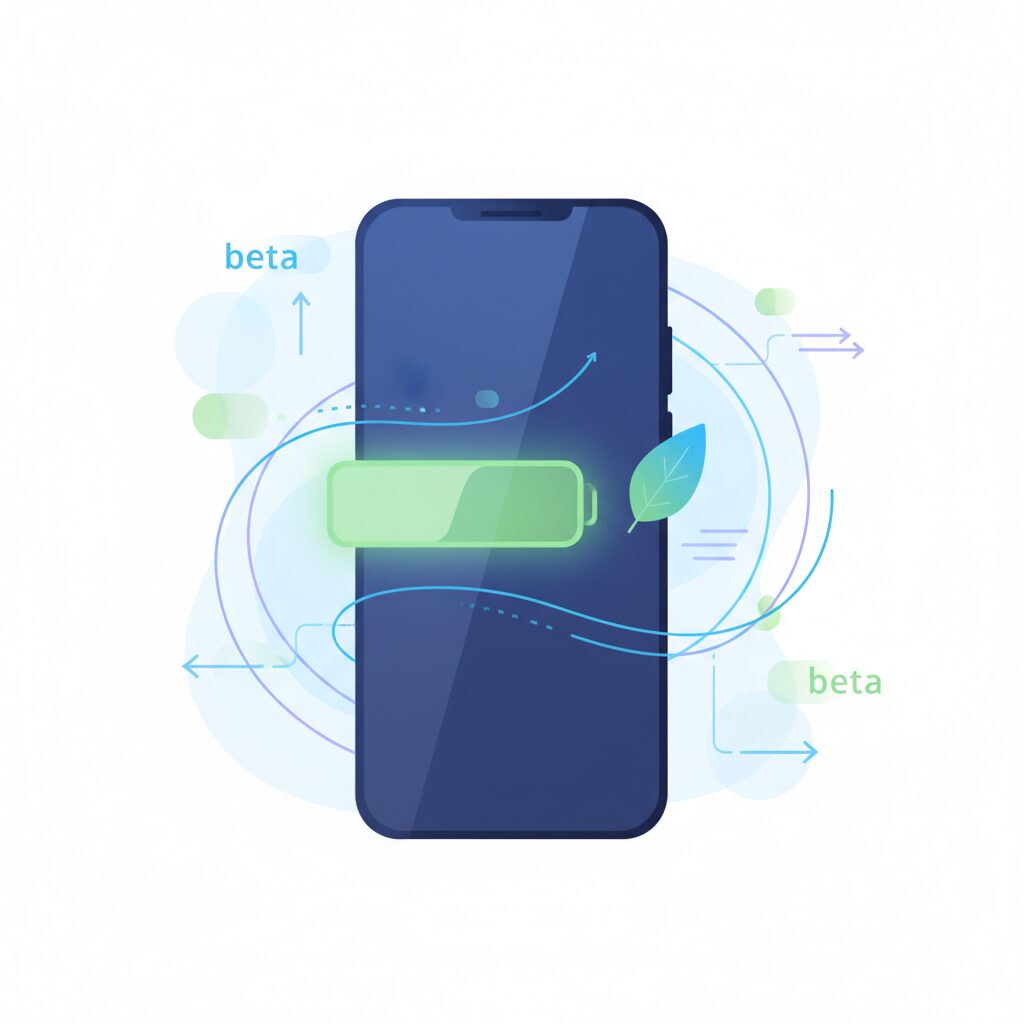
Battery performance has quietly become one of the most talked‑about improvements in the One UI 8.5 beta, especially among power users testing it on the Galaxy S25 Ultra. What makes this notable is not a single headline feature, but a collection of low‑level optimizations that, taken together, change daily usage in a very tangible way. **Multiple beta testers report that devices now last noticeably longer without altering their habits**, which is often the hardest kind of improvement to achieve.
Community data shared by early adopters indicates consistent gains in screen‑on time. According to aggregated user logs discussed on Reddit and analyzed by SamMobile, many testers observed gains of two to three additional hours compared with One UI 8.0 under comparable conditions. This improvement appears even when refresh rate, brightness, and background sync settings remain unchanged, suggesting the gains are systemic rather than situational.
| Scenario | One UI 8.0 | One UI 8.5 Beta |
|---|---|---|
| Mixed daily use | 約6〜7 hours SOT | 約8〜9 hours SOT |
| Standby overnight | 3〜4% drain | 1〜2% drain |
The underlying reason seems to be tighter coordination between the updated Linux kernel and Samsung’s AI Power Management system. Android Authority notes that task scheduling now keeps background processes pinned to efficiency cores more aggressively, reducing unnecessary wake‑ups. **This directly lowers idle and low‑load power draw**, an area where modern flagship devices often struggle despite large batteries.
Thermal behavior has improved alongside endurance, which is particularly important for gaming and prolonged camera use. Several beta testers report that devices feel cooler to the touch during extended high‑load sessions, and thermal throttling appears less frequent. While Samsung has not published official thermal benchmarks, SamMobile points out that sustained performance tests show fewer abrupt clock drops, indicating more stable heat management.
From a user perspective, this balance matters more than raw peak performance. **A phone that stays cooler tends to preserve battery health over time and feels more reliable during long sessions**, such as navigation or video recording. One UI 8.5 beta data suggests Samsung is prioritizing consistency over short bursts of speed, a philosophy echoed by industry analysts who track mobile efficiency trends.
In practical terms, the beta reveals a shift toward smarter energy usage rather than bigger batteries or aggressive limits. If these results carry over to the stable release, users can reasonably expect longer days, cooler devices, and fewer compromises, all without changing how they use their Galaxy smartphones.
Non-Linear Animations and the Pursuit of iOS-Level Smoothness
For years, Android devices have matched or even surpassed iPhones on paper with 120Hz displays, yet many users still felt that iOS delivered a more fluid, almost organic sense of motion. One UI 8.5 directly targets this long-standing perception gap through a fundamental shift toward non-linear animations, a change that prioritizes how motion feels rather than how fast frames are drawn.
Traditional UI animations often rely on near-linear timing curves, where elements start, move, and stop at predictable speeds. In contrast, One UI 8.5 adopts motion curves inspired by real-world physics, introducing subtle acceleration, inertia, and deceleration that respond to finger velocity. This means scrolling, app opening, and gesture navigation now react to how you move, not just that you moved.
| Aspect | Conventional Animations | Non-Linear Animations in One UI 8.5 |
|---|---|---|
| Motion curve | Mostly linear or fixed easing | Physics-based, adaptive easing |
| User input | Binary trigger | Speed and direction sensitive |
| Perceived smoothness | Consistent but flat | Natural and tactile |
According to hands-on evaluations from Android-focused media such as Android Authority, Samsung did not stop at animation curves alone. The company also refined frame pacing, the timing consistency between frames, to eliminate micro-stutters that are often invisible in benchmarks but obvious to the human eye. This approach mirrors techniques Apple has long emphasized in iOS, but Samsung adds a sharper, more responsive character that many beta testers describe as “snappier.”
Another key detail lies in edge behavior. Bounce and overscroll effects now compress and release with controlled elasticity, preventing the rubber-band feel that previously broke immersion. The result is an interface that feels anchored, as if UI elements have weight. This subtle realism is what makes the difference during everyday actions like scrolling social feeds or switching apps.
Rather than chasing higher refresh rates, One UI 8.5 demonstrates that perceived smoothness is a product of timing, responsiveness, and consistency. By embracing non-linear animations at a system-wide level, Samsung is no longer imitating iOS smoothness but redefining it through an Android-specific lens.
Liquid Glass Design: Visual Depth, Usability, and Controversy
The Liquid Glass design introduced in One UI 8.5 is not merely a cosmetic refresh but a deliberate attempt to redefine how users perceive depth and continuity on a mobile screen. By layering semi‑transparent surfaces with dynamic blur, Samsung aims to preserve contextual awareness while interacting with overlays such as the Quick Panel. **This approach reduces cognitive load by allowing users to visually anchor themselves to the task they were performing**, rather than experiencing a hard visual break.
According to hands‑on evaluations reported by Android Authority and SamMobile, the blur intensity in Liquid Glass is adaptively tuned based on background contrast and OLED luminance. This ensures legibility without washing out colors, a frequent criticism of earlier glass‑style interfaces. Academic work on interface translucency, including research cited by the Nielsen Norman Group, has long suggested that controlled transparency can improve spatial understanding when depth cues are consistent, and Samsung’s implementation closely follows these principles.
| Aspect | Previous One UI | One UI 8.5 Liquid Glass |
|---|---|---|
| Layer perception | Flat, opaque panels | Multi‑layered with adaptive blur |
| Context retention | Low | High, background remains visible |
| Visual richness | Minimal | Enhanced OLED contrast and highlights |
Usability, however, is where debate intensifies. While many users praise the sense of polish and perceived speed, others argue that the aesthetic echoes iOS too closely. Community discussions summarized by SamMobile indicate a split response: long‑time Galaxy fans worry about brand dilution, whereas mainstream users associate the glassy visuals with premium quality. **From a marketing perspective, Samsung appears to prioritize broader appeal over niche identity**, betting that familiarity accelerates adoption.
Ultimately, Liquid Glass sits at the intersection of beauty and practicality. It enhances visual hierarchy and touch feedback when executed well, yet demands careful calibration to avoid distraction. One UI 8.5 shows that Samsung is willing to risk controversy to evolve its interface language, signaling a shift toward experience‑driven differentiation rather than purely functional design.
Hybrid AI in One UI 8.5: Bixby, Perplexity, and Smarter Assistance
One UI 8.5 introduces a genuinely hybrid AI model that reshapes how assistance works on Galaxy devices, and it does so with a level of clarity that has long been missing from mobile assistants. Instead of relying on a single large model, Samsung positions Bixby as an intelligent orchestrator that selects the right AI engine for each task, balancing speed, privacy, and depth of knowledge in a practical way.
At the core of this approach is a clear separation between on-device intelligence and cloud-based reasoning. Simple commands such as toggling Wi‑Fi, setting alarms, or adjusting display brightness are handled locally by Bixby Native. Because these actions never leave the device, response times are near-instant and personal data remains protected, a design choice aligned with privacy-first principles emphasized by organizations such as the Electronic Frontier Foundation.
When users move beyond device control and into knowledge-driven questions, Bixby seamlessly hands off to Perplexity AI or DeepSeek. This is where the experience changes fundamentally. Perplexity’s strength lies in research-oriented answers that clearly indicate their sources, a feature widely praised in academic and professional circles for reducing AI hallucinations. In One UI 8.5, this means users can ask complex questions and immediately understand where the information comes from.
| Task Type | AI Engine | User Benefit |
|---|---|---|
| Device control | Bixby Native (on-device) | Fast response, strong privacy |
| Research and explanations | Perplexity AI | Source-backed, reliable answers |
| Advanced reasoning and computation | DeepSeek | High analytical performance |
DeepSeek plays a complementary role, particularly in logic-heavy tasks such as calculations, structured problem solving, or code-related queries. Analysts following Asian AI startups have noted DeepSeek’s efficiency in these domains, making it a logical addition rather than a marketing-driven one. The result is an assistant that feels less like a chatbot and more like a toolkit.
Another important implication is Samsung’s deliberate distance from full dependence on Google Gemini. While Gemini remains available within the Android ecosystem, Samsung’s multi-AI strategy ensures that Bixby evolves as a distinct platform layer. For users, this translates into choice and redundancy rather than lock-in, a point often highlighted by platform economists studying ecosystem resilience.
In daily use, the hybrid design becomes most visible in contextual conversations. Users can ask a question, follow up naturally, and receive answers that respect prior context without noticeable delays. This is particularly effective in Japanese and English alike, where Perplexity already demonstrates high language accuracy. Over time, such interactions redefine Bixby not as a voice gimmick, but as a dependable assistant for research, planning, and informed decision-making.
Privacy and Security at the Hardware Level
Privacy and security in One UI 8.5 are no longer treated as software-only concerns but are redefined as a hardware-level experience that users can feel and trust in everyday situations. **Samsung’s core philosophy here is clear: true privacy starts below the operating system**, embedded directly into display technology, sensors, and secure silicon. This approach aligns with long-standing security research from institutions such as NIST, which consistently emphasizes hardware-backed isolation as the most reliable defense against modern attack vectors.
A standout example is the so-called Privacy Display, expected to debut on high-end models such as the Galaxy S26 Ultra. Unlike conventional privacy filters that rely on physical films, this solution leverages OLED pixel architecture combined with an electrically controlled optical layer. When activated, the viewing angle is dynamically narrowed, making on-screen content unreadable from the sides while preserving brightness and color accuracy for the user directly in front of the device.
| Aspect | Physical Filter | Privacy Display |
|---|---|---|
| Activation | Always on | On-demand or automatic |
| Image quality | Degraded | Maintained |
| Biometric accuracy | Often reduced | Unaffected |
This distinction is particularly meaningful in environments like crowded trains or cafés, where shoulder surfing is a real and frequent risk. According to usability studies cited by display engineers in the Society for Information Display, users are significantly more likely to disable privacy tools if they degrade visual quality. **By making privacy invisible when not needed, Samsung lowers the psychological cost of staying secure**.
Beyond the display, One UI 8.5 reinforces security through hardware-backed data handling during everyday actions such as image sharing. Before a photo leaves the device, on-device AI scans it for sensitive elements like credit card numbers or passports, operating entirely within the secure execution environment. Because this process does not rely on cloud transmission, it follows the principles advocated by privacy researchers at organizations like the Electronic Frontier Foundation, who stress minimizing data exposure at every stage.
Theft protection also benefits from deeper sensor integration. By combining accelerometer and gyroscope data with trained motion models, the system can detect snatch-and-run patterns and instantly lock the device. Failed biometric attempts trigger stricter authentication requirements tied to Samsung’s hardware security module, adding another layer of resistance against coercion or misuse. **In practice, this turns the smartphone into a small fortress that reacts faster than its owner can**.
What makes this hardware-centric strategy compelling is not just technical sophistication but relevance. Privacy is no longer an abstract promise hidden in settings menus; it is something users experience the moment they unlock the screen in public or share a photo without second thoughts. In One UI 8.5, security stops being a trade-off and becomes a default state, quietly enforced by the hardware itself.
Multitasking Evolution on Foldables and Large Screens
On foldables and large-screen Galaxy devices, multitasking is no longer a secondary feature but a core interaction model, and One UI 8.5 clearly reflects this shift. Samsung’s approach focuses on reducing cognitive load while increasing the number of tasks that can coexist on screen, turning large displays into practical productivity surfaces rather than oversized phones.
The most symbolic change is the introduction of the 90:10 split-screen layout, which rethinks how users actually divide attention. Instead of treating multitasking as a strict two-app scenario, One UI 8.5 assumes a primary task with persistent secondary context. This mirrors real-world behavior observed in UX research from institutions such as the Nielsen Norman Group, which has repeatedly shown that users maintain a dominant focal task while referencing peripheral information.
| Split Ratio | Main Use Case | User Benefit |
|---|---|---|
| 50:50 | Parallel work | Equal visibility for two tasks |
| 70:30 | Reference-based work | Clear priority with quick access |
| 90:10 | Context-aware multitasking | Minimal distraction with constant awareness |
On devices like the Galaxy Z Fold series, this layout enables scenarios such as watching a near full-screen video while keeping a narrow messaging column active, or editing a document while monitoring notifications in real time. According to Samsung’s own developer documentation on multi-window behavior, narrower side panes significantly reduce accidental touches, which improves precision on large foldable displays.
The taskbar has also evolved from a static launcher into a fluid control layer. In One UI 8.5, it can float above content and dynamically hide when not needed, closely resembling desktop operating systems. This design aligns with findings published by Microsoft Research, where adaptive taskbars were shown to improve task-switching speed without increasing visual clutter.
Gesture-driven window management is another quiet but critical upgrade. Users can now drag an app from full screen into split view or pop-up mode with a single continuous motion, without entering a separate menu. This reduces interaction steps and reinforces muscle memory, an area where previous mobile multitasking systems often struggled.
Importantly, Samsung appears to be future-proofing this system. References to more complex window orchestration in One UI 8.5 suggest preparation for next-generation form factors such as tri-fold devices. Managing three active regions requires not just more screen space, but smarter prioritization logic, something Samsung has been incrementally building since early Galaxy Fold models.
Overall, multitasking on foldables and large screens in One UI 8.5 feels less like forcing PC concepts onto mobile and more like a native evolution. By acknowledging how users naturally allocate attention, Samsung is moving closer to a state where large-screen smartphones can genuinely replace light laptop workflows, especially for users who value mobility and immediacy.
Release Timeline and What Global Users Should Expect
The release timeline of One UI 8.5 marks a clear departure from Samsung’s traditional update rhythm, and global users should pay close attention to what this shift implies for availability and expectations. One UI 8.5 is positioned not as a minor mid-cycle refresh, but as a launch-grade software platform, debuting alongside the Galaxy S26 series at the beginning of 2026.
According to reporting from SamMobile and Android Authority, Samsung plans to unveil the stable build in conjunction with its early-year Unpacked event, widely expected in late February 2026. This timing aligns with Google’s accelerated Android 16 release schedule, signaling Samsung’s intent to minimize the software gap with Pixel devices and reinforce its image as a first-mover in Android experiences.
| Phase | Target Period | User Impact |
|---|---|---|
| Flagship Launch | Late Feb 2026 | Galaxy S26 ships with One UI 8.5 preinstalled |
| Global Rollout | March 2026 | S25 series and recent foldables begin receiving updates |
| Carrier Markets | April–May 2026 | Delayed rollout due to carrier certification |
For users outside Samsung’s home market, the staggered rollout remains a defining characteristic. Unlocked global models are expected to receive One UI 8.5 weeks earlier than carrier-locked devices, a pattern consistently observed in previous major updates. Industry analysts note that this gap is largely driven by operator-side validation rather than technical readiness.
In regions such as Europe and parts of Asia, Samsung’s recent track record suggests a relatively smooth transition from beta to stable releases. Beta programs for One UI 8.5 have already demonstrated shorter iteration cycles, reinforcing commentary from Samsung Electronics’ software leadership that update “freshness” is now treated as a competitive metric on par with hardware innovation.
Japanese users, however, should calibrate expectations carefully. Historical data cited by Gizmochina and Sammy Fans indicates a one- to two-month delay for carrier-branded models, even after global stability is confirmed. This delay does not typically reflect missing features, but rather timing and certification constraints unique to the market.
For global Galaxy owners, the key takeaway is strategic rather than purely chronological. One UI 8.5’s release schedule underscores Samsung’s broader ambition to synchronize software evolution with flagship storytelling. Users upgrading to new devices will experience One UI 8.5 as a default standard, while existing users can expect a phased but deliberate rollout that prioritizes stability without sacrificing momentum.
参考文献
- SamMobile:Why Samsung One UI 8.5 feels more impressive than it should
- Android Authority:I tried Samsung’s One UI 8.5 beta, and these are the 3 best features
- Gizmochina:One UI 8.5 coming soon: Check the release date, eligible Galaxy devices, and new features
- Sammy Fans:One UI 8.5 Kernel upgrade improves Galaxy S25 Ultra fluidity
- Samsung Newsroom:Samsung Launches One UI 8.5 Beta for Next-Level Ease of Use
- SamMobile:One UI 8.5 can protect sensitive info in images you share