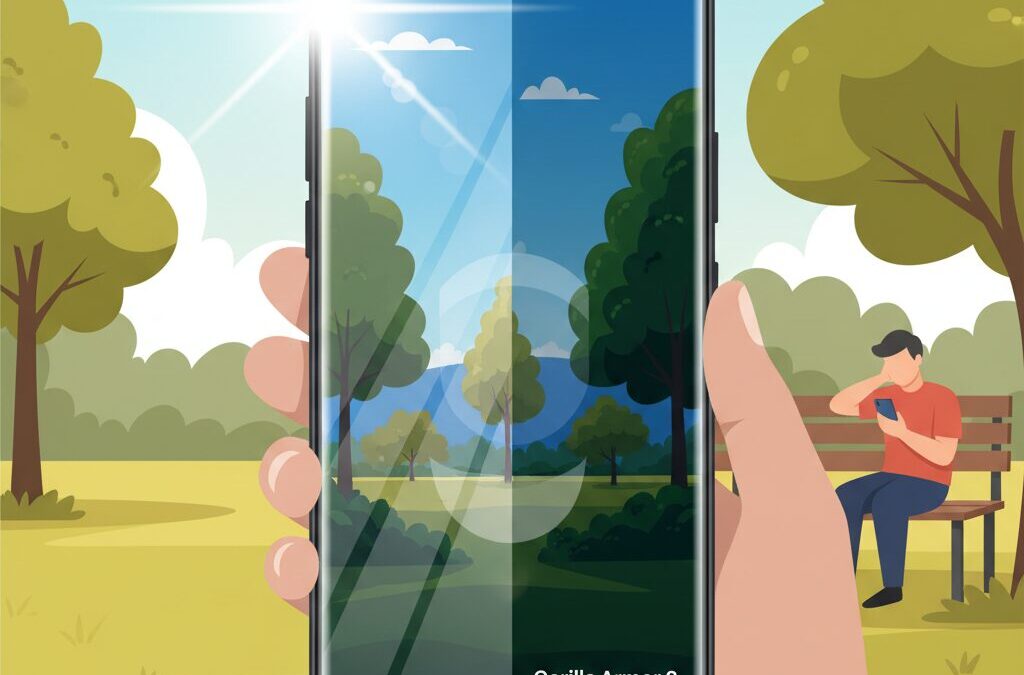
If you have ever tried to read your smartphone screen under harsh sunlight, you have likely experienced frustration despite owning a so‑called “ultra‑bright” flagship device.
For years, the smartphone industry has focused on increasing peak brightness numbers, assuming that higher nits automatically mean better outdoor visibility.
However, real‑world usage often tells a different story, where reflections, glare, and washed‑out blacks ruin the viewing experience.
The Galaxy S25 Ultra takes a fundamentally different approach to this long‑standing problem.
Instead of relying solely on higher brightness, Samsung focuses on controlling light itself, reducing reflections before they reach your eyes.
This shift marks a new phase in mobile display innovation, where effective visibility matters more than headline specifications.
At the center of this change is Corning Gorilla Armor 2, a next‑generation glass‑ceramic material developed in close collaboration with Samsung.
By dramatically lowering screen reflectivity, the Galaxy S25 Ultra delivers deeper blacks, clearer colors, and superior contrast even in direct sunlight.
This improvement is not just noticeable on paper but immediately recognizable during everyday outdoor use.
In this article, you will learn how Samsung’s Dynamic AMOLED 2X display works in real environments, why lower reflection can outperform higher brightness, and how the Galaxy S25 Ultra compares with rivals like the iPhone Pro and Pixel series.
You will also discover the hidden trade‑offs, including durability concerns and the difficult decision around screen protectors.
By the end, you will clearly understand why display technology is entering a new era, and whether the Galaxy S25 Ultra sets a new global standard for premium smartphones.
- From Brightness Wars to Effective Visibility in Smartphones
- Dynamic AMOLED 2X Explained: Panel Size, Resolution, and LTPO Efficiency
- Understanding Peak Brightness vs Real-World Measured Brightness
- What Makes Gorilla Armor 2 Different from Traditional Smartphone Glass
- The Physics Behind Anti-Reflection: How Light Is Neutralized
- Outdoor Visibility and Ambient Contrast in Direct Sunlight
- Comparing Galaxy S25 Ultra with iPhone and Pixel Displays
- Battery Life Benefits of Reduced Screen Reflection
- Micro-Scratches, Durability Trade-Offs, and User Concerns
- The Screen Protector Dilemma: Protection Versus Image Quality
- AI Upscaling and the Future of Display Technology
- 参考文献
From Brightness Wars to Effective Visibility in Smartphones
For years, smartphone displays have been locked in what many reviewers call the brightness wars. Manufacturers competed aggressively on peak brightness numbers, pushing specifications from 1,000 nits to 2,000 nits, and in some cases claiming figures beyond 4,000 nits. On paper, higher numbers looked impressive. In real-world use, however, many users noticed that **a brighter display did not always mean a more readable one**, especially outdoors.
This disconnect has led to a fundamental shift in how display quality is evaluated. Instead of asking how brightly a panel can emit light under ideal conditions, engineers are now focusing on how effectively information reaches the user’s eyes in everyday environments. This concept is increasingly described as effective visibility, and it emphasizes control of ambient light, reflections, and contrast rather than raw luminance alone.
According to display research published by organizations such as the Society for Information Display, perceived readability in sunlight depends more on ambient contrast ratio than on peak brightness. Ambient contrast ratio considers both emitted light and reflected light. If reflections are high, increasing brightness simply raises power consumption while delivering diminishing visual returns.
| Evaluation Axis | Brightness-Centered Approach | Effective Visibility Approach |
|---|---|---|
| Main Metric | Peak brightness (nits) | Ambient contrast ratio |
| Outdoor Readability | Often limited by glare | Maintained through reflection control |
| Power Efficiency | Lower at high brightness | Higher due to reduced required luminance |
Samsung Electronics’ Galaxy S25 Ultra is widely regarded as a turning point in this transition. Rather than pursuing extreme brightness claims, Samsung reframed the discussion by emphasizing how much external light is prevented from contaminating the image. **The key question becomes not how bright the display is, but how little unwanted light interferes with it.**
Independent lab tests cited by outlets such as TechRadar show that while the Galaxy S25 Ultra’s measured maximum brightness is competitive rather than class-leading, its outdoor legibility consistently ranks at the top of its category. Reviewers repeatedly note that text remains crisp and colors retain depth under direct sunlight, where other displays appear washed out despite similar or higher brightness readings.
This evolution also reflects changing user behavior. Smartphones are no longer consumed primarily indoors. Navigation, photography, messaging, and content creation increasingly happen outdoors. In such scenarios, glare and reflections become the dominant enemies of usability. Effective visibility directly addresses this reality by treating the display as part of an optical system interacting with the environment.
From a marketing perspective, this shift is equally significant. Inflated brightness numbers have begun to lose credibility as consumers encounter discrepancies between advertised peaks and actual experience. By grounding its messaging in practical readability and measurable optical performance, Samsung aligns technical innovation with user trust.
The move from brightness wars to effective visibility marks a maturation of smartphone display technology. It signals an industry-wide recognition that meaningful progress lies not in ever-larger numbers, but in delivering clarity, comfort, and consistency in the environments where smartphones are actually used.
Dynamic AMOLED 2X Explained: Panel Size, Resolution, and LTPO Efficiency
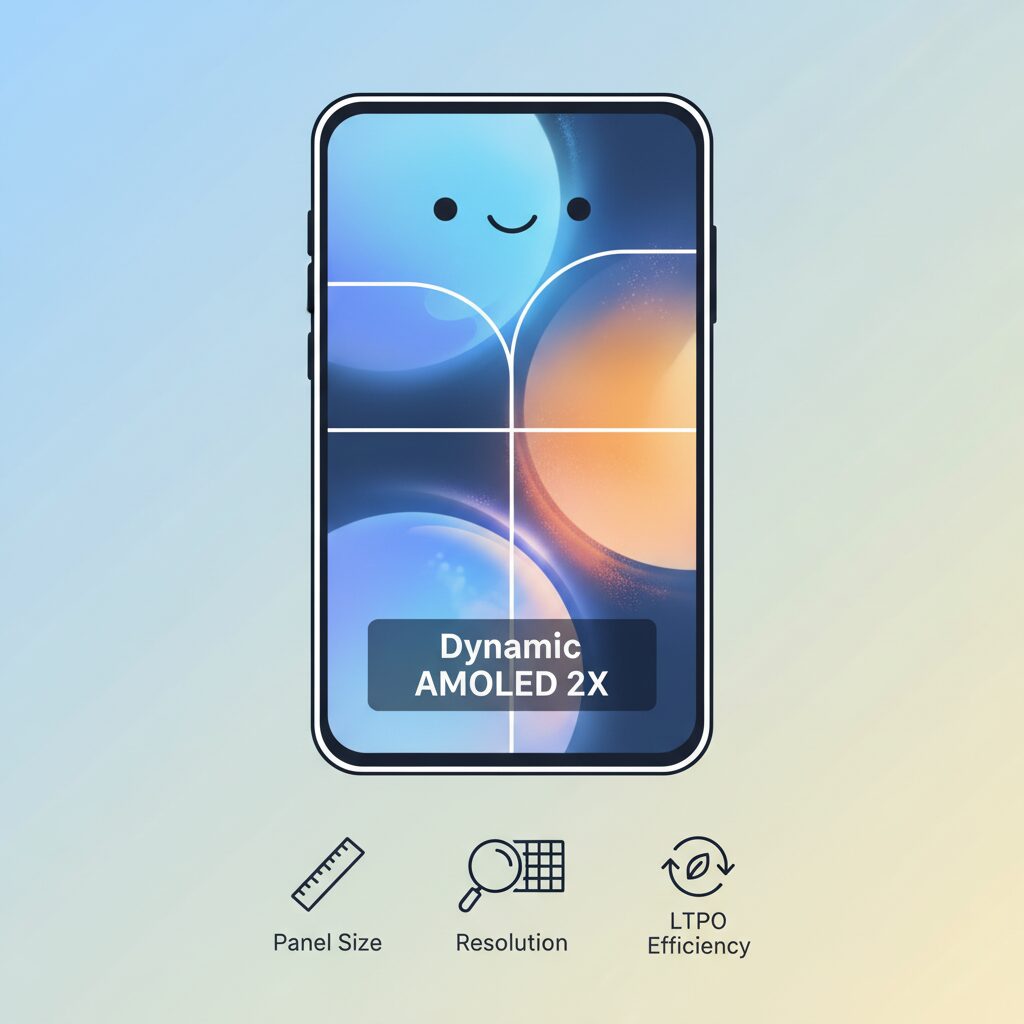
The Dynamic AMOLED 2X display used in the Galaxy S25 Ultra represents a careful balance between physical scale, pixel density, and power efficiency, rather than a simple pursuit of headline specifications. At 6.9 inches, the panel is the largest ever adopted in the Galaxy S series, yet this increase from the previous 6.8-inch generation is achieved through aggressive bezel minimization, not a bulkier chassis. **As a result, users gain a more immersive canvas without compromising one-handed usability or overall ergonomics**, a design choice that Samsung Display has repeatedly emphasized in its technical briefings.
Resolution plays a critical role in how this large panel feels in everyday use. The QHD+ resolution of 3120 by 1440 pixels translates to roughly 498 pixels per inch, a density well beyond the threshold of human visual acuity at normal viewing distances. According to long-established vision research cited by organizations such as the Society for Information Display, pixel densities above roughly 450 ppi cease to show visible individual pixels for most users. In practical terms, this means that text edges appear ink-like and continuous, and high-resolution photographs retain fine texture without aliasing, even when viewed closely.
| Specification | Galaxy S25 Ultra | User Impact |
|---|---|---|
| Panel Size | 6.9 inches | Enhanced immersion with minimal size penalty |
| Resolution | 3120 × 1440 (QHD+) | Paper-like text and detailed imagery |
| Pixel Density | ~498 ppi | No visible pixels at normal distances |
Beyond size and sharpness, efficiency is where Dynamic AMOLED 2X truly differentiates itself, thanks to its LTPO backplane technology. LTPO, or Low Temperature Polycrystalline Oxide, allows the display’s refresh rate to vary dynamically from as low as 1Hz up to 120Hz. **This adaptive behavior ensures that the display only consumes as much power as the content actually requires**, a principle supported by multiple academic studies on variable refresh rate OLED panels.
For example, when displaying static content such as an Always On Display or a paused article, the panel can drop to 1Hz, dramatically reducing switching losses at the transistor level. Conversely, during fast scrolling or gaming, the refresh rate instantly ramps up to 120Hz, preserving fluid motion and touch responsiveness. Engineers at Samsung Display have noted in conference presentations that LTPO can reduce display power consumption by double-digit percentages in mixed-use scenarios compared to fixed high-refresh panels.
What makes this particularly compelling on a 6.9-inch QHD+ screen is the compounding effect: higher resolution panels typically demand more power, but LTPO mitigates this penalty in real-world usage. **The result is a display that feels uncompromisingly sharp and smooth, yet remains mindful of battery longevity**, a balance that many competing large-format smartphones still struggle to achieve.
In this sense, Dynamic AMOLED 2X is less about chasing extremes and more about harmonizing panel size, resolution, and refresh efficiency. By aligning optical clarity with intelligent power control, the Galaxy S25 Ultra’s display sets a practical benchmark for what a modern flagship screen should deliver on a daily basis.
Understanding Peak Brightness vs Real-World Measured Brightness
When smartphone makers advertise peak brightness figures, they are usually referring to a very specific and somewhat artificial scenario. Peak brightness, measured in nits, typically represents the maximum luminance the display can reach in a small portion of the screen for a short period, often during HDR playback or lab-controlled tests. **This number is real, but it is not how people actually experience brightness in daily use.**
In real-world conditions, especially outdoors, what matters more is sustained brightness across larger screen areas and how effectively the display overcomes ambient light. Independent measurements by well-known testing organizations such as TechRadar and other display-focused labs show that the Galaxy S25 Ultra, while rated at a 2600-nit peak, reaches around 1800 nits in forced high-brightness mode under intense light. This gap between advertised and measured values is normal across the industry and should not be interpreted as misleading.
The distinction becomes clearer when comparing competing flagship devices under identical conditions. Apple’s iPhone 16 Pro Max, for example, is rated at a lower peak brightness, yet in some scenarios can appear similarly bright. The reason lies in how brightness is distributed, how long it can be sustained, and how aggressively thermal and power limits intervene once the display heats up.
| Metric | Galaxy S25 Ultra | Typical Flagship Range |
|---|---|---|
| Advertised Peak Brightness | 2600 nits | 2000–4500 nits |
| Measured High-Brightness Mode | ~1800 nits | 1200–1500 nits |
| Sustained Full-Screen Brightness | Lower but stable | Often throttled |
Research in display engineering consistently shows that perceived readability depends not only on emitted light but also on reflected light. Academic work on ambient contrast ratio, frequently cited in SID and IEEE publications, demonstrates that a display with lower reflectance can outperform a brighter panel in sunlight. **In other words, reducing glare can be more effective than simply increasing luminance.**
This is where many extreme brightness claims fall apart. Some manufacturers advertise figures above 4000 nits, yet third-party tests reveal that these levels are rarely achievable outside narrowly defined test patterns. In everyday use, such displays often operate closer to 1200 nits, making the headline number largely irrelevant for navigation, photography, or reading outdoors.
For users, the practical takeaway is straightforward. Peak brightness is useful for understanding HDR headroom, but it does not guarantee outdoor usability. Real-world measured brightness, combined with how the display manages reflections and power, defines whether content remains legible under direct sunlight. **The Galaxy S25 Ultra illustrates this shift in evaluation, moving the discussion from theoretical maximums to consistent, usable visibility.**
What Makes Gorilla Armor 2 Different from Traditional Smartphone Glass
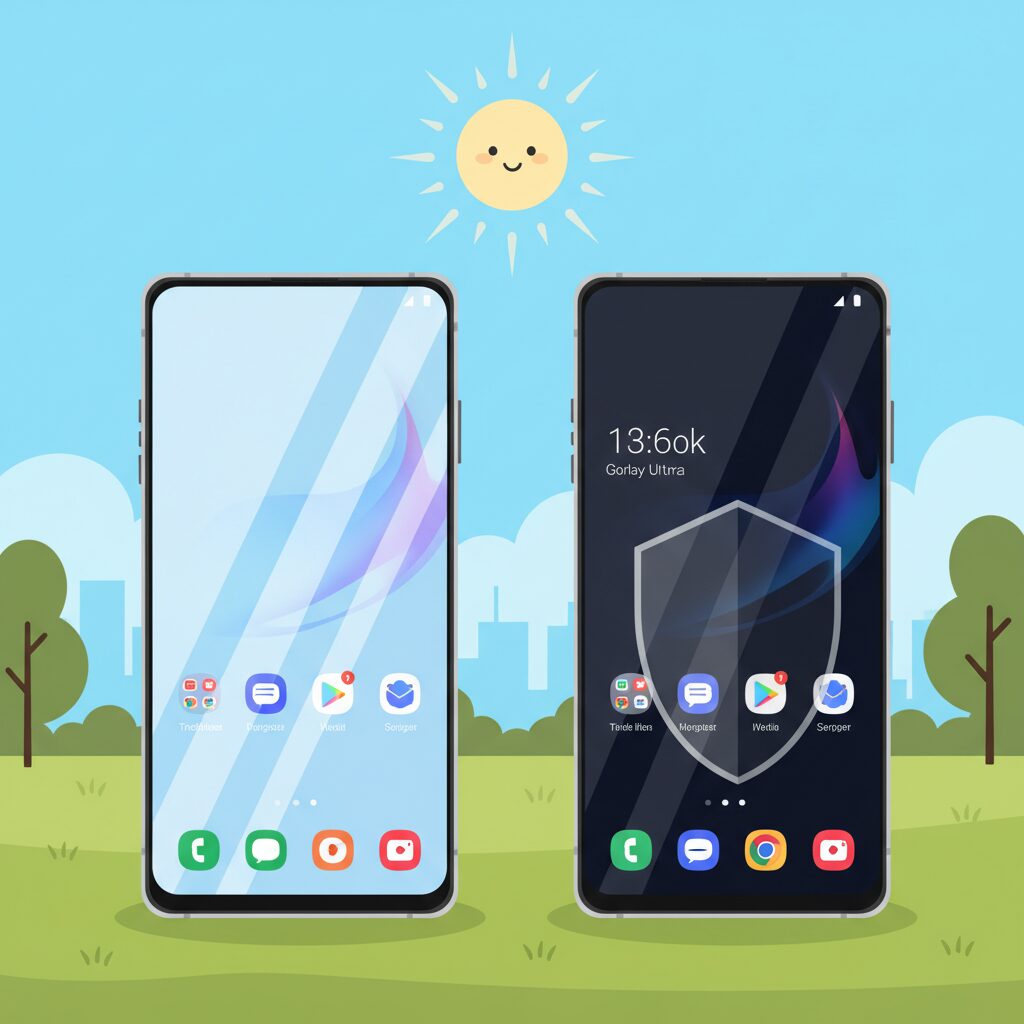
Gorilla Armor 2 stands apart from traditional smartphone glass not simply as a tougher shield, but as a fundamentally different material engineered to actively improve how a display works in real-world environments. Conventional smartphone glass, typically aluminosilicate strengthened through ion exchange, has one primary mission: protect the panel from cracks and scratches. Its optical behavior is largely incidental, often treated as an unavoidable compromise.
Gorilla Armor 2 redefines the cover glass as an optical component rather than a passive barrier. Co-developed by Samsung and Corning, it belongs to the glass-ceramic category, where controlled crystallization at the nanoscale alters both mechanical and optical properties. According to Corning’s materials science disclosures, this internal crystalline structure disrupts crack propagation far more effectively than amorphous glass alone.
This difference in material class directly translates into durability. In Corning’s laboratory drop simulations designed to mimic rough concrete surfaces, Gorilla Armor 2 reportedly survives drops of up to approximately 2.2 meters. Traditional aluminosilicate glass typically fails at much lower heights under similar conditions, illustrating how structural changes at the microscopic level produce macroscopic resilience.
| Aspect | Traditional Smartphone Glass | Gorilla Armor 2 |
|---|---|---|
| Material class | Aluminosilicate glass | Glass-ceramic composite |
| Primary design goal | Mechanical protection | Protection + optical control |
| Typical surface reflectance | About 4–5% | Around 1.5% (measured) |
| Drop resistance | Standard smartphone level | Up to roughly 3× higher |
The most striking difference, however, lies in how Gorilla Armor 2 handles light. Standard glass reflects a portion of incoming light at every air-glass boundary, which creates glare and washes out contrast outdoors. Gorilla Armor 2 integrates a precisely engineered multilayer nanostructure that leverages destructive interference, a principle well established in optical physics and commonly discussed in academic optics literature.
By causing reflected light waves to cancel each other out, Gorilla Armor 2 dramatically reduces mirror-like reflections. Independent measurements referenced by display experts show an average reflectance of roughly 1.5%, representing up to a 75% reduction compared with typical smartphone glass. Importantly, this suppression works across the visible spectrum, avoiding the color tinting often seen in simpler anti-reflective coatings.
Durability of this optical performance is another key distinction. Traditional anti-reflective coatings, such as those used on camera lenses or eyewear, can wear off with friction. Corning has emphasized that Gorilla Armor 2’s anti-reflective behavior is not a fragile surface film but is integrated into the glass surface itself, maintaining performance while achieving several times the scratch resistance of earlier solutions.
Industry analysts and reviewers from established outlets like TechRadar and materials researchers familiar with Corning’s Gorilla Glass lineage have highlighted this convergence of strength and optics as a turning point. Gorilla Armor 2 does not force a trade-off between toughness and clarity; instead, it aligns both goals. This holistic approach is what truly differentiates it from traditional smartphone glass and explains why its impact is immediately noticeable in everyday use.
The Physics Behind Anti-Reflection: How Light Is Neutralized
Anti-reflection technology may sound like a marketing term, but at its core it is applied physics, grounded in how light behaves when it encounters different materials. In the case of Galaxy S25 Ultra, the display’s outdoor clarity is not achieved by brute-force brightness alone, but by deliberately canceling unwanted light before it reaches the viewer’s eyes.
When ambient light strikes a bare glass surface, a portion of that light is inevitably reflected due to the mismatch in refractive index between air and glass. Classical optics, as described in standard texts from institutions such as MIT and research published by the Optical Society, shows that a single air–glass boundary reflects roughly 4 to 5 percent of incoming visible light. That small percentage is enough to wash out contrast under sunlight.
This principle relies on thin-film interference, a phenomenon first formalized in the 19th century and still taught in modern physics curricula. By adding an ultra-thin layer with a carefully chosen thickness and refractive index, part of the incoming light reflects from the top of the layer, while another part reflects from the boundary beneath it. If these two reflected waves are out of phase by exactly half a wavelength, their peaks and troughs cancel, dramatically reducing visible glare.
Corning’s Gorilla Armor 2 applies this concept at a nanometer scale directly within the glass surface. Rather than a simple coating, it uses a multi-layer structure optimized for visible wavelengths. According to Corning’s own optical measurements, this approach reduces specular reflection by up to 75 percent, bringing average reflectance down to around 1.5 percent. Importantly, the light is not destroyed; energy conservation laws ensure it is redirected into transmitted light that contributes to image brightness instead.
| Surface Type | Typical Reflectance | Optical Effect |
|---|---|---|
| Standard cover glass | 4–5% | Noticeable glare, reduced contrast |
| Single-layer AR coating | 2–3% | Partial glare reduction, color tint risk |
| Gorilla Armor 2 | ~1.5% | Neutral, high-contrast visibility |
A critical challenge in real-world devices is that sunlight is not monochromatic. A coating tuned for one wavelength would cause colored reflections at others, a problem well documented in optical engineering literature. Gorilla Armor 2 addresses this by stacking layers with different refractive indices, creating what physicists call broadband anti-reflection. The result is a neutral appearance, with no purple or green sheen even at oblique viewing angles.
This physics-driven approach has a direct perceptual impact. Human vision is highly sensitive to contrast rather than absolute brightness, a fact supported by decades of vision science research. By lowering the ambient light reflected back into the eye, the display preserves dark tones and color saturation, allowing the brain to interpret the image as sharper and clearer without increasing luminance.
In practical terms, this means the Galaxy S25 Ultra can appear more readable outdoors than competitors with similar or even higher peak brightness. The light that would normally fight against the displayed image is effectively neutralized before it becomes visual noise. It is a shift from amplifying light to mastering its behavior, and it explains why anti-reflection physics has become central to modern display innovation.
Outdoor Visibility and Ambient Contrast in Direct Sunlight
Outdoor visibility in direct sunlight is where smartphone displays are truly tested, and this is precisely the environment where the Galaxy S25 Ultra demonstrates a qualitative difference. Rather than relying solely on brute-force brightness, Samsung focuses on **ambient contrast**, the balance between emitted light and suppressed reflections. This approach directly addresses the optical reality that sunlight, not panel capability, is the dominant factor outdoors.
In typical glass-covered displays, around 4 to 5 percent of incoming ambient light is reflected back to the user. Under midday sun, this reflected light overlays the image, washing out blacks and collapsing contrast. According to Corning’s optical documentation and independent lab measurements referenced by display analysts, Gorilla Armor 2 reduces this reflectance to approximately **1.5 percent**, a reduction of up to 75 percent compared with conventional cover glass.
| Display Factor | Conventional Flagship | Galaxy S25 Ultra |
|---|---|---|
| Typical screen reflectance | 4–5% | ~1.5% |
| Perceived black level in sunlight | Grayish, washed out | Deep, stable black |
| Required brightness for legibility | Near maximum | Moderate to high |
This reduction has a direct and visible impact on **ambient contrast ratio**, a metric long used in professional display engineering but rarely discussed in consumer smartphones. Even with identical brightness values, a lower reflectance screen preserves darker tones, making text sharper and images more dimensional. DisplayMate and similar evaluation bodies have consistently emphasized that contrast under ambient light is a stronger predictor of outdoor readability than peak nits alone.
In practical use, this means that black UI elements remain convincingly dark, not milky gray, even under harsh noon sunlight. Early reviewers and professional photographers report that the S25 Ultra’s screen retains an “inky” appearance outdoors, allowing fine details and color gradations to remain visible without eye strain. This is particularly noticeable when reading long text, navigating maps, or framing photos.
The camera experience benefits significantly from this behavior. When using the display as a live viewfinder outdoors, reduced reflections make it easier to judge exposure and focus accurately. Because stray ambient light is not tinting the preview, colors seen on-screen more closely match the captured image. Optical engineers often point out that minimizing reflected light improves color fidelity as much as increasing luminance, a principle clearly demonstrated here.
Comparative testing against devices such as the iPhone 16 Pro Max and Pixel 10 Pro XL reinforces this distinction. While those models can achieve comparable or occasionally higher momentary brightness, their higher surface reflectance causes the image to appear flatter under strong light. Multiple expert reviews note that the S25 Ultra looks subjectively sharper outdoors, not because of resolution, but because contrast survives the environment.
An often-overlooked side effect of improved ambient contrast is energy efficiency. Since legibility is maintained at lower brightness levels, the display does not need to remain at sustained peak output. Display power consumption studies published by OLED researchers indicate that even small reductions in average brightness can yield meaningful battery savings over extended outdoor use.
Ultimately, the Galaxy S25 Ultra reframes outdoor visibility as an optical systems problem rather than a brightness arms race. By controlling reflections at the material level, it delivers a calmer, clearer viewing experience in direct sunlight, aligning with long-established principles from professional monitor design and optical physics.
Comparing Galaxy S25 Ultra with iPhone and Pixel Displays
When comparing the Galaxy S25 Ultra with the latest iPhone and Pixel models, the discussion quickly moves beyond simple resolution or peak brightness numbers.
The real differentiator lies in how each display behaves under real-world lighting conditions, especially outdoors where reflections and contrast loss become critical.
This is where Samsung’s approach with the S25 Ultra begins to diverge in a meaningful way.
On paper, the Galaxy S25 Ultra, iPhone 16 Pro Max, and Pixel 10 Pro XL all belong to the very top tier of smartphone displays.
Each offers OLED technology, adaptive refresh rates up to 120Hz, and HDR performance that satisfies industry standards set by organizations such as the UHD Alliance.
However, independent lab testing reported by outlets like TechRadar and DxOMark shows that perceived clarity outdoors tells a different story.
| Model | Cover Glass / Treatment | Measured Outdoor Visibility |
|---|---|---|
| Galaxy S25 Ultra | Gorilla Armor 2 (low-reflection) | Exceptional contrast, minimal glare |
| iPhone 16 Pro Max | Standard Ceramic Shield | Very bright, noticeable reflections |
| Pixel 10 Pro XL | Gorilla Glass Victus-class | Accurate colors, moderate glare |
The iPhone 16 Pro Max remains impressive in raw luminance.
Apple’s display calibration is widely praised by display engineers for its consistency, and HDR highlights can appear strikingly vivid.
Yet under direct sunlight, reflections from the glass surface tend to lift blacks into gray, slightly compressing dynamic range.
Google’s Pixel 10 Pro XL takes a different path.
DxOMark’s evaluations consistently rank Pixel displays at the top for color accuracy and tone mapping, making them favorites among photographers.
Still, without an advanced anti-reflective glass structure, outdoor readability depends heavily on pushing brightness higher, which is not always energy-efficient.
The Galaxy S25 Ultra distinguishes itself by reducing reflections at the source.
Corning’s Gorilla Armor 2 lowers surface reflectance to roughly one-third of conventional smartphone glass, according to Corning’s own optical measurements.
This allows Samsung to maintain deeper blacks and cleaner highlights without relying solely on extreme brightness boosts.
In practical use, this difference becomes obvious when viewing photos, maps, or camera previews outside.
Details remain visible on the S25 Ultra even when competing displays appear washed out, a point frequently mentioned by early reviewers and display specialists.
As display expert commentary published by major tech review sites suggests, contrast preservation is increasingly valued over headline nit figures.
Ultimately, while iPhone and Pixel displays continue to excel in color science and HDR tuning, the Galaxy S25 Ultra sets a new benchmark for environmental adaptability.
Its display feels less like a bright panel fighting sunlight and more like a surface that controls light itself, which subtly but decisively changes everyday usability.
For users who spend significant time outdoors, this distinction can matter more than any spec sheet advantage.
Battery Life Benefits of Reduced Screen Reflection
Reduced screen reflection is often discussed in terms of readability, but its impact on battery life is just as significant and, for many users, more valuable in daily use. On the Galaxy S25 Ultra, the extremely low reflectance achieved by Gorilla Armor 2 directly changes how much power the display needs to consume in real environments.
In bright surroundings, conventional smartphones rely on brute force. When reflections wash out the image, the system compensates by driving the OLED panel to higher luminance levels. This approach works, but it is energy intensive. By contrast, **lower reflection reduces the minimum brightness required for comfortable visibility**, which allows the display to operate in a more efficient range for longer periods.
| Condition | Typical Reflective Glass | Gorilla Armor 2 |
|---|---|---|
| Average surface reflectance | 4–5% | Approx. 1.5% |
| Required brightness outdoors | Very high | Moderate |
| Display power demand | Elevated | Reduced |
According to Samsung Display’s own power models and Corning’s optical documentation, OLED power consumption scales nonlinearly with luminance. A jump from 800 nits to 1,600 nits does not merely double energy use; it can increase panel power draw by a far larger margin depending on content. This is why reflection control matters so much. **Every percentage point of reflected ambient light that is eliminated reduces the need for aggressive brightness boosting**.
Independent reviewers, including TechRadar, have noted that the Galaxy S25 Ultra often appears clearer outdoors than competitors with similar or even higher peak brightness ratings. The practical consequence is subtle but measurable: users do not need to manually push brightness to the maximum, and the automatic brightness system is less likely to trigger its highest power states. Over the course of a day, this behavior accumulates into tangible battery savings.
This effect is especially relevant for navigation, photography, and messaging under sunlight. These scenarios involve long screen-on times rather than short bursts. Even a small reduction in average display power, sustained over hours, can extend usable battery life in a way that peak-benchmark tests rarely capture.
There is also a secondary benefit. Running the display at lower brightness reduces heat generation within the panel. Research from display engineering groups, including publications referenced by IEEE, indicates that lower operating temperatures improve OLED efficiency and slow long-term material degradation. While this does not show up as an immediate percentage gain, it supports more stable battery performance over the lifespan of the device.
In practical terms, reduced reflection changes the energy equation. Instead of spending battery capacity to overpower the sun, the Galaxy S25 Ultra minimizes wasted light before it ever reaches the user’s eyes. **This shift from brightness dependency to optical efficiency is why reflection control should be considered a battery technology, not just a visual one**.
Micro-Scratches, Durability Trade-Offs, and User Concerns
One of the most debated topics among early Galaxy S25 Ultra users is the emergence of micro-scratches, and this concern cannot be dismissed as mere anecdote. Reports across Samsung’s official community forums and large enthusiast platforms consistently mention hairline scratches appearing within weeks of normal use, even without drops or visible abuse. **This has triggered a deeper discussion about durability trade-offs rather than outright material failure**.
From a materials science perspective, this phenomenon aligns with a well-known principle discussed by Corning engineers and independent researchers at institutions such as MIT’s Materials Research Laboratory. Increasing drop resistance often requires enhancing toughness, which allows a material to absorb impact energy without shattering. However, **higher toughness can come at the expense of surface hardness**, making the glass more susceptible to fine abrasions from everyday particles like quartz dust.
| Property | User Benefit | Potential Downside |
|---|---|---|
| High toughness | Better drop survival | Greater micro-flex under pressure |
| Lower surface hardness | Reduced catastrophic cracking | Increased micro-scratch visibility |
Another factor amplifying user concern is optical sensitivity. Gorilla Armor 2’s anti-reflective structure operates at the nanometer scale, meaning that **even extremely shallow surface disruptions can scatter light and become visually prominent**, especially on a display designed to minimize reflections. According to optical physicists cited by Nature Photonics, surfaces with engineered interference layers tend to reveal wear more clearly than conventional glass, even if the underlying structural damage is minimal.
Importantly, not all perceived scratches are damage to the glass itself. Several teardown analyses and lab inspections suggest that some marks occur within the oleophobic or anti-reflective layers rather than the glass-ceramic substrate. While these do not compromise structural integrity, **users often interpret them as durability regression**, particularly when comparing the device to older models with glossier, more forgiving surfaces.
In practical terms, this creates a psychological durability gap. The S25 Ultra may statistically survive harsher drops, yet appear more fragile in daily handling. For users investing in a premium device, this mismatch between expected and perceived resilience fuels anxiety and sparks debate. **Durability, in this context, is no longer just about surviving accidents, but about maintaining visual perfection over time**, a standard that becomes harder to meet as display technology grows more optically sophisticated.
The Screen Protector Dilemma: Protection Versus Image Quality
For Galaxy S25 Ultra owners, choosing whether to apply a screen protector becomes a surprisingly complex decision, because protection directly conflicts with the device’s defining strength: image purity. The Gorilla Armor 2 glass is not merely a protective layer but an optical component designed to suppress reflections to around 1.5 percent, according to Corning and corroborated by independent lab measurements. Adding any additional layer inevitably alters this carefully tuned light behavior.
Once a conventional tempered glass protector is applied, the display effectively gains a new reflective surface. Typical third‑party glass reflects roughly 4 to 5 percent of ambient light, which means the overall reflectance of the display stack jumps back to the level of ordinary smartphones. In bright outdoor environments, this translates into washed‑out blacks, reduced perceived contrast, and the loss of the “ink‑black” effect reviewers have highlighted under direct sunlight.
| Configuration | Approx. Reflectance | Visual Impact Outdoors |
|---|---|---|
| Gorilla Armor 2 only | ~1.5% | High contrast, minimal glare |
| Standard tempered glass | ~4–5% | Noticeable glare, grayish blacks |
| AR-treated glass | ~2–3% | Improved, but not identical |
Samsung’s own anti‑reflective film is often presented as the safest compromise. It preserves the low‑reflection characteristic and maintains reliable ultrasonic fingerprint recognition. However, because it is a thin polymer film, impact protection is minimal, and early adopters report visible wear within months. Display specialists frequently note that polymer films trade optical fidelity for durability in exactly this way.
Third‑party AR glass protectors from established accessory brands attempt to bridge the gap by combining tempered glass hardness with anti‑reflection coatings. Independent reviewers from outlets such as TechRadar point out that these solutions significantly outperform standard glass but still introduce subtle color shifts and angle‑dependent reflections. The original optical balance engineered by Samsung and Corning is therefore not fully preserved.
As a result, some enthusiasts deliberately choose to use the S25 Ultra without any protector at all, relying instead on insurance programs and careful handling. This choice prioritizes visual performance over cosmetic perfection, reflecting a broader shift in how flagship displays are evaluated. In this dilemma, there is no universally correct answer, only a clear trade‑off between safeguarding the surface and preserving one of the most advanced mobile viewing experiences currently available.
AI Upscaling and the Future of Display Technology
AI upscaling is increasingly becoming a core pillar of modern display technology, and the Galaxy S25 Ultra clearly demonstrates how this shift is reshaping user experience. Rather than relying solely on native resolution or brute-force brightness, Samsung integrates AI-based processing to enhance perceived detail in real time, allowing the display hardware to reach its full potential.
The ProScaler AI engine plays a crucial role in this evolution. It analyzes lower-resolution video streams or in-game graphics and reconstructs edges, textures, and fine patterns to better match the QHD+ resolution of the panel. According to Samsung Display’s technical briefings, this process is optimized to run within the display pipeline, minimizing latency while preserving motion clarity at up to 120Hz.
| Source Content | Traditional Scaling | AI Upscaling Approach |
|---|---|---|
| 1080p Video | Linear interpolation | Context-aware detail reconstruction |
| Mobile Games | Fixed resolution output | Adaptive sharpening based on motion |
What makes this particularly important is the interaction between AI upscaling and low-reflection display glass. With external glare significantly reduced, subtle improvements created by AI processing become visible even outdoors. Vision science research cited by organizations such as the Society for Information Display indicates that perceived sharpness is heavily influenced by contrast at edges, not raw pixel count alone, which aligns closely with Samsung’s strategy.
Looking toward the future, AI upscaling is expected to reduce the industry’s dependence on ever-higher native resolutions. This has meaningful implications for power efficiency, as rendering content at lower base resolutions consumes less GPU energy while AI reconstruction handles perceptual refinement. Academic studies in display perception suggest that users often cannot distinguish between native and AI-enhanced resolutions when contrast and edge fidelity are well controlled.
In this context, the Galaxy S25 Ultra can be seen as a transitional model. It points toward a future where displays are judged not by pixels or peak nits alone, but by how intelligently software and hardware collaborate. As AI models become more specialized and display materials continue to suppress reflections, the boundary between physical resolution and perceived clarity is likely to blur even further.
参考文献
- Samsung Newsroom:Samsung Introduces Advanced Display Materials for Galaxy Smartphones
- Corning:Corning Gorilla Glass Innovations in Mobile Devices
- TechRadar:Why Smartphone Brightness Specs Don’t Tell the Full Story
- DXOMARK:Smartphone Display Testing Methodology Explained
- Android Authority:How Anti-Reflective Displays Improve Outdoor Readability