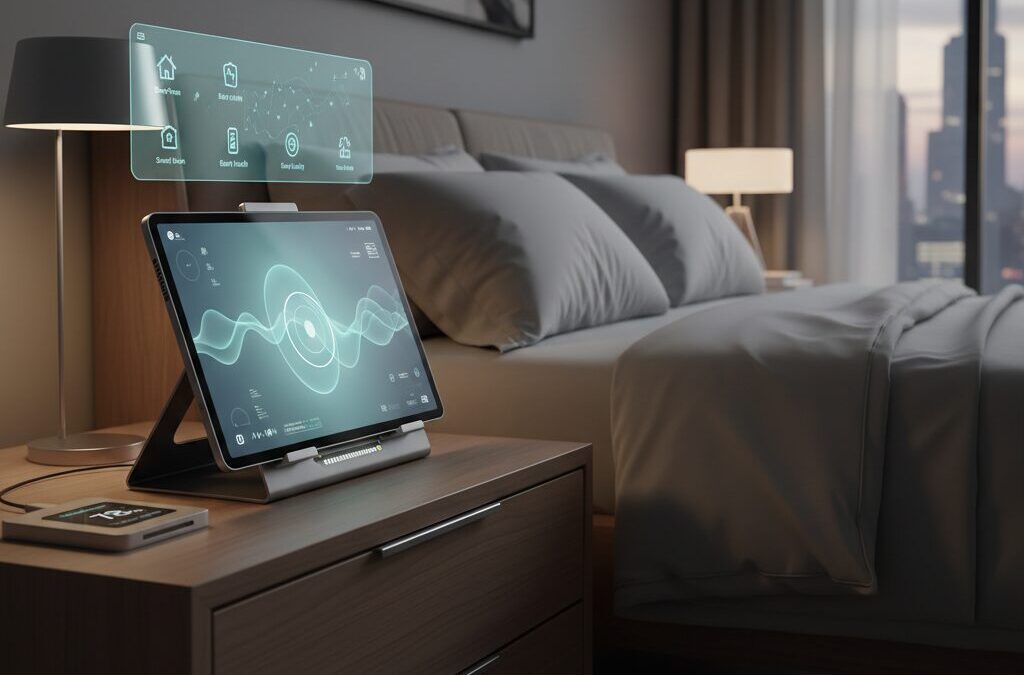
Many gadget enthusiasts already use tablets in the bedroom, but few realize how dramatically the placement and power management of a tablet can change their wake-up experience.
In 2026, tablets are no longer just screens that ring in the morning, but intelligent sleep hubs that analyze rest, interact with smart homes, and protect long-term device value.
By understanding how sleep technology has evolved and how battery science works, you can wake up more comfortably while extending the life of your favorite device.
This article explains why tablet-based alarm setups are gaining global attention, especially as sleep tech advances rapidly in Japan and influences international gadget trends.
You will learn how physical placement affects sensor accuracy, how constant charging impacts lithium-ion batteries, and why the 20–80% rule has become a global standard.
By the end, you will be able to design a bedroom setup that improves sleep quality, protects resale value, and fits perfectly into a modern smart lifestyle.
- The Global Rise of Sleep Tech and Why Tablets Matter in 2026
- From Alarm Clock to Intelligent Sleep Hub
- Why Tablet Placement Directly Affects Sleep Data Accuracy
- Bedside, Arm-Mounted, or Overhead: Ergonomic Placement Strategies
- What Stand Stability and Viewing Angles Mean for Daily Use
- The Science Behind Battery Degradation During Constant Charging
- Why the 20–80% Charging Rule Became a Technical Standard
- Advanced Battery Management Systems and Adaptive Charging
- Wireless Charging, Heat Control, and Bedroom Safety
- How Battery Health Influences Long-Term Resale Value
- Tablets as Part of Smart Homes and Sleep Automation
- Sustainability, Device Longevity, and the Future of Sleep Gadgets
- 参考文献
The Global Rise of Sleep Tech and Why Tablets Matter in 2026
The global rise of sleep tech is no longer a niche wellness trend but a structural shift in how technology intersects with health, aging, and daily productivity. By 2026, sleep is widely recognized as a measurable, optimizable pillar of human performance, and this recognition is reflected in rapid market expansion. According to industry analyses cited by Japanese research institutions, Japan’s sleep tech device market alone surpassed USD 1.04 billion in 2025 and is projected to reach USD 1.18 billion in 2026, maintaining a CAGR of over 17% toward 2035. **This pace places sleep tech among the fastest-growing categories in consumer health technology worldwide.**
What makes this growth particularly significant is not only consumer interest, but also demographic and economic pressure. Japan’s advanced aging society faces rising healthcare costs and labor productivity challenges, pushing both policymakers and consumers toward preventive, data-driven health solutions. Reports from the Ministry of Economy, Trade and Industry emphasize that domestically developed health devices are becoming a strategic priority, reducing dependence on imported medical equipment while stimulating innovation. In this environment, sleep tech has evolved from wearable trackers into integrated systems that actively shape nightly routines.
Tablets matter because they uniquely bridge hardware capability, software flexibility, and everyday usability. Unlike wearables that specialize in sensing, tablets offer large displays for longitudinal sleep data, adaptive alarm interfaces, and real-time environmental control. Users no longer see them as mere screens but as intelligent sleep hubs that aggregate data from sensors, analyze trends, and present actionable feedback in a cognitively accessible way. This shift is especially visible in Japan, where consumer electronics media note growing demand for bedside tablets optimized for continuous, overnight operation.
| Factor | Wearables | Tablets |
|---|---|---|
| Primary role | Biometric sensing | Analysis and control hub |
| User interaction | Passive, minimal | Active, visual and contextual |
| Upgrade cycle | Short, device-specific | Longer, OS-driven |
| Integration scope | Individual | Multi-device and room-level |
Another reason tablets are gaining importance is their alignment with platform-based innovation. Government-backed R&D programs coordinated through organizations such as AMED and NEDO encourage modular development, where software updates and peripheral integration extend device value over time. Tablets benefit disproportionately from this model, as operating systems increasingly include native sleep analysis features, adaptive charging controls, and smart home connectivity. **This allows a single tablet to remain relevant across multiple generations of sleep tech innovation.**
From a global perspective, the implications are clear. As sleep tech scales beyond individual gadgets toward room-level and lifestyle-level optimization, devices with sufficient processing power, display real estate, and energy management become indispensable. Tablets occupy this strategic middle ground between clinical equipment and consumer electronics. In 2026, their role in sleep tech is not accidental but inevitable, shaped by market forces, demographic realities, and the growing demand for scientifically grounded yet user-friendly sleep solutions.
From Alarm Clock to Intelligent Sleep Hub
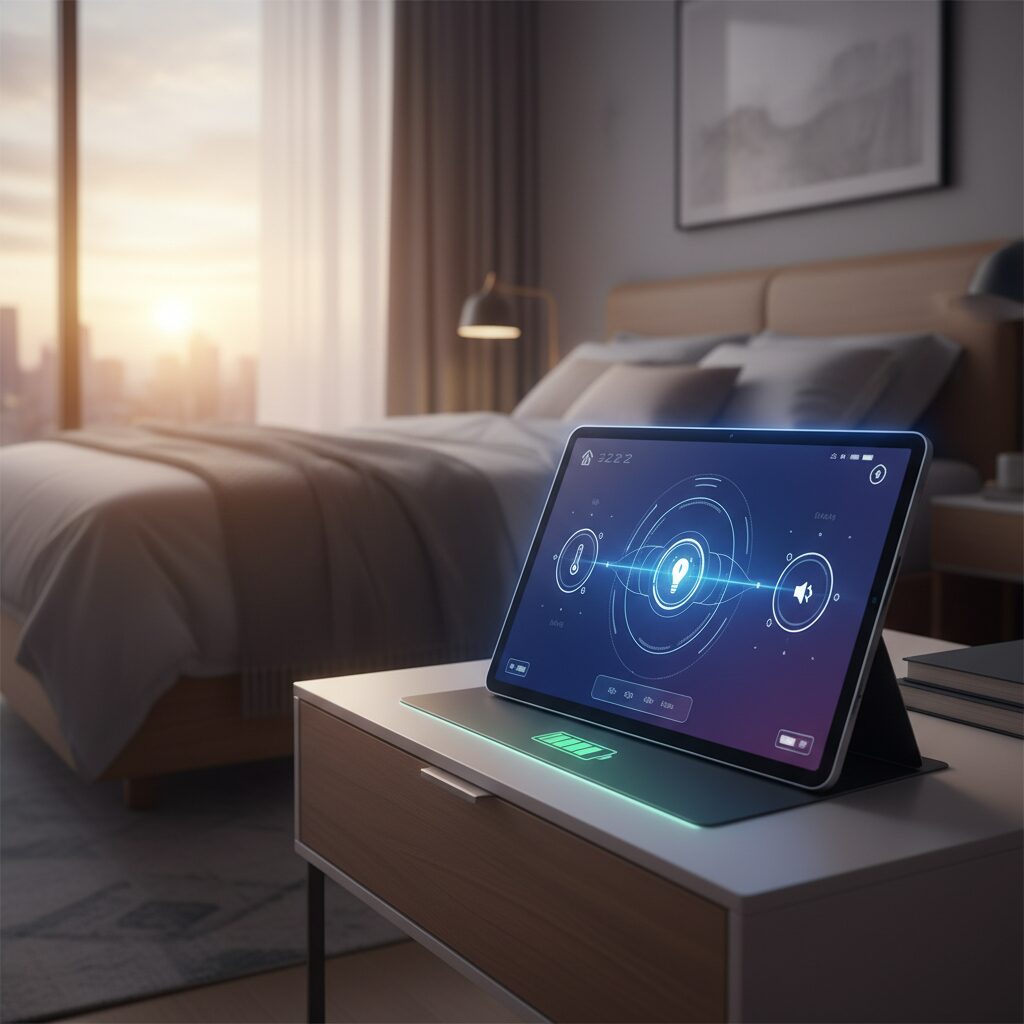
What once functioned as a simple alarm clock has evolved into something far more sophisticated in 2026. In Japan’s rapidly expanding sleep-tech market, tablets placed in the bedroom are now treated as intelligent sleep hubs that continuously analyze, assist, and optimize sleep rather than merely signal wake-up time.
This shift is strongly supported by market data. According to industry research, Japan’s sleep-technology device market surpassed USD 1.04 billion in 2025 and is projected to reach USD 1.18 billion in 2026, driven by aging demographics and rising healthcare awareness. Government-backed innovation programs led by METI and AMED have accelerated domestic development, making advanced sleep-analysis features accessible through consumer tablets.
As a result, users increasingly rely on tablets to aggregate multiple sleep-related functions into a single bedside interface. Motion sensors, cameras, and app-level algorithms work together to visualize sleep stages, detect breathing irregularities, and suggest behavioral adjustments the next morning, transforming the waking moment into a data-informed feedback loop.
| Function | Conventional Alarm | Intelligent Sleep Hub |
|---|---|---|
| Wake-up trigger | Fixed time alarm | Sleep-stage-aware timing |
| Sleep insight | None | Multi-sensor analysis |
| User interaction | Dismiss only | Review and adjust habits |
Sleep researchers have long emphasized that awareness precedes improvement. By centralizing data and interaction at the bedside, tablets reduce friction between measurement and action. This is why consumers no longer evaluate these devices as accessories, but as core infrastructure for nightly recovery.
In practice, the tablet becomes the quiet conductor of the bedroom, coordinating sensing, feedback, and gentle intervention. The journey from alarm clock to intelligent sleep hub is not about adding features, but about redefining the role of technology during the most critical third of daily life.
Why Tablet Placement Directly Affects Sleep Data Accuracy
When a tablet is used as a sleep-tracking hub, its physical placement directly influences how accurately sleep data is captured. This is not a minor optimization detail but a foundational requirement, because most tablet-based sleep solutions rely on indirect sensing rather than contact-based measurements. **Where the device is positioned determines what the sensors can actually “see” and how much noise is mixed into the data**.
Modern tablets used in sleep tech primarily depend on cameras, accelerometers, microphones, and in some advanced configurations, millimeter-wave radar modules. According to accumulated findings in the sleep technology field and guidelines referenced by research institutions involved in medical device development in Japan, these sensors are highly sensitive to angle, distance, and stability. Even small deviations in placement can systematically distort results such as sleep duration, breathing regularity, and body movement frequency.
| Placement Factor | Sensor Impact | Resulting Data Risk |
|---|---|---|
| Height above bed | Camera and radar field of view | Missed chest movement or false negatives |
| Viewing angle | Optical motion detection accuracy | Overestimation of awakenings |
| Mechanical stability | Accelerometer baseline noise | False body-turn events |
From a biomechanical perspective, the most reliable configuration places the tablet slightly above chest level, angled downward. This allows subtle respiratory-induced movements to be captured consistently. Studies referenced by organizations such as AMED indicate that **oblique, top-down observation reduces occlusion from bedding and minimizes interference from limb movement**, which is a common source of misclassification in sleep stage estimation.
Stability is equally critical. If a tablet is mounted on a flexible arm with insufficient rigidity, micro-vibrations caused by air movement, bed shifts, or even the user tapping the screen can contaminate accelerometer data. In practice, this vibration noise may be interpreted by algorithms as frequent tossing and turning, artificially lowering calculated sleep efficiency. Japanese device evaluation media have repeatedly shown that stands with higher torsional rigidity significantly reduce this effect, leading to more reproducible nightly measurements.
Audio-based sleep tracking, such as snoring or breathing sound analysis, is also highly placement-dependent. When a tablet is placed too close to the pillow, sound pressure levels can clip, while excessive distance increases ambient noise from air conditioners or outside traffic. Research in acoustic monitoring suggests that positioning the microphone at a moderate distance with a clear line of sound propagation yields the highest signal-to-noise ratio, which directly improves apnea risk screening accuracy.
Experts in sleep medicine often emphasize that consistency matters as much as correctness. Once an optimal placement is established, keeping the tablet in the same position every night reduces variability unrelated to the user’s actual sleep. This principle is widely accepted in clinical sleep studies and is increasingly reflected in consumer sleep tech design philosophy. **A stable, repeatable placement turns raw sensor output into longitudinal data that can be meaningfully compared over weeks and months**.
In short, tablet placement is not an aesthetic or convenience choice. It is a technical parameter that shapes the fidelity of every sleep metric generated overnight. Treating placement as part of the measurement system itself is what separates casual sleep tracking from data that can genuinely support sleep improvement decisions.
Bedside, Arm-Mounted, or Overhead: Ergonomic Placement Strategies
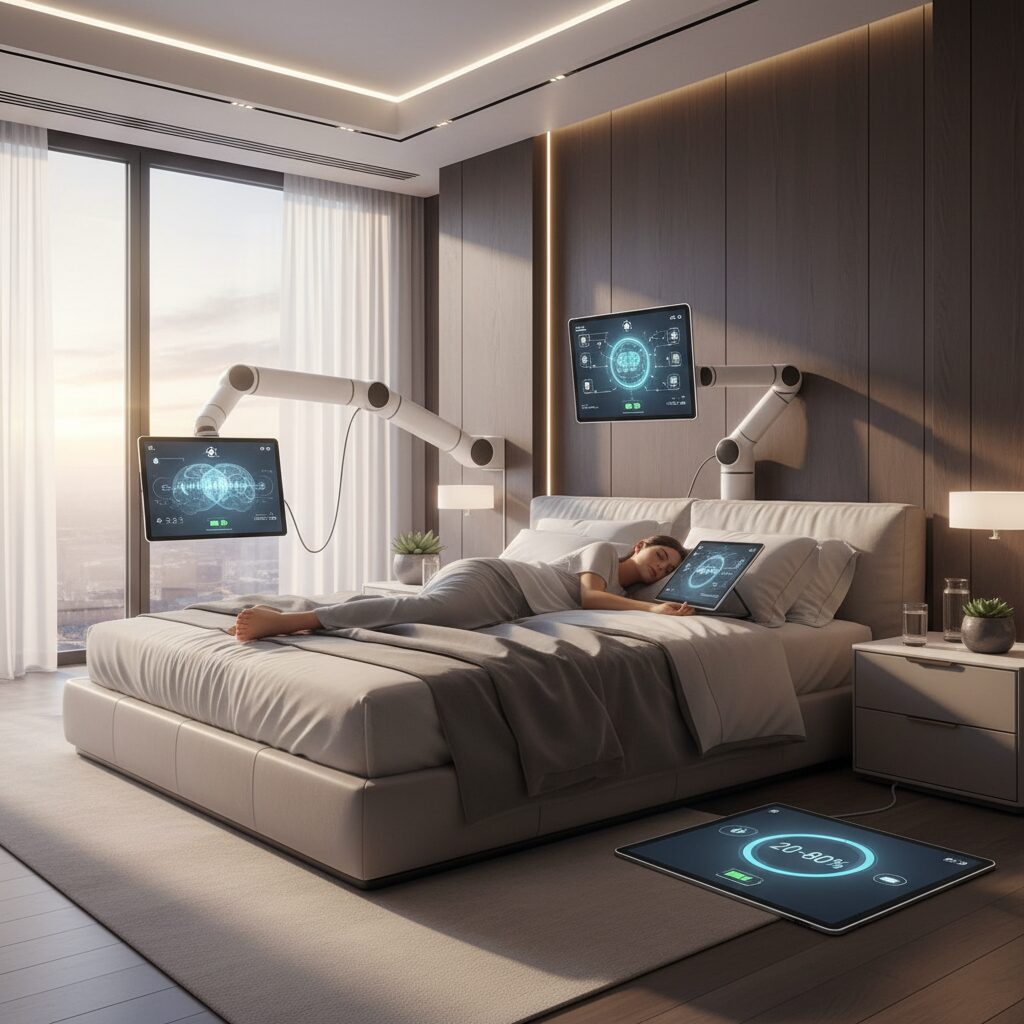
When using a tablet as a bedside alarm and sleep hub in 2026, placement is not a matter of preference but a question of ergonomics, safety, and data reliability. Bedside, arm-mounted, and overhead setups each shape how the device is seen, touched, and sensed during sleep and wake-up routines. **The wrong placement quietly degrades usability and measurement accuracy**, while the right one integrates the tablet into the body’s natural movements.
From an ergonomic perspective, bedside static placement remains the most conservative and widely adopted strategy. Heavy, low-center-of-gravity stands position the screen within arm’s reach, allowing users to dismiss alarms with a single, deliberate tap. According to evaluations by Japanese gadget review authorities such as 家電批評, high-mass stands consistently outperform lighter models in nocturnal stability, reducing accidental drops caused by half-awake movements. This setup favors users who prioritize certainty and minimal cognitive load immediately after waking.
| Placement Type | Primary Advantage | Key Trade-off |
|---|---|---|
| Bedside Static | Maximum stability and tap accuracy | Limited viewing angles |
| Arm-Mounted | Flexible positioning while lying down | Potential micro-vibration |
| Overhead | Optimal sensor field of view | Installation complexity |
Arm-mounted placement, typically using clamp-based aluminum arms, addresses a different ergonomic need. By suspending the tablet from a bed frame or headboard, the screen enters the natural line of sight when lying supine. This reduces neck flexion, a factor that occupational health research associates with lower cervical strain during prolonged viewing. In practice, this means users can review sleep analytics or calming content without propping themselves up. **However, arm length and material rigidity become decisive variables**. Longer arms amplify vibration, especially during touch input, which is why high-rigidity aluminum alloys have become the 2026 standard.
Overhead placement represents the most technically ambitious option. Originally niche, it has gained traction alongside contactless biometric sensing. When tablets use cameras, accelerometers, or millimeter-wave radar to monitor respiration and movement, researchers recommend a vantage point slightly above and in front of the chest. This geometry minimizes occlusion and improves signal-to-noise ratios. Sleep engineering literature frequently notes that even small deviations in angle can reduce detection accuracy, making adjustable height and tilt mechanisms essential rather than optional.
What distinguishes 2026 from earlier years is the convergence of ergonomics and system thinking. METI-supported research initiatives emphasize that human-device interfaces in health tech must account for unconscious behaviors, such as tossing during REM sleep. Overhead and arm-mounted solutions, when properly engineered, accommodate these behaviors by keeping the device outside the range of incidental contact while preserving visibility and sensor alignment.
Ultimately, there is no universally “correct” placement. Bedside setups excel in simplicity and fail-safe operation, arm-mounted configurations balance comfort and accessibility, and overhead installations unlock the full potential of advanced sleep sensing. **The optimal strategy aligns the tablet’s physical position with the user’s sleep posture, interaction habits, and sensing goals**, transforming placement from a furniture decision into a core element of sleep optimization.
What Stand Stability and Viewing Angles Mean for Daily Use
When a tablet is used every day as a bedside alarm and sleep hub, stand stability and viewing angles directly shape how stress-free that routine feels. A screen that wobbles, slowly tilts overnight, or forces awkward neck movement may seem like a small issue, but over weeks and months it quietly degrades usability and even safety. In daily use, stability is not about luxury; it is about predictability and trust.
Japanese device review outlets such as 家電批評 emphasize that modern tablets are heavier and thinner than past generations, shifting their center of gravity forward. **This makes insufficiently rigid stands prone to micro‑vibrations**, especially when users tap the screen to silence alarms early in the morning. Those vibrations do not just feel cheap; they increase the risk of the device slipping or falling during half‑awake interactions.
From a viewing‑angle perspective, ergonomics research referenced by organizations like the Japan Ergonomics Society shows that neck flexion beyond roughly 20 degrees significantly increases muscular load when sustained. For a tablet alarm, this matters because users often check the screen immediately after waking, when muscles are relaxed and posture control is low. A stand that fixes the display too low or too upright encourages unnecessary strain at precisely the wrong moment.
| Stand characteristic | Daily impact | User experience outcome |
|---|---|---|
| Wide, weighted base | Prevents tipping during touch input | Confident one‑handed operation |
| High arm rigidity | Reduces oscillation after tapping | Clear visibility without refocusing |
| Fine angle adjustment | Aligns screen with eye level | Lower neck and shoulder strain |
In real bedrooms, lighting conditions amplify these factors. Tablets are often viewed in low ambient light just before sleep or immediately after waking. **A stable stand that holds a precise viewing angle helps maintain consistent contrast and readability**, especially for always‑on clock displays or sleep dashboards. Even small shifts can cause glare from ceiling lights or morning sunlight, forcing users to reposition the device daily.
Experts in human‑computer interaction, including researchers cited by METI‑supported ergonomics studies, note that habitual micro‑adjustments are a hidden cognitive cost. When users unconsciously correct a sagging arm or re‑tilt a screen each night, the device becomes a source of friction rather than calm. Over time, this erodes the perceived quality of both the stand and the tablet itself.
Another overlooked aspect is safety during sleep. In households where tablets are mounted on arm‑type stands near the bed, insufficient clamping force or flexible joints can allow gradual drooping. **Stable geometry ensures that the tablet remains outside the fall zone**, reducing the risk of nighttime accidents caused by sudden detachment or joint fatigue.
Ultimately, stand stability and viewing angles determine whether a tablet alarm integrates seamlessly into daily life or constantly demands attention. A well‑engineered stand fades into the background, letting the screen stay exactly where the eyes expect it to be. That quiet reliability is what transforms a powerful device into a truly comfortable everyday companion.
The Science Behind Battery Degradation During Constant Charging
When a tablet is kept on constant charge, the lithium-ion battery inside is exposed to conditions that differ fundamentally from normal daily use. **The core issue is not charging itself, but the prolonged time spent at high voltage and elevated temperature**, which accelerates chemical aging even when the device is idle. This mechanism has been repeatedly documented in electrochemical research and is well understood among battery engineers.
From a scientific perspective, voltage plays the central role. As the state of charge increases, the cathode potential rises sharply. According to research summarized by IEEE and university battery laboratories, this high-potential environment promotes electrolyte oxidation at the cathode surface. The byproducts of this reaction form thicker interphase layers, which permanently increase internal resistance and reduce usable capacity over time.
Thermal stress compounds this problem. Even wired charging generates heat, and wireless charging is less efficient, converting more energy into thermal loss. Battery aging follows Arrhenius-type behavior, meaning that **a temperature increase of around 10 degrees Celsius can nearly double the rate of chemical degradation**. Studies cited by Apple and other device manufacturers show that tablets left charging overnight in warm environments lose capacity significantly faster than those kept cooler.
| Factor | What Happens Internally | Long-Term Impact |
|---|---|---|
| High voltage | Electrolyte oxidation at cathode | Capacity fade and impedance rise |
| Heat buildup | Accelerated side reactions | Shortened calendar life |
| Constant full charge | Mechanical stress on electrodes | Microcracks and lithium trapping |
Mechanical stress is often overlooked but equally important. At full charge, lithium ions are densely packed within the electrode crystal structure. Materials science research published in peer-reviewed journals shows that this causes repeated lattice expansion, leading to microfractures over time. Once these cracks form, lithium becomes irreversibly trapped, reducing the battery’s effective capacity even if the device is rarely unplugged.
These findings explain why major OS vendors introduced charging limits around 80 percent. **By lowering peak voltage and reducing thermal exposure, manufacturers can extend battery lifespan by up to two times in controlled tests**, according to aggregated lab data referenced by consumer electronics experts. In constant charging use cases, such as a tablet acting as a bedside device, this scientific insight becomes directly relevant to real-world longevity.
Why the 20–80% Charging Rule Became a Technical Standard
The 20–80% charging rule did not emerge as casual advice but became a technical standard through repeated validation in battery science and product engineering. As lithium-ion batteries spread from smartphones to tablets used in always-on scenarios such as bedside alarms, engineers needed a reproducible rule that balanced longevity and usability. The 20–80% range proved to be the point where electrochemical stress could be minimized without sacrificing practical capacity.
According to peer-reviewed battery research frequently cited by institutions such as university electrochemistry labs and major device manufacturers, high state of charge correlates directly with elevated electrode potential. This accelerates electrolyte oxidation and excessive SEI layer growth. By contrast, operating below full charge significantly reduces these side reactions. Industry-facing analyses report that lowering the upper charge limit by even a small margin can double cycle life under controlled conditions.
| Charge Range | Electrochemical Stress | Expected Impact on Lifespan |
|---|---|---|
| 0–20% | High mechanical strain | Accelerated degradation |
| 20–80% | Low and stable | Maximum cycle longevity |
| 80–100% | High voltage stress | Rapid chemical aging |
Thermal behavior further reinforced this standard. Battery aging follows the Arrhenius relationship, meaning temperature increases accelerate degradation exponentially. Devices held at 100% while connected to power, especially overnight, remain warm for extended periods. Keeping charge below 80% shortens the time spent at high voltage and high temperature simultaneously, a combination widely recognized as the most damaging condition.
By the mid-2020s, operating-system vendors and battery management system designers converged on this evidence. Apple publicly defined 80% capacity as a key health threshold, while Android and PC platforms introduced charge limits by default. This alignment between academic findings and commercial policy is why the 20–80% rule transitioned from recommendation to standard. It is not about user discipline, but about embedding proven electrochemical limits directly into device behavior.
Advanced Battery Management Systems and Adaptive Charging
In 2026, advanced battery management systems and adaptive charging are no longer niche features but core technologies that define how tablet-based alarm devices are operated safely and sustainably. When a tablet is placed by the bedside and kept connected to power for long hours, the battery is exposed to unique electrochemical stresses. **Modern BMS designs are intended to minimize these stresses through continuous sensing, prediction, and control**, rather than relying on simple on-off charging logic.
According to accumulated findings in battery science and device engineering, lithium-ion degradation accelerates under three combined conditions: high state of charge, elevated temperature, and repeated micro-cycling. Research summarized by major Japanese and international device analysts indicates that keeping a battery near 100 percent for extended periods significantly increases electrolyte oxidation and solid-electrolyte interphase growth. For this reason, operating strategies that deliberately avoid full saturation have become standard in recent operating systems.
Adaptive charging works by synchronizing software-level prediction with hardware-level current control. For example, when a tablet is used as a bedside alarm, the system can maintain the battery at around 80 percent throughout the night and only raise it toward full charge shortly before the expected wake-up time. This approach is widely discussed in the context of optimized night charging and is supported by electrochemical evidence showing that reducing the cumulative time spent at high voltage can meaningfully extend cycle life.
Device manufacturers and component suppliers have integrated these concepts directly into charging chipsets and power controllers. Smart chargers equipped with communication-capable chips exchange real-time data with the tablet’s BMS, dynamically adjusting current, voltage, and even bypassing the battery entirely when conditions allow. Industry documentation from certified charger manufacturers emphasizes that bypass power delivery reduces both heat generation and unnecessary charge-discharge cycles during stationary use.
| Management Function | System-Level Mechanism | Battery Protection Effect |
|---|---|---|
| Charge Limit Control | Automatic current cutoff at 80–95% | Suppresses high-voltage side reactions |
| Optimized Night Charging | Delayed full charge until pre-wake period | Reduces total high-SoC exposure time |
| Bypass Power Delivery | Direct system power without battery cycling | Limits heat buildup and cycle wear |
Thermal management is another critical dimension where advanced BMS technology demonstrates its value. Temperature sensors embedded near the battery cell continuously feed data into control algorithms that scale charging power in real time. This design aligns with well-established electrochemical principles, such as the Arrhenius relationship between temperature and reaction rate, which shows that even small increases in heat can exponentially accelerate degradation.
Wireless charging, often favored in bedroom environments for aesthetic reasons, presents additional challenges because of conversion losses and localized heating. Smart wireless chargers introduced in recent years address this by intentionally stopping at around 80 percent charge and resuming only when thermal conditions are optimal. Manufacturers emphasize compliance with international safety standards such as CE and FCC as part of ensuring stable long-term operation under these constraints.
From a user perspective, these technologies quietly translate into tangible economic benefits. In Japan’s active secondary device market, battery health thresholds, particularly the widely recognized 80 percent capacity benchmark referenced by major platform providers, strongly influence resale value. Users who rely on adaptive charging and BMS-driven limits during nightly stationary use are more likely to preserve this threshold over several years, effectively lowering total ownership cost.
Ultimately, advanced battery management systems and adaptive charging represent a shift in philosophy. Rather than asking users to constantly monitor percentages and unplug cables, the system itself assumes responsibility for long-term battery stewardship. **For tablet-based alarm setups in 2026, this automation is not merely a convenience feature but a foundational requirement for reliable, sustainable operation.**
Wireless Charging, Heat Control, and Bedroom Safety
Wireless charging has become a natural choice for tablet-based alarm setups in the bedroom because it reduces cable clutter and allows the device to remain in a fixed position overnight.
At the same time, this convenience introduces a technical challenge that cannot be ignored: heat generation during inductive power transfer.
According to battery research summarized by IEEE and widely cited by device manufacturers, even a few degrees of sustained temperature increase can accelerate lithium-ion degradation in a measurable way.
Wireless charging is inherently less efficient than wired charging because energy is transferred through electromagnetic induction rather than direct electrical contact.
This efficiency gap means that part of the input power is inevitably converted into heat at the coil, the battery, and the surrounding enclosure.
Laboratory measurements referenced by battery engineers show that surface temperatures can rise by 5–10°C compared with wired charging under identical conditions.
From a safety perspective, this matters most in the bedroom, where tablets are often placed near bedding, curtains, or wooden furniture.
Consumer safety guidelines from organizations such as UL emphasize that prolonged heat accumulation in poorly ventilated spaces increases both battery stress and environmental risk.
For this reason, flat placement on soft surfaces is strongly discouraged, even if the charger itself is certified.
| Charging Method | Typical Heat Profile | Bedroom Safety Implication |
|---|---|---|
| Wired (USB-C) | Low to moderate, localized | Easier to manage with airflow |
| Wireless (Qi) | Moderate, distributed across back panel | Requires careful placement and ventilation |
Modern wireless chargers released after 2025 have begun to address this issue through intelligent thermal control.
Manufacturers such as Wecent publicly explain that their chargers dynamically reduce input power once the battery reaches around 80 percent state of charge.
This strategy is supported by electrochemical studies showing that high temperature and high voltage together accelerate electrolyte breakdown.
In practical bedroom use, this means the tablet remains warm rather than hot for most of the night.
Experts in battery management systems often note that avoiding peak temperature is more important than achieving full charge as quickly as possible.
As a result, adaptive charging is increasingly recommended for devices that stay on the nightstand every night.
Placement also plays a critical role in heat control.
A tablet positioned vertically on a stand allows natural convection to carry heat away from the rear panel.
This simple physical advantage can reduce internal temperature by several degrees, according to thermal simulations published in electronics engineering journals.
Bedroom safety extends beyond the battery itself.
Certified wireless chargers comply with international standards such as CE, FCC, and RoHS, which include safeguards against overcurrent and abnormal heating.
However, these certifications assume proper usage, including sufficient airflow and avoidance of enclosed spaces.
It is therefore recommended that users think of wireless charging as part of the room’s thermal design rather than a standalone accessory.
Leaving a small clearance behind the device and avoiding contact with fabric surfaces can significantly reduce cumulative heat exposure.
Over months and years, this practice supports both safer sleep environments and more stable battery health.
When wireless charging, heat control, and placement are treated as a single system, the bedroom tablet becomes a quiet, reliable companion rather than a hidden source of risk.
This integrated approach reflects how sleep tech in 2026 prioritizes not only convenience but also long-term safety.
For users who value both peace of mind and device longevity, this balance is increasingly seen as the correct standard.
How Battery Health Influences Long-Term Resale Value
Battery health plays a decisive role in how much value a tablet can retain over time, especially when you plan to resell it after several years of daily use. In the secondary gadget market, buyers increasingly view battery condition as a proxy for overall device care. A tablet with visibly preserved battery capacity is often perceived as a low-risk purchase, even when cosmetic wear is present.
According to guidelines widely referenced by manufacturers such as Apple, a remaining maximum capacity of 80 percent is considered a practical threshold for healthy performance. This benchmark has quietly become a psychological anchor in resale negotiations. Devices that remain above it tend to avoid steep price penalties, while those below it are often categorized as “needing service,” regardless of how well other components function.
| Battery Health Level | Buyer Perception | Typical Impact on Resale Price |
|---|---|---|
| 90–100% | Near-new condition | Minimal depreciation |
| 80–89% | Well maintained | Moderate, predictable reduction |
| Below 80% | Degraded or risky | Noticeable price drop |
The science behind this market behavior is well established. Research in electrochemistry shows that prolonged exposure to high state-of-charge accelerates electrolyte oxidation and internal resistance growth. Once capacity loss becomes visible in system settings, it signals irreversible chemical aging, which buyers factor directly into future replacement costs.
From an economic standpoint, disciplined charging habits effectively lower total cost of ownership. Users who limit charging to around 80–90 percent during stationary use often find that, years later, their devices still meet resale benchmarks. This transforms battery management from a technical concern into a financial strategy.
Industry analysts frequently note that informed buyers are willing to pay a premium for documented battery care. By maintaining healthy capacity, you are not only extending usability but also preserving liquidity. In long-term ownership, battery health quietly determines whether a tablet is viewed as an aging gadget or a well-kept asset.
Tablets as Part of Smart Homes and Sleep Automation
In 2026, tablets are increasingly positioned as a central interface within smart homes, especially when sleep automation is the primary goal. Rather than functioning as isolated alarm devices, tablets now coordinate lighting, climate control, and environmental sensing to create a coherent sleep–wake rhythm. This shift reflects a broader trend in sleep tech, where the bedroom is treated as a responsive system that adapts to human biology.
The key value of a tablet in this context lies in its role as an always-on control hub. Compared with smartphones, tablets offer larger displays that remain visible from a distance, making them suitable for wall-mounted or bedside placements that continuously visualize sleep status, room conditions, and upcoming automation events. According to analyses frequently cited by organizations such as METI, this form of centralized interaction lowers cognitive load and improves long-term adherence to sleep optimization routines.
From a technical perspective, tablets integrate smoothly with modern smart home standards such as Matter and established Bluetooth Low Energy profiles. When paired with sleep analysis apps, the tablet can trigger automation based on sleep stages rather than fixed clock times. For example, when light REM sleep is detected in the early morning, the tablet can instruct smart lighting to gradually increase color temperature while signaling air conditioners to reduce airflow noise.
| Automation Target | Triggered by Tablet | Sleep-Related Benefit |
|---|---|---|
| Smart Lighting | REM or light sleep detection | Gentler awakening, reduced sleep inertia |
| Climate Control | Room temperature drift during sleep | More stable deep sleep cycles |
| Blinds and Curtains | Predicted wake-up window | Alignment with natural circadian cues |
Placement strategy becomes critical once tablets are used as environmental sensors. Built-in cameras, accelerometers, or millimeter-wave radar features require a field of view that covers the upper body and surrounding airspace. This is why 2026-era smart bedrooms often position tablets slightly away from the pillow area, such as elevated side placements that overlook the bed. This configuration improves data reliability while reducing user discomfort.
Energy management is another reason tablets fit naturally into smart home sleep automation. With adaptive charging and bypass power delivery becoming mainstream, tablets can remain connected to smart plugs or energy management systems without accelerating battery degradation. Research-backed practices such as maintaining charge levels around 80 percent allow the device to stay online overnight while preserving long-term hardware value.
Experts in human–computer interaction frequently note that a visible, stable interface encourages trust in automation. When users can glance at a tablet and confirm that lights will dim, alarms are context-aware, and the room will respond automatically, anxiety around oversleeping or sudden alarms decreases. This psychological reassurance is a subtle but measurable contributor to better sleep quality.
As smart homes continue to evolve, the tablet’s role is becoming less about control and more about orchestration. Acting as a mediator between sensors, appliances, and human perception, the tablet transforms sleep automation from a set of disconnected features into a unified nightly experience that feels intentional, calm, and scientifically grounded.
Sustainability, Device Longevity, and the Future of Sleep Gadgets
Sustainability has become a core design requirement for modern sleep gadgets, and tablet-based alarm devices are no exception. In 2026, longevity is no longer treated as a secondary benefit but as a measurable performance metric that directly affects environmental impact and user value. According to analyses cited by academic battery researchers and major platform providers, extending lithium-ion battery lifespan even by one to two years can significantly reduce lifecycle carbon emissions associated with device replacement.
From a sustainability perspective, the way a sleep tablet is charged every night matters as much as the hardware itself. **Operating the battery within a controlled state-of-charge window is widely recognized as the most effective method to slow chemical degradation.** Studies referenced by Apple and materials science journals indicate that avoiding prolonged high-voltage states reduces electrolyte oxidation and structural stress inside the cell.
| Operation Pattern | Battery Stress Level | Environmental Impact |
|---|---|---|
| Always at 100% | High | Frequent replacement, higher waste |
| 20–80% managed | Low | Extended lifespan, lower emissions |
| Bypass power use | Very low | Minimal battery wear |
Device longevity also has a direct economic dimension that reinforces sustainable behavior. In Japan’s mature resale market, battery health is treated as a proxy for overall device care. **Maintaining maximum capacity above the commonly referenced 80% threshold can preserve resale value by a noticeable margin**, which discourages premature disposal and supports a circular economy model.
Manufacturers are responding to this shift with software-driven sustainability features. Intelligent Battery Management Systems, supported by public research funding bodies such as AMED, increasingly enable adaptive charging, thermal regulation, and power bypass modes. These technologies allow a tablet to function as a stationary sleep hub while minimizing unnecessary charge cycles.
Looking ahead, experts in sleep technology and sustainable electronics suggest that future sleep gadgets will be evaluated not only by how well they improve rest, but by how responsibly they age. **A sleep device that lasts longer, degrades slower, and retains value is ultimately the most sustainable form of innovation**, aligning user comfort, environmental responsibility, and long-term cost efficiency.
参考文献
- Research Nester Japan:Japan Sleep Tech Devices Market Size and Share Forecast to 2035
- 360LiFE by Shinyusha:Best iPad Stand Rankings for Bed Use in 2026
- Reinforz Gadget:Can Battery Degradation Be Prevented? The Science Explained
- Wecent Official Media:Why You Should Stop Charging at 80%
- Wecent Official Media:Why Does My Battery Stop Charging at 80%?
- PC Watch (Impress):Latest Techniques to Extend Battery Life and Prevent Degradation