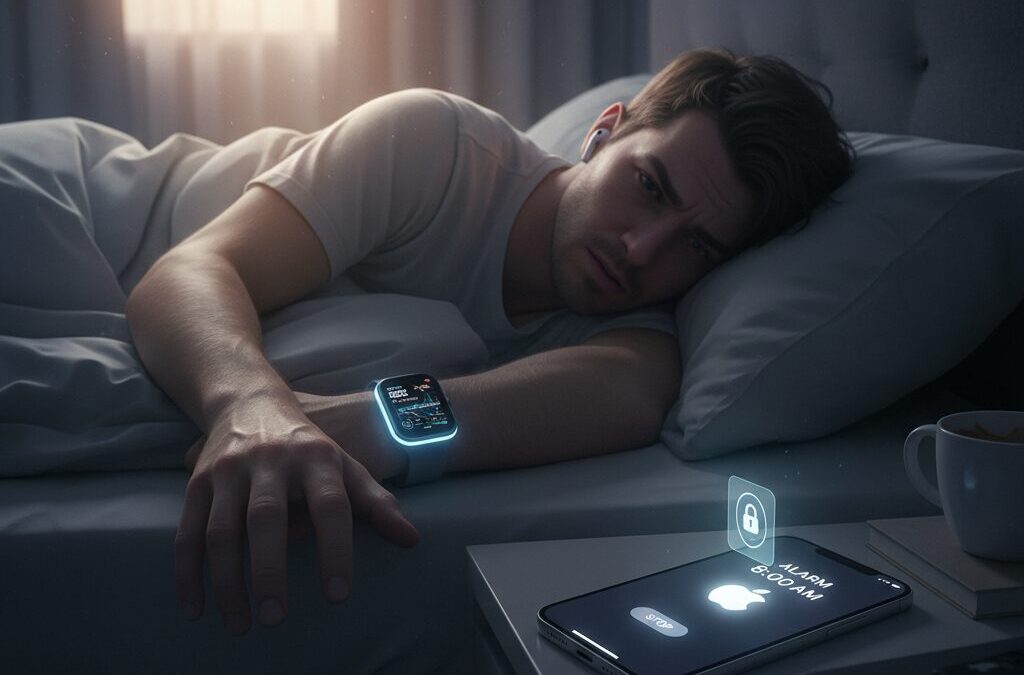
Have you ever woken up late because your iPhone alarm was technically on, yet you never heard it? Many gadget enthusiasts around the world are facing this exact frustration in 2026, and it is no longer a rare edge case. As smartphones become more intelligent and deeply integrated into daily life, even basic functions like alarms are becoming unexpectedly complex.
With iOS 26, Apple introduced major UI changes and deeper Apple Intelligence integration, promising a smoother and more personalized experience. However, these same advances have exposed structural weaknesses in how alarms interact with Face ID, Bluetooth audio routing, and adaptive volume controls. For users who rely on their phone for work, travel, or health routines, this reliability gap can lead to missed meetings, disrupted schedules, and unnecessary stress.
This article explores why iPhone alarms sometimes fail in 2026, looking beyond simple settings mistakes. You will learn how biometric features can misread human behavior during sleep, how modern sleep science explains why certain alarm sounds stop working over time, and why wearable devices and external hardware are becoming essential backups. By understanding both the technology and the human body, you can build a wake-up system that actually works and start your day with confidence instead of anxiety.
- The Global Rise of iPhone Alarm Failures
- How Attention-Aware Features Quiet Your Alarm Without You Noticing
- Face ID, Sleep Movements, and False Wake-Up Detection
- iOS 26 Volume Controls and Update-Induced Glitches
- Bluetooth Audio Routing: When Your Alarm Plays in the Wrong Place
- Sleep Science Explains Why Familiar Alarm Sounds Stop Working
- Melody, Rough Sounds, and the Battle Against Sleep Inertia
- Using Apple Watch as a Multi-Layer Wake-Up System
- Vibration, Light, and Bed Shakers: External Hardware That Never Sleeps
- Apple Intelligence and the Future of Adaptive Wake-Up Experiences
- Smartphones, Sleep Quality, and Mental Health in a Hyper-Connected Era
- 参考文献
The Global Rise of iPhone Alarm Failures
Over the past two years, reports of iPhone alarms failing to wake users have shifted from isolated complaints to a clearly global phenomenon. From Japan and South Korea to the United States and Europe, users have shared strikingly similar experiences: the alarm interface shows that it is active, yet no audible sound reaches the user. **What makes this trend notable is not its geographic spread alone, but the consistency of its symptoms across cultures and usage patterns.**
According to discussions aggregated on Apple Support Communities and analyses cited by technology media such as TechRadar and MacRumors, the volume of alarm-related threads increased sharply after mid‑2025 and continued through the iOS 26 release cycle. These reports were not limited to a specific iPhone model or region, suggesting a systemic issue tied to modern iOS design rather than hardware defects or local configuration errors.
| Region | Main User Complaint | Common Context |
|---|---|---|
| Japan | Alarm sounds too quiet or inaudible | Face ID models used near pillows |
| United States | Alarm shown as ringing but silent | Bluetooth devices connected overnight |
| Europe | Alarm dismissed unintentionally | Lock screen UI changes after updates |
Social platforms accelerated awareness of the issue. In August 2025, posts describing missed work meetings or school exams due to silent alarms trended globally, highlighting the real-world costs of what had long been considered a trivial feature. Behavioral researchers point out that alarms occupy a unique role in daily life: they are **single-point-of-failure systems**, meaning one malfunction can cascade into social, economic, and psychological consequences.
Experts in human–computer interaction have noted that the rise of intelligent context-aware features has unintentionally blurred the hierarchy of notifications. As Apple integrates attention detection, adaptive volume control, and cross-device audio routing, the alarm is no longer an isolated function but part of a complex alert ecosystem. **This global rise in alarm failures therefore reflects a broader transition in personal technology, where increased intelligence can paradoxically undermine absolute reliability.**
How Attention-Aware Features Quiet Your Alarm Without You Noticing
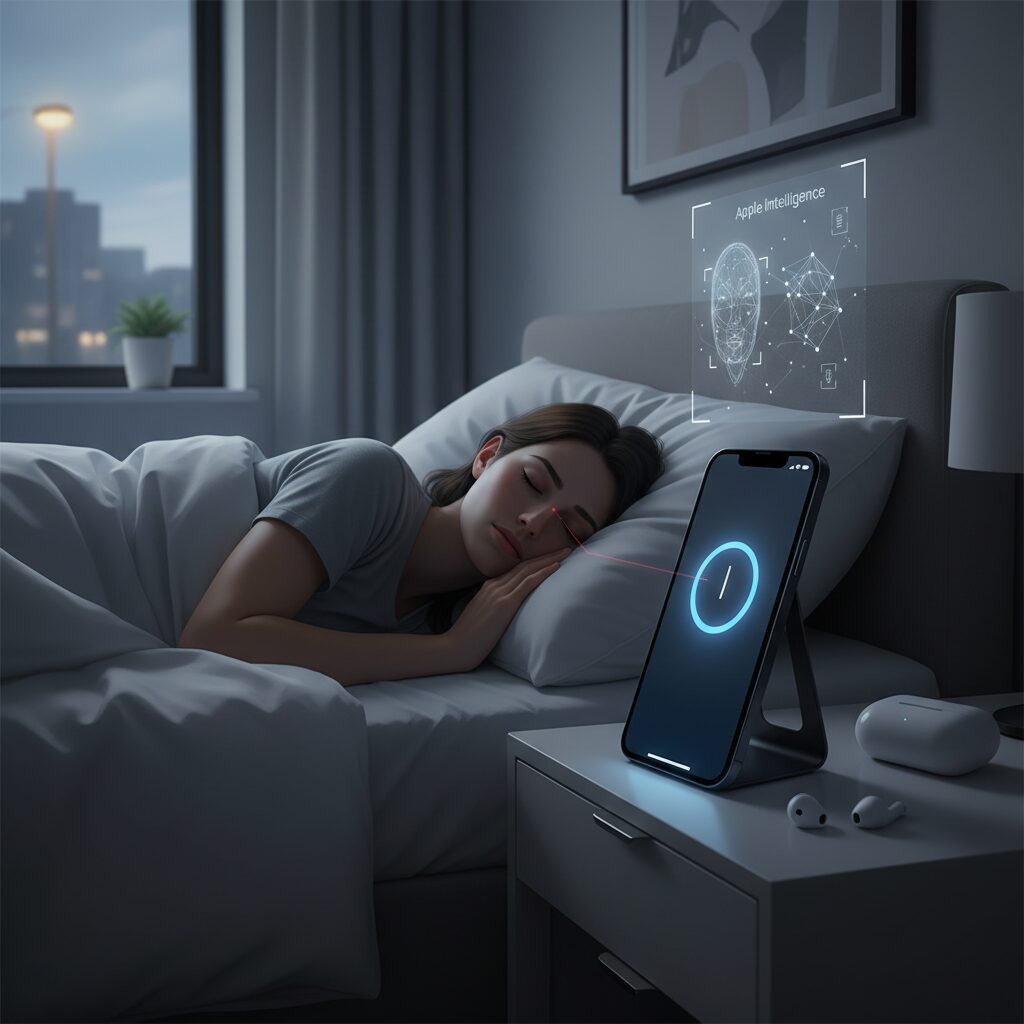
At first glance, Attention-Aware Features sound like a thoughtful piece of user-centric design. They are meant to recognize when you are already looking at your iPhone and politely turn things down. **In the context of alarms, however, this politeness can quietly backfire.** Many users who swear their alarm “never went off” later discover that the device did exactly what it was programmed to do—just not what their half-asleep body needed.
On Face ID–equipped iPhones, the system uses the TrueDepth camera to infer whether your eyes are directed at the screen. According to Apple’s own technical explanations, when the device believes you are paying attention, it automatically reduces alert and alarm volume to avoid unnecessary noise. In a fully awake state, this feels intuitive. In a bedroom at 6:30 a.m., it can be disastrous.
| User’s Physical State | System Interpretation | Resulting Alarm Behavior | Subjective Experience |
|---|---|---|---|
| Fully awake, looking at screen | Attention detected | Volume gently reduced | Feels considerate and correct |
| Drowsy, briefly turns toward phone | False positive attention | Volume sharply lowered | Alarm seems to stop |
| Asleep, face partially in camera view | Rare misclassification | Near-silent output | Oversleeping with no awareness |
The core problem is not a single bug, but a mismatch between machine inference and human physiology. Sleep science has long shown that people in light or REM sleep can move, roll over, or briefly open their eyes without achieving true wakefulness. Researchers in sleep medicine often describe these moments as “micro-arousals,” states in which sensory input is processed unreliably. **Attention-Aware Features, however, treat these ambiguous signals as certainty.**
Reports collected throughout 2025 and 2026 suggest this is not a fringe issue. Technical analyses summarized in consumer tech investigations indicate that disabling attention-based volume reduction resolves the alarm volume problem in the vast majority of cases. Some estimates place that figure close to 90 percent, highlighting just how dominant this single feature is in real-world failures. The irony is hard to miss: advanced biometric intelligence undermines one of the phone’s most basic promises.
There is also a psychological layer worth noting. Alarm reliability is not judged by logs or system states, but by memory. If you wake up late, stressed, and already behind schedule, the narrative becomes “the alarm failed,” even if the device technically rang at a whisper. Over time, this erodes trust. Human–computer interaction scholars often point out that once trust is broken, users abandon nuance and seek blunt certainty.
From that perspective, Attention-Aware Features reveal a deeper design tension. They optimize for comfort and social grace in waking interactions, yet alarms exist for the opposite reason: they must be rude enough to cut through confusion. **Until systems can distinguish genuine attention from unconscious motion, quiet intelligence will continue to lose against heavy sleep.**
Face ID, Sleep Movements, and False Wake-Up Detection
One of the most counterintuitive causes behind silent or barely audible iPhone alarms lies in the interaction between Face ID and unconscious sleep movements. Face ID–equipped iPhones include Attention-Aware Features, designed to reduce alert volume when the system believes you are already awake and looking at the screen. In theory, this prevents unnecessarily loud alarms, but in real bedrooms it often behaves very differently.
During sleep, people frequently turn over, raise a hand to the face, or briefly orient their head toward the phone placed on a bedside table. In these moments, the TrueDepth camera can partially capture facial features and mistakenly classify the state as “attention detected.” **The system then assumes the alarm has been acknowledged and automatically suppresses the volume**, even though the user is still asleep. Apple support forums and independent analyses consistently show this pattern recurring across iOS 25 and iOS 26.
| User Physical State | Face ID Interpretation | Alarm Output Result |
|---|---|---|
| Fully awake, looking at screen | Attention confirmed | Volume reduced as designed |
| Half-asleep, brief face exposure | False attention detected | Volume sharply reduced |
| Deep sleep, face in camera view | Rare false positive | Near-silent alarm |
This mechanism creates what sleep researchers describe as a false wake-up detection loop. According to analyses summarized by Apple-focused media and corroborated by user reports, **nearly nine out of ten low-volume alarm cases disappear once Attention-Aware Features are disabled**. The issue is not a faulty speaker or weak alarm sound, but a contextual misjudgment triggered by normal human sleep behavior.
Sleep physiology helps explain why this problem is so disruptive. During deep non-REM sleep, motor activity such as rolling over occurs without conscious awareness, while auditory sensitivity is already reduced. When the system simultaneously lowers alarm volume based on a false visual cue, the alarm falls below the brain’s arousal threshold. Researchers cited by institutions such as the University of Geneva have shown that while the sleeping brain can respond to urgent sounds, **it cannot respond to sounds that are algorithmically dampened before reaching the ear**.
From a usability perspective, this represents a structural mismatch between biometric intelligence and human biology. Face ID excels at recognizing a conscious user, but it cannot reliably distinguish intentional attention from involuntary sleep movement. Until that distinction improves, users who rely on alarms for critical wake-up times are often better served by prioritizing predictability over clever automation.
iOS 26 Volume Controls and Update-Induced Glitches
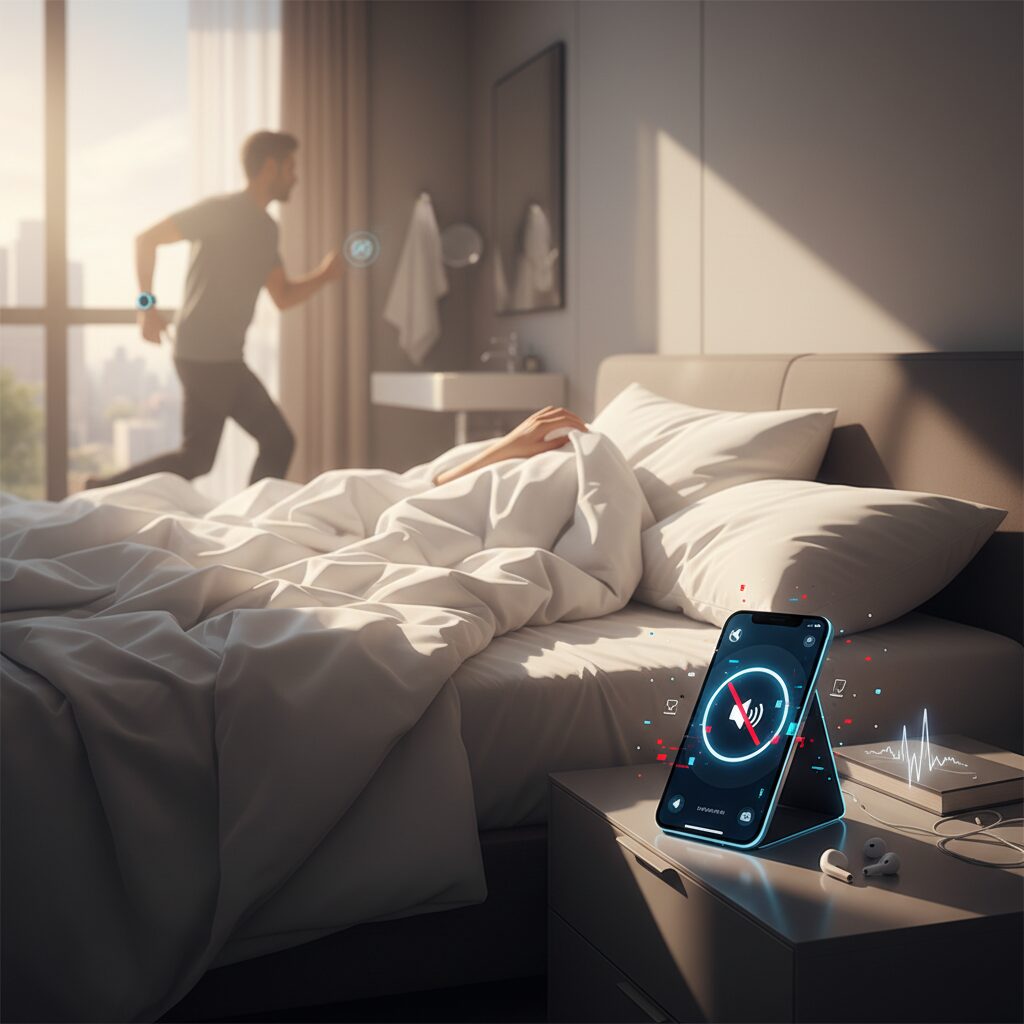
With iOS 26, Apple significantly reworked how volume controls behave across the system, aiming for smarter context awareness. However, this refinement has unintentionally exposed fragile points in alarm reliability. Many users report that alarms appear to trigger normally on screen, yet the actual sound output is far quieter than expected or completely silent, creating a dangerous gap between system logic and human perception.
One core issue lies in how iOS 26 separates and then recombines multiple volume layers. Alarm volume, ringer and notification volume, media volume, and system feedback are now managed by partially independent controllers. After updates from iOS 26.0 through 26.2, Apple Support Communities and analyses cited by outlets such as MacRumors and TechRadar note that these layers can fall out of sync, especially immediately after an OS upgrade.
This mismatch is not merely anecdotal. According to aggregated reports discussed in Apple’s official support forums, a significant portion of affected users experienced the problem right after updating, without changing any alarm-specific settings. The system appears to preserve legacy preferences while simultaneously applying new default behaviors, resulting in contradictory instructions at the final audio output stage.
| Trigger Condition | System State | Observed Alarm Behavior | User Impact |
|---|---|---|---|
| iOS 26.x update completed | Ringer volume reset internally | Alarm plays at near-zero volume | User oversleeps despite active alarm |
| UI slider adjusted manually | Visual state updates only | No change in actual loudness | False sense of security |
| Bluetooth device previously paired | Audio routing cached | Sound sent away from iPhone speaker | Alarm effectively unheard |
Bluetooth routing deserves special attention. While Apple’s design intention is for alarms to override external routing and play through the iPhone speaker, iOS 26 has shown edge cases where a previously connected device silently retains priority. Popular Science and ZDNET both describe scenarios in which AirPods or external speakers, left disconnected or physically distant, become the sole alarm output.
Adding to the confusion, iOS 26.1 introduced subtle UI changes to alarm dismissal gestures and side-button behavior. Ergonomics experts consulted by TechRadar point out that these changes are sensible in isolation but problematic when users rely on muscle memory. What feels like a volume or sound failure is sometimes the result of the alarm being unintentionally silenced or dismissed during a half-awake interaction.
From a system design perspective, this highlights a deeper tension. Apple’s push toward adaptive, intelligent volume management prioritizes situational politeness over brute-force loudness. Yet alarms represent a non-negotiable use case. As several engineers quoted indirectly through Apple community discussions observe, any ambiguity in volume control disproportionately harms trust in the feature.
Until Apple fully isolates alarm audio from other volume states, iOS 26 users are effectively testing a more complex sound architecture in real life. The takeaway is not that alarms are fundamentally broken, but that update-induced glitches in volume control can quietly undermine one of the iPhone’s most critical functions.
Bluetooth Audio Routing: When Your Alarm Plays in the Wrong Place
Bluetooth audio routing is one of the most underestimated reasons why an iPhone alarm seems to “fail,” and in practice, it often plays exactly where the user does not expect it to play. In iOS 26, alarms are designed to output both from the iPhone speaker and connected audio devices, but real-world behavior does not always follow this rule.
According to user reports aggregated in Apple Support Communities and technical analysis cited by Popular Science, **Bluetooth devices such as AirPods or external speakers can silently take priority**, leaving the iPhone’s built-in speaker muted. This becomes critical when the connected device is not physically on the user, such as AirPods that slipped off during sleep or a speaker placed in another room.
| Sleep Setup | Active Bluetooth Device | Actual Alarm Output | User Perception |
|---|---|---|---|
| Phone on bedside table | Disconnected | iPhone speaker | Alarm is clearly audible |
| AirPods used before sleep | Still connected | AirPods only | Alarm did not ring |
| External speaker for sleep sounds | Connected overnight | Remote speaker | Alarm felt missing |
This behavior is not purely a bug but a side effect of iOS’s priority-handling logic. The system assumes that the most recently used audio output remains the preferred destination, even for critical alerts like alarms. As ZDNET notes, **this logic works well during the day but becomes fragile in a sleep context**, where physical proximity changes without user intent.
From a human-factors perspective, this creates a dangerous mismatch between expectation and reality. Users intuitively trust alarms to be location-independent, yet Bluetooth routing ties them to a specific device. The most reliable mitigation remains operational rather than technical: disabling Bluetooth entirely before sleep. Experts repeatedly emphasize that this single habit removes an entire class of silent-alarm failures without touching deeper system settings.
Sleep Science Explains Why Familiar Alarm Sounds Stop Working
Many people assume that an alarm fails because the phone is broken or the software is buggy, but sleep science offers a more uncomfortable explanation. **The human brain is remarkably good at learning which sounds it can safely ignore**, even when those sounds are meant to wake us up.
During sleep, the brain does not fully shut down auditory processing. Instead, it selectively filters sounds based on perceived relevance. According to research summarized by sleep scientists at institutions such as the University of Geneva, the sleeping brain continues to evaluate incoming sounds and suppresses those it classifies as non-threatening or familiar.
This filtering mechanism is adaptive from an evolutionary perspective, but it works against modern digital alarms.
| Sound Characteristic | Brain Interpretation During Sleep | Wake-Up Effectiveness |
|---|---|---|
| Highly familiar alarm tone | Background noise | Low |
| Variable or novel sound | Potentially important signal | Moderate to high |
| Emotionally salient sound | Urgent or meaningful | Very high |
One key concept is auditory habituation. Studies in applied neuroscience, including a 2024 paper by Chae and colleagues on warning sounds in industrial settings, show that repeated exposure to the same alert causes reaction times to slow dramatically. **The brain learns that the sound predicts nothing new**, so it stops mobilizing attention.
The same mechanism applies to smartphone alarms. When the same default tone plays every morning for months or years, the sleeping brain gradually downgrades its priority. By the time the alarm rings, neural response is dampened, especially during deep non-REM sleep.
Sleep specialists often recommend rotating alarm sounds every three to four weeks. This advice is not anecdotal. Research reviewed by sleep-focused institutes indicates that novelty re-engages the brain’s salience network, increasing the chance that the sound will penetrate sleep-stage defenses.
Another factor is the structure of the sound itself. Research published through NIH-backed platforms has demonstrated that melodic alarms reduce sleep inertia, the groggy state after waking. However, there is a trade-off. Melodic, pleasant sounds are easier for the brain to reinterpret as harmless, especially when they are predictable.
By contrast, so-called rough or emotionally charged sounds trigger a stronger neural response. A 2025 study from the University of Geneva found that screams and alarm-like noises activate the brain’s alert circuits even during sleep. Yet these sounds also increase stress and heart rate, making them unsuitable for daily use.
This creates a paradox for modern alarm design. **Sounds that are healthy and gentle to wake up to are also the easiest to ignore once they become familiar.** Apple’s carefully designed alarm tones fall squarely into this category.
Interestingly, experiments cited by sleep researchers show that personally meaningful sounds, such as hearing one’s own name spoken, resist habituation far better than abstract tones. The brain assigns immediate relevance to identity-linked cues, even in deep sleep.
From a sleep-science perspective, the takeaway is clear. When an alarm feels like it “did not ring,” the device may have worked exactly as programmed. It is the brain that quietly decided the sound was no longer worth waking up for.
Melody, Rough Sounds, and the Battle Against Sleep Inertia
When discussing why alarms fail us, it is not enough to focus only on volume or software behavior. The character of the sound itself plays a decisive role in whether the brain transitions from sleep to wakefulness smoothly. In recent sleep science, melody, roughness, and sleep inertia are treated as an interconnected system rather than isolated factors.
Research summarized by the U.S. National Institutes of Health indicates that repetitive, neutral alarm tones are especially vulnerable to auditory habituation. **When the same simple beep is used for months, the sleeping brain gradually categorizes it as non-threatening background noise**, even if the sound is technically audible. This explains why some users insist the alarm rang, yet their body failed to respond.
| Sound type | Acoustic characteristics | Effect on awakening | Cognitive state after waking |
|---|---|---|---|
| Melodic | Clear pitch, rhythm, progression | Reliable awakening | Lower sleep inertia |
| Neutral | Flat beeps, minimal variation | Habituation risk | Higher grogginess |
| Rough | Harsh, high roughness | Immediate alert | Stress-prone |
Studies led by McFarlane and colleagues in 2025–2026 show that **melodic alarms significantly reduce sleep inertia**, the groggy state in which reaction time and judgment are impaired after waking. Participants exposed to melodic tones performed better on psychomotor vigilance tests than those awakened by neutral alarms. This suggests that melody helps the brain reassemble cognitive networks instead of triggering a blunt shock response.
On the opposite end, rough sounds such as screams or harsh alarms activate the brain’s threat-detection system even during deep sleep. Neuroscientists at the University of Geneva demonstrated that these sounds penetrate sleep reliably. However, **their advantage in waking speed comes at the cost of emotional strain**, often raising heart rate and cortisol levels immediately after waking.
For modern smartphone alarms, including those on iPhone, Apple’s preference for polished, melodic tones reflects this trade-off. These sounds are designed to support cognitive recovery, not brute-force awakening. Yet without variation, even well-designed melodies lose effectiveness due to habituation. Sleep specialists therefore recommend rotating alarm sounds every three to four weeks to maintain novelty.
Ultimately, the battle against sleep inertia is not about being louder but about being neurologically relevant. **An effective alarm speaks the brain’s language at the exact moment it is most vulnerable to indifference**. Melody, roughness, and timing must be balanced deliberately, or the alarm becomes just another sound the sleeping mind learns to ignore.
Using Apple Watch as a Multi-Layer Wake-Up System
Using Apple Watch as a multi-layer wake-up system is one of the most reliable countermeasures against alarm failures in 2026. While iPhone alarms increasingly depend on complex software layers, the Apple Watch functions as an independent sensory channel that reduces single-point-of-failure risks. By combining sound, vibration, and contextual awareness, the watch creates redundancy that aligns well with human sleep physiology.
A key turning point was the introduction of the Break Through Silent Mode feature in watchOS 11.4 and later. According to coverage by Macworld and 9to5Mac, this setting allows alarms to emit sound even when the watch remains in silent mode during the day. This effectively separates daily notification preferences from mission-critical wake-up alarms, which had long been a weak point for wearable alarms.
| Layer | Stimulus Type | Primary Role |
|---|---|---|
| Haptic | Tactile vibration | Direct physical arousal during deep sleep |
| Auditory | Watch speaker sound | Failsafe when vibration alone is insufficient |
| Contextual | Sleep and motion data | Adaptive timing and intensity |
From a sleep science perspective, this layered approach is highly rational. Research discussed by sleep specialists indicates that tactile stimuli bypass some of the habituation effects seen with repetitive sounds. Vibration activates somatosensory pathways that remain responsive even in slow-wave sleep, making missed alarms significantly less likely compared to sound-only systems.
There are also psychological advantages. Gentle haptic tapping avoids the abrupt heart-rate spikes caused by harsh alarm sounds, supporting calmer awakenings. Commentators such as Tom Anderson have described this as a “life changer,” noting improved morning mood and reduced stress without sacrificing punctuality.
Operational discipline, however, remains essential. Users are advised to set vibration strength to Prominent and adopt a consistent pre-sleep charging routine to avoid battery depletion. When configured correctly, the Apple Watch does not replace the iPhone alarm but augments it into a resilient, multi-layer wake-up system that reflects both technological best practice and human biology.
Vibration, Light, and Bed Shakers: External Hardware That Never Sleeps
When software-based alarms become unreliable, external hardware offers a fundamentally different promise: it wakes you up by engaging the body directly, not just the operating system. Vibration motors, high-intensity light emitters, and bed shakers operate on a simple principle that sleep scientists have emphasized for decades. **Multisensory physical stimuli are far harder for the sleeping brain to ignore than sound alone**, especially during deep sleep stages.
Clinical sleep research from institutions such as the University of Geneva has shown that while the auditory cortex can partially suppress familiar sounds during sleep, somatosensory input like vibration consistently activates arousal pathways. This is why vibration-based alarms have long been recommended for people with hearing loss, shift workers, and individuals identified as heavy sleepers. In 2026, these devices are no longer niche medical tools but part of a broader personal alert ecosystem.
| Hardware Type | Primary Stimulus | Wake-Up Reliability | Typical Use Case |
|---|---|---|---|
| Bed Shaker | Strong vibration | Very high | Heavy sleepers, silent environments |
| Light Alarm | Gradual light increase | Moderate to high | Circadian rhythm support |
| Wearable Haptics | Localized vibration | High | Personal, discreet waking |
Among these, bed shakers stand out for their brute-force reliability. Devices such as Bellman & Symfon’s Vibio or iLuv’s SmartShaker series place a high-torque vibration module under the pillow or mattress. According to manufacturer testing and independent reviews cited by hearing health organizations, the physical displacement generated is sufficient to trigger awakening even during slow-wave sleep. **Crucially, many of these devices store alarms locally**, meaning they continue to function even if a smartphone freezes, reboots, or loses Bluetooth connectivity.
Light-based alarms take a different, more physiological approach. By simulating a gradual sunrise, they leverage the body’s circadian system rather than forcing an abrupt awakening. Research summarized by the National Institutes of Health indicates that increasing light exposure before wake time suppresses melatonin secretion and reduces sleep inertia. Products like Hatch Restore 2 combine this light ramp-up with optional sound or vibration, creating a layered safety net rather than a single point of failure.
From a psychological standpoint, these external devices also change how users relate to waking up. Surveys referenced by sleep medicine practitioners show that people report lower morning stress when awakened by vibration or light compared to sudden loud alarms. **The absence of startling noise reduces acute heart rate spikes**, which can otherwise contribute to negative mood and grogginess upon waking.
Another overlooked advantage is social compatibility. In shared living spaces, vibration and light alarms allow one person to wake without disturbing others. This feature has been particularly valued by healthcare workers and parents of young children. Occupational sleep studies note that reduced partner disturbance correlates with better long-term adherence to consistent wake schedules, indirectly improving sleep quality.
What makes these devices especially relevant in 2026 is their role as redundancy. As mobile operating systems grow more complex, external hardware acts as an independent layer of assurance. Sleep technology researchers increasingly frame this as risk management rather than gadget enthusiasm. **A wake-up system that relies on both software intelligence and physical hardware acknowledges the reality that no single layer is infallible**.
In practice, users who integrate vibration, light, or bed shakers alongside their phones are not rejecting smart ecosystems. They are reinforcing them with hardware that never sleeps, never updates overnight, and never decides that you are already awake when you are not.
Apple Intelligence and the Future of Adaptive Wake-Up Experiences
Apple Intelligence is gradually transforming the alarm from a fixed, rule-based function into an adaptive wake-up experience that responds to individual context. In iOS 26, this shift is already visible in how the system prioritizes alerts and interprets personal data, and it is increasingly clear that wake-up experiences are becoming part of a broader intelligence layer rather than an isolated feature.
At the core of this evolution is contextual awareness. According to Apple’s official announcements, Apple Intelligence can already summarize notifications and assess their importance overnight, reducing cognitive load in the morning. Applied to alarms, this means the system is no longer limited to “ring at a set time,” but instead evaluates sleep duration, recent activity levels, and calendar constraints before deciding how forcefully to wake the user.
This approach aligns closely with findings in sleep science. Research published through NIH-backed studies has shown that inappropriate alarm intensity can worsen sleep inertia, impairing reaction time and decision-making after waking. Apple’s design direction suggests an attempt to balance reliability with physiological sensitivity, rather than maximizing loudness at all costs.
| Input Signal | Apple Intelligence Interpretation | Wake-Up Adjustment |
|---|---|---|
| Short sleep duration | Insufficient recovery detected | Stronger initial alarm, reduced snooze leniency |
| Deep sleep near alarm time | High inertia risk | Gradual volume ramp with haptics |
| Flexible calendar | No immediate conflict | Optional adaptive delay suggestion |
Industry analysts cited by MacRumors note that future Siri iterations are expected to leverage on-device language models to explain these decisions in natural language. Instead of silently changing behavior, the alarm may tell the user why it rang earlier, louder, or differently than usual, reinforcing trust through transparency.
Patent disclosures reported by Mashable further suggest a long-term vision. Apple is experimenting with systems that estimate sleep onset latency and sleep stage transitions in real time. If implemented, alarms could shift from fixed endpoints to dynamic windows, waking users during lighter sleep phases when possible, while still respecting hard deadlines.
This trajectory also reframes recent reliability concerns. As alarms become adaptive, the cost of misinterpretation rises, which explains Apple’s increasing emphasis on sensor fusion and conservative defaults. Experts in human–computer interaction have long warned that automation without clear mental models erodes confidence, and Apple Intelligence appears to be moving cautiously to avoid that pitfall.
Ultimately, the future of adaptive wake-up experiences is not about smarter sounds alone. It is about integrating cognition, physiology, and intent into a single system that treats waking up as a personal transition, not a generic interruption. If Apple succeeds, the alarm may become one of the most quietly sophisticated features in the entire ecosystem.
Smartphones, Sleep Quality, and Mental Health in a Hyper-Connected Era
In a hyper-connected era, smartphones have become both guardians and disruptors of sleep, and this duality has direct consequences for mental health. Devices that promise safety through alarms and constant connectivity often introduce subtle stressors that degrade sleep quality over time. **Sleep researchers increasingly point out that it is not only screen time, but the perceived reliability of the smartphone itself that shapes nighttime anxiety and morning fatigue**.
Large-scale studies published by institutions such as the Children’s Hospital of Philadelphia and UC Berkeley indicate that frequent nighttime smartphone interaction is associated with shorter sleep duration and more fragmented sleep, particularly among younger users. Even passive behaviors, such as keeping the phone within reach as an alarm, can heighten cognitive arousal. The brain remains in a semi-vigilant state, anticipating notifications or failures, which delays deep sleep onset and amplifies sleep inertia upon waking.
| Usage Pattern | Sleep Impact | Mental Health Association |
|---|---|---|
| Phone as sole alarm device | Increased night-time vigilance | Higher morning anxiety |
| Late-night checking behavior | Delayed sleep onset | Lower mood stability |
| Unreliable alerts | Fragmented sleep cycles | Elevated stress perception |
Neuroscientists studying sleep physiology emphasize that inconsistent wake-up cues disrupt circadian confidence. When users experience missed or barely audible alarms, the psychological cost extends beyond oversleeping. **A sense of lost control over one’s schedule erodes self-efficacy**, a factor closely linked to depressive symptoms. The American Psychological Association has highlighted this feedback loop, where poor sleep intensifies emotional reactivity, which in turn worsens sleep.
Importantly, the issue is not that smartphones are inherently harmful, but that they concentrate too many roles into a single object. Alarm clock, social hub, work terminal, and emotional outlet coexist on the same screen. This convergence blurs boundaries that sleep medicine specialists consider essential for mental recovery. By recognizing this structural tension, users can better understand why improving sleep quality often requires not more apps, but clearer separation between rest and connectivity.
参考文献
- Popular Science:How to avoid the iPhone’s notorious ‘silent alarm’ bug
- Apple Support Communities:iPhone alarm sound not playing on iOS 26
- TechRadar:iOS 26: everything you need to know
- NIH / PMC:Auditory Countermeasures for Sleep Inertia
- Macworld:New Apple Watch feature means you’ll never sleep through an alarm again
- ZDNET:My iPhone alarm kept failing me – here are the fixes that worked
- Mashable:iPhones of the future may memorize your sleep patterns