Have you ever felt that one smartphone is not enough for your multiple digital lives? Many tech-savvy users now manage separate identities for work, side projects, creator activities, and private communication, all on a single device.
In 2026, dual app technology has evolved far beyond simple convenience. With Android 16 introducing standardized clone profiles, expanding multi-account support across platforms, and enterprises accelerating digital transformation through work profiles, app cloning has become core infrastructure for digital identity management.
At the same time, new research reveals security risks in AI-generated code, LLM app cloning, and malicious app squatting, raising urgent questions about privacy and governance. In this article, you will explore the technical architecture behind dual apps, real-world adoption data, enterprise case studies, and cutting-edge academic findings that are shaping the future of multi-identity mobile computing.
- Why Dual Apps Became Essential in the Age of Multiple Digital Identities
- The Technical Architecture of App Cloning: Isolation, Packages, and Profiles
- Android 16 and the Rise of the Native Clone Profile
- System-Level Cloning vs. Virtualization Engines: OEM Features and Third-Party Tools
- Multi-Account Demand in Japan: Platform Statistics and Behavioral Trends
- LINE, Sub-Numbers, and Cultural Drivers of Account Separation
- Enterprise DX and Android Work Profiles: Real-World Business Implementations
- AI-Generated Code and Clone App Vulnerabilities: Evidence from Large-Scale Studies
- LLM App Squatting and Cloning: Emerging Threats in AI App Ecosystems
- Self-Cloning AI Chatbots for Mental Well-Being: Innovation and Ethical Boundaries
- Performance, Battery, and Secure Environment Flags: The Practical Limits of Dual Apps
- Privacy Budgets Under Pressure: What 2026 Forecasts Mean for Users and Enterprises
- 参考文献
Why Dual Apps Became Essential in the Age of Multiple Digital Identities
We no longer live with a single digital identity. We switch between roles—professional, creator, community member, private individual—often within minutes. As our online presence fragments across platforms, dual apps have evolved from a convenience feature into essential infrastructure for managing multiple digital identities.
In Japan, this shift is especially visible. According to research cited by Web担当者Forum based on a Docomo survey, 17.0% of users hold multiple Google accounts, while 11.7% use multiple X accounts and 8.9% manage more than one Instagram profile. These are not edge cases. They reflect a structural change in how people organize their digital lives.
At the OS level, this reality is now officially recognized. With Android 16 introducing a standardized “Clone Profile” in the Android Open Source Project documentation, app duplication is no longer a workaround but a supported user model. The system itself acknowledges that one person may legitimately operate parallel identities within a single device.
| Platform | Typical Identity Split | User Motivation |
|---|---|---|
| LINE | Private / Work / Side Business | Clear separation of contacts |
| X | Hobby / Professional | Community-specific presence |
| Personal / Brand | Audience segmentation |
LINE, which has over 99 million users in Japan according to industry data summarized by Comnico, illustrates this need clearly. Because one phone number maps to one account, users increasingly rely on device-level separation—such as OEM dual messenger features or multi-user environments—to avoid mixing client conversations with private chats.
Enterprises are reinforcing this trend. Android Work Profiles allow organizations to isolate corporate data from personal space on the same device. NTT Docomo Business promotes such solutions as part of its DX portfolio, enabling remote wipe of work data without touching personal content. This reflects a broader principle: identity separation is now a security requirement, not just a lifestyle preference.
At the same time, academic research warns that identity duplication introduces new risks. An arXiv study analyzing 7,703 AI-generated code files found measurable vulnerability rates depending on language choice, and further research shows iterative AI-assisted coding can increase severe vulnerabilities by 37.6%. When cloning tools are built on insecure foundations, identity management becomes a liability rather than protection.
The rise of LLM app cloning and app squatting—where over 9,500 cloning cases were identified in one large-scale study—adds another layer of urgency. If users operate multiple identities, attackers can exploit that complexity. The more fragmented our digital selves become, the more carefully the infrastructure must be designed.
In 2026, managing multiple digital identities is not optional. It is the default condition of connected life. Dual app technology stands at the center of that transformation, translating social complexity into controlled, technical separation.
The Technical Architecture of App Cloning: Isolation, Packages, and Profiles
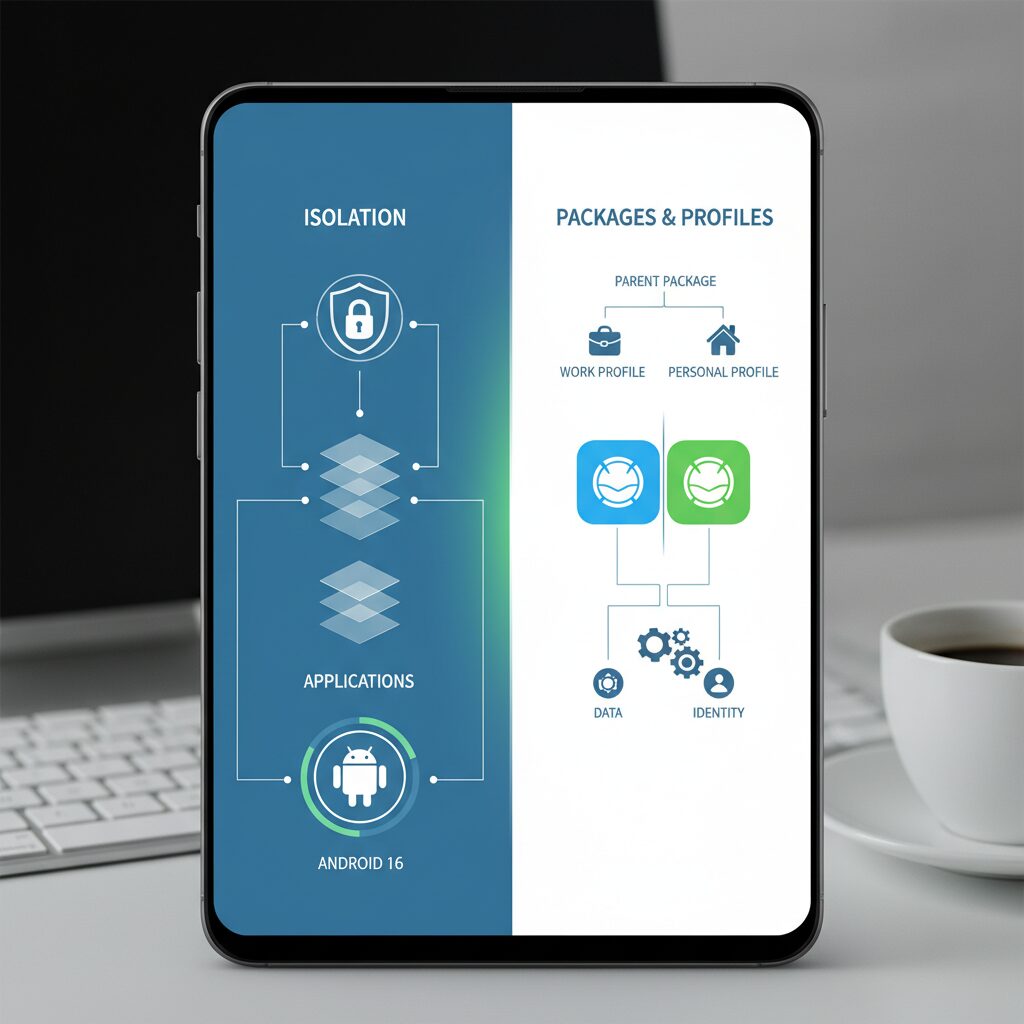
App cloning is not magic. It is a carefully engineered orchestration of isolation boundaries, package identities, and user profiles inside the operating system. When you run two instances of the same app on one device, the OS must convince itself that they are separate entities while still sharing the same physical hardware.
At its core, the architecture revolves around one principle: logical separation without physical duplication of the entire system. The app binaries may look identical, but their execution contexts are deliberately segmented.
System-Level Cloning and Package Identity
On Android, system-level cloning typically extends the native multi-user framework. According to the Android Open Source Project documentation, Android supports multiple user types, each with isolated app data directories and security identifiers. OEM features such as Dual Messenger build on this foundation.
Technically, the OS duplicates the original application package reference and assigns a modified package name, for example adding a suffix to differentiate it from the base app. The system then treats it as a distinct install target, complete with its own UID and sandbox.
This separation happens at the Linux user ID level, which is critical because Android’s sandbox model binds each app process to a unique UID. As a result, file storage paths, shared preferences, and authentication tokens remain segregated.
| Layer | Mechanism | Isolation Scope |
|---|---|---|
| Package Layer | Modified package name, distinct UID | App-level sandbox |
| User/Profile Layer | Separate user or clone profile | Data directory and system services |
| Kernel Layer | Linux UID enforcement | Process and file isolation |
Clone Profiles in Android 16
With Android 16, the introduction of the “Clone profile” formalizes app duplication at the OS level. A clone profile is not a full secondary user. Instead, it is a lightweight profile optimized to run a duplicated instance of a single application.
Unlike secondary users, which create fully independent environments, clone profiles focus on granular, app-specific isolation. The system selectively mirrors necessary system services while redirecting storage and credential management to a separate namespace.
This architectural decision reduces overhead while preserving security boundaries. Because it is standardized at the AOSP level, behavioral inconsistencies between manufacturers are narrowing.
Application Virtualization Engines
Third-party tools take a different route. Instead of modifying system packages, they create a virtualized container within the primary user space. Tools like Parallel Space rely on a lightweight virtual engine that intercepts system calls and reroutes them into a controlled sandbox.
In this model, the cloned app does not receive a truly independent UID from the OS. Rather, the virtualization layer simulates separation by managing file paths, memory allocation, and permission mapping internally.
The distinction is subtle but important: system-level cloning relies on native OS isolation, while virtualization emulates it within a host process. This difference affects compatibility, performance, and security.
Profiles, Policies, and Data Boundaries
User profiles are the structural backbone of isolation. Android defines multiple user types, including main users, secondary users, managed work profiles, and clone profiles. Each profile maintains separate application data directories under distinct user IDs.
Work profiles, widely adopted in enterprise mobility management, demonstrate how profile-based separation can enforce policy boundaries. Organizations manage only the work container, leaving personal data untouched. The same architectural logic underpins clone profiles, but with narrower scope.
From a security engineering perspective, profile isolation is stronger than simple account switching because it segments cryptographic keys, notification channels, and inter-process communication permissions.
Security Implications of Architectural Choices
Architecture directly influences risk. Research published on arXiv in 2025 analyzing over 7,700 AI-generated code files found measurable vulnerability rates depending on implementation quality. When cloning tools are built with insufficient review, weaknesses can propagate into the isolation layer itself.
If a virtualization engine mishandles permission forwarding or shared memory, the theoretical boundary between instances may weaken. In contrast, OS-level cloning benefits from hardened kernel enforcement and SELinux policies.
This is why some high-security applications declare flags that restrict execution in virtualized environments. The architecture determines whether cloning is permitted, rejected, or partially supported.
Ultimately, the technical architecture of app cloning is a layered construct. Packages define identity, profiles define context, and the kernel enforces isolation. When these three layers align, multiple digital identities can coexist on a single device without colliding.
For gadget enthusiasts and power users, understanding this structure reveals why some clones feel seamless while others drain resources or crash. Behind every duplicated icon lies a carefully negotiated contract between isolation, system policy, and performance constraints.
Android 16 and the Rise of the Native Clone Profile
With Android 16, dual app functionality has moved from fragmented OEM features to a standardized, OS-level capability through the introduction of the native Clone Profile. According to the Android Open Source Project documentation on multi-user support, the Clone Profile is now formally defined alongside Main, Secondary, and Managed (Work) profiles, signaling a structural shift in how Android treats multi-identity usage.
Unlike earlier manufacturer-specific implementations such as Samsung’s Dual Messenger, Android 16 integrates cloning directly into the system user framework. This reduces behavioral inconsistencies across devices and provides a predictable security and storage model for developers and power users alike.
| Profile Type | Primary Purpose | Isolation Level |
|---|---|---|
| Main User | Personal daily use | Baseline |
| Work Profile | Enterprise data separation | High |
| Clone Profile | Duplicate a single app instance | Medium (app-level) |
The Clone Profile is optimized specifically for running a second instance of the same application, not for creating a fully separate user environment. This distinction matters. A Secondary User creates a nearly isolated device space, while a Clone Profile focuses on app-scoped data and credential separation, balancing convenience and system efficiency.
Technically, the mechanism builds on Android’s multi-user architecture. The system treats the cloned app as operating under a distinct user environment, ensuring that authentication tokens, local storage, and app preferences do not overlap. Earlier OEM approaches often relied on modified package identifiers such as adding “.clone” to the original APK. Android 16 standardizes this behavior at the framework level, reducing compatibility issues after major OS updates.
This evolution also reshapes the developer landscape. Because cloning is now part of the core OS design, developers must assume that their apps may run in parallel instances. That has implications for session management, push notification routing, and backend rate limiting. Google’s official documentation emphasizes correct handling of user-scoped storage and secure authentication flows, especially for apps dealing with financial or sensitive personal data.
At the same time, not all applications are guaranteed to function in cloned environments. As seen in recent platform updates, some security-sensitive apps declare restrictions that prevent operation within virtualized or duplicated contexts. This reflects a broader tension between usability and security, especially as privacy expectations rise globally.
For gadget enthusiasts and advanced users, the rise of the native Clone Profile represents more than a convenience feature. It formalizes multi-account behavior as a legitimate use case rather than an edge scenario. In an era where individuals routinely manage professional, creator, community, and private identities, Android 16 acknowledges that a single human increasingly operates through multiple digital personas—and the OS is finally built to support that reality natively.
System-Level Cloning vs. Virtualization Engines: OEM Features and Third-Party Tools
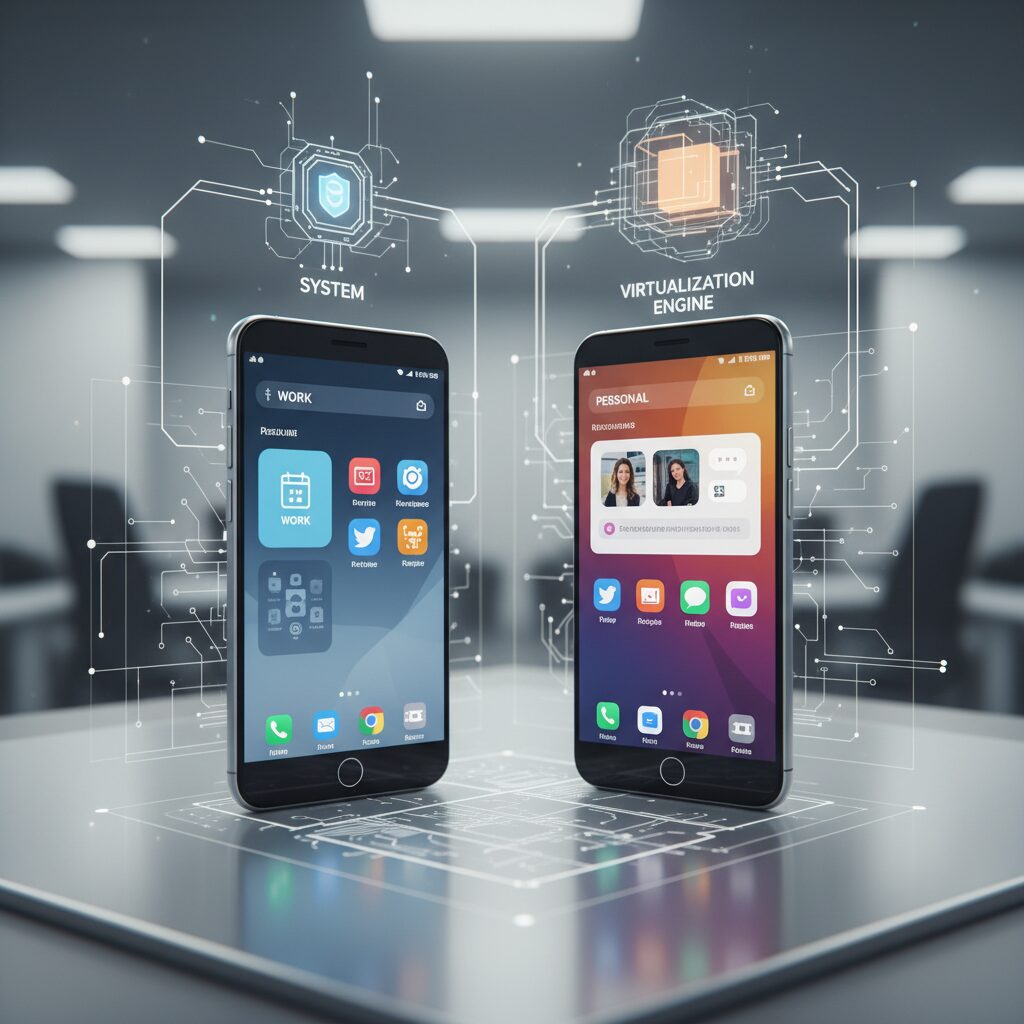
System-level cloning and third-party virtualization engines pursue the same goal—running multiple instances of the same app—but they differ fundamentally in architecture, governance, and trust boundaries. In 2026, this distinction has become more visible as Android 16 formally standardizes the Clone Profile within the AOSP multi-user framework.
OEM features such as Samsung’s Dual Messenger or Xiaomi’s Dual Apps extend Android’s native multi-user model. Instead of simulating a parallel environment, the OS duplicates the application package and assigns it to a dedicated profile, allowing the system to recognize it as a separate entity. This approach leverages kernel-level isolation and official user-type definitions, which reduces compatibility inconsistencies across devices.
According to the Android Open Source Project documentation, the introduction of the Clone Profile narrows behavioral gaps among manufacturers by defining isolation rules at the framework level. Data separation occurs at the app boundary rather than at the full user-environment level, balancing flexibility with controlled resource usage.
| Aspect | System-Level Cloning (OEM) | Virtualization Engines (Third-Party) |
|---|---|---|
| Execution Layer | Native OS multi-user framework | Lightweight virtual OS container |
| Isolation Model | Profile-based, OS-enforced | App sandbox within host app |
| Compatibility | High with supported apps | Broad device coverage, variable stability |
| Security Control | Aligned with Android security flags | Dependent on engine implementation |
In contrast, tools such as Parallel Space Pro rely on proprietary virtualization engines like MultiDroid. These engines create a contained runtime layer inside the host app, enabling duplicated execution even on devices without OEM cloning support. This flexibility has driven adoption among power users and developers who require testing environments or multi-account management on unsupported hardware.
However, virtualization engines introduce an additional abstraction layer. The cloned app does not run directly under the OS profile model but within a mediated container. As a result, performance overhead, background process instability, and compatibility conflicts with newer Android versions are more frequently reported in user reviews on official app stores.
Security implications also diverge sharply. System-level cloning respects Android’s security flags, including mechanisms that allow sensitive applications to block execution in virtualized contexts. Banking and high-security apps increasingly declare flags that prevent operation inside cloned or containerized environments. This creates a structural advantage for OEM-level implementations, which are more likely to be recognized as legitimate profiles rather than emulated spaces.
Academic research further underscores the risk dimension surrounding unofficial cloning ecosystems. A 2025 large-scale analysis published on arXiv examined 7,703 AI-generated code files and found that while 87.9% were vulnerability-free, the remainder contained significant weaknesses. The study also reported that iterative AI-assisted refinement increased severe vulnerabilities by 37.6%. When applied to third-party cloning tools developed without rigorous review, this evidence suggests that security debt can accumulate invisibly.
Virtualization tools often provide advanced customization, including device identifier masking or network proxy routing. While attractive for privacy-conscious users, these capabilities blur the boundary between legitimate isolation and evasion of platform safeguards. Separate research into LLM app cloning and squatting has shown measurable rates of malicious behavior among cloned applications, reinforcing the need for provenance verification.
From a resource-management standpoint, OEM-level cloning integrates more efficiently with Android’s process scheduler and memory governance. Because the OS recognizes each clone as part of its multi-user architecture, resource allocation follows predictable system rules. Virtualization engines, by contrast, must manage CPU, RAM, and synchronization tasks within their own runtime, which can amplify battery consumption during parallel background activity.
Ultimately, the decision between system-level cloning and third-party virtualization is not merely about convenience. It reflects a trade-off between architectural transparency and functional flexibility. OEM-native cloning prioritizes stability, compliance, and long-term platform support, while virtualization engines emphasize device-agnostic adaptability and deep customization. For gadget enthusiasts who demand granular control, understanding this structural divergence is essential to making informed, risk-aware choices in a multi-identity mobile environment.
Multi-Account Demand in Japan: Platform Statistics and Behavioral Trends
In Japan, demand for managing multiple accounts on a single device is no longer a niche behavior but a structural shift in digital life. As smartphone usage deepens across age groups, users increasingly separate identities by purpose, community, and economic activity.
According to MMD Research Institute, Android holds 51.4% of the main device OS share in late 2025, while iPhone accounts for 48.3%. This near parity matters because Android’s system-level cloning flexibility and iOS’s gradual multi-account support shape how Japanese users operationalize dual identities.
The platform environment directly influences how—and how easily—users maintain parallel digital personas.
| Platform | Estimated Users in Japan | Multi-Account Behavior |
|---|---|---|
| LINE | 99+ million | Work/private/side-business separation |
| YouTube | 73.7+ million | Viewing vs. creator channels |
| X (Twitter) | 68+ million | Interest-based parallel accounts |
| 66+ million | Business and personal branding split | |
| TikTok | 42+ million | Content-niche specialization |
Data compiled by Comnico (2026 edition) shows that communication and social platforms dominate daily engagement. Within this ecosystem, identity segmentation becomes a practical necessity rather than a preference.
Docomo’s Mobile Society Research Institute reports that 17.0% of users hold multiple Google accounts, 11.7% maintain multiple X accounts, and 8.9% manage more than one Instagram account. These figures reveal that multi-account behavior is already normalized at the credential level, even before OS-level cloning is considered.
Behaviorally, Japanese users tend to segment accounts along three axes: economic function, social circle, and anonymity. For example, X users commonly maintain separate accounts for hobbies, professional networking, and private commentary, reflecting the platform’s average user age of 37 and its community-centric culture.
LINE presents a uniquely Japanese case. With over 99 million users domestically and a strict one-phone-number-per-account structure, multiple account operation often requires additional SIM management or profile separation. As LUFT’s operational guides explain, users frequently combine OEM dual-messenger features with secondary lines to maintain strict work–private boundaries.
This reflects a broader cultural pattern: identity control in Japan prioritizes context separation over visibility maximization.
Generational differences further reinforce demand. On Instagram, where roughly 80% of people in their 20s participate, business–personal bifurcation is standard practice. On TikTok, where more than 65% of teenagers are active, niche-specific accounts allow experimentation without contaminating a primary identity.
From a marketing perspective, this fragmentation means that a single user may represent multiple behavioral clusters simultaneously. A consumer might engage as a corporate decision-maker on one account, a hobbyist on another, and an anonymous commentator on a third. Platform statistics therefore understate identity multiplicity per capita.
In 2026 Japan, multi-account demand is not driven by technical curiosity but by structural digital coexistence. As platform penetration approaches saturation, growth shifts from user acquisition to identity diversification within the same individual.
The real expansion is not in the number of users—but in the number of selves each user actively manages.
LINE, Sub-Numbers, and Cultural Drivers of Account Separation
In Japan, the demand for dual apps is inseparable from LINE’s dominance and the cultural logic of separating identities. With more than 99 million users domestically, LINE functions as social infrastructure rather than a simple messaging tool, according to industry data compiled by Comnico. This scale naturally amplifies the need to segment communication contexts.
Unlike platforms that allow multiple profiles under a single login, LINE is built on a one-phone-number-per-account principle. As detailed by LUFT’s operational guides, creating a second LINE account requires securing a separate phone number, then registering it within a cloned app or isolated user profile. This structural constraint directly fuels interest in dual app and sub-number solutions.
| Element | LINE Policy | User Response |
|---|---|---|
| Account creation | One phone number per account | Obtain sub-number or secondary SIM |
| App environment | Single install by default | Use OEM dual app or user profile |
| Contact data | Synced per profile | Separate environments to avoid mixing |
Technically, users rely on OEM features such as Galaxy’s Dual Messenger or Android’s multi-user function to install a second LINE instance. By registering a different number in the cloned environment, they maintain strict data isolation, preventing contact lists and chat histories from overlapping. This is not merely convenience; it is operational risk control in everyday communication.
The cultural drivers are equally important. Japan’s communication norms emphasize context-sensitive behavior, often described as switching between public and private selves. Work groups, family circles, hobby communities, and even “oshi-katsu” fan activities each demand different tones and disclosure levels. Maintaining multiple LINE accounts becomes a practical mechanism for preserving social boundaries in a high-context society.
Survey data cited by Webtan shows that 17.0% of users hold multiple Google accounts, and 11.7% do so on X. This broader pattern of account segmentation reinforces LINE sub-account strategies. Users are not fragmenting impulsively; they are systematically structuring digital identities around role-based communication.
From a marketing and AIO perspective, this behavior has profound implications. Brands operating official LINE accounts must recognize that a single individual may interact through different personas, each with distinct intent and engagement patterns. Segmentation strategies based solely on device or surface-level identifiers risk misinterpreting user journeys.
Dual apps and sub-numbers are therefore not hacks but reflections of a culturally embedded need for identity compartmentalization. In Japan’s mobile ecosystem, technological architecture and social expectations converge, making account separation a rational, even essential, design response to modern communication complexity.
Enterprise DX and Android Work Profiles: Real-World Business Implementations
In enterprise environments, dual app technology has evolved from a convenience feature into a strategic pillar of DX. By leveraging Android Work Profiles, companies can logically separate corporate data from personal data on a single device, enabling secure BYOD without sacrificing user experience.
According to the Android Open Source Project documentation, Work Profiles create a managed container within the main user space, where apps, storage, and policies are isolated at the OS level. This isolation is enforced through Android’s multi-user framework, which ensures that corporate data cannot be accessed by personal apps.
The key value for enterprises lies in granular control: organizations can manage only the work container while leaving private data untouched.
The operational differences between personal space and Work Profile environments can be summarized as follows.
| Aspect | Personal Profile | Work Profile |
|---|---|---|
| App Management | User-installed freely | Deployed via MDM |
| Data Control | User managed | Remote wipe & policy enforcement |
| Security Policies | Optional | Mandatory encryption & compliance |
In Japan, NTT Docomo Business has expanded enterprise mobility solutions integrating device management and secure communication. Through services such as Anshin Manager NEXT, administrators can centrally configure Work Profiles, enforce encryption, and remotely erase only corporate data in case of loss or resignation.
This selective wipe capability significantly reduces legal and ethical friction in BYOD deployments. Employees retain photos, private messages, and personal app data, while companies maintain compliance with internal security standards and industry regulations.
Communication separation is another practical implementation. By combining Work Profiles with solutions like cloud PBX services, employees can make and receive business calls using corporate numbers within managed apps, without exposing their personal mobile numbers. This architectural separation strengthens brand governance and auditability.
DX use cases extend beyond office work. In construction and field operations, managed profiles transform personal smartphones into secure enterprise terminals running specialized apps for 3D measurement or fleet tracking. Devices effectively switch roles depending on the active profile, minimizing hardware duplication costs.
Security governance remains critical. Research published on arXiv in 2025 and 2026 highlights vulnerabilities in poorly validated cloned or AI-generated applications. For enterprises, this underscores the importance of distributing approved apps exclusively through managed Play environments within the Work Profile, rather than relying on third-party cloning tools.
Ultimately, Android Work Profiles operationalize dual-app principles at scale. They do not merely duplicate applications; they institutionalize identity separation, policy enforcement, and lifecycle management. For organizations pursuing serious digital transformation, this controlled duality becomes a foundation for sustainable, secure mobile-first operations.
AI-Generated Code and Clone App Vulnerabilities: Evidence from Large-Scale Studies
As dual app technologies become mainstream, a new risk surface has emerged: AI-generated code and large-scale clone app ecosystems. Recent empirical studies show that convenience-driven cloning and rapid AI-assisted development can quietly introduce systemic vulnerabilities into mobile environments.
According to a large-scale arXiv study published in October 2025, researchers analyzed 7,703 AI-generated code files from public GitHub repositories using CodeQL. While 87.9% contained no detectable vulnerabilities, the remaining portion exposed critical Common Weakness Enumerations (CWEs), highlighting that AI assistance does not guarantee secure-by-default implementations.
| Language | Vulnerability Rate | Security Density (LOC per CWE) |
|---|---|---|
| Python | 16.18%–18.50% | 1,739 (with Copilot) |
| JavaScript | 8.66%–8.99% | Pattern-sensitive |
| TypeScript | 2.50%–7.14% | Relatively stronger |
The findings suggest that unofficial clone tools or rapidly prototyped dual-app utilities built with AI may inherit language-specific weaknesses from the outset. More concerning, a separate arXiv analysis on iterative AI code refinement found that repeated feedback loops increased severe vulnerabilities by 37.6%, demonstrating a paradox where optimization cycles degrade security posture.
The risks extend beyond source code quality. A comprehensive study on LLM app squatting and cloning identified over 5,000 squatting apps and 9,575 cloned instances derived from the top 1,000 LLM applications. Among sampled cases, 18.7% of squatting apps and 4.9% of cloned apps exhibited malicious behaviors such as phishing, malware distribution, and deceptive content injection.
This evidence reframes clone apps not merely as productivity tools, but as scalable attack vectors within AI-driven ecosystems. When app names, interfaces, and even conversational models are replicated at scale, users struggle to distinguish authentic services from weaponized copies.
Further compounding the issue, research on blurred capability boundaries in LLM applications documented real-world abuse cases where access control weaknesses allowed restricted functions to be bypassed. This demonstrates that cloning is not only about duplicating UI or branding, but also about replicating capability layers without adequate governance.
From a governance perspective, the implications are serious. ISACA-related industry reporting indicates that 26% of privacy professionals expect a material privacy breach in 2026, while 44% cite insufficient budgets to manage emerging risks. As clone apps multiply and AI-generated code accelerates release cycles, oversight capacity is not scaling proportionally.
For power users and developers, the takeaway is clear: security validation must precede convenience. Static analysis, dependency auditing, and provenance verification of cloned or AI-assisted applications are no longer optional best practices—they are baseline requirements in a multi-identity mobile world increasingly shaped by automated code generation.
LLM App Squatting and Cloning: Emerging Threats in AI App Ecosystems
As AI app ecosystems expand rapidly in 2026, a new category of risk is drawing serious attention: LLM app squatting and cloning. While dual app technology was originally designed to separate identities safely at the OS level, malicious actors are now exploiting similar concepts at the platform level to impersonate, replicate, and monetize trusted AI applications.
The core issue is no longer technical cloning alone, but trust-layer manipulation inside AI marketplaces. When users search for a popular AI tool, visually similar names, icons, or descriptions can lead them to install a fraudulent clone without realizing it.
According to the arXiv paper “LLM App Squatting and Cloning” (2411.07518), large-scale analysis using the LLMappCrazy tool uncovered the following ecosystem-wide patterns.
| Category | Observed Scale | Malicious Behavior Rate |
|---|---|---|
| Squatting Apps | 5,000+ derived from top 1,000 names | 18.7% |
| Cloned Apps | 9,575 cases identified | 4.9% |
Squatting apps typically imitate the branding of high-ranking LLM tools by slightly modifying names or metadata. Cloned apps, by contrast, attempt to replicate functionality or prompt structures. The research found that nearly one in five squatting apps exhibited malicious behavior, including phishing interfaces, malware distribution, deceptive advertising injection, and fake content generation.
This threat model differs from traditional mobile app cloning. In LLM ecosystems, functionality is often abstract and prompt-driven, making behavioral inspection more difficult. A cloned chatbot can appear legitimate during casual interaction while quietly harvesting user input or redirecting API calls.
Another dimension of risk emerges from blurred capability boundaries. The study “Beyond Jailbreak” (2511.17874v2) documents a real-world incident in early 2025 where weaknesses in access control within an LLM-powered translation feature were exploited to bypass restrictions and execute unintended tasks. This marked one of the first documented abuses of an LLM application in the wild.
What makes LLM app squatting especially dangerous is the convergence of identity confusion and AI-generated code. Separate research analyzing 7,703 AI-generated GitHub files (arXiv 2510.26103) found that while 87.9% showed no detected vulnerabilities, the remaining code contained significant CWE weaknesses. Python projects exhibited vulnerability rates between 16.18% and 18.50%, substantially higher than TypeScript’s 2.50%–7.14% range.
When fraudulent developers rapidly generate clone apps using AI-assisted coding, these statistical risk patterns compound. Furthermore, a systematic analysis of iterative AI code generation (arXiv 2506.11022) revealed that repeated feedback loops with AI increased severe vulnerabilities by 37.6%. In the context of cloned LLM apps, this means security degradation can scale alongside replication speed.
Platform governance is struggling to keep pace. The economic incentive is clear: popular AI apps accumulate search traffic, subscription conversions, and API usage revenue. Squatters intercept this demand with minimal branding investment. Unlike counterfeit hardware, detection requires semantic and behavioral auditing, not just binary signature checks.
For gadget-savvy users and AI power users, practical vigilance becomes essential. Verification of developer identity, cross-checking official sources, and scrutinizing permission scopes are no longer optional steps. Even subtle inconsistencies in update frequency or privacy disclosures can signal elevated risk.
LLM app squatting represents a structural vulnerability of open AI marketplaces, not merely a collection of isolated bad actors. As AI agents become embedded in productivity, finance, and communication workflows, cloned applications gain access to increasingly sensitive conversational data. The attack surface shifts from device-level isolation to conversational trust itself.
In this environment, the future of AI app ecosystems depends on stronger naming protections, automated similarity detection, runtime behavior monitoring, and transparent developer verification pipelines. Without these safeguards, the very scalability that defines LLM platforms will continue to amplify impersonation risks.
Self-Cloning AI Chatbots for Mental Well-Being: Innovation and Ethical Boundaries
In 2026, self-cloning AI chatbots are emerging as a new frontier in digital identity: instead of duplicating an app, they replicate the user’s conversational patterns, values, and emotional tendencies. For gadget enthusiasts and early adopters, this represents a shift from managing multiple accounts to managing multiple versions of the self.
According to the arXiv paper “Cloning the Self for Mental Well-Being” (2601.15465v1), researchers explored how AI chatbots trained on a user’s dialogue history can function as a “self-clone” for therapeutic reflection. Through interviews with 16 mental health professionals and 6 general users, the study examined both the promise and the psychological hazards of this approach.
A self-clone chatbot is not just a productivity tool. It is a mirror that talks back.
The proposed design framework emphasizes three pillars: alignment with established psychotherapy models, dynamic definition of the relationship between user and clone, and systematic minimization of emotional and ethical risks. This is crucial because the chatbot does not act as a neutral assistant; it simulates the user’s own cognitive style.
Key opportunities and risks identified in the research can be structured as follows.
| Dimension | Potential Benefit | Primary Risk |
|---|---|---|
| Self-Dialogue | Enhanced reflection and emotional articulation | Reinforcement of negative cognitive schemas |
| Identity Modeling | Clearer understanding of behavioral patterns | Identity confusion or over-identification with the clone |
| Accessibility | 24/7 low-barrier mental support | Blurring boundary between simulation and reality |
From a Human-Computer Interaction perspective, the most delicate issue is relational framing. If users perceive the clone as an authority, it may unintentionally legitimize maladaptive beliefs. If they perceive it purely as a tool, therapeutic depth may diminish. The study stresses that the relationship must be explicitly designed and continuously recalibrated.
This ethical tension becomes sharper when viewed alongside broader LLM security research. Studies on LLM app cloning and misuse have shown that boundary ambiguities can lead to unintended behaviors and exploitation. When the “app” being cloned is effectively a personality model, the stakes are significantly higher.
Another design challenge lies in data provenance and consent. A self-clone requires extensive personal conversation data to model tone, preferences, and emotional triggers. Without strict governance, the same dataset that enables therapeutic mirroring could expose deeply sensitive psychological patterns. As privacy professionals have warned in broader AI contexts, governance often lags behind innovation.
For mental well-being applications, safety layers are not optional add-ons but structural requirements. The framework recommends embedding guardrails such as crisis escalation protocols, transparency about synthetic nature, and constraints against validating harmful ideation. In other words, a self-clone must be engineered to disagree when necessary.
For tech-forward readers, the appeal is obvious: an AI that understands you at a granular level, available anytime, capable of structured self-dialogue. Yet the innovation challenges us to reconsider what “digital identity management” truly means. It is no longer just about separating work and private profiles, but about negotiating boundaries within one’s own replicated persona.
As this field matures, the central question will not be whether we can clone the self, but how responsibly we can design that clone to support growth rather than entrench vulnerability.
Performance, Battery, and Secure Environment Flags: The Practical Limits of Dual Apps
Dual apps promise convenience, but in practice they push your device to its architectural limits. Because each cloned app runs as an independent process with its own data space, the system must allocate separate CPU cycles, RAM, background services, and storage blocks. According to technical analyses of Android’s multi-user framework, even clone profiles rely on real process isolation rather than lightweight session switching.
This means performance impact is not theoretical—it is structural. When two instances of a messaging or social app continuously sync notifications, media, and cloud backups, the load doubles at the scheduler level. On mid-range devices, this often translates into frame drops, delayed push notifications, or aggressive background task killing by the OS.
| Resource | Single App | Dual App (Clone) |
|---|---|---|
| RAM Usage | One active process | Two isolated processes |
| Background Sync | Single channel | Parallel network calls |
| Storage | One data directory | Duplicated app data |
Battery life is where the trade-off becomes most visible. Multiple background connections—especially for chat, SNS, or cloud-based collaboration tools—trigger repeated radio wake-ups. As documented in Android developer materials and reflected in user reports of major cloning apps, persistent background activity can accelerate battery drain significantly when both instances remain logged in and active.
Users frequently notice that cloned apps are terminated after 10 to 15 minutes on newer Android versions. This is not merely instability; it is often the operating system enforcing stricter background execution limits introduced in Android 15 and 16. In other words, the platform itself recognizes that duplicated workloads can destabilize overall device performance.
Security flags introduce another hard boundary. Increasingly, financial and privacy-sensitive applications declare secure environment requirements such as REQUIRE_SECURE_ENV, preventing execution inside virtualized or cloned environments. For banking, payment, or identity verification apps, cloning is intentionally blocked at the manifest level.
This shift reflects a broader industry stance. As research on cloned and squatted LLM applications has shown, isolation layers can be abused for phishing or malicious redistribution. Developers respond by tightening runtime checks, detecting virtualization frameworks, and refusing to launch in modified environments. The result is a fragmented experience: social apps may clone smoothly, while high-security apps simply refuse to open.
Third-party virtualization tools add further complexity. Reviews of leading cloning platforms in late 2025 and early 2026 highlight recurring crashes after OS updates, inconsistent license recognition, and compatibility gaps on tablets. Because these tools operate as intermediary execution layers, any system update can break internal hooks or sandbox assumptions.
In practical terms, dual apps scale best on devices with abundant RAM, optimized power management, and official OS-level clone support. OEM-native clone profiles are generally more stable than virtualization-based solutions, precisely because they integrate with Android’s user-type architecture rather than emulating it.
Ultimately, dual apps are not infinitely extensible. Performance ceilings, battery economics, and secure environment enforcement define clear operational limits. Power users can push these boundaries, but the operating system—and increasingly, app developers themselves—set guardrails that cannot be bypassed without compromising stability or security.
Privacy Budgets Under Pressure: What 2026 Forecasts Mean for Users and Enterprises
As dual app and multi-profile technologies mature in 2026, the concept of a “privacy budget” is no longer abstract. It represents the real-world limits of money, talent, and governance that organizations can allocate to protect user data across cloned apps, work profiles, and AI-driven environments.
According to ISACA’s 2026 outlook reported by ITPro, 44% of privacy teams say they are underfunded, and 54% expect further budget cuts. Even more striking, 26% of professionals anticipate a material privacy breach within the year. This signals a structural imbalance between technological complexity and defensive capacity.
For enterprises deploying dual apps, work profiles, and AI-integrated mobile tools, that imbalance has immediate consequences.
Enterprise Pressure Points in 2026
| Area | Emerging Risk | Operational Impact |
|---|---|---|
| AI-generated code | Hidden CWE vulnerabilities | Insecure clone or management apps |
| LLM app cloning | App squatting and impersonation | Brand damage and data leakage |
| Work profiles | Misconfigured access control | Cross-boundary data exposure |
An arXiv study analyzing 7,703 AI-generated code files found that while 87.9% were free from detected vulnerabilities, the remaining portion contained serious weaknesses. Another paper showed that iterative AI-assisted coding increased severe vulnerabilities by 37.6% when human review was insufficient. When privacy budgets shrink, rigorous code auditing is often the first casualty.
Meanwhile, research on LLM app squatting identified over 5,000 squatting apps and 9,575 cloning cases derived from top app names, with 18.7% of sampled squatting apps demonstrating malicious behavior. Enterprises must now defend not only their infrastructure, but also their digital identity footprint across app ecosystems.
For users, the implications are equally tangible. As banks and high-security apps adopt flags such as REQUIRE_SECURE_ENV to block execution in virtualized environments, cloned convenience gives way to controlled access. Privacy protection increasingly means reduced flexibility.
For gadget enthusiasts and power users, this shift means greater scrutiny of third-party cloning tools, subscription transparency, and update compatibility. For enterprises, it demands measurable governance: stricter MDM policies, verified app distribution channels, and mandatory human-in-the-loop security reviews.
The forecast is clear. As multi-identity management becomes mainstream, privacy budgets are under structural pressure. Those who treat privacy as a strategic investment rather than an operational expense will define the next phase of secure digital identity.
参考文献
- Android Open Source Project:Support multiple users
- Google Play:Parallel Space Pro – app clone
- App Cloner:App Cloner – Official Home Page
- arXiv:Security Vulnerabilities in AI-Generated Code: A Large-Scale Analysis of Public GitHub Repositories
- arXiv:LLM App Squatting and Cloning
- ITPro:26% of privacy professionals expect a “material privacy breach” in 2026 as budget cuts and staff shortages stretch teams to the limit