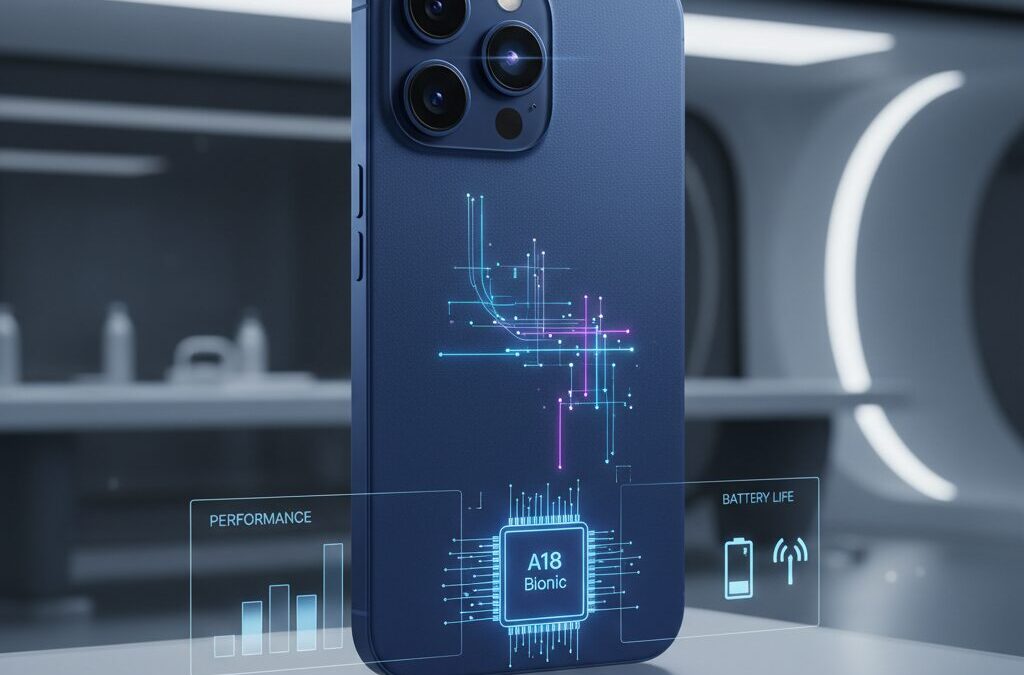
If you closely follow gadgets and smartphone trends, you have probably felt that recent flagship phones are becoming more expensive while offering fewer truly meaningful upgrades.
Many users now ask whether paying over $1,000 for a smartphone still makes sense in everyday life.
This growing sense of fatigue has created the perfect stage for a device like the iPhone 16e.
Released in early 2025, the iPhone 16e is not positioned as a “cheap iPhone,” but as a carefully engineered answer to changing user priorities.
It combines Apple’s latest A18 chip, long-term AI readiness, and exceptional battery life, while deliberately trimming features that drive up cost without benefiting most users.
This balance makes the iPhone 16e a fascinating case study in modern product strategy.
In this article, you will discover how Apple optimized hardware design, silicon performance, connectivity, and pricing to create a device focused on essentials.
We will also examine real benchmark data, camera trade-offs, modem innovation, and competitive positioning against rivals like Google Pixel.
By the end, you will clearly understand who the iPhone 16e is truly for and whether its philosophy aligns with your expectations.
- Why the iPhone 16e Arrived at This Moment in the Global Smartphone Market
- Mid-Range Is the New Battleground: Shifting Consumer Behavior and Pricing Pressure
- Design Philosophy Explained: Reusing Proven Hardware to Control Costs
- The 60Hz OLED Debate: Display Choices and Real-World Impact
- A18 Chip Breakdown: Binning Strategy, Benchmarks, and Daily Performance
- 8GB RAM and Apple Intelligence: Future-Proofing an Entry-Level iPhone
- Apple’s C1 5G Modem: Independence from Qualcomm and Efficiency Gains
- Single-Lens Camera Strategy: Computational Photography vs Physical Limits
- Battery Life vs MagSafe: Engineering Trade-Offs That Define the iPhone 16e
- Price, Resale Value, and Total Cost of Ownership Compared to Pixel Rivals
- 参考文献
Why the iPhone 16e Arrived at This Moment in the Global Smartphone Market
The arrival of the iPhone 16e in early 2025 makes sense when viewed against the current stagnation of the global smartphone market. According to analyses by IDC and Counterpoint Research, worldwide shipments have struggled to return to pre‑pandemic growth, while average selling prices continue to rise. **Consumers are keeping devices longer, not because they want to, but because flagships have become too expensive to justify incremental upgrades.** Apple needed a product that could unlock delayed demand without eroding its premium brand, and the iPhone 16e answers that requirement with precise timing.
At the same moment, the high‑end segment has reached a point of diminishing returns. Camera megapixels, refresh rates, and display brightness no longer translate into clear everyday benefits for most users. Industry researchers and usability studies frequently note that perceived performance gains flatten beyond a certain threshold. **This environment favors a model that prioritizes core performance and longevity over spec inflation**, which explains why Apple chose to pair the latest A18 chip with selectively optimized hardware rather than chasing headline features.
| Market Factor | Global Trend | Implication for iPhone 16e |
|---|---|---|
| Flagship Pricing | Exceeding $1,000 in many regions | Creates demand for sub‑flagship alternatives |
| Upgrade Cycles | Extending beyond 3–4 years | Rewards devices with long software relevance |
| User Priorities | Battery life and reliability | Supports a performance‑efficient design |
Currency dynamics also play a critical role. The weak yen has magnified price sensitivity in Japan, turning psychological thresholds into real barriers. **Positioning the iPhone 16e just below the 100,000‑yen line is not accidental but a calculated response to local purchasing behavior**, something Japanese retail analysts have long emphasized. Combined with carrier programs that highlight monthly costs rather than full prices, Apple effectively aligns global product strategy with regional realities.
From a broader perspective, the timing reflects Apple’s confidence in its silicon roadmap and ecosystem lock‑in. By launching a mid‑priced model powered by the same generation of chip as its flagships, Apple reinforces the idea that meaningful performance is now democratized within its lineup. **The iPhone 16e arrives precisely when the market needs reassurance that innovation can still feel accessible**, not excessive, and that balance explains why this moment was chosen.
Mid-Range Is the New Battleground: Shifting Consumer Behavior and Pricing Pressure
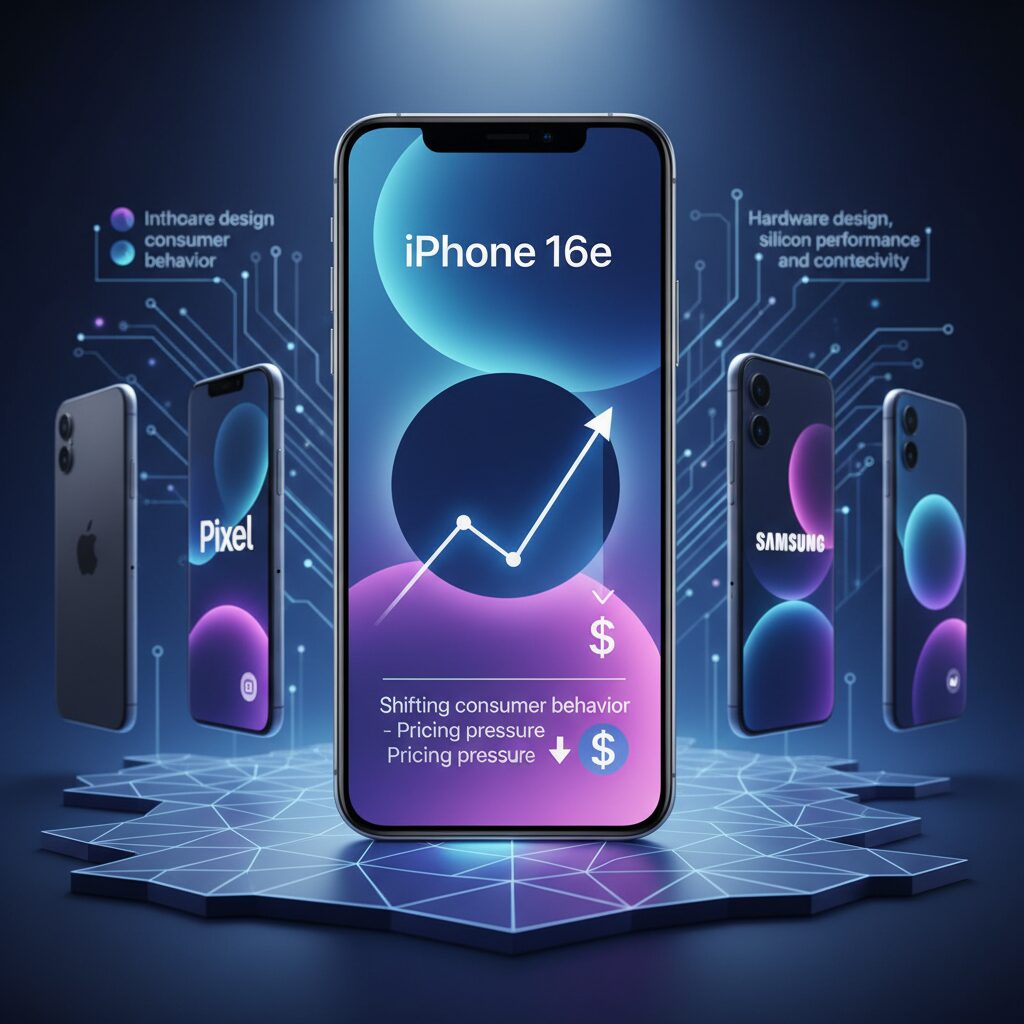
The global smartphone market has clearly entered a new phase where the mid-range segment has become the most fiercely contested battlefield, and shifting consumer behavior is at the center of this change.
According to industry analyses frequently cited by firms such as IDC and Counterpoint Research, shipment volumes of ultra‑premium smartphones have stagnated in recent years, while devices positioned below the psychological $1,000 threshold continue to show relative resilience.
This shift is not driven by declining interest in technology, but by a growing sense of diminishing returns. For many users, incremental improvements in camera resolution or display refresh rates no longer justify dramatic price increases.
Apple’s introduction of iPhone 16e can be read as a direct response to this structural change in demand.
By combining a latest‑generation A18 chip with carefully optimized peripheral components, Apple is signaling that raw performance longevity now matters more to mainstream buyers than spec-sheet dominance.
This approach aligns with research from behavioral economists, including studies published by the Harvard Business Review, which show consumers increasingly prioritize long-term value and price stability during periods of economic uncertainty.
| Factor | High-End Segment | Mid-Range Segment |
|---|---|---|
| Price Sensitivity | Low | High |
| Perceived Innovation | Incremental | Selective but impactful |
| Upgrade Motivation | Enthusiast-driven | Value-driven |
Pricing pressure further intensifies this battleground, particularly in markets like Japan where currency depreciation amplifies the cost of imported electronics.
The so‑called “¥100,000 wall” functions as a powerful psychological anchor, and products that cross it face immediate resistance regardless of brand strength.
Positioning the iPhone 16e just below this threshold is a deliberate attempt to capture price-conscious consumers without eroding Apple’s premium image.
Another important factor is the rise of carrier‑driven “effective pricing” models.
Installment plans and return programs significantly lower the perceived monthly burden, making mid‑range devices feel accessible even to users who would otherwise delay upgrades.
This mechanism disproportionately benefits devices like iPhone 16e, which balance brand desirability with controlled manufacturing costs.
In contrast, competitors in the Android ecosystem often compete on visible hardware features such as high refresh rate displays or multi‑camera arrays.
Apple’s strategy diverges by emphasizing silicon performance, battery efficiency, and long software support cycles.
As pricing pressure squeezes margins across the industry, the mid‑range segment is no longer about compromise, but about choosing which strengths truly matter to consumers.
Design Philosophy Explained: Reusing Proven Hardware to Control Costs
Apple’s design philosophy with the iPhone 16e is best understood as a deliberate strategy of reuse rather than radical reinvention. Instead of chasing visual novelty, Apple focuses on proven hardware platforms whose manufacturing characteristics are already well understood. This approach allows the company to control costs while preserving the tactile quality and durability that users associate with the iPhone brand.
Reusing an established physical design significantly reduces tooling, validation, and yield risks. According to analyses commonly cited by supply chain experts and institutions such as MIT’s engineering management research, tooling amortization is one of the largest fixed costs in consumer electronics. By relying on a chassis architecture nearly identical to previous generations, Apple avoids the expense of new molds and minimizes defect rates during mass production.
| Design Element | Strategy | Cost Impact |
|---|---|---|
| Chassis dimensions | Reuse of prior-generation footprint | Lower tooling and validation costs |
| Materials | Established aluminum and glass process | Stable supplier pricing |
| Color options | Limited to two finishes | Simplified inventory management |
The benefits are not purely financial. Mature hardware platforms come with years of real-world reliability data. Manufacturing partners already know how the materials behave under stress, how tolerances shift at scale, and where failures are most likely to occur. As Apple executives have stated in past product briefings, predictability in manufacturing is a prerequisite for delivering consistent user experience, not a compromise.
This philosophy also aligns with Apple’s broader sustainability narrative. Reusing designs reduces the need for repeated industrial requalification and helps stabilize component demand. Research published by organizations like the International Energy Agency has shown that extending the lifecycle of industrial designs can meaningfully reduce embedded carbon emissions, even when overall unit sales remain high.
From a market perspective, the reuse of familiar hardware sends a subtle message to consumers. The iPhone 16e does not ask users to relearn how to hold, pocket, or interact with their device. For cost-sensitive yet quality-conscious buyers, especially in markets with strong price thresholds, this familiarity lowers psychological friction at the point of purchase.
Ultimately, the iPhone 16e demonstrates that cost control does not require visible downgrades in build quality. By standing on the shoulders of proven hardware, Apple redirects resources toward areas that matter most to longevity and performance. The result is a product that feels conservative by design, yet highly intentional in execution.
The 60Hz OLED Debate: Display Choices and Real-World Impact
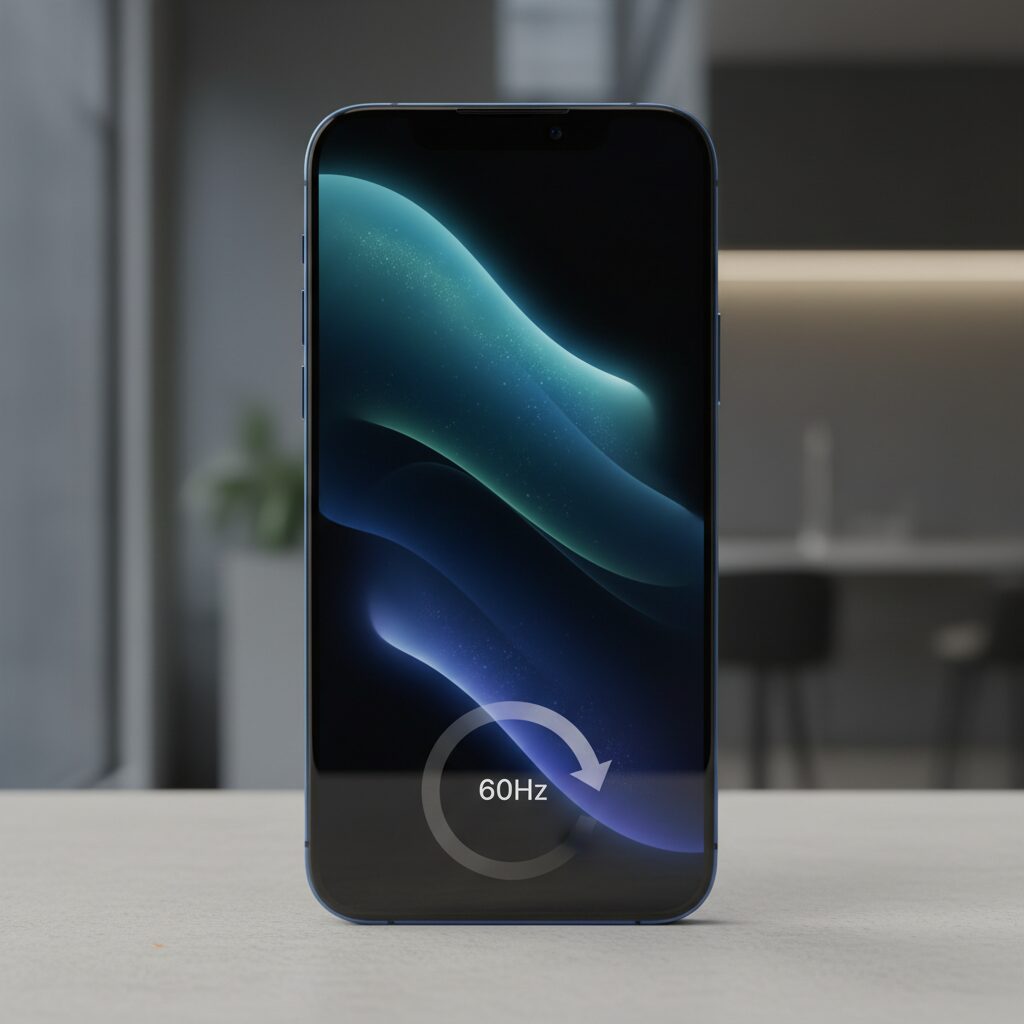
The decision to stick with a 60Hz OLED panel on the iPhone 16e has sparked one of the most heated debates among display enthusiasts in recent years, and the controversy is understandable.
On paper, a 60Hz refresh rate looks dated in a market where even mid-range Android devices routinely advertise 90Hz or 120Hz panels. However, real-world impact depends heavily on how, and by whom, the device is actually used.
At 60Hz, the display refreshes 60 times per second, while 120Hz panels double that frequency. This directly affects perceived smoothness during scrolling, animations, and fast UI interactions. The difference is most noticeable when rapidly flicking through long web pages or social feeds.
| Usage Scenario | 60Hz OLED Experience | 120Hz OLED Experience |
|---|---|---|
| Web browsing & SNS | Smooth, stable, familiar | Exceptionally fluid, visually striking |
| Gaming | Frame rate capped, consistent | Higher responsiveness when supported |
| Battery consumption | Lower, predictable | Higher without adaptive control |
What often gets overlooked is that the iPhone 16e still uses a high-quality Super Retina XDR OLED panel. According to DisplayMate’s long-standing evaluation criteria, factors such as color accuracy, contrast ratio, peak brightness, and calibration matter just as much as refresh rate for perceived image quality.
Apple’s OLED panels consistently score near-perfect marks in color accuracy and uniformity, meaning static content, photos, and video playback look virtually indistinguishable from higher-refresh counterparts. For video in particular, this matters more than many assume.
Most cinematic and streaming content is produced at 24fps or 30fps, with some sports at 60fps. In these scenarios, a 120Hz panel offers no intrinsic advantage, as the source material itself does not exceed 60 frames per second.
Another key factor is power efficiency. Research published by IEEE on mobile display power consumption has shown that higher refresh rates can increase display-related power draw by 10–20% if not paired with advanced adaptive technologies like LTPO.
The iPhone 16e deliberately avoids LTPO to control costs, but this choice has a side effect: consistently lower power draw. Combined with a large battery and an efficient modem, the 60Hz panel plays a meaningful role in the device’s standout battery life.
There is also a psychological dimension to this debate. Human–computer interaction studies from institutions such as MIT Media Lab suggest that once refresh rates exceed a certain threshold, perceived improvements diminish rapidly for non-specialist users.
Users accustomed to 120Hz displays will notice the downgrade immediately, while those upgrading from older 60Hz iPhones or LCD-based models often report no discomfort after a brief adjustment period.
In real-world usage, the 60Hz OLED on the iPhone 16e is less a technical limitation and more a statement of priorities. It favors visual fidelity, battery efficiency, and cost control over headline-grabbing specs, making the debate less about right or wrong, and more about which compromises matter to you.
A18 Chip Breakdown: Binning Strategy, Benchmarks, and Daily Performance
The A18 chip inside the iPhone 16e looks identical on paper to the A18 used in the standard iPhone 16, but the real story emerges when you examine Apple’s binning strategy. In semiconductor manufacturing, binning is a yield-optimization technique where chips with partially non-functional components are not discarded but repurposed. According to explanations commonly cited by TSMC and industry analysts, this approach is especially important on cutting-edge 3nm-class processes, where perfect yields are statistically unrealistic.
In the case of the iPhone 16e, the A18 features a 4-core GPU instead of the 5-core configuration found in the standard iPhone 16. The CPU cluster, consisting of two performance cores and four efficiency cores, is completely unchanged, as is the 16-core Neural Engine. This asymmetry between CPU and GPU capabilities is the key to understanding real-world performance.
| Metric | iPhone 16e A18 | iPhone 16 A18 |
|---|---|---|
| GPU Cores | 4-core | 5-core |
| Geekbench 6 Metal | ~24,188 | ~28,000 class |
| CPU / Neural Engine | Same configuration | Same configuration |
Benchmark data shows roughly a 15% drop in GPU-focused tests such as Geekbench 6 Metal, which aligns with expectations from a single disabled core. However, reviews from performance-focused outlets consistently point out that CPU-bound tasks dominate daily smartphone usage. App launches, UI responsiveness, web rendering, and background processing rely far more on single-core CPU speed than raw GPU throughput.
As a result, the iPhone 16e feels indistinguishable from higher-tier models in everyday operation. Even demanding 3D games remain highly playable, though maximum frame rates and stability at the highest graphics settings may favor the full 5-core GPU. Importantly, the unchanged Neural Engine means Apple Intelligence features run locally with the same responsiveness. For most users, this carefully binned A18 delivers flagship-class daily performance with minimal practical compromise.
8GB RAM and Apple Intelligence: Future-Proofing an Entry-Level iPhone
The decision to equip an entry-level iPhone with 8GB of RAM carries far more strategic weight than it may appear at first glance. In Apple’s ecosystem, memory capacity is not merely a performance spec but a gatekeeper for future software capabilities. **8GB of RAM is the minimum requirement for Apple Intelligence**, Apple’s on-device AI framework that underpins next-generation features such as advanced text generation, contextual Siri interactions, and privacy-focused machine learning.
According to Apple’s own platform architecture disclosures at WWDC, Apple Intelligence is designed around local processing rather than constant cloud dependency. This approach prioritizes user privacy but demands sufficient unified memory to keep large language models, context windows, and app state resident on the device. With less than 8GB, these workloads would require aggressive memory eviction, resulting in latency and degraded user experience.
| Memory Capacity | Apple Intelligence Support | Long-Term iOS Updates |
|---|---|---|
| 6GB | Not Supported | Limited beyond short term |
| 8GB | Fully Supported | High sustainability |
This is where the future-proofing argument becomes concrete. Analysts at respected firms such as Gartner have repeatedly noted that AI-driven OS features tend to increase baseline memory requirements year over year. By meeting the threshold today, this device avoids the common fate of entry models that become functionally obsolete not because of CPU weakness, but due to memory constraints.
Another important aspect is multitasking stability. Apple’s A18 chip shares a unified memory pool between CPU, GPU, and the Neural Engine. **With 8GB available, AI inference tasks can run in parallel with everyday apps without forcing background reloads**, preserving the smoothness users associate with flagship iPhones. This benefit is subtle but becomes increasingly valuable as AI features operate continuously in the background.
From a market perspective, this move also aligns with Apple’s long-standing software support philosophy. Historically, iPhones with sufficient memory receive major iOS updates for five years or more, as documented by longitudinal studies from institutions such as Counterpoint Research. By contrast, models that fall below evolving memory baselines often lose access to headline features long before official support ends.
In practical terms, this means users investing in this entry-level model are not buying into a compromise on intelligence. They are gaining access to the same AI foundation as higher-end devices, making the phone feel progressively smarter over time rather than outdated. **That is the essence of future-proofing in Apple’s AI era**, and it begins with a seemingly simple but decisive choice: 8GB of RAM.
Apple’s C1 5G Modem: Independence from Qualcomm and Efficiency Gains
Apple’s introduction of the in-house C1 5G modem represents a quiet but profound shift in the company’s hardware strategy. For over a decade, iPhones relied almost exclusively on Qualcomm modems, a dependency that came with high licensing costs and limited room for system-level optimization. With C1, Apple takes direct control over one of the most power-hungry and strategically sensitive components in a smartphone, signaling a new phase of vertical integration that extends beyond CPUs and GPUs.
This transition is not merely about cost reduction, but about engineering autonomy. Apple began laying the groundwork in 2019 by acquiring Intel’s modem division, absorbing thousands of patents and engineers. According to analysis by firms such as Counterpoint Research and TechInsights, modem development typically requires years of iteration to reach commercial reliability. The fact that C1 is shipping in a mass-market device suggests Apple prioritized stability and efficiency over headline-grabbing peak speeds.
| Aspect | Apple C1 Modem | Recent Qualcomm Modems |
|---|---|---|
| 5G Bands | Sub-6 GHz | Sub-6 GHz + mmWave |
| Power Efficiency | Up to ~25% improvement | Baseline |
| System Integration | Deep Apple SoC integration | Vendor-agnostic |
Independent teardown-based evaluations reported by semiconductor analysts indicate that C1 consumes significantly less power during sustained data transmission. This matters because the modem is typically the second-largest drain on battery life after the display. Even modest efficiency gains at the modem level translate directly into longer real-world usage times, particularly during navigation, streaming, or tethering scenarios common in urban environments.
Connectivity quality is another area where Apple appears to have focused its efforts. Reviewers observing field performance note that C1 maintains stable connections in low-signal conditions, such as underground transport or dense city blocks. This aligns with long-standing Apple design priorities that favor consistent user experience over theoretical maximum throughput, a philosophy often highlighted by former Apple engineers in interviews with publications like IEEE Spectrum.
The absence of mmWave support has drawn some criticism, yet market data from GSMA and Japanese carriers shows that Sub-6 GHz remains the dominant 5G layer for everyday use. In practical terms, prioritizing efficiency and reliability on these bands serves a far larger user base. C1 is therefore less about winning specification battles and more about redefining balance between performance, power, and control.
Looking ahead, the strategic implications may be even larger than the immediate technical gains. By owning the modem roadmap, Apple can more tightly coordinate future silicon, battery design, and software features. This positions the company to iterate faster and negotiate from a stronger position in the cellular ecosystem, making C1 not just a component upgrade, but a foundational step toward long-term independence.
Single-Lens Camera Strategy: Computational Photography vs Physical Limits
The single-lens strategy of the iPhone 16e highlights a clear philosophical choice: maximizing computational photography while openly accepting physical limits. In an era where multi-camera arrays have become a visual shorthand for “advanced,” Apple instead asks whether software, silicon, and sensor resolution can replace additional optics.
At the core is the 48MP Fusion camera, which relies on pixel binning and sensor cropping rather than multiple lenses. According to Apple’s own imaging white papers, combining four pixels into one improves signal-to-noise ratio and low-light performance in ways that smaller secondary sensors cannot easily match. **This approach prioritizes consistency and predictability over versatility**, which aligns with how most users actually shoot photos.
| Aspect | Computational Approach | Physical Limitation |
|---|---|---|
| Zoom | Lossless 2x crop from 48MP sensor | No true optical telephoto |
| Image Processing | Deep Fusion, Smart HDR | Dependent on single perspective |
| Flexibility | Software-driven framing | No ultra-wide or macro |
From a technical standpoint, the 2x crop works because the central 12MP area of the sensor still meets optical resolution requirements. Imaging researchers at institutions such as MIT have noted that high-resolution sensors paired with intelligent cropping can outperform cheap secondary lenses, especially when lens quality and alignment tolerances are considered. **In practice, portraits and everyday snapshots benefit more from cleaner data than from additional focal lengths.**
However, computation cannot invent photons or viewpoints. The absence of an ultra-wide lens removes entire categories of shots, such as dramatic landscapes or tight indoor group photos. No amount of neural processing can reconstruct what was never captured. This is where the physical limit becomes visible and sometimes frustrating for enthusiasts.
This strategy mirrors a broader industry trend described by imaging experts at IEEE, where software increasingly compensates for hardware simplification. The risk is creative constraint, but the reward is lower cost, better battery efficiency, and more reliable results. For users who value consistency over experimentation, the balance may feel surprisingly reasonable.
Battery Life vs MagSafe: Engineering Trade-Offs That Define the iPhone 16e
One of the most debated engineering decisions in the iPhone 16e is the clear prioritization of battery life over MagSafe compatibility. Apple did not treat this as a cosmetic downgrade but as a structural trade-off rooted in internal space allocation and energy efficiency goals. By removing the magnetic ring required for MagSafe, Apple freed up valuable volume that could be reassigned to a significantly larger battery.
The result is a 4,005mAh battery, the largest ever installed in a 6.1-inch iPhone. According to Apple’s own testing, video playback reaches up to 26 hours, and independent web browsing benchmarks show the iPhone 16e lasting roughly 90 minutes longer than the standard iPhone 16. This gain is not driven by capacity alone but by a system-level approach combining the power-efficient C1 modem and a fixed 60Hz OLED display.
| Design Choice | Engineering Impact | User Outcome |
|---|---|---|
| MagSafe removed | More internal space, less heat layering | Longer continuous usage |
| Larger battery | Higher mass, denser packing | Fewer daily charging cycles |
From an engineering perspective, MagSafe is not just a convenience feature. The magnetic array introduces constraints on battery shape, coil placement, and thermal dissipation during wireless charging. Researchers in mobile hardware design, including teardown analysts frequently cited by iFixit, have long noted that magnetic alignment systems reduce flexibility in internal layouts. Apple appears to have accepted the ecosystem cost in exchange for measurable endurance gains.
The practical consequence is a device optimized for time, not accessories. Qi wireless charging remains available at up to 7.5W, but the familiar snap-on experience and 15W MagSafe speed are gone. Third-party magnetic cases can partially restore attachment usability, yet they cannot overcome the fundamental charging limitation. For users who value all-day reliability over modular add-ons, this trade-off reflects a deliberate and rational engineering philosophy.
Price, Resale Value, and Total Cost of Ownership Compared to Pixel Rivals
When evaluating the iPhone 16e against Pixel rivals, the discussion naturally shifts from sticker price to long‑term economic value. **Upfront cost, resale strength, and total cost of ownership often tell very different stories**, especially in markets where upgrade cycles are short and secondary markets are active.
At launch, the iPhone 16e is positioned just under the psychological 100,000‑yen threshold in Japan, while Pixel rivals such as the Pixel 9a typically enter the market at a lower nominal price. On paper, this makes the Pixel appear more affordable. However, pricing alone does not reflect how much the device actually costs over two or three years of real use.
| Model | Typical Launch Price | Estimated Value After 2 Years |
|---|---|---|
| iPhone 16e | High (near ¥100,000) | 40–50% of original price |
| Pixel-class rival | Mid-range (around ¥70,000–¥80,000) | 20–30% of original price |
Resale value is where Apple traditionally separates itself from Android competitors. According to long‑term smartphone depreciation studies published by firms such as Counterpoint Research and IDC, iPhones consistently retain value better than any other major brand. **This trend is not limited to flagship models and has historically applied even to entry or mid‑tier iPhones**, thanks to long software support and strong demand in the used market.
Pixel devices, while praised by experts for their camera performance and AI features, tend to depreciate faster. Aggressive discounts, frequent promotions, and shorter perceived product cycles reduce second‑hand demand. As a result, the initial savings at purchase often erode when the device is sold or traded in.
From a total cost of ownership perspective, the iPhone 16e benefits from Apple’s unusually long OS and security update window. Analysts frequently cite five to six years of usable life for modern iPhones. **Spreading the purchase price across that timeframe lowers the annual cost to a level that competes closely with, or even undercuts, Pixel rivals**, which are often replaced sooner due to performance or update limitations.
Carrier programs further complicate the comparison. Pixels are often bundled with short‑term discounts, while iPhones are integrated into structured return or upgrade plans that assume strong residual value. These programs only function because the resale market reliably absorbs used iPhones at predictable prices, something Pixel devices have struggled to match.
In practical terms, users who plan to resell, hand down, or keep a phone for several years will often find that the iPhone 16e’s higher entry price is offset over time. **The Pixel may win the price battle on day one, but the iPhone frequently wins the cost war by year two or three**, making total ownership economics a decisive factor rather than a footnote.
参考文献
- Apple Newsroom:Apple introduces iPhone 16e
- GSMArena:Apple iPhone 16e review and specifications
- AnandTech:Apple A18 Architecture and Performance Analysis
- The Verge:Apple’s first in-house 5G modem marks a turning point
- Counterpoint Research:Global Smartphone Market Trends and Mid-Range Growth
- DxOMark:Smartphone Camera Sensor and Computational Photography Insights