In today’s always-connected world, attention has become one of the most valuable and limited resources you have.
Smartphones, once blamed for constant distraction, are now evolving into powerful platforms designed to protect focus, mental health, and productivity.
As of 2026, focus timer apps are no longer simple countdown tools. They are transforming into intelligent digital wellbeing ecosystems that combine behavioral science, AI personalization, biometric data, and OS-level controls.
This article will guide you through how this paradigm shift is happening, why it matters for your daily life, and what kind of technologies are shaping the future of deep focus.
You will discover how gamification techniques such as virtual growth and loss aversion keep users engaged, how social focus features turn lonely work sessions into shared experiences, and how AI-driven mental partners support emotional stability.
By understanding these trends, you can make smarter choices about the tools you use, design healthier digital habits, and turn your mobile device into an ally rather than an enemy of concentration.
If you are passionate about gadgets, productivity, and the future of human–technology interaction, this article will provide valuable insights you can apply immediately.
- Why Attention Has Become a Strategic Asset in the Mobile Era
- The Evolution of Focus Timer Apps into Digital Coaches
- Gamification and Behavioral Economics Behind Sustainable Focus
- Social Focus Features and the Power of Shared Concentration
- AI, Biometrics, and Real-Time Mental State Monitoring
- Sleep, Sound, and Cognitive Science as Foundations of Focus
- How iOS and Android Are Redefining Digital Wellbeing at the OS Level
- Scientific Evidence Supporting Focus Cycles and Break Optimization
- Different Focus Needs Across Students, Professionals, and Creators
- Accessibility, Privacy, and Security as Pillars of Deep Focus
- 参考文献
Why Attention Has Become a Strategic Asset in the Mobile Era
In the mobile era, attention is no longer treated as a vague mental state but is increasingly recognized as a strategic asset that must be protected, allocated, and optimized with intention. As smartphones have become the primary interface for work, learning, and social interaction, they have also turned human attention into a scarce resource. Researchers in cognitive science have long pointed out that attention is limited and easily depleted, and organizations such as the American Psychological Association have warned that constant digital interruptions significantly increase cognitive load and stress levels. In 2026, this understanding has finally translated into concrete strategies at the technology and market level.
What makes attention strategic today is its direct connection to productivity, learning outcomes, and mental health. According to longitudinal studies cited by academic institutions like Stanford University, frequent task switching caused by mobile notifications can reduce effective performance and increase error rates. This means that attention is no longer just a personal concern but a measurable factor that affects economic output and educational success. **In this context, attention functions much like capital: when it is fragmented, value is lost, and when it is managed well, returns compound over time.**
The mobile ecosystem itself has played a paradoxical role in this shift. Smartphones were once viewed primarily as sources of distraction, yet by 2026 they have become the main platform for restoring focus. This reversal has occurred because the same devices that compete for attention are uniquely positioned to monitor behavior, analyze patterns, and intervene at the right moment. Industry analysts and OS developers increasingly describe attention as an “asset class” within the broader attention economy, a term popularized by scholars such as Herbert A. Simon and later expanded by digital economy researchers.
| Perspective | Past View | 2026 Reality |
|---|---|---|
| Role of Attention | Personal discipline | Strategic resource |
| Mobile Devices | Primary distractor | Focus management hub |
| Impact Scope | Individual only | Economic and social |
This strategic framing is also driven by market forces. Reports from organizations such as IMARC Group indicate rapid growth in education and self-improvement apps, reflecting a broader demand for tools that help users defend their attention. The rise of reskilling and remote work has intensified this demand, as individuals are required to learn complex skills without the structural boundaries of traditional classrooms or offices. In such environments, unmanaged attention quickly translates into lost time and missed opportunities.
Another important reason attention has become strategic is its close relationship with mental well-being. Clinical research referenced by medical institutions has shown that chronic notification exposure correlates with higher anxiety levels and reduced perceived control. By contrast, environments that intentionally limit interruptions support what psychologists call a flow state, where deep focus and intrinsic motivation reinforce each other. **Protecting attention, therefore, is not about working harder but about creating conditions in which the mind can operate efficiently and sustainably.**
From a societal perspective, this shift reflects changing values around digital rights. Major platform providers now describe attention protection as part of digital well-being, signaling that the ability to concentrate is increasingly viewed as something users deserve by design. When operating systems and applications incorporate features that reduce unnecessary stimuli, they implicitly acknowledge that attention underpins autonomy and informed decision-making. This aligns with discussions by policy researchers and technology ethicists who argue that safeguarding attention is essential for a healthy digital society.
In summary, attention has become a strategic asset in the mobile era because it sits at the intersection of performance, health, and economic value. Smartphones, once symbols of distraction, now act as instruments for managing this asset with precision. As evidence from cognitive science, market data, and platform strategy converges, it becomes clear that those who can consciously protect and invest their attention gain a lasting advantage in both personal growth and professional outcomes.
The Evolution of Focus Timer Apps into Digital Coaches
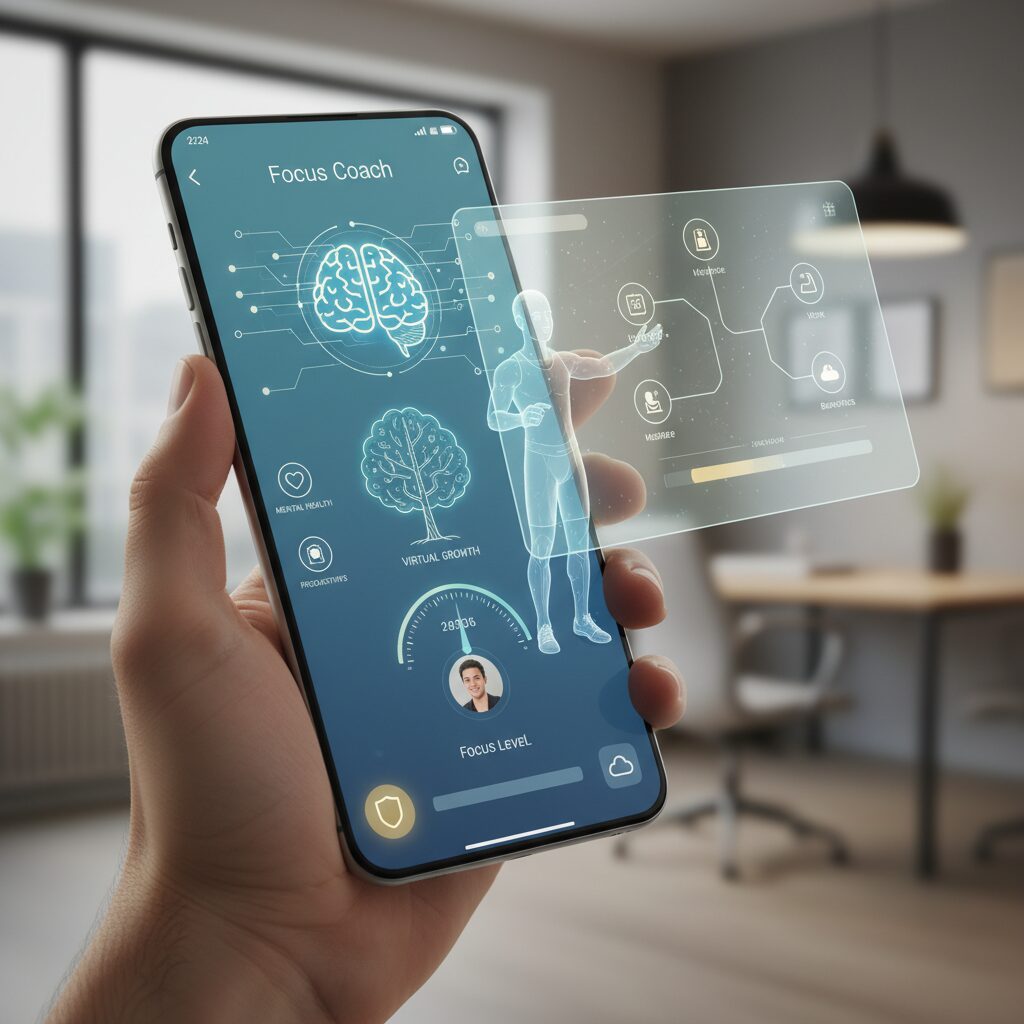
Focus timer apps have quietly transformed from simple countdown tools into something far more sophisticated: digital coaches that actively shape how users work, rest, and sustain attention. In 2026, attention is widely discussed by researchers as a scarce cognitive asset, and this framing has pushed app developers to move beyond passive time tracking toward behavioral guidance informed by psychology and data.
Early focus timers merely measured duration. Today’s leading apps intervene in motivation itself by combining gamification and behavioral economics. Forest, often cited in discussions on digital well-being, visualizes focus as the growth of a virtual tree. The fear of losing progress when a session is broken leverages loss aversion, a principle documented in behavioral science literature and frequently referenced by institutions such as the Behavioral Insights Team. This mechanism turns distraction into a tangible cost rather than an abstract failure.
| Evolution Stage | Core Function | User Impact |
|---|---|---|
| Timer Tool | Counts focus minutes | Awareness of time spent |
| Gamified App | Rewards and penalties | Sustained motivation |
| Digital Coach | Adaptive guidance | Behavior change |
The concept of coaching becomes clearer when social and emotional layers are added. In Japan, where collective norms strongly influence self-discipline, social focus features have gained traction. Apps like StudyCast allow users to study “together” remotely, introducing gentle peer pressure. According to observations shared by education platforms such as Studyplus, seeing others persist increases adherence more reliably than solitary goal setting.
AI has accelerated this shift. Modern focus apps increasingly analyze usage patterns and emotional inputs to recommend breaks, breathing exercises, or shorter sessions. This aligns with findings often discussed by cognitive scientists at organizations like the American Psychological Association, which emphasize that optimal focus depends on recovery as much as effort. As a result, the focus timer no longer asks users to endure longer sessions but guides them toward smarter cycles.
What emerges is not a stricter tool, but a more empathetic one. By responding to motivation, stress, and context, focus timer apps now resemble digital coaches that accompany users through their workday. This evolution reflects a broader understanding that concentration is designed through interaction, not enforced by willpower alone.
Gamification and Behavioral Economics Behind Sustainable Focus
Gamification in modern focus technologies is no longer about making productivity fun in a superficial sense. It is carefully engineered around behavioral economics, designed to sustain attention over weeks and months rather than minutes. **By aligning psychological biases with long-term habit formation, focus apps in 2026 function as behavioral scaffolding rather than simple timers.**
A core principle is loss aversion, a concept formalized by Daniel Kahneman and Amos Tversky, which suggests that people experience losses more intensely than equivalent gains. Apps such as Forest operationalize this insight by attaching visible consequences to distraction. When a user breaks a focus session, a virtual tree withers, converting a momentary lapse into a tangible loss. User feedback consistently indicates that this mechanism feels more compelling than abstract rewards, because effort already invested becomes psychologically protected.
| Behavioral Principle | In-App Mechanism | Impact on Focus |
|---|---|---|
| Loss aversion | Tree withering or progress reset | Reduces impulsive phone checking |
| Endowment effect | Accumulated virtual assets | Encourages long-term continuation |
| Social proof | Shared sessions and rankings | Normalizes sustained effort |
Another less obvious mechanism is the endowment effect, where users assign higher value to things they feel ownership over. As virtual forests, avatars, or collections expand over time, abandoning the app feels like giving something up. This explains why customization elements, such as unlocking new tree species or environments, significantly increase retention. According to aggregated app store reviews, users often describe their virtual assets as representations of self-discipline rather than cosmetic features.
Social gamification adds a separate behavioral layer. In Japan, where collective norms strongly influence self-regulation, shared focus sessions and peer visibility play a decisive role. Study-oriented platforms that visualize progress among friends or within ranked groups transform solitary concentration into a socially accountable act. **The pressure is subtle but effective: users report focusing not to win, but to avoid being the one who stopped early.** Behavioral economists describe this as reputational concern, a powerful motivator even without explicit competition.
Importantly, sustainable focus depends on avoiding over-optimization. Research in cognitive psychology warns that excessive extrinsic rewards can crowd out intrinsic motivation. Leading apps therefore calibrate feedback frequency, offering confirmation of progress without overwhelming users with constant points or alerts. This balance reflects insights from self-determination theory, which emphasizes autonomy and competence as prerequisites for long-term engagement.
By 2026, the most effective focus ecosystems treat gamification as a behavioral contract rather than entertainment. **They gently constrain choices, visualize consequences, and leverage social context, all while preserving a sense of voluntary control.** This synthesis of gamification and behavioral economics explains why modern focus tools succeed not by demanding willpower, but by redesigning the decision environment in which attention is exercised.
Social Focus Features and the Power of Shared Concentration
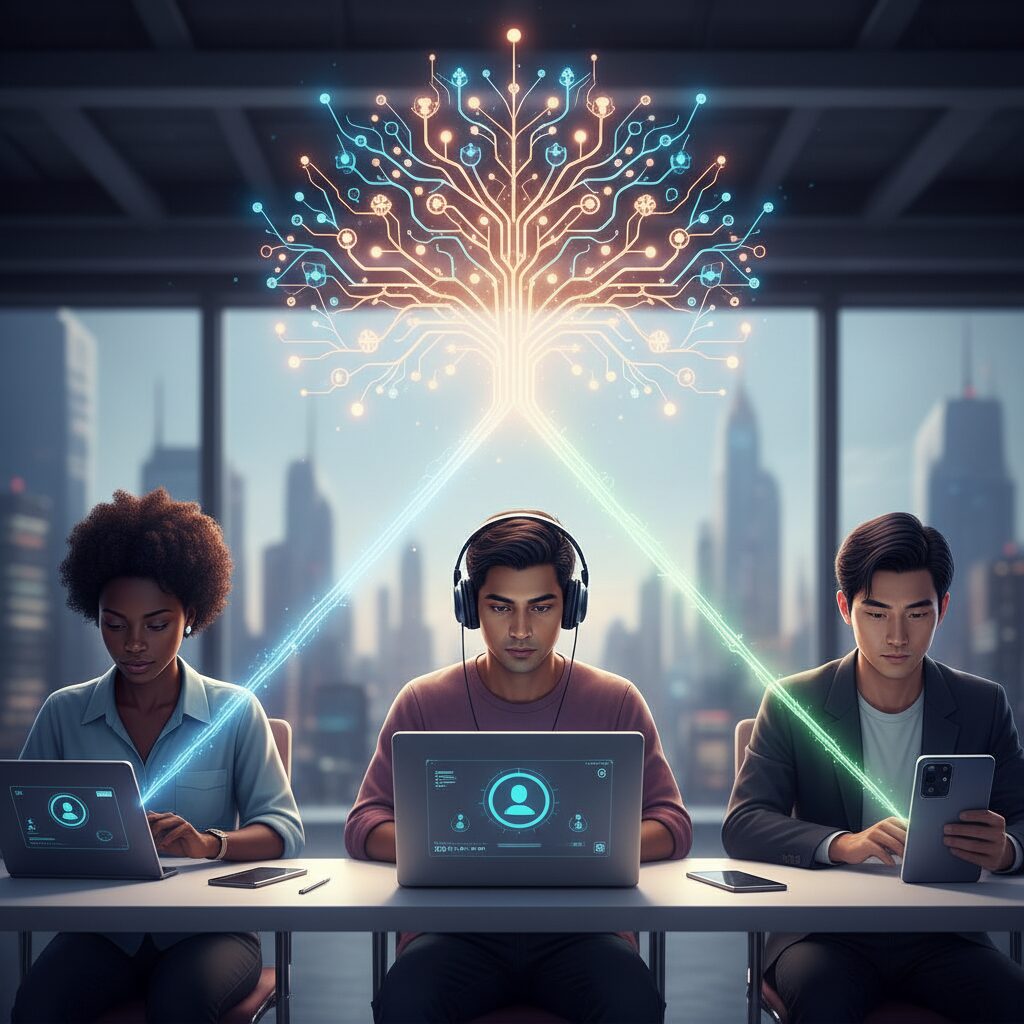
Social focus features redefine concentration by transforming what was once a solitary struggle into a shared, socially reinforced experience. In 2026, attention is widely described by cognitive scientists as a fragile resource, and research from institutions such as Stanford University has shown that perceived social presence can significantly increase task persistence. **When people know that others are focusing at the same time, the psychological cost of distraction rises**, and this subtle pressure works in favor of sustained attention.
Japanese study and productivity apps have embraced this principle with particular sophistication. Services like StudyCast and Study Circle allow users to synchronize focus timers, visualize collective progress, and remain loosely connected without active conversation. This design choice is critical, because it preserves deep work while still leveraging social accountability. According to user behavior analyses published by domestic education platform operators, sessions conducted with shared timers tend to last longer than solo sessions, even when the tasks themselves are identical.
| Feature | Individual Focus | Social Focus |
|---|---|---|
| Motivation source | Self-discipline | Peer awareness |
| Dropout risk | High during fatigue | Lower due to shared presence |
| Emotional state | Isolation-prone | Connected yet quiet |
What makes social focus especially effective in Japan is its alignment with cultural patterns of self-regulation within groups. Educational psychologists in Japan have long noted that students often perform better when their efforts are visible to peers, even indirectly. **Ranking systems based on study time or school goals are not mere gamification tricks but structured mirrors**, reflecting one’s effort back through the lens of the community. Reports from exam-prep users indicate that school-specific leaderboards provide a tangible sense of “studying together,” even when participants are physically apart.
This effect is supported by broader behavioral science. Research cited by the American Psychological Association has shown that social accountability increases goal adherence, particularly for repetitive cognitive tasks. Social focus apps apply this insight carefully by limiting interaction to progress indicators rather than chat streams. As a result, they avoid the common pitfall of social platforms, where communication itself becomes a distraction.
Another notable dimension is emotional reassurance. Remote work and at-home study environments often blur boundaries and amplify loneliness. **Seeing others actively focusing in real time reduces the feeling of being left alone with an overwhelming task**, a phenomenon sometimes referred to as shared concentration. User interviews published by Japanese app developers consistently mention reduced anxiety and greater calm during long sessions, even without verbal interaction.
Importantly, social focus does not rely on competition alone. Many applications emphasize parallel effort rather than winning, which aligns with findings from the University of Tokyo’s education research groups that cooperative framing leads to more sustainable motivation. Instead of urging users to outperform others, the interface quietly suggests that everyone is enduring the same challenge together.
As attention economics intensify, social focus features demonstrate that concentration can be designed not only through restriction but through connection. **By converting passive peer presence into a supportive cognitive scaffold**, these systems show that shared silence can be as powerful as collaboration. In the evolving digital well-being ecosystem of 2026, social focus stands out as a reminder that attention, while personal, is often strengthened in the company of others.
AI, Biometrics, and Real-Time Mental State Monitoring
By 2026, AI-driven biometrics have transformed focus apps into systems capable of monitoring mental states in real time. **Attention is no longer inferred solely from time-on-task but estimated through physiological signals** such as heart rate variability, pulse wave patterns, and sleep cycles, captured via smartphone cameras and sensors.
Applications like Upmind exemplify this shift. Using photoplethysmography through the phone camera, the app estimates autonomic nervous system balance in about 30 seconds and translates it into actionable feedback. According to research published in journals such as Nature Biomedical Engineering, short-term HRV measurements can reflect stress and cognitive load, making them suitable for adaptive coaching rather than clinical diagnosis.
AI layers interpret these signals continuously. When elevated stress or fatigue is detected, the system may recommend shorter focus intervals, breathing exercises, or a deliberate pause. **This real-time adjustment prevents the common productivity trap of over-focusing, which paradoxically degrades performance and mental health.**
| Signal Type | Captured Via | Practical Insight |
|---|---|---|
| Heart rate variability | Camera-based pulse reading | Stress and recovery balance |
| Sleep patterns | Motion and audio sensors | Baseline attention capacity |
| Interaction rhythm | Touch and usage logs | Cognitive fatigue trends |
Awarefy extends this model by acting as an AI mental partner, correlating biometric trends with user reflections. Insights from the American Psychological Association suggest that such reflective feedback loops improve emotional regulation, which directly supports sustained concentration. **The result is a shift from rigid timers to living systems that sense, predict, and gently steer mental states as they evolve.**
Sleep, Sound, and Cognitive Science as Foundations of Focus
Deep focus does not begin at the moment a timer starts. It is built on physiological and cognitive foundations that are prepared long before a task begins. In 2026, leading focus technologies increasingly treat sleep quality, sound environments, and cognitive load as inseparable elements of sustained attention. This shift reflects a growing consensus in cognitive science that focus is not a single skill, but a state emerging from well-regulated biological systems.
Sleep is the primary substrate of attention. According to sleep research cited by institutions such as Harvard Medical School and the National Institutes of Health, insufficient or fragmented sleep directly impairs the prefrontal cortex, reducing working memory, emotional regulation, and task persistence. Apps like BetterSleep respond to this evidence by analyzing sleep cycles and snoring patterns, helping users identify why they wake unrefreshed and how that deficit carries into daytime focus.
From a cognitive science perspective, this matters because attention is metabolically expensive. When sleep debt accumulates, the brain defaults to stimulus-driven behavior, making notifications, social feeds, and minor distractions far harder to resist. By improving sleep architecture rather than merely enforcing daytime discipline, modern focus ecosystems address the problem at its root.
| Foundation | Cognitive Mechanism | Impact on Focus |
|---|---|---|
| Sleep quality | Prefrontal cortex recovery | Sustained attention, impulse control |
| Sound environment | Sensory gating, arousal regulation | Reduced distraction, deeper immersion |
| Cognitive load | Working memory allocation | Task persistence, error reduction |
Sound is the second pillar that focus technologies now treat scientifically rather than aesthetically. Research in auditory neuroscience has shown that predictable, non-linguistic sounds such as rainfall or ocean waves reduce the brain’s need to constantly evaluate incoming stimuli. This frees cognitive resources for the task at hand. Apps like TIDE and リルック are designed around this principle, offering carefully engineered soundscapes rather than generic background music.
The key is controllability, not silence. Complete silence can heighten sensitivity to sudden noise, while structured ambient sound creates a stable sensory baseline. Studies referenced by cognitive psychologists at institutions like Stanford have linked such environments to faster entry into flow states, especially for knowledge workers and students performing complex tasks.
Cognitive science also explains why combining focus tools with mental state awareness is so effective. Apps such as Memorado integrate brain-training games with mindfulness sessions, reflecting evidence that alternating between cognitive activation and relaxation optimizes neuroplasticity. This aligns with findings from cognitive load theory, which emphasizes that performance degrades when working memory is continuously saturated without recovery.
Rather than demanding constant intensity, these systems encourage rhythmic engagement. Short, deliberate focus periods paired with brief recovery phases mirror how attention naturally fluctuates. Japanese user data from 2025–2026 reinforces this model, showing that most high-performing learners favor breaks under 15 minutes, a pattern consistent with established attention research.
Focus is increasingly engineered by stabilizing the body first, then guiding the mind. Sleep analysis, sound design, and cognitive pacing now form a unified framework rather than isolated features.
What distinguishes the 2026 landscape is not the novelty of these elements, but their integration. Sleep data informs when focus sessions should occur. Sound adapts to mental fatigue. Cognitive exercises balance strain with recovery. By grounding focus technology in well-established sleep science and cognitive theory, modern digital tools move beyond motivation hacks and toward sustainable, evidence-based attention management.
How iOS and Android Are Redefining Digital Wellbeing at the OS Level
By 2026, digital wellbeing is no longer treated as an optional setting hidden deep in menus, but is being redesigned at the operating system level by both iOS and Android. Smartphones, once criticized as the primary source of distraction, are now being positioned as active guardians of attention. This shift reflects a broader recognition shared by Apple and Google that attention is a limited cognitive resource, and that protecting it is part of the OS’s core responsibility.
Android 16 offers a clear example of this philosophy through its intelligent handling of notifications. One of the most discussed features, Notification Cooldown, automatically detects bursts of repeated alerts from the same app and gradually lowers their sound before temporarily silencing them. According to coverage by Android Authority and Tech Advisor, this approach directly targets one of the most common causes of focus breakdown: group chats and real-time feeds that escalate without pause. Instead of forcing users to manually mute apps, the OS now intervenes contextually and in real time.
| OS | Wellbeing Feature | Impact on Focus |
|---|---|---|
| Android 16 | Notification Cooldown | Reduces cognitive overload from rapid alerts |
| Android 16 | Live Updates | Minimizes app switching by showing progress on lock screen |
| iOS 18/19 | Screen Time & App Limits | Enforces intentional usage through hard boundaries |
Live Updates in Android 16 further reinforce this design direction. Similar to Apple’s Live Activities, they allow ongoing tasks such as delivery tracking or ride status to be viewed directly on the lock screen. This reduces the habitual pattern of opening an app “just to check,” which often leads users into unrelated social or news content. The OS quietly removes friction points that previously pulled users out of a focused state.
On the iOS side, Apple continues to refine Screen Time and Focus modes in iOS 18 and 19. What has changed is not only granularity but also feedback quality. Usage dashboards now present clearer patterns of behavior, encouraging reflection rather than guilt. As CNET has noted, these tools are increasingly framed as self-regulation aids rather than parental controls, aligning with research in behavioral psychology that autonomy improves long-term adherence.
Another notable evolution is Android’s work profile system, which allows professional notifications and apps to disappear entirely outside working hours. By separating identities at the OS level, users experience a psychological shift similar to owning two devices. This separation supports mental recovery, which neuroscientists emphasize as essential for sustained attention. In this way, iOS and Android are no longer just platforms for apps, but active architects of healthier digital environments.
Scientific Evidence Supporting Focus Cycles and Break Optimization
Scientific discussions around focus cycles and break optimization have moved far beyond productivity folklore and are now grounded in measurable cognitive and physiological evidence. **Modern focus timer applications are effective because they align with how the human brain naturally allocates attention and recovers from mental fatigue**. Neuroscience and cognitive psychology consistently show that sustained attention is not linear, but oscillates in predictable cycles.
According to cognitive load theory and attention restoration research discussed by leading universities and neuroscience institutes, the prefrontal cortex begins to show reduced efficiency after prolonged effort. This decline is not a sign of weak willpower, but a biological constraint. Short, structured breaks allow glucose metabolism and neural signaling efficiency to recover, which directly impacts working memory and decision accuracy.
In Japan, this principle is reflected in large-scale behavioral data. Studyplus analyzed learning logs from 2025 to 2026 and found that **users who adopted one-hour work blocks with breaks under 15 minutes consistently maintained higher daily study volumes than those who worked continuously**. This pattern supports international findings that recovery periods must be short enough to prevent context switching costs, yet long enough to reduce cognitive strain.
| Focus Cycle Length | Break Duration | Observed Cognitive Effect |
|---|---|---|
| 25 minutes | 5 minutes | Stable attention and low mental fatigue |
| 50–60 minutes | 5–15 minutes | High task retention with emotional recovery |
| 90 minutes | 15 minutes | Deep focus followed by pronounced fatigue |
These results closely mirror chronobiological research on ultradian rhythms, which suggests that the brain naturally cycles through peaks and troughs of alertness roughly every 90 minutes. However, applied research indicates that **shorter cycles, such as those used in Pomodoro-based systems, are more effective for digital environments filled with external stimuli**. Frequent micro-recovery prevents the accumulation of stress hormones that degrade focus quality.
Break optimization also has a strong physiological dimension. Applications like Upmind demonstrate that autonomic nervous system balance plays a central role in attention sustainability. When heart rate variability indicates sympathetic dominance, pushing through fatigue leads to diminishing returns. **Data-driven prompts encouraging brief rest or breathing exercises have been shown to stabilize concentration rather than interrupt it**.
Sleep science further reinforces this structure. Research summarized by sleep medicine specialists shows that fragmented rest during the day cannot compensate for poor nocturnal sleep, but strategic daytime breaks can preserve attentional control. Tools such as BetterSleep indirectly improve focus cycles by strengthening the baseline on which daytime concentration depends.
Importantly, scientific consensus emphasizes that effective breaks are not synonymous with digital distraction. Passive scrolling activates reward circuits without restoring executive function. **The most effective recovery activities are low-stimulation behaviors such as standing, light stretching, or controlled breathing**, which explains why modern focus apps increasingly guide break behavior instead of simply timing it.
From a scientific perspective, focus cycle optimization succeeds because it respects biological limits while leveraging behavioral feedback. Rather than forcing longer endurance, these systems engineer conditions where attention can repeatedly reset at a high level. This alignment between neuroscience, behavioral data, and real-world usage explains why focus timers remain a foundational component of the digital well-being ecosystem in 2026.
Different Focus Needs Across Students, Professionals, and Creators
Focus is not a one-size-fits-all capability, and in 2026 this reality has become increasingly clear across different user groups. Students, professionals, and creators all pursue concentration, but the conditions, duration, and psychological demands they face differ markedly. **Modern mobile focus technologies respond to these differences by tailoring motivation, feedback, and mental load to each role**.
For students, especially university students and exam candidates, focus is closely tied to social context and emotional reassurance. According to findings shared by Studyplus, many learners maintain concentration more effectively when they can see peers studying at the same time. This explains the popularity of social focus features such as shared timers and online study rooms, which transform solitary study into a collective effort. The awareness that others are working toward similar goals reduces anxiety and helps sustain attention during long preparation periods.
Professionals, by contrast, prioritize stability and recovery as much as intensity. Remote and hybrid work environments blur boundaries, making it harder to switch into a focused state. Apps like Upmind and Awarefy are adopted not simply to measure time, but to assess physiological and emotional readiness. **By visualizing autonomic nervous system balance or stress levels, professionals are guided to rest before cognitive fatigue undermines productivity**, an approach aligned with research in occupational health emphasizing prevention over endurance.
| User Group | Primary Focus Challenge | Effective Technological Support |
|---|---|---|
| Students | Loneliness and motivation loss | Social focus rooms and shared progress |
| Professionals | Mental fatigue and stress | AI-driven mental and physiological monitoring |
| Creators | Maintaining flow without interruption | Notification control and immersive environments |
Creators represent yet another distinct focus profile. Writers, designers, and video producers often require extended, uninterrupted flow states rather than short bursts of concentration. OS-level features such as notification cooldowns and live updates play a crucial role here. By reducing the need to check apps manually, these systems minimize cognitive context switching, which neuroscientists have long identified as a major disruptor of creative flow, as noted in studies frequently cited by institutions like Stanford University.
What unites these groups is not the method of focusing, but the expectation that technology should adapt to human attention rather than force uniform discipline. **The shift from simple timers to adaptive digital well-being ecosystems reflects a broader recognition that attention is an asset shaped by role, environment, and mental state**. In 2026, effective focus tools succeed precisely because they respect these differences and design concentration around real human needs.
Accessibility, Privacy, and Security as Pillars of Deep Focus
Deep focus in 2026 is no longer achieved only by silencing notifications or starting a timer. It is increasingly built on three invisible but critical pillars: accessibility, privacy, and security. When these foundations are stable, users can enter a state of concentration with confidence, knowing that their device is working with them rather than against them.
Accessibility plays a direct role in cognitive load. According to updates reported by PCMag and Android Authority, Android 16 significantly strengthens assistive features such as Guided Frame for visually impaired users and Dwell Cursor support for users with limited upper-limb mobility. These are not marginal improvements. By reducing physical and perceptual friction, the OS lowers background mental effort, which cognitive science consistently links to improved sustained attention.
| Accessibility Feature | Primary Benefit | Impact on Focus |
|---|---|---|
| Guided Frame | Audio-based environmental guidance | Reduces situational uncertainty |
| Dwell Cursor | Hands-free click operation | Minimizes physical interruption |
| LE Audio Hearing Support | Clearer signal-to-noise ratio | Improves auditory immersion |
Privacy is equally essential, because concentration collapses when users feel monitored or exposed. Research summarized by CNET highlights that modern digital wellbeing features are designed to keep sensitive information local to the device whenever possible. Screen Time dashboards on iOS 18 and Digital Wellbeing on Android 16 analyze usage patterns without requiring constant cloud transmission, which reassures users that self-regulation does not come at the cost of personal data leakage.
This sense of informational safety directly supports deeper focus. Behavioral studies from human-computer interaction research at institutions such as MIT have shown that perceived surveillance increases anxiety and task-switching frequency. By contrast, transparent privacy controls encourage longer uninterrupted work sessions, especially in public or shared environments.
Security completes the triangle by protecting attention from malicious intrusion. Android 16 introduces Advanced Protection Mode, integrating scam call detection, malicious message filtering, and automatic hiding of sensitive lock-screen notifications. Android Authority notes that these measures are designed not only for safety, but also to eliminate sudden emotional spikes caused by fraud attempts or alarming messages.
From a focus perspective, this is crucial. Neuropsychological research indicates that emotionally charged interruptions consume disproportionately large cognitive resources. By neutralizing these threats before they reach the user, the OS preserves mental continuity and supports entry into flow states.
In practical terms, accessibility reduces effort, privacy builds trust, and security removes fear. Together, they form a protected cognitive space where deep focus becomes sustainable rather than fragile. In 2026, the most effective concentration technologies are not the loudest features, but the quiet systems that safeguard attention in the background.
参考文献
- App-Liv:Best Focus Timer Apps in 2026
- App-Liv:Best Meditation and Mindfulness Apps in 2026
- Android Authority:Android 16: Confirmed Features and Everything We Know
- CNET:Need to Limit Your Screen Time? These Wellness Settings Can Help
- IMARC Group:Japan Education Apps Market Size and Forecast
- PCMag:Second Major Android 16 Update Adds Accessibility and AI Features