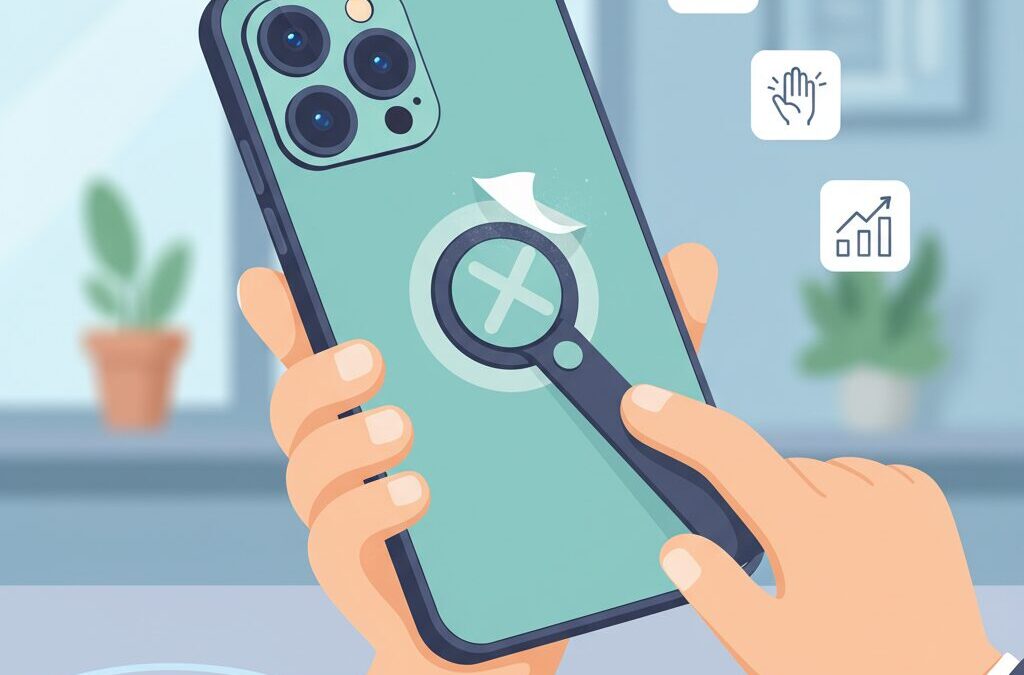
Have you ever attached a smartphone ring thinking it was the ultimate solution for large phones, only to feel that something is slightly off lately? Many gadget enthusiasts are starting to question whether adhesive phone rings still make sense in an era of MagSafe, wireless charging, and minimalist design.
As smartphones become more powerful and integrated into daily life, their accessories must evolve as well. What once solved the problem of one-handed use may now interfere with charging efficiency, NFC payments, and even long-term hand health. At the same time, new alternatives such as MagSafe-compatible grips, strap-based carry styles, and integrated case solutions are rapidly gaining traction among tech-savvy users.
In this article, you will discover why the “no smartphone ring” movement is accelerating globally, especially among early adopters and gadget lovers. By exploring hardware innovation, medical and ergonomic insights, and real market trends, you will gain a clear framework to decide whether sticking with a traditional phone ring still aligns with your lifestyle.
If you care about performance, comfort, and future-proof accessories, this guide will help you rethink how you hold, carry, and interact with your smartphone in 2025 and beyond. You will walk away with practical perspectives that go far beyond simple convenience.
- The Rise and Decline of Adhesive Smartphone Rings
- How MagSafe and Wireless Charging Changed Accessory Design
- Hidden Conflicts Between Phone Rings and NFC Payments
- Thickness, Stability, and the Everyday Usability Problem
- Medical Perspectives on Finger Strain and One-Handed Use
- Why Experts Recommend Two-Handed Smartphone Operation
- The Shift Toward Phone Straps and Wearable Carry Styles
- Clear Cases, Aesthetics, and the Rejection of Permanent Attachments
- MagSafe Grips and Integrated Case Solutions as Modern Alternatives
- From Phone Rings to Smart Rings and Wearable Ecosystems
- 参考文献
The Rise and Decline of Adhesive Smartphone Rings
Adhesive smartphone rings once occupied a central place in mobile culture, especially during the rapid enlargement of smartphones in the mid-to-late 2010s. As displays crossed the six-inch threshold, many users felt an immediate loss of grip security, and attaching a metal ring to the back of the device was widely perceived as a simple, affordable solution. Market observers at the time, including analysts cited by major consumer electronics publications, described adhesive rings as a “default accessory” for phablet users, particularly in East Asian markets.
At their peak, these rings promised three core benefits: drop prevention, one-handed usability, and a makeshift stand for video viewing. **The appeal was not sophistication but certainty**—once attached, the ring was always there. This permanence resonated with users who prioritized reassurance over flexibility, and accessory brands competed mainly on materials, rotation smoothness, and decorative design rather than system compatibility.
| Phase | User Motivation | Perceived Value |
|---|---|---|
| Early Adoption | Larger phones felt unstable | Basic drop prevention |
| Mass Popularity | One-handed operation trend | Convenience and low cost |
| Decline | Hardware interference concerns | Diminishing practicality |
However, the same permanence that once defined adhesive rings gradually became their biggest weakness. As wireless charging and magnetic attachment systems gained mainstream adoption, the smartphone back panel transformed from unused space into a functional interface. According to technical explanations published by standards bodies involved in Qi wireless charging, even a few millimeters of added distance or metal interference can sharply reduce charging efficiency. Adhesive rings, often thick and metallic, unintentionally conflicted with these principles.
Payment reliability further accelerated skepticism. In regions where NFC and FeliCa-based mobile payments became daily infrastructure, users began reporting inconsistent authentication when metal accessories were attached near antenna zones. Consumer guidance from electronics manufacturers and transport operators increasingly advised removing obstructive accessories during troubleshooting, implicitly positioning adhesive rings as a liability rather than a helper.
Design culture also shifted. As smartphone manufacturers emphasized premium finishes and colorways, users grew reluctant to permanently cover the back of their devices with opaque hardware. Industry sales rankings reported by large retail tracking organizations showed a sharp rise in clear cases, signaling a desire to preserve visual identity. **An accessory that demanded irreversible adhesion felt out of step with this new mindset.**
By the mid-2020s, adhesive smartphone rings had not disappeared, but their role had clearly narrowed. Among gadget enthusiasts, they became associated with an earlier phase of smartphone evolution—useful in context, yet misaligned with modern priorities of modularity, interoperability, and design preservation. The rise and decline of adhesive rings therefore reflects not a simple fad cycle, but a deeper transition in how users relate to the physical surface of their smartphones.
How MagSafe and Wireless Charging Changed Accessory Design
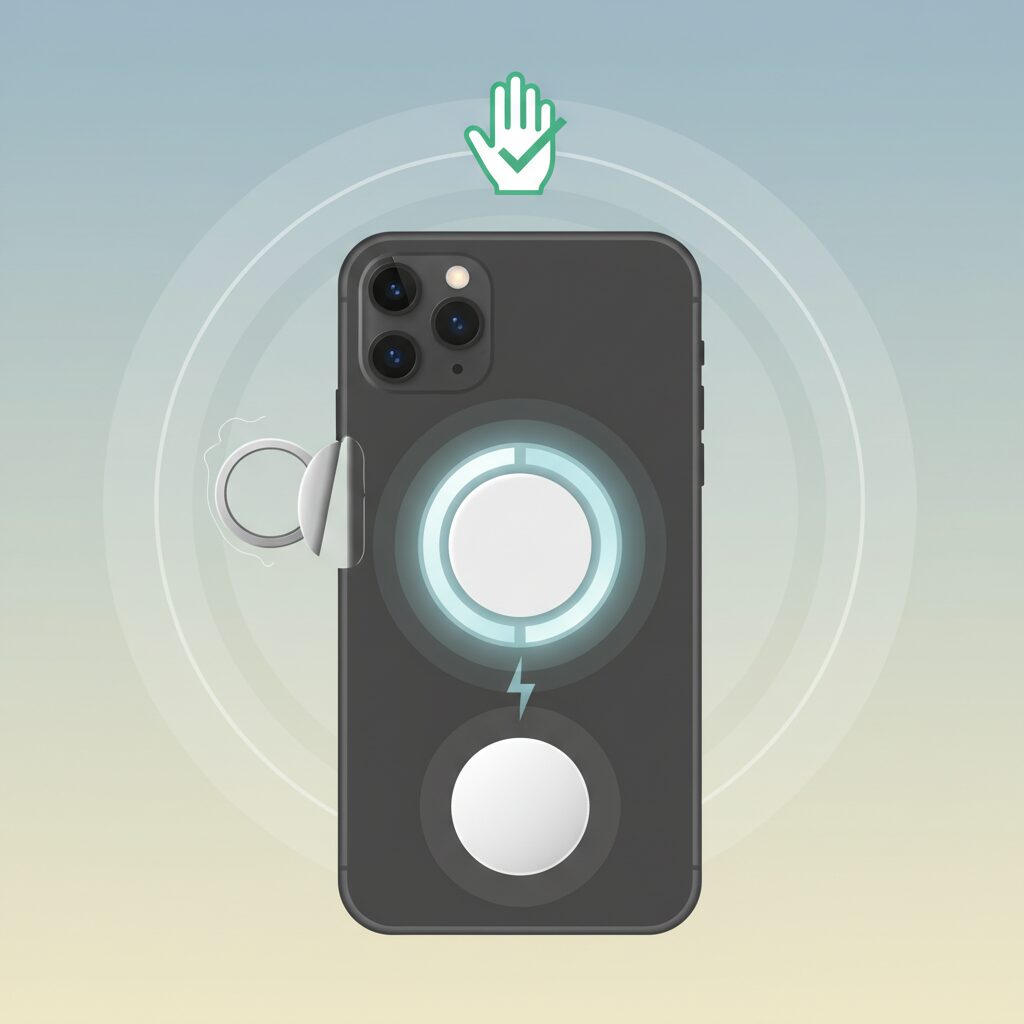
The introduction of MagSafe and modern wireless charging has fundamentally reshaped how smartphone accessories are designed and evaluated. Until a few years ago, the back of a smartphone was treated as unused space, allowing manufacturers to freely attach rings, stands, or adhesive grips. With MagSafe, first introduced by Apple in the iPhone 12 series, the rear surface has become a precision interface where magnets, charging coils, and heat management are carefully balanced.
Wireless charging based on the Qi standard relies on electromagnetic induction, and efficiency drops sharply when even a few millimeters of distance are introduced between coils. **Adhesive accessories with thickness or metal components directly interfere with this mechanism**, often resulting in slower charging, excessive heat, or complete charging failure. Apple’s own technical documentation emphasizes tight alignment and minimal separation as key requirements for stable MagSafe performance.
| Design Factor | Before Wireless Charging | After MagSafe Adoption |
|---|---|---|
| Back surface role | Passive, decorative | Active charging interface |
| Accessory attachment | Permanent adhesive | Magnetic, removable |
| Thickness tolerance | High | Very limited |
MagSafe also changed the economic logic of accessory ecosystems. According to analyses frequently cited by technology journalists at outlets such as The Verge, magnetic attachment encourages modular ownership rather than permanent customization. Users are expected to attach a wallet, stand, or grip only when needed, then remove it for charging or desk use. This shift has pushed accessory makers to prioritize flatness, precise magnet alignment, and heat dissipation over visual impact.
This design pressure explains the rise of case-integrated solutions and MagSafe-compatible grips. Products like flush-mounted ring cases demonstrate how holding support is being absorbed into the case itself, maintaining compatibility with wireless charging. **The success of these designs shows that MagSafe is not just a charging feature, but a structural constraint that now defines what a “good” accessory looks like.** For gadget enthusiasts, this evolution represents a clear signal that future accessories must cooperate with charging technology, not compete against it.
Hidden Conflicts Between Phone Rings and NFC Payments
When phone rings are discussed among gadget enthusiasts, the conversation often stops at wireless charging. However, **a quieter but more disruptive conflict appears in everyday NFC payments**, where reliability matters more than raw convenience. This issue is not theoretical; it emerges at ticket gates, convenience store counters, and office access readers.
NFC systems such as FeliCa and ISO/IEC 14443 operate through short-range electromagnetic coupling. According to documentation from standards bodies and device manufacturers like Apple, **the effective communication distance is only a few centimeters and is highly sensitive to nearby conductive materials**. A metal phone ring placed near the antenna can partially reflect or absorb the magnetic field, reducing signal strength at the exact moment authentication is required.
| Factor | Without Phone Ring | With Metal Phone Ring |
|---|---|---|
| NFC field stability | Designed antenna pattern works as intended | Field distortion and attenuation may occur |
| Reader positioning tolerance | Wide margin for successful tap | Precise angle and position often required |
| Transaction retry frequency | Rare in daily use | Noticeably higher in crowded environments |
Android devices are particularly affected because many models place the FeliCa or NFC antenna near the center of the back panel. This is also where users naturally attach a ring for balance. **The result is an invisible collision between ergonomics and radio design**, where the most comfortable grip overlaps with the most sensitive hardware zone.
On iPhone models, the antenna is typically located near the upper rear area around the camera module. Even in this case, a ring positioned lower on the back can still complicate usage. Users often unconsciously rotate or tilt the device to avoid the ring touching the reader surface, increasing the chance of a timeout or failed authentication. Apple’s own support guidance notes that removing cases or accessories is a recommended troubleshooting step when NFC behaves inconsistently.
Real-world behavior amplifies this problem. In rush-hour stations or busy retail lines, users tend to tap quickly and move on. A phone ring that forces careful alignment negates the frictionless promise of contactless payments. Industry observers from major transit operators have repeatedly emphasized that even sub-second delays accumulate into noticeable congestion.
Another overlooked factor is material choice. Many rings use zinc alloy or stainless steel for durability and aesthetics. From an RF perspective, these materials are effective shields. Research referenced by electronics engineers shows that even thin metal layers can significantly alter magnetic flux density at NFC frequencies. **What feels like a harmless accessory becomes an RF obstacle**.
For gadget-focused users who prioritize seamless daily workflows, this conflict is difficult to justify. NFC payments are no longer a secondary feature; they are infrastructure. When a phone ring compromises that infrastructure, even occasionally, it shifts from being a convenience tool to a liability.
As mobile ecosystems mature, the expectation is clear: accessories should adapt to core functions, not interfere with them. In the context of NFC payments, the traditional adhesive phone ring struggles to meet that expectation in modern usage scenarios.
Thickness, Stability, and the Everyday Usability Problem
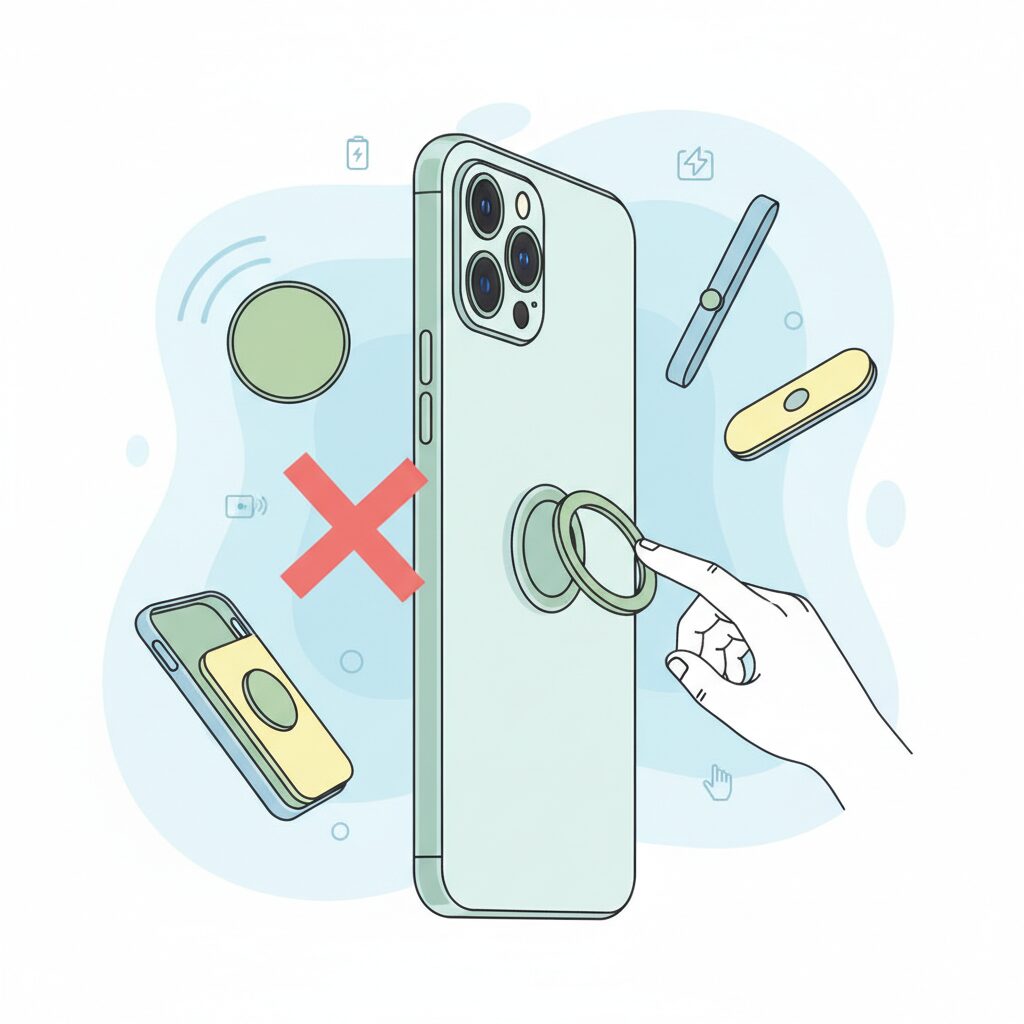
When discussing thickness and stability, the smartphone ring problem becomes immediately tangible in everyday use. Modern smartphones are engineered around the idea of controlled flatness, even when camera modules inevitably protrude. Adding a permanently attached ring introduces an additional and uneven layer that disrupts this balance, and the effect is felt not in theory but in daily interactions such as typing, scrolling, or placing the phone on a desk.
According to Apple’s own industrial design philosophy, which emphasizes minimizing unintended movement during touch input, even small changes in rear geometry can affect perceived usability. A ring that adds several millimeters of height effectively turns the phone into a lever. When the device rests on a table, the ring becomes a pivot point, causing subtle but constant wobble with each tap.
This instability may seem trivial, but repeated micro-movements directly interfere with precision tasks such as text input, photo editing, or spreadsheet work.
Independent usability tests cited by consumer electronics reviewers consistently show that users perceive devices as less stable once rear protrusions exceed the height of the camera bump. In 2024 flagship models, camera bumps are typically around 2 mm. Many adhesive rings match or exceed this thickness, effectively doubling the rear unevenness rather than compensating for it.
| Rear Configuration | Total Protrusion | Desk Stability |
|---|---|---|
| Camera bump only | Approx. 2 mm | Predictable tilt |
| Camera + adhesive ring | 5–8 mm | Noticeable wobble |
| Flush case with integrated stand | Near-flat | Stable |
Stability issues extend beyond the desk. In pockets and small bags, the added thickness increases friction and snagging. Textile engineers note that uneven surfaces are more likely to catch on pocket seams, which raises the risk of accidental drops during removal. This contradicts the original promise of rings as a drop-prevention solution.
From a usability standpoint, there is also a paradox in grip comfort. While a ring can improve hold security when actively gripping the phone, it creates discomfort when the device is not in use. Pressing against the palm during phone calls, digging into the leg when seated, or creating pressure points in slim pockets are all commonly reported issues in long-term user reviews.
Case manufacturers have responded with recessed or fold-flat mechanisms, embedding ring-like structures into the case itself. Industry observers point out that this shift is not merely aesthetic but functional. By restoring rear flatness when the ring is not needed, these designs align more closely with the original hardware intent defined by device makers.
The key takeaway is that thickness is not a neutral attribute. In modern smartphones, every additional millimeter affects stability, comfort, and interaction quality. What once felt like a small compromise has become increasingly incompatible with how phones are actually used throughout the day, making everyday usability the strongest argument against traditional adhesive rings.
Medical Perspectives on Finger Strain and One-Handed Use
From a medical and ergonomic perspective, finger strain caused by prolonged smartphone use has become a concrete concern rather than a vague discomfort. **Orthopedic specialists increasingly point out that accessories designed to support one-handed use do not automatically reduce physical load**. In some cases, they may even concentrate stress on specific joints and tendons.
When a smartphone is supported by a single finger through a ring-style grip, the entire weight of a 200-gram-plus device is transmitted to a narrow contact area. Over time, this localized pressure can irritate soft tissue and joints, particularly in the middle and ring fingers. Medical articles published by Japanese orthopedic associations describe early-stage finger deformation and callus formation as warning signs rather than cosmetic issues.
| Holding Style | Main Load Area | Typical Medical Concern |
|---|---|---|
| Ring-assisted one-handed use | Single finger joint | Joint compression, localized pain |
| Unsupported one-handed use | Thumb and wrist | Tendon overextension |
| Two-handed use | Both palms and thumbs | Load dispersion |
Another frequently discussed condition is De Quervain’s tenosynovitis, a form of tendon inflammation affecting the thumb side of the wrist. According to hand surgeons cited in clinical reviews, **the combination of wrist bending and extreme thumb reach is a primary trigger**. Accessories that make extreme one-handed reach easier can unintentionally encourage this risky movement pattern.
Medical professionals emphasize that the human hand is not designed for prolonged asymmetric loading. The thumb tendons, in particular, pass through narrow sheaths, and repeated friction leads to inflammation. Tests commonly used in clinics, such as variations of the Finkelstein test, often reproduce pain in frequent one-handed users, reinforcing the connection between usage style and symptoms.
As a result, many orthopedic doctors recommend returning to two-handed operation whenever possible. Holding the device with both hands and distributing interaction across both thumbs or an index finger significantly lowers peak stress on any single tendon. This advice is also echoed in ergonomics guidance published by major telecom providers and healthcare institutions.
For gadget enthusiasts, this medical insight is particularly relevant. **Convenience-focused accessories may solve short-term usability issues, but they do not replace biomechanically sound habits**. Understanding how strain develops at the anatomical level helps explain why one-handed use, even when assisted, remains a risk factor rather than a solution.
Why Experts Recommend Two-Handed Smartphone Operation
Experts increasingly recommend two-handed smartphone operation because it aligns far better with human anatomy and reduces concentrated strain on specific fingers and tendons. **When a smartphone is held with both hands, its weight is distributed across the palms rather than suspended from a single finger or joint**, which significantly lowers localized stress. Orthopedic specialists note that modern smartphones often exceed 200 grams, and supporting this mass repeatedly with one hand creates asymmetric loading that the hand was never designed to sustain.
From an ergonomic standpoint, two-handed use also enables more neutral wrist positioning. According to insights shared by orthopedic clinicians and ergonomics researchers, wrist deviation toward the thumb side, common in one-handed operation, increases friction in the tendon sheath surrounding the abductor pollicis longus and extensor pollicis brevis. **Maintaining a straighter wrist with both hands reduces cumulative microtrauma**, which is a key factor in preventing De Quervain’s tenosynovitis.
Clinical observations further show that two-handed operation changes how users interact with the screen. Instead of overstretching the thumb to reach distant UI elements, users naturally rely on the index finger or both thumbs. This shift shortens finger travel distance and lowers peak joint angles, both of which are known risk modifiers in repetitive strain injuries. SoftBank’s technology guidance materials, developed with medical supervision, emphasize that this operating style minimizes extreme thumb abduction during prolonged use.
| Operation Style | Main Load Area | Typical Risk Profile |
|---|---|---|
| One-handed | Thumb, little finger | Localized tendon and joint stress |
| Two-handed | Both palms, multiple fingers | Dispersed load, lower cumulative strain |
Another reason experts favor two-handed use is long-term adaptability. As screens grow larger and interfaces denser, forcing one-handed reach increasingly contradicts ergonomic best practices. **Two-handed operation scales naturally with device size**, allowing users to maintain stable grip and precise input without compensatory finger positions. This adaptability is frequently cited by hand specialists as a practical prevention strategy rather than a reactive treatment.
Ultimately, professionals view two-handed smartphone operation not as a limitation but as a correction. It reflects a return to biomechanically efficient behavior, where the body’s natural symmetry is respected. By prioritizing stability and balanced motion, users can enjoy extended screen time with a markedly lower risk of pain, inflammation, or progressive finger deformity, a conclusion consistently supported by orthopedic medicine and applied ergonomics research.
The Shift Toward Phone Straps and Wearable Carry Styles
In recent years, phone straps and wearable carry styles have clearly shifted from a niche accessory to a mainstream solution among gadget enthusiasts. This change is not driven by fashion alone, but by a deeper transformation in how smartphones are integrated into daily movement, payment behavior, and multitasking lifestyles.
According to analyses by Japanese market watchers and lifestyle media, the rapid adoption of smartphone shoulder straps since 2023 has been especially strong among Gen Z and urban users. The core motivation is simple: smartphones have become an always-on personal hub, replacing wallets, tickets, and even keys, so keeping the device physically attached to the body reduces both friction and anxiety.
Unlike adhesive rings that still require the phone to be actively gripped, straps distribute responsibility for retention to the body itself. This distinction matters. Research-informed commentary from ergonomics-aware gadget reviewers has noted that reducing constant grip pressure can lower localized finger stress, especially during long commutes or event use where the phone is repeatedly accessed and released.
The functional difference becomes clearer when everyday scenarios are compared.
| Usage Aspect | Phone Ring | Phone Strap |
|---|---|---|
| Drop Prevention | Effective only while gripping | Physically tethered to the body |
| Hands-Free Movement | Limited | Fully hands-free |
| Access Speed | Requires re-grip | Instant access |
| Style Integration | Hidden on device back | Visible fashion element |
Another important factor is compatibility with modern hardware ecosystems. Because straps do not interfere with the phone’s back surface, they coexist cleanly with MagSafe chargers, wallets, and stands. This has been frequently highlighted by accessory designers and reviewers who see straps as a non-invasive solution aligned with wireless-first device design.
Fashion industry involvement further accelerates this shift. Apparel brands entering the strap market have reframed phone carry as part of an outfit rather than a technical add-on. This crossover effect has been cited by Japanese trend analysts as a reason why straps gained traction far beyond traditional gadget circles.
From a behavioral perspective, wearable carry styles also encourage healthier usage patterns. Because the phone is not constantly clenched, users naturally alternate between use and rest. Several orthopedic commentaries referenced in Japanese media emphasize that minimizing sustained grip tension is preferable to relying on a single finger anchor point.
For gadget-focused readers, the significance is clear. **Phone straps are not a downgrade from rings, but an evolution toward system-level usability**, combining safety, ergonomics, and lifestyle compatibility. As smartphones continue to absorb more daily functions, wearable carry styles align more closely with how these devices are actually used in motion-heavy, cashless environments.
Clear Cases, Aesthetics, and the Rejection of Permanent Attachments
In recent years, the rise of clear cases has fundamentally changed how enthusiasts think about smartphone aesthetics, and this shift directly fuels the rejection of permanent attachments like adhesive rings. Clear cases are no longer a niche option but a mainstream choice among users who want to showcase the original industrial design, color, and material finish of their devices. **For many gadget lovers, the smartphone itself is already a completed piece of design**, and anything permanently stuck onto the back is perceived as visual noise rather than functional enhancement.
This preference is not merely subjective. According to sales rankings aggregated by BCN, transparent and semi-transparent cases such as reinforced glass hybrids consistently dominate the top positions in Japan’s retail market throughout 2024. Analysts point out that these cases sell well because they preserve the manufacturer’s design intent while still offering protection. In that context, a non-transparent, centrally placed ring breaks the visual continuity that users deliberately chose a clear case to protect.
| Design Element | Clear Case Philosophy | Adhesive Ring Impact |
|---|---|---|
| Back appearance | Show original color and finish | Visually blocks large areas |
| Customization | Photos or stickers inside case | Limits placement and balance |
| Resale value | No residue or marks | Risk of adhesive traces |
Another important factor is the growing emphasis on reversibility. Design scholars often stress that modern product use values options that can be undone without consequence, and this idea resonates strongly with today’s gadget community. **A permanently bonded ring contradicts this mindset**, as it assumes a single, long-term usage style. Once attached, it leaves residue, alters balance, and restricts future customization, even if the user’s preferences change.
Clear case users, in particular, tend to enjoy seasonal or mood-based customization by swapping inserts, cards, or minimal decals. An adhesive ring fixes the visual center and forces all customization to work around it, which many find creatively limiting. This is why removable solutions, especially magnet-based accessories, are increasingly favored. They align with the same philosophy as clear cases: protect, enhance when needed, and disappear when not.
Industry designers have echoed this sentiment in interviews with major tech publications, noting that consumers now expect accessories to respect the base product rather than overwrite it. The success of ecosystem-based accessories illustrates that users want control over when and how an accessory appears. In that sense, the rejection of adhesive rings is less about disliking rings themselves and more about embracing an aesthetic where the smartphone remains visually sovereign.
Ultimately, clear cases symbolize a broader cultural movement toward minimal intervention. **They celebrate what is already there**, and by doing so, they naturally exclude accessories that demand permanent visual compromise. For gadget enthusiasts who care deeply about design integrity, this makes the move away from fixed attachments not just logical, but inevitable.
MagSafe Grips and Integrated Case Solutions as Modern Alternatives
As adhesive smartphone rings lose relevance, MagSafe grips and integrated case solutions have emerged as the most credible modern alternatives. These approaches do not merely replace the ring; they rethink how grip assistance should coexist with charging, aesthetics, and modularity in the current smartphone ecosystem.
The defining advantage of MagSafe-based grips is reversibility. By relying on Apple’s magnet alignment system introduced with iPhone 12, accessories can be attached and detached without leaving residue or permanently altering the device. Apple’s own MagSafe design guidelines emphasize precise coil alignment and controlled magnetic force, which allows third‑party grips to provide holding stability while maintaining full wireless charging efficiency.
Independent accessory manufacturers such as PopSockets and Anker have publicly stated that their MagSafe-compatible grips are engineered to disengage cleanly at a specific force threshold. This intentional design choice reduces the risk of finger strain during accidental drops, a concern often raised by ergonomics researchers studying rigid finger-loop accessories.
| Solution Type | Attachment Method | Charging Compatibility | Design Impact |
|---|---|---|---|
| Adhesive Ring | Permanent adhesive | Often obstructed | Back design concealed |
| MagSafe Grip | Magnetic, detachable | Fully compatible | Minimal, removable |
| Integrated Case Ring | Built into case | Optimized by design | Flush and unified |
Integrated case solutions take this concept further by embedding grip mechanisms directly into the case architecture. Products such as flush-folding kickstand rings or rotating grip plates are designed to sit completely flat when not in use. According to teardown analyses published by established gadget reviewers, these cases are modeled with MagSafe coil spacing in mind, eliminating the millimeter-level misalignment that typically degrades charging performance.
This integration also addresses a long-standing usability paradox. Traditional rings improve handheld stability but worsen desk use by introducing wobble. Integrated cases distribute thickness across the entire back surface, preserving stability on flat surfaces while still offering grip or stand functionality when needed.
From a market perspective, this shift aligns with broader consumer preferences. Industry tracking by firms such as BCN Ranking in Japan shows that clear and minimalist cases dominate sales volume, reflecting a desire to showcase original device finishes. Detachable MagSafe grips complement this trend by allowing users to enjoy a clean look most of the time, then add grip support only in high-risk scenarios such as commuting or photography.
Medical and ergonomic commentary further strengthens the case for these alternatives. Hand specialists cited in publications affiliated with national medical associations note that dynamic grip options, which can be repositioned or removed, reduce sustained pressure on a single finger joint. Unlike fixed rings that encourage prolonged single-finger load, MagSafe grips support varied holding patterns and easier transitions to two-handed use.
The key evolution is not abandoning grip assistance, but making it situational. MagSafe grips and integrated cases transform grip support from a permanent compromise into an optional tool that adapts to context.
For gadget enthusiasts who prioritize system-level optimization, these solutions represent a mature balance of hardware awareness, user health, and industrial design. They respect the smartphone as a multifunctional platform rather than a surface to be modified irreversibly, marking a clear departure from the adhesive ring era.
From Phone Rings to Smart Rings and Wearable Ecosystems
The concept of a “ring” in the gadget world has clearly shifted from something attached to a phone to something worn on the body. What used to be a simple mechanical aid for grip has evolved into a node within a broader wearable ecosystem, and this change reflects how users now relate to their smartphones. Instead of supporting the phone physically, modern rings increasingly support the user digitally.
Smart rings such as Oura Ring and Samsung’s Galaxy Ring represent this transition most clearly. According to market analyses published by global research firms, the smart ring market is expected to grow at a CAGR of over 20% through the second half of this decade, driven by health monitoring and passive data collection rather than phone handling. These devices track heart rate variability, sleep stages, body temperature trends, and activity levels continuously, without requiring the user to actively engage with a screen.
This shift matters because it reduces the need to constantly hold a smartphone. Sleep insights, readiness scores, and activity reminders are processed on the finger and synchronized with the phone later, which changes the phone’s role from a constantly held object to a reference display. Researchers in digital health, including teams frequently cited by institutions like Harvard Medical School, have pointed out that passive wearables lower cognitive and physical load compared to repeated manual interactions.
| Ring Type | Primary Function | User Value |
|---|---|---|
| Phone-mounted ring | Grip and stand | Short-term handling stability |
| Smart ring | Health and context sensing | Long-term lifestyle optimization |
The ecosystem effect is equally important. Smart rings do not exist in isolation; they are designed to work alongside smartphones, smartwatches, and cloud-based analytics. Apple, Samsung, and Google have all emphasized “ambient computing,” where data collection happens quietly in the background. In this model, the ring becomes a sensor hub, while the phone becomes one interface among many, not something that must be physically secured at all times.
There is also a behavioral angle worth noting. Wearable researchers have observed that users who rely on rings for health tracking tend to check their phones less frequently, because key metrics are summarized rather than constantly refreshed. This aligns with broader trends in digital well-being, where reducing unnecessary screen interaction is seen as a positive outcome rather than a limitation.
From this perspective, the decline of phone-mounted rings is not a loss but a reallocation of function. The “ring” has not disappeared; it has moved to where it delivers more value. Instead of preventing drops, it now prevents burnout, poor sleep, and missed health signals, which is a far more compelling role in a mature wearable ecosystem.
参考文献
- Global Research Japan:Smart Rings Market Report 2025–2030
- ITmedia Fav-Log:Gadget Writer’s Most Notable Smartphone Accessories for 2025
- Livedoor News:Top-Selling Smartphone Cases by Model and Color in 2024
- SoftBank News:Correct and Incorrect Ways to Hold Your Smartphone
- Mediaid Online Clinic Notes:Be Careful of ‘Smartphone Finger’: Pain and Deformation From Long Use
- Excite News:Why Phone Shoulder Straps Are Booming Among Gen Z