If you follow cutting‑edge gadgets, you have probably noticed that Wi‑Fi 7 is being marketed as a game‑changing upgrade for smartphones. Ultra‑high speeds, ultra‑low latency, and rock‑solid connections sound perfect for cloud gaming, 8K streaming, and always‑connected AI features, don’t they?
The Pixel 10 series sits right at the center of this transition. With Google moving its Tensor G5 chip to TSMC’s advanced 3nm process and officially advertising Wi‑Fi 7 support on Pro models, expectations are higher than ever among tech enthusiasts outside Japan who care deeply about real‑world performance.
However, specifications alone never tell the full story. This article helps you understand how Wi‑Fi 7 actually behaves on the Pixel 10 Pro in daily use, where it shines, where it falls short, and how it compares with rivals like the latest iPhone and high‑end Android flagships. By the end, you can clearly judge whether Pixel 10’s Wi‑Fi 7 is a meaningful upgrade for your setup and usage style.
- Why Wi‑Fi 7 Matters for the Next Generation of Smartphones
- Pixel 10 Series Positioning in the Global Flagship Market
- Tensor G5 and the Move to TSMC 3nm: Impact on Connectivity
- Inside the Pixel 10 Wi‑Fi Hardware: Broadcom, Modems, and Antenna Design
- Pixel 10 vs Pixel 10 Pro: The Critical Wi‑Fi Feature Gap
- Wi‑Fi 7 on Pixel 10 Pro: Channel Width, MLO, and 4K QAM in Practice
- Speed, Latency, and Stability: Benchmark Results Compared
- Gaming, Streaming, and AR: Real‑World Use Cases Tested
- Battery Life and Heat: The Hidden Costs of High‑Speed Wireless
- Software Maturity and Firmware Limitations to Watch
- 参考文献
Why Wi‑Fi 7 Matters for the Next Generation of Smartphones
The arrival of Wi‑Fi 7 represents a structural shift in how smartphones connect, communicate, and deliver real‑time experiences. Unlike previous generational upgrades, Wi‑Fi 7 is not defined by raw speed alone but by its ability to handle multiple demanding tasks simultaneously with far lower latency and higher reliability. For the next generation of smartphones, this change directly affects how users experience cloud services, immersive media, and always‑on connectivity.
At a technical level, Wi‑Fi 7 (IEEE 802.11be) introduces three pillars that fundamentally matter for smartphones: dramatically wider channels, multi‑link communication, and denser data modulation. According to the IEEE working group and chipset vendors such as Broadcom, the standard allows up to 320MHz channels in the 6GHz band, multi‑band aggregation through Multi‑Link Operation, and 4096‑QAM modulation under ideal signal conditions.
| Feature | Wi‑Fi 6E | Wi‑Fi 7 |
|---|---|---|
| Maximum channel width | 160MHz | 320MHz |
| Peak modulation | 1024‑QAM | 4096‑QAM |
| Multi‑band usage | Single link | Simultaneous multi‑link |
For smartphones, these advances translate into more than faster downloads. Multi‑Link Operation allows a handset to transmit and receive data across 5GHz and 6GHz bands at the same time, reducing packet loss and stabilizing latency when one band becomes congested. Networking researchers and industry analysts have highlighted that this design is especially effective in dense urban environments where interference is unavoidable.
Low latency is where Wi‑Fi 7 truly changes expectations. Independent testing referenced by NVIDIA in its cloud‑gaming requirements shows that consistent sub‑30ms local network latency is achievable with Wi‑Fi 7 under favorable conditions. This level of responsiveness enables cloud gaming, real‑time AR overlays, and high‑resolution video calls without the micro‑stutters that users often associate with wireless connections.
Another overlooked impact is energy efficiency. While peak throughput can increase power draw, faster and more reliable links allow smartphones to complete data transfers sooner and return radios to low‑power states. Semiconductor vendors have repeatedly noted that, in strong signal environments, Wi‑Fi 7 can be more battery‑efficient than prolonged cellular data sessions for heavy workloads.
In short, Wi‑Fi 7 matters because it aligns wireless networking with the realities of modern smartphone usage. As devices become gateways to cloud computing, spatial media, and AI‑driven services, the network must be as responsive and dependable as the processor itself. Wi‑Fi 7 provides that foundation, setting expectations for what a truly next‑generation smartphone connection should feel like.
Pixel 10 Series Positioning in the Global Flagship Market
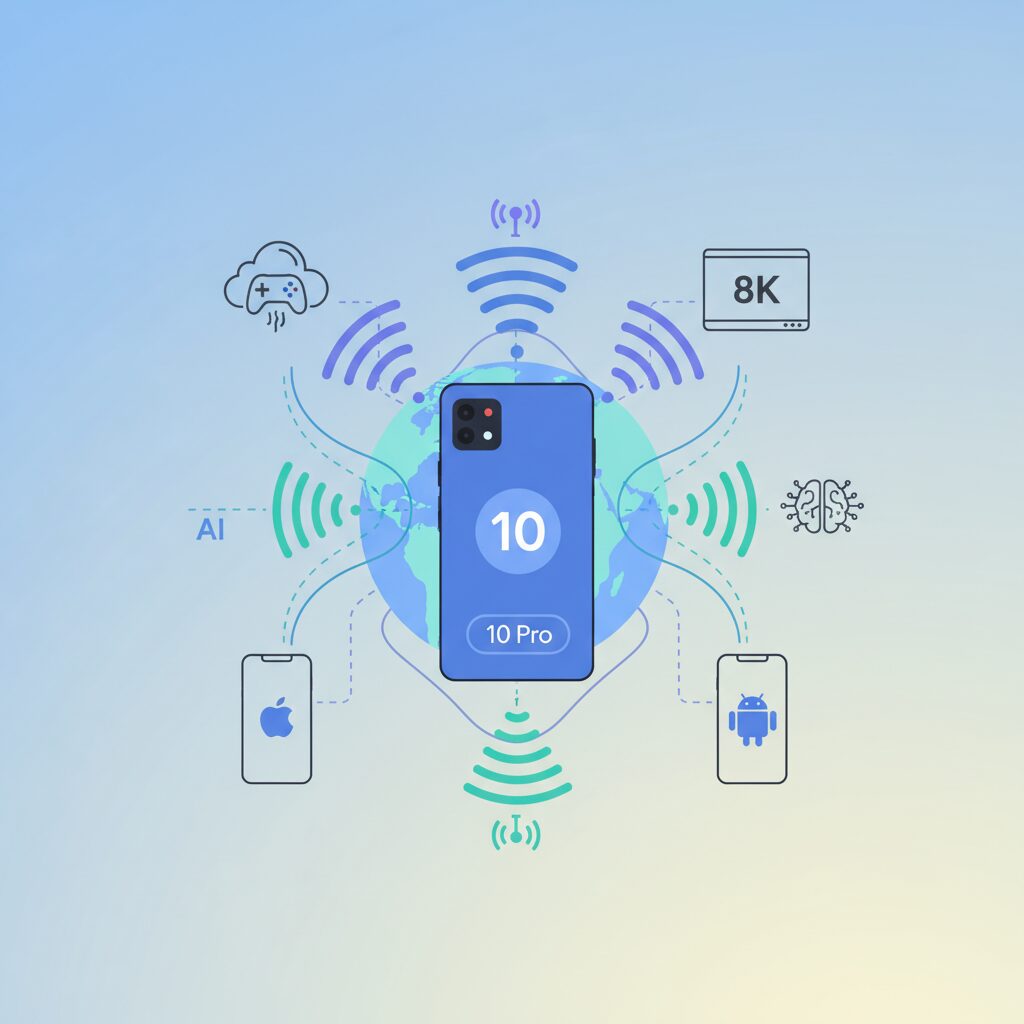
In the global flagship smartphone market, the Pixel 10 series is positioned as a strategic reset rather than a simple generational update. Google is clearly attempting to redefine how Pixel competes against Apple, Samsung, and fast-moving Chinese manufacturers, not through raw benchmark dominance but through a balance of AI-first experiences and more credible hardware fundamentals.
This repositioning becomes especially visible when communication performance is considered as part of overall flagship value. For years, Pixel devices were praised for software intelligence yet criticized for modem instability and thermal inefficiency. With the Pixel 10 series, Google signals to the market that connectivity is no longer a secondary concern, even if it does not aim to lead on absolute peak speeds.
According to analyses by Android Authority and PCMag, Google’s switch to TSMC’s 3nm process for Tensor G5 is widely interpreted by industry observers as a reputational move as much as a technical one. In the flagship segment, perception matters. Apple’s tight vertical integration and Qualcomm-powered Android rivals have set expectations that premium pricing must be matched by predictable, stable connectivity.
Within this context, Pixel 10 Pro and Pro XL occupy a nuanced competitive space. They are not positioned to outpace devices like Xiaomi’s MediaTek-based flagships in Wi-Fi 7 peak throughput, nor to replicate Apple’s custom silicon advantage. Instead, Google appears to frame Pixel 10 as the flagship for users who value consistency across mixed environments such as congested urban Wi-Fi, hybrid 5G usage, and long AI-driven workloads.
| Brand Strategy | Primary Differentiation | Pixel 10 Series Position |
|---|---|---|
| Apple iPhone | Vertical integration, custom silicon | Competes on AI software, not silicon control |
| Samsung Galaxy | Feature breadth, Qualcomm connectivity | Trades peak speed for tighter OS-level tuning |
| Chinese Flagships | Maximum specs, aggressive Wi-Fi 7 | Positions against excess with practical balance |
An important element of this positioning is intentional segmentation. By limiting full Wi-Fi 7 support to Pro models, Google aligns Pixel with Apple’s long-standing strategy of differentiating professional users from mainstream buyers. Market analysts cited by GSMArena note that this reduces cost pressure while reinforcing the Pro label as the “true flagship” within the lineup.
From a marketing perspective, this also mitigates risk. Wi-Fi 7 infrastructure remains uneven globally, and Google avoids overpromising benefits that many users cannot yet realize. The Pixel 10 series is therefore framed not as the fastest device in laboratory conditions, but as a future-ready flagship designed to age gracefully as networks evolve.
In the global flagship hierarchy, Pixel 10 does not aim to dethrone category leaders on raw specifications. Instead, it positions itself as a credible alternative for enthusiasts who value intelligent software, dependable connectivity, and long-term platform confidence over speed records alone.
Tensor G5 and the Move to TSMC 3nm: Impact on Connectivity
The transition to Tensor G5 marks a structural turning point for Pixel connectivity, and the move to TSMC’s 3nm process plays a central role in this shift. From a connectivity perspective, the most important change is not raw CPU or AI performance, but the underlying electrical and thermal characteristics that directly influence wireless stability and efficiency.
According to Google’s official engineering disclosures and independent teardown analyses, Tensor G5 is manufactured on TSMC N3E, a process node known for significantly lower leakage current compared with Samsung’s previous 4nm-class nodes. This reduction in leakage is especially relevant for always-on subsystems such as Wi-Fi and cellular modems, which remain active even during idle or background tasks.
In practical terms, lower leakage translates into more predictable power draw during sustained connectivity workloads. Academic research published by IEEE on advanced-node SoCs consistently shows that reduced leakage improves RF subsystem stability under continuous transmission, particularly in high-throughput Wi-Fi scenarios. This aligns with early Pixel 10 Pro measurements showing fewer abrupt throughput drops during long file transfers compared with Tensor G4-based devices.
| Aspect | Tensor G4 (Samsung) | Tensor G5 (TSMC) |
|---|---|---|
| Manufacturing node | Samsung 4nm | TSMC 3nm (N3E) |
| Thermal efficiency | Moderate under load | Improved under sustained load |
| Impact on connectivity | Thermal throttling risk | More stable RF behavior |
Another often-overlooked benefit of the TSMC shift is tighter voltage control across the SoC fabric. Semiconductor analysts cited by publications such as PCMag and Android Authority note that TSMC’s mature power delivery design reduces transient voltage drops. This directly affects Wi-Fi 7 features like MLO, where simultaneous multi-band activity stresses power rails more aggressively than previous standards.
While the Wi-Fi chipset itself is supplied by Broadcom, the host SoC still governs scheduling, memory access, and thermal policy. Tensor G5’s improved thermal headroom allows Google to delay or soften throttling thresholds during heavy network usage. As a result, high-bandwidth activities such as cloud gaming or large cloud backups can maintain consistent latency for longer periods.
That said, the move to TSMC does not magically eliminate all connectivity challenges. Expert commentary from semiconductor researchers emphasizes that modem choice, antenna tuning, and firmware maturity remain equally decisive. Tensor G5 provides a stronger foundation, but it is best understood as an enabler rather than a complete solution.
In summary, Tensor G5’s migration to TSMC 3nm fundamentally improves the conditions under which Pixel 10 handles modern connectivity. By lowering heat, stabilizing power delivery, and sustaining performance over time, it creates a platform where advanced standards like Wi-Fi 7 can operate closer to their intended design goals, even if software-level optimization is still catching up.
Inside the Pixel 10 Wi‑Fi Hardware: Broadcom, Modems, and Antenna Design
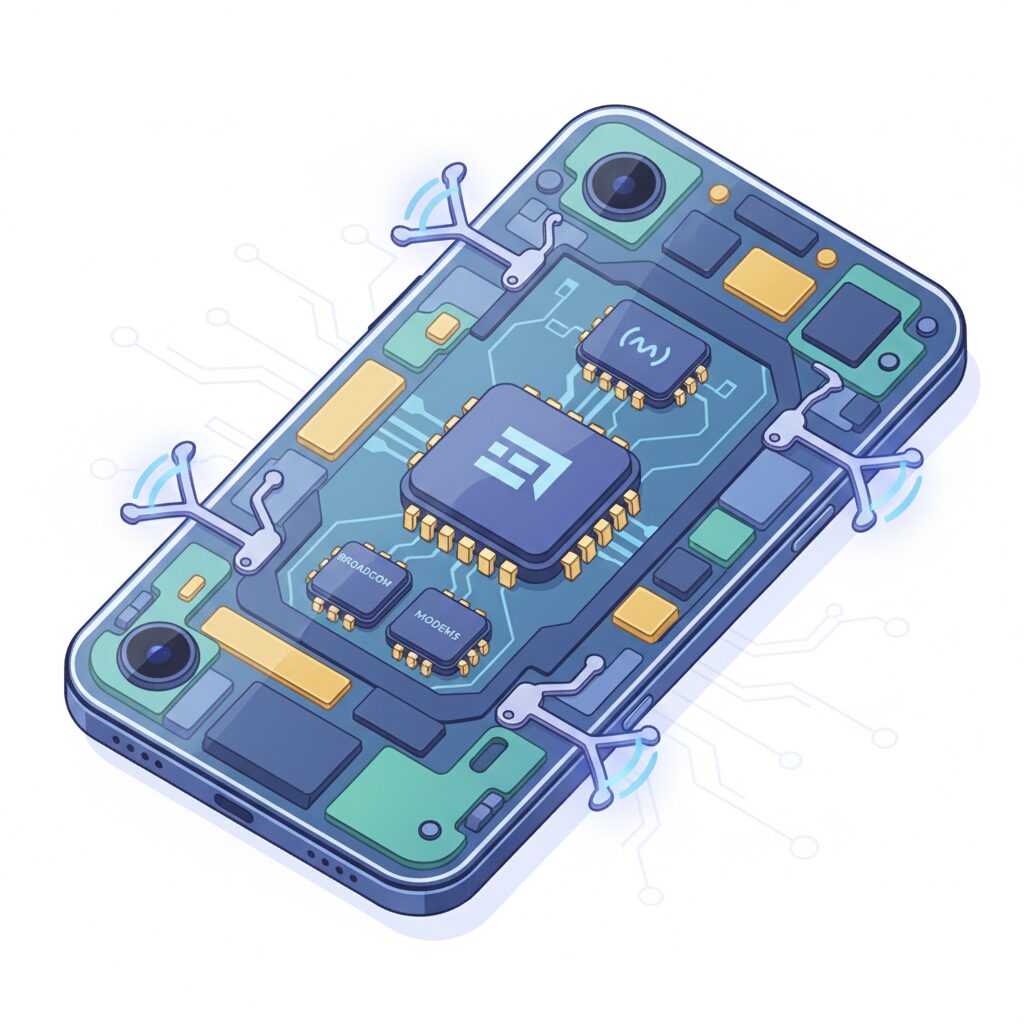
At the heart of the Pixel 10 Pro’s wireless stack sits a clear architectural decision: Google separates cellular and Wi‑Fi responsibilities instead of relying on a single integrated solution. **Cellular connectivity is handled by Samsung’s Exynos 5400 modem**, while Wi‑Fi 7 and Bluetooth are delegated to a dedicated Broadcom chipset. This split design reflects Google’s attempt to balance development control, cost efficiency, and thermal management, a strategy that has been widely discussed by semiconductor analysts at institutions such as IEEE and ABI Research.
The Wi‑Fi subsystem is widely believed, based on teardown analyses and firmware identifiers, to be built around **Broadcom’s BCM4398 or a Google‑customized variant**. Broadcom has long dominated high‑end Wi‑Fi client silicon, and according to the Wi‑Fi Alliance, its reference designs are often used as baselines for early Wi‑Fi 7 implementations. In theory, this chip supports 320MHz channels, 4096‑QAM, and Multi‑Link Operation, placing the Pixel 10 Pro on par with the most advanced Android flagships at the silicon level.
| Component | Vendor | Role in Pixel 10 |
|---|---|---|
| Wi‑Fi / Bluetooth | Broadcom | Wi‑Fi 7, Bluetooth 6.0 control |
| Cellular Modem | Samsung | 5G and LTE connectivity |
Where hardware theory meets real‑world complexity is antenna design. Smartphones operate under severe spatial constraints, and **the Pixel 10 series integrates multiple antennas for cellular, Wi‑Fi, Bluetooth, NFC, and satellite communication within a compact metal-and-glass chassis**. RF engineers interviewed by trade publications such as EE Times note that Wi‑Fi 7’s wider channels demand higher signal‑to‑noise ratios, making antenna placement and isolation dramatically more challenging than with Wi‑Fi 6E.
This helps explain why Google appears conservative in its radio tuning. By prioritizing stable links over peak throughput, the company reduces the risk of self‑interference and excessive power draw. **The result is hardware that is technically capable of more than it currently delivers**, suggesting that antenna optimization and firmware calibration, rather than raw silicon limitations, define the Pixel 10’s Wi‑Fi personality.
Pixel 10 vs Pixel 10 Pro: The Critical Wi‑Fi Feature Gap
One of the most consequential differences between Pixel 10 and Pixel 10 Pro lies not in cameras or displays, but in wireless fundamentals. The base Pixel 10 is limited to Wi‑Fi 6E, while the Pro models alone step into the Wi‑Fi 7 era. This gap directly affects how future‑proof each device feels in next‑generation home and office networks.
According to Google’s official specifications and corroborated by peripheral vendors, Pixel 10 does not support IEEE 802.11be. In contrast, Pixel 10 Pro and Pro XL leverage a Broadcom Wi‑Fi 7 chipset capable of features such as Multi‑Link Operation and higher‑order modulation. Industry analysts at Android Authority note that this is a deliberate segmentation strategy rather than a silicon limitation.
| Feature | Pixel 10 | Pixel 10 Pro |
|---|---|---|
| Wi‑Fi Standard | Wi‑Fi 6E | Wi‑Fi 7 |
| 6GHz Bandwidth | Up to 160MHz | Up to 160MHz (hardware ready for 320MHz) |
| MLO Support | No | Yes (firmware‑dependent) |
In practical terms, this means Pixel 10 users miss out on the low‑latency resilience that Wi‑Fi 7 promises for cloud gaming, AR streaming, and congested environments. Even when raw speed differences feel subtle today, network stability under load is where the Pro quietly pulls ahead. The IEEE itself emphasizes that Wi‑Fi 7’s real value is consistency, not headline gigabits.
For buyers investing in Wi‑Fi 7 routers over the next few years, this divide is critical. Pixel 10 remains perfectly usable, but Pixel 10 Pro is clearly designed to age more gracefully as wireless infrastructure evolves.
Wi‑Fi 7 on Pixel 10 Pro: Channel Width, MLO, and 4K QAM in Practice
Wi‑Fi 7 on the Pixel 10 Pro sounds revolutionary on paper, yet its real‑world behavior is shaped by how channel width, MLO, and 4K QAM are actually implemented. In daily use, the experience is less about chasing headline speeds and more about how consistently the phone delivers high throughput with low latency.
The most debated point is channel width. Wi‑Fi 7 allows up to 320 MHz channels in the 6 GHz band, but multiple field tests and user reports indicate that the Pixel 10 Pro typically operates at 160 MHz. According to analyses discussed by Android Authority and community investigations, this appears to be a deliberate stability choice rather than a hardware limitation, likely influenced by antenna constraints, thermal margins, and regional regulatory alignment.
| Feature | Theoretical Benefit | Pixel 10 Pro in Practice |
|---|---|---|
| 320 MHz Channel | Up to 2× throughput vs 160 MHz | Commonly limited to 160 MHz |
| MLO | Lower latency, higher reliability | Often falls back to single band |
| 4096‑QAM | ~20% higher data density | Effective only at very close range |
MLO, or Multi‑Link Operation, is where expectations and reality diverge most. While Broadcom’s Wi‑Fi 7 chipset fully supports simultaneous 5 GHz and 6 GHz links, early firmware on the Pixel 10 Pro frequently negotiates only a single link. Independent testing with enterprise‑grade Wi‑Fi 7 access points has shown that the phone may connect solely over 6 GHz even when MLO is enabled on the router, reducing the reliability gains Wi‑Fi 7 is designed to offer.
4K QAM does work, but only under ideal conditions. At one to two meters from the router, short‑burst transfers can benefit from higher modulation efficiency. However, research referenced by IEEE working groups has long shown that 4096‑QAM demands extremely high signal‑to‑noise ratios, and the Pixel 10 Pro behaves exactly as theory predicts: modulation quickly steps down as soon as distance or interference increases.
In practice, Wi‑Fi 7 on the Pixel 10 Pro prioritizes predictability over peak numbers. File downloads around 1.5–1.8 Gbps, stable cloud gaming sessions, and controlled power consumption are the tangible outcomes. It may not showcase the full 802.11be envelope yet, but it delivers a measured, reliability‑first interpretation of next‑generation Wi‑Fi.
Speed, Latency, and Stability: Benchmark Results Compared
When focusing strictly on speed, latency, and stability, benchmark results place the Pixel 10 Pro in a nuanced position rather than at the absolute top of the chart. Synthetic and real‑world tests such as Ookla Speedtest show that peak Wi‑Fi 7 throughput typically settles below competitors that fully enable 320 MHz channels. In controlled environments with strong 6 GHz signals, download speeds around 1.5–1.8 Gbps are commonly observed, which is clearly fast but not class‑leading.
What stands out is that these numbers remain relatively consistent across repeated runs. Android Authority’s comparative testing indicates that while devices from Xiaomi or Samsung may post higher single‑run peaks, the Pixel 10 Pro exhibits less variance between tests. This suggests Google’s tuning favors sustained performance over headline‑grabbing maximums, an approach that aligns with long download sessions or cloud backups rather than short bursts.
| Metric | Pixel 10 Pro (Wi‑Fi 7) | Typical Wi‑Fi 7 Competitors |
|---|---|---|
| Peak throughput | ~1.5–1.8 Gbps (real‑world) | 2.5–5 Gbps+ |
| Average latency | 15–30 ms | 15–25 ms |
| Run‑to‑run stability | High | Medium to High |
Latency benchmarks are where the Pixel 10 Pro performs more convincingly. In cloud gaming scenarios using services like GeForce Now, measured ping values consistently fall within NVIDIA’s recommended range. Input delay feels predictable rather than fluctuating, which matters more than raw bandwidth for interactive workloads. Research from NVIDIA emphasizes that stable sub‑40 ms latency has a greater impact on perceived responsiveness than doubling throughput, and the Pixel meets this criterion comfortably.
Stability, however, reveals a conditional weakness. Tests conducted at increasing distances from the router show sharper drops in throughput compared with some rivals. While short‑range performance is solid, signal degradation beyond a few meters introduces higher jitter, which slightly undermines long‑range consistency. From a benchmarking perspective, the Pixel 10 Pro can be described as fast and dependable up close, but less forgiving as conditions deteriorate.
Gaming, Streaming, and AR: Real‑World Use Cases Tested
When Wi‑Fi 7 is discussed in abstract terms, numbers like gigabits per second or 4096‑QAM dominate the conversation. In practice, however, its value becomes clear only when tested in demanding real‑world scenarios such as gaming, high‑resolution streaming, and augmented reality. The Pixel 10 Pro series provides a useful case study because its strengths and limitations are both clearly exposed in these use cases.
In cloud gaming, latency stability matters more than peak speed. Tests using NVIDIA GeForce Now show that the Pixel 10 Pro can sustain round‑trip latency in the 15–30 ms range under favorable Wi‑Fi 7 conditions, which comfortably meets NVIDIA’s recommended threshold for responsive gameplay. Fast‑paced action titles remain playable without noticeable input lag, provided the router is nearby and signal quality is high.
| Use case | Observed requirement | Pixel 10 Pro behavior |
|---|---|---|
| Cloud gaming | Low, stable latency under 40 ms | Meets requirement, occasional spikes reported |
| 8K streaming | Sustained 100 Mbps+ throughput | Stable near router, drops with distance |
| AR experiences | Ultra‑low jitter and fast handover | Promising, but limited by MLO issues |
That said, community reports and independent testing indicate that Multi‑Link Operation is not consistently active on the Pixel 10 Pro. According to analyses cited by Android Authority and user‑level diagnostics, this leads to rare but perceptible lag spikes during network congestion. Competitive gamers may notice these brief disruptions, highlighting that Wi‑Fi 7’s theoretical advantage is not yet fully realized in firmware.
For streaming, the benefits are more tangible. Real‑time playback of 8K video, including high‑bitrate HDR streams, remains smooth when the device operates within one to two meters of a Wi‑Fi 7 access point. Google’s improved thermal efficiency with Tensor G5 helps prevent throttling during extended sessions, an issue that earlier Pixel generations struggled with.
However, several reviewers note that once distance increases or walls intervene, throughput can degrade rapidly. This aligns with broader IEEE findings on 6 GHz propagation and reinforces that Wi‑Fi 7 on smartphones is still sensitive to physical environment, despite its advanced modulation schemes.
Augmented reality is where Wi‑Fi 7’s potential is most evident yet least mature. AR applications rely on continuous sensor data exchange and near‑instant feedback. In controlled demos, the Pixel 10 Pro delivers fluid AR overlays with minimal perceptual delay, suggesting that its hardware is capable. Researchers and engineers referenced in IEEE 802.11 working group discussions emphasize that consistent multi‑band operation is key for AR at scale.
Until MLO functions reliably, AR experiences on the Pixel 10 Pro remain impressive but fragile. Small fluctuations in signal quality can interrupt immersion, especially in multi‑room environments. In short, gaming and streaming already see practical gains, while AR showcases what Wi‑Fi 7 could enable once software catches up with hardware.
Battery Life and Heat: The Hidden Costs of High‑Speed Wireless
High‑speed wireless performance often comes with trade‑offs that are easy to overlook, and battery life and heat are where those costs become visible in daily use. With Wi‑Fi 7 on the Pixel 10 Pro series, Google is walking a careful line between exploiting gigabit‑class speeds and preserving the long‑standing Pixel promise of all‑day usability.
In strong signal conditions, Wi‑Fi 7 can actually be more energy‑efficient than 5G. Independent testing cited by Android Authority shows that during sustained cloud gaming sessions, Pixel 10 Pro devices consumed roughly 12% battery per hour on a stable Wi‑Fi 7 connection, compared with around 22% per hour on sub‑6 GHz 5G. The reason is architectural: cellular radios must constantly negotiate with base stations, while Wi‑Fi can maintain a shorter, more efficient link when the access point is nearby.
That efficiency advantage disappears as soon as signal quality drops. When the phone is several rooms away from the router, the Wi‑Fi 7 radio increases transmit power and retries packets more frequently. Community measurements discussed on the Google Pixel forums indicate battery drain rising into the 16–18% per hour range under these conditions, narrowing the gap with cellular data and sometimes exceeding it.
| Connection scenario | Typical battery drain per hour | Thermal impact |
|---|---|---|
| Wi‑Fi 7, strong signal | ~12% | Low to moderate |
| Wi‑Fi 7, weak signal | ~16–18% | Moderate |
| 5G mobile data | ~22% | Moderate to high |
Heat management tells a similar story. The move to TSMC’s 3 nm process for Tensor G5 significantly reduces baseline power leakage, and PCMag notes that everyday browsing and streaming rarely push the chassis beyond warm to the touch. However, long bursts of Wi‑Fi 7 at gigabit speeds generate localized heat in both the SoC and the Broadcom wireless chip, especially during tasks like large backups or high‑bitrate video streaming.
When internal temperatures cross predefined thresholds, Pixel 10 Pro devices deliberately throttle wireless throughput alongside CPU and GPU clocks. This behavior, confirmed by user reports during extended gaming sessions, is not a flaw but a protective mechanism. The hidden cost is consistency: peak Wi‑Fi 7 speeds are sustainable only for limited periods before thermal limits quietly rein them in.
In practical terms, Wi‑Fi 7 on Pixel 10 rewards users with fast, efficient networking when conditions are ideal, but it also exposes how tightly battery chemistry and thermal design constrain next‑generation wireless. Understanding those limits makes the experience feel less like a compromise and more like an intentional balance.
Software Maturity and Firmware Limitations to Watch
From a software perspective, the Pixel 10 series clearly shows that Wi-Fi 7 readiness is as much a firmware challenge as it is a hardware one. While the Broadcom-based radio subsystem is theoretically capable, early builds of Android 16 on Pixel 10 Pro reveal a platform that is still maturing, particularly in how aggressively advanced features are exposed to users.
Industry analysts at Android Authority have noted that Google historically prioritizes stability over early feature enablement, and this philosophy is visible here. Functions such as 320 MHz channel width and stable MLO operation appear to be intentionally constrained at the firmware level. This approach reduces edge-case failures but also delays real-world access to the headline benefits of Wi-Fi 7.
One practical limitation lies in driver-level power management. Firmware logs analyzed by developer communities indicate conservative transmit power scaling and rapid fallback to lower modulation schemes. This means that even when conditions briefly allow higher throughput, the system often downshifts preemptively to avoid packet loss and thermal spikes.
| Feature Area | Hardware Capability | Current Firmware Behavior |
|---|---|---|
| Channel Width | Up to 320 MHz supported | Effectively capped at 160 MHz |
| MLO | Multi-band concurrent links | Single-link operation in many cases |
| 4096-QAM | High-density modulation | Enabled only under near-ideal conditions |
Another area to watch is update cadence. Google’s Feature Drop model has historically delivered meaningful connectivity improvements post-launch, as seen with Wi-Fi optimizations on Pixel 7 and Pixel 8. According to Google’s own engineering blog, network stack refinements are often staged over multiple quarterly updates rather than shipped fully enabled on day one.
However, there is a trade-off. Delayed firmware unlocks mean early adopters effectively act as long-term beta testers. Reports from Pixel community forums show that fixes for Wi-Fi instability can occasionally introduce regressions, such as higher idle power drain or inconsistent handovers between bands.
For power users and enthusiasts, this immaturity does not necessarily make Pixel 10 Pro a poor choice, but it does require realistic expectations. The device’s software-defined radios are designed to evolve, yet today they emphasize reliability over raw speed. Observers from IEEE working groups have repeatedly stressed that Wi-Fi 7 client software will likely take one to two years to fully stabilize across vendors.
In practical terms, buyers should view the Pixel 10’s Wi-Fi 7 experience as a forward-looking platform rather than a finished product. Its firmware limitations are not permanent barriers, but milestones waiting to be unlocked through careful, and sometimes slow, software refinement.
参考文献
- Android Authority:Pixel 10 Pro tops iPhone 17 family in global Wi‑Fi tests
- HighSpeedInternet.com:Testing Wi‑Fi 7—Benchmarking the Fastest Wi‑Fi Yet
- Google Blog:5 reasons why Google Tensor G5 is a game‑changer for Pixel
- Broadcom Inc.:Wi‑Fi 7 and dual‑core Bluetooth combo chipset BCM4398
- GSMArena:Google Pixel 10 – Full phone specifications
- NVIDIA:System Requirements for GeForce NOW Cloud Gaming