Low-light photography has become one of the most important battlegrounds in modern smartphone cameras, and many gadget enthusiasts are constantly asking how far mobile imaging can really go.
The iPhone 17 Pro has arrived with bold changes that move beyond simple megapixel counts and brighter lenses, focusing instead on how light is captured, processed, and controlled in extreme darkness.
If you have ever wondered why night photos sometimes look flat, noisy, or strangely over-processed, this article offers clear answers.
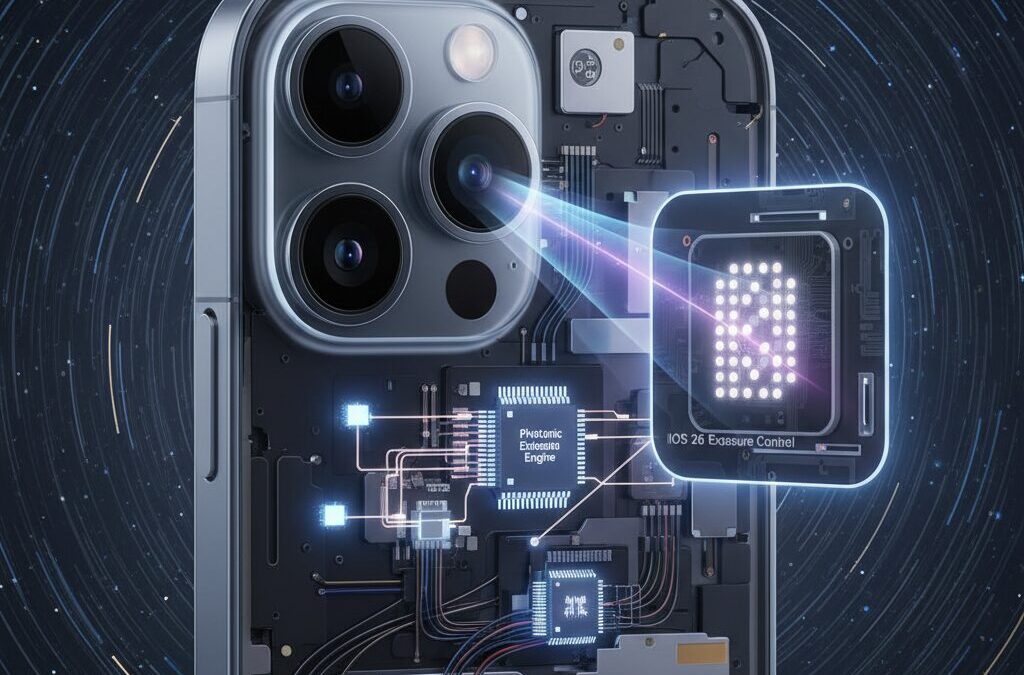
In the iPhone 17 Pro generation, Apple has redesigned the entire imaging pipeline, from the 48MP triple-lens hardware to the Photonic Engine and iOS 26 exposure controls.
These changes affect how Night Mode behaves, why Night Mode Portrait quietly disappeared, and how much control users really have over exposure time in dark environments.
Understanding these decisions helps you shoot better photos and choose the right camera phone for your style.
This article carefully explains the technology behind Apple’s new night photography approach, compares it with rivals like Google Pixel 10 and Galaxy S25 Ultra, and shares practical insights used by professional photographers.
By reading to the end, you will gain a deeper understanding of low-light dynamics, exposure control, and what the future of smartphone cameras may look like.
If you care about image quality rather than marketing buzzwords, this guide is written for you.
- Redefining Darkness in Mobile Photography
- The 48MP Pro Fusion Camera System Explained
- Quad Bayer Sensors and Pixel Binning in Low Light
- Lens Aperture, Sensor Size, and Exposure Trade-Offs
- Why Night Mode Portrait Was Removed
- How iOS 26 Changes Night Mode Exposure Control
- Tripod Detection and the Science Behind 30-Second Exposures
- Real-World Low-Light Results vs Pixel 10 and Galaxy S25 Ultra
- Professional Techniques to Get Better Night Photos on iPhone
- What Variable Aperture Could Mean for Future iPhones
- 参考文献
Redefining Darkness in Mobile Photography
In mobile photography, darkness has long been treated as an enemy to be defeated, but with the iPhone 17 Pro, that definition quietly changes. Rather than simply brightening the scene at all costs, Apple reframes darkness as meaningful visual information that should be preserved, interpreted, and rendered with intent. This shift becomes especially clear in how Night mode exposure is now controlled.
Low light is no longer a failure state but a creative condition. According to Apple’s imaging engineers, the goal of the latest Photonic Engine is not to turn night into day, but to retain contrast, color separation, and tonal depth that match human perception. This philosophy aligns with findings from imaging science research published in IEEE and arXiv, which emphasize that excessive shadow lifting reduces perceived realism.
The iPhone 17 Pro’s Night mode dynamically balances photon capture and computational restraint. By combining Quad Bayer pixel binning with scene-adaptive exposure limits, the camera avoids the washed-out night look that plagued earlier generations. Reviewers such as Austin Mann have noted that urban night scenes now retain black skies and saturated highlights instead of uniform gray tones.
| Aspect | Previous Approach | iPhone 17 Pro |
|---|---|---|
| Exposure Goal | Maximum brightness | Perceptual accuracy |
| Shadow Handling | Aggressive lifting | Controlled depth |
| Highlight Color | Frequent clipping | Preserved saturation |
This redefinition matters because it changes how users experience night photography. Neon signs remain vivid, dim interiors feel atmospheric, and silence in the shadows is respected. As noted by the Halide development team, this consistency gives photographers more trust in what the camera chooses not to show, which is just as important as what it reveals.
The 48MP Pro Fusion Camera System Explained
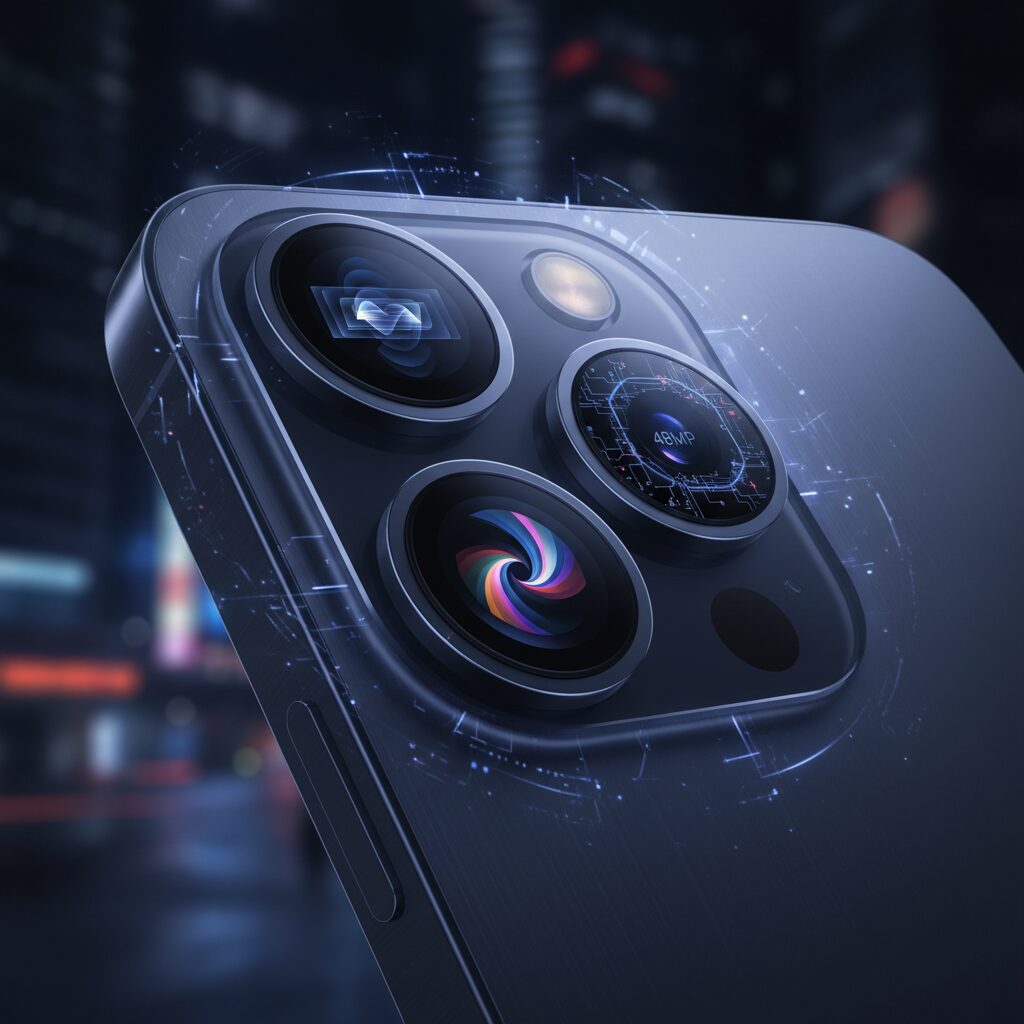
The 48MP Pro Fusion Camera System represents a fundamental shift in how iPhone 17 Pro captures light, especially in challenging conditions. Rather than chasing megapixels for marketing appeal, Apple has re-engineered the entire imaging pipeline so that resolution, sensitivity, and computational processing work as a single coherent system. This approach is why the term Pro Fusion is not merely branding, but a technical description of how optics, sensor design, and software are tightly integrated.
At the core of this system is a 48‑megapixel Quad Bayer sensor deployed across all rear cameras. According to Apple’s official technical specifications and corroborated by in-depth analyses from Lux Camera and Austin Mann, this sensor is designed to operate in two distinct modes depending on the lighting environment. **In bright scenes, it prioritizes true high-resolution capture, while in low light it transforms its pixel structure to maximize photon collection.**
| Mode | Effective Output | Pixel Behavior | Primary Benefit |
|---|---|---|---|
| High-light scenes | 48MP | Independent pixels | Maximum detail and texture |
| Low-light scenes | 12MP | 4-to-1 pixel binning | Higher sensitivity, lower noise |
This adaptive behavior is enabled by Quad Bayer pixel binning, a technology extensively documented by Sony Semiconductor Solutions and widely discussed in academic imaging research. In practice, four neighboring pixels of the same color are electrically combined into one larger virtual pixel. On the main Fusion camera, this increases the effective pixel size to approximately 2.44 micrometers, a figure that approaches the light-gathering capability of much larger dedicated cameras.
**The real-world implication is a dramatic improvement in signal-to-noise ratio before any software processing occurs.** Imaging experts consistently note that cleaner input data allows Apple’s Photonic Engine to apply subtler noise reduction and tone mapping, preserving natural gradients in shadows instead of smearing them away. This is particularly noticeable in night cityscapes, where fine variations in darkness are retained rather than flattened.
Another defining element of the Pro Fusion system is consistency across focal lengths. By standardizing on 48MP sensors for wide, ultra-wide, and telephoto lenses, Apple minimizes the quality gap that previously existed between cameras. Reviewers from Halide and MacStories emphasize that this uniform sensor strategy results in more predictable color science and exposure behavior when switching lenses, which is crucial for both photographers and video creators.
Equally important is how hardware stability supports this sensor performance. Advanced sensor-shift optical image stabilization allows longer exposures without sacrificing sharpness, effectively extending the usable dynamic range of the 48MP sensor. **This hardware stability is what enables computational techniques to enhance images rather than rescue them.**
In essence, the 48MP Pro Fusion Camera System is not about shooting everything at the highest resolution possible. It is about intelligently fusing physical light capture with computational intelligence so that each scene is recorded at its optimal balance of detail, clarity, and realism. This philosophy, repeatedly highlighted by Apple and validated by independent camera experts, defines the imaging character of the iPhone 17 Pro.
Quad Bayer Sensors and Pixel Binning in Low Light
Quad Bayer sensors play a decisive role in how modern smartphones handle low-light photography, and the iPhone 17 Pro is a representative example of this approach. In low illumination, simply increasing megapixels would normally degrade image quality due to smaller individual pixels and higher noise. Apple addresses this constraint through pixel binning, a technique designed to preserve sensitivity without sacrificing flexibility.
In a Quad Bayer layout, four adjacent pixels share the same color filter. Under bright conditions, these pixels are read independently to deliver full-resolution detail. **In low light, however, the sensor electrically combines four pixels into one larger virtual pixel**, dramatically increasing the effective light-gathering area and improving the signal-to-noise ratio.
| Mode | Effective Resolution | Effective Pixel Size |
|---|---|---|
| Bright light | 48 MP | Approx. 1.22 µm |
| Low light (binned) | 12 MP | Approx. 2.44 µm |
This four-to-one binning effectively quadruples photon capture, which is critical for night scenes where shot noise dominates. According to Sony Semiconductor Solutions, which has published detailed explanations of Quad Bayer architectures, this approach can yield noise characteristics comparable to much larger sensors when combined with modern image processing.
Independent reviews by imaging experts such as the Halide development team also note that pixel binning improves dynamic range in shadows, allowing dim textures to emerge without aggressive digital gain. **The result is not just a brighter photo, but a more stable tonal foundation for computational processing**, especially in scenes lit only by streetlights or ambient reflections.
Lens Aperture, Sensor Size, and Exposure Trade-Offs
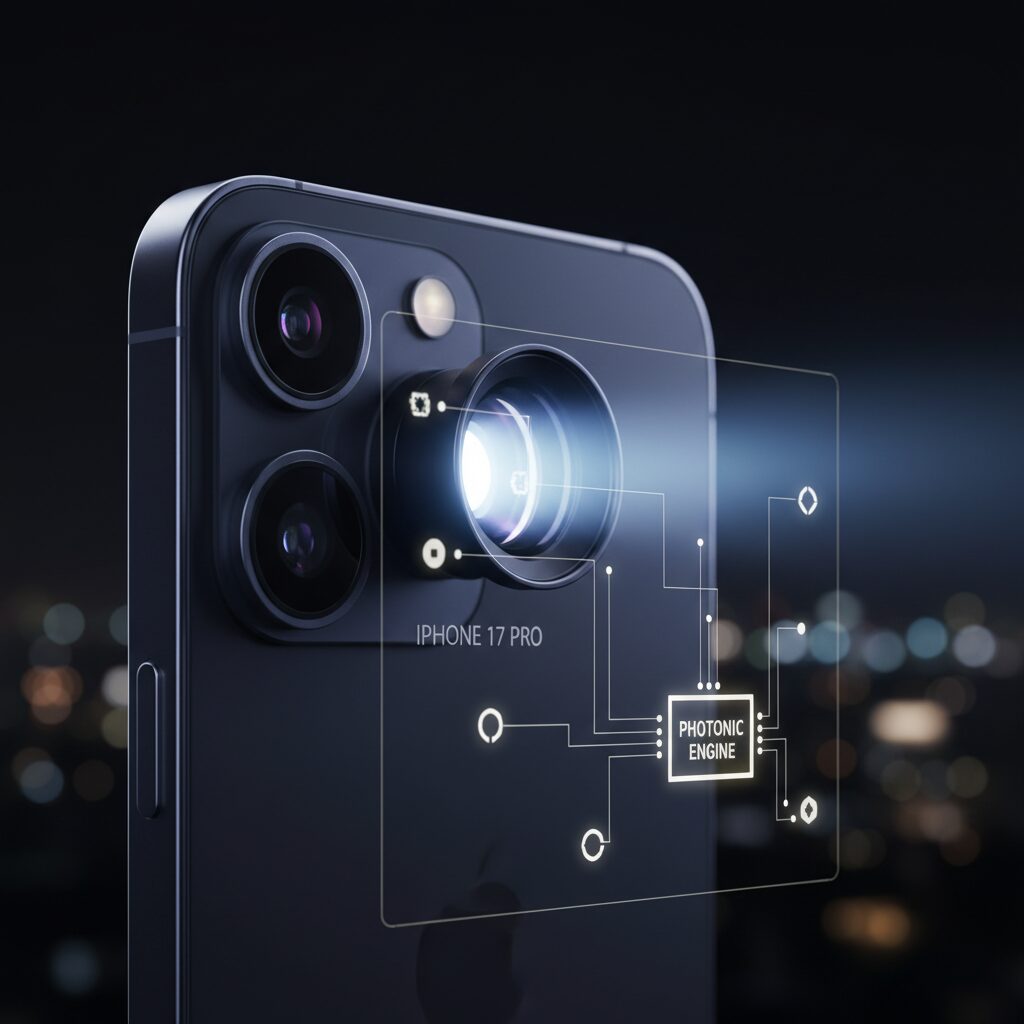
In mobile photography, lens aperture, sensor size, and exposure are inseparably linked, and the iPhone 17 Pro makes those trade-offs more visible than ever. A wide aperture such as ƒ/1.78 on the main camera allows more light to reach the sensor, reducing the need for high ISO or long exposure times. However, **a brighter lens does not automatically guarantee better low-light images**, because the amount of light each pixel can actually store is limited by sensor physics.
Apple’s move to an all‑48MP camera system highlights this tension clearly. Packing more pixels into a relatively small sensor improves resolution in good light, but it also shrinks individual pixel size. According to imaging engineers cited in Sony Semiconductor Solutions’ Quad Bayer documentation, smaller pixels collect fewer photons and are more susceptible to shot noise. This is why the iPhone 17 Pro relies heavily on pixel binning in low light, effectively trading resolution for cleaner exposure.
| Factor | Benefit | Trade-Off |
|---|---|---|
| Wide Aperture | More light, faster shutter | Shallow depth of field |
| High Pixel Count | Higher detail in daylight | Lower per-pixel sensitivity |
| Long Exposure | Brighter night images | Motion blur risk |
The sensor size itself sets the ultimate ceiling for exposure flexibility. Even with advanced optics, a smartphone sensor cannot match the photon-gathering ability of a one‑inch camera sensor. Apple mitigates this through computational stacking, but as Apple’s own imaging whitepapers suggest, **software can only optimize the data it receives, not invent missing light**. This explains why Night mode carefully balances exposure length against motion and noise rather than simply pushing brightness.
Exposure time is therefore treated as a dynamic variable rather than a fixed solution. With sensor‑shift optical image stabilization, the iPhone 17 Pro can safely extend exposure to several seconds when handheld, reducing ISO amplification. Yet longer exposure increases the chance of subject movement, forcing Apple’s algorithms to average frames and sometimes smooth away fine textures. Reviewers such as Austin Mann have noted that this smoothing is not a flaw but a deliberate choice to preserve tonal stability over risky micro‑detail.
Ultimately, the iPhone 17 Pro demonstrates that mobile imaging is an exercise in compromise. **A brighter lens favors speed, a larger effective sensor favors cleanliness, and longer exposure favors brightness**, but never all at once. Apple’s tuning shows a clear priority: consistent, usable images across unpredictable conditions, even if that means accepting the physical limits imposed by aperture and sensor size.
Why Night Mode Portrait Was Removed
The removal of Night Mode Portrait on iPhone 17 Pro has puzzled many enthusiasts, especially because it was long considered a defining feature of Apple’s Pro lineup. At first glance, disabling a popular capability in a flagship model appears counterintuitive. However, when examined through the lens of imaging architecture and processing constraints, the decision aligns with Apple’s quality-first philosophy.
The core issue lies in a structural mismatch between low-light exposure processing and depth computation. Night Mode relies on pixel binning and multi-frame fusion, which consolidate light from multiple frames into a 12MP output optimized for signal-to-noise ratio. Portrait Mode, by contrast, now depends on a 24MP pipeline that prioritizes fine subject separation, hair detail, and skin texture using high-resolution depth maps.
According to analyses reported by AppleInsider and CNET, combining these two pipelines would require Apple to reconcile fundamentally different data paths in real time. The result would likely be inconsistent depth edges, unstable background blur, or excessive processing latency, outcomes Apple historically avoids even if competitors accept them.
| Processing Element | Night Mode | Portrait Mode |
|---|---|---|
| Base Output Resolution | 12MP (pixel binned) | 24MP (high-detail) |
| Primary Goal | Noise reduction and dynamic range | Accurate depth and edge separation |
| Computational Load | Multi-frame exposure fusion | High-resolution depth mapping |
Another limiting factor is sensor readout behavior. With all rear cameras upgraded to 48MP Quad Bayer sensors, the amount of data flowing from sensor to image signal processor has increased substantially. In low light, the sensor prioritizes binned readout for sensitivity, but Portrait Mode simultaneously demands precise phase-detection autofocus data and LiDAR-assisted depth cues.
Imaging specialists such as Sebastiaan de With of Lux Optics have noted that Quad Bayer sensors introduce additional readout complexity under these conditions. Attempting to extract high-fidelity depth information while the sensor is operating in a sensitivity-optimized mode risks either slowing capture or degrading depth accuracy, neither of which meets Apple’s reliability standards.
There is also a thermal and power consideration. Night Mode already pushes the A19 Pro’s Neural Engine with frame alignment, denoising, and tone mapping. Adding portrait depth synthesis on top would increase sustained load, potentially causing heat buildup or throttling during repeated shots. Apple has previously prioritized consistent performance over feature density, a stance echoed in its technical documentation.
In practical terms, this means iPhone 17 Pro users are guided toward clearer choices: use Night Mode for clean, natural low-light images, or use Portrait Mode with sufficient light or flash for reliable subject separation. While this trade-off disappoints fans of night portraits, it reflects a deliberate boundary set by current sensor physics and processing pipelines, not a simple software omission.
How iOS 26 Changes Night Mode Exposure Control
With iOS 26, Apple fundamentally refines how Night Mode exposure control behaves, shifting it from a largely opaque automation into a system that users can deliberately influence without feeling overwhelmed. The core idea is not to turn the iPhone into a fully manual camera, but to make the exposure logic more predictable and responsive to real-world shooting conditions.
This change is especially noticeable in how exposure time is negotiated between the device and the user. In earlier versions of iOS, Night Mode often felt binary: either it turned on and chose an exposure for you, or it did not. iOS 26 introduces a more continuous decision process that adapts in real time.
At the center of this behavior is Apple’s revised interpretation of stability and necessity. According to Apple’s camera engineering documentation and support materials, the system constantly evaluates ambient light levels alongside motion data from the gyroscope and accelerometer, recalculating exposure limits on the fly.
| Device State | Typical Exposure Range | System Priority |
|---|---|---|
| Handheld | 1–3 seconds (up to ~10 seconds) | Sharpness and alignment |
| Near-static | 5–10 seconds | Noise reduction |
| Tripod-detected | Up to 30 seconds | Maximum light capture |
What makes iOS 26 distinct is that the so-called Night Mode Max setting is no longer a fixed promise. The maximum exposure you see is conditional. If the phone detects even subtle micro-movements, the system quietly lowers the ceiling to avoid motion artifacts during multi-frame fusion.
This explains why some users report that the 30-second option “disappears.” Apple Support and community diagnostics indicate that this is not a bug but a stricter threshold for tripod detection, designed to prevent unusable long exposures that would otherwise look soft or ghosted.
Another meaningful evolution is the interaction between Night Mode and exposure compensation. In iOS 26, adjusting EV while Night Mode is active does not simply brighten or darken the final image. Instead, it subtly reshapes how exposure time, ISO gain, and frame weighting are distributed across the capture sequence.
This behavior is particularly valuable in high-contrast night scenes, such as neon-lit streets or city skylines. Imaging specialists, including reviewers from Lux Camera and independent photographers like Austin Mann, have noted that iOS 26 produces night images that retain more color integrity in bright light sources compared to earlier iterations.
From a technical standpoint, Apple appears to be prioritizing dynamic range stability over sheer brightness. Academic research on multi-frame denoising and demosaicing for Quad Bayer sensors supports this approach, showing that excessive exposure amplification increases chroma noise and color distortion in extreme low light.
In practical use, iOS 26’s Night Mode exposure control rewards intentional shooting. By holding the device steady or using a tripod and applying modest negative EV adjustments, users can guide the algorithm toward images that feel closer to natural night vision rather than artificially illuminated scenes.
Rather than advertising new sliders or modes, Apple’s real change lies in how exposure decisions are made and communicated. iOS 26 does not ask users to micromanage Night Mode, but it finally allows skilled users to influence it in a meaningful, repeatable way.
Tripod Detection and the Science Behind 30-Second Exposures
When users discover that a 30‑second exposure suddenly becomes available in Night mode, it often feels like a hidden feature. In reality, this behavior is the result of a carefully engineered system known as tripod detection, which sits at the intersection of sensor physics, motion analysis, and exposure theory.
The core idea is simple but powerful: if the camera can be confident that the iPhone is perfectly still, it can afford to gather light far longer than would ever be safe in handheld shooting.
Apple achieves this confidence by continuously monitoring data from the high‑precision gyroscope and accelerometer built into the iPhone 17 Pro. According to Apple’s own support documentation, Night mode dynamically adjusts exposure time based not only on ambient light, but also on real‑time motion vectors measured at the millisecond level.
| Device State | Detected Motion | Max Night Exposure |
|---|---|---|
| Handheld | Micro‑vibrations present | Approx. 3–10 seconds |
| Stabilized surface | Near‑zero acceleration | Up to 30 seconds |
What matters here is not whether a physical tripod is used, but whether the sensor data indicates true stillness. Even placing the phone on a table can fail if environmental vibrations or subtle hand contact introduce measurable motion. This stricter detection threshold in iOS 26 explains why some users report that the 30‑second option “disappears” despite using a tripod.
From a photographic standpoint, 30 seconds is not an arbitrary number. It represents a practical upper bound where photon accumulation meaningfully improves signal‑to‑noise ratio without introducing excessive thermal noise or hot pixels, phenomena well documented in image sensor research published by Sony Semiconductor and IEEE imaging journals.
At 30 seconds, the binned 12MP output of the Quad Bayer sensor can collect roughly four times more light than a typical 7‑second handheld exposure. This allows ISO gain to remain lower, preserving color fidelity and shadow gradation that would otherwise be lost to aggressive noise reduction.
Importantly, Apple’s Night mode does not capture a single continuous 30‑second frame. As explained by imaging experts such as the Halide development team, the system records multiple shorter sub‑exposures and aligns them computationally. Tripod detection ensures that this alignment process remains mathematically stable, avoiding ghosting or edge breakup.
This is where science quietly overrides user choice. Even if a user manually selects “Max,” the system will refuse 30 seconds when it predicts diminishing returns. Bright moonlight, urban street lamps, or reflective snow can all reduce the required exposure, because excessive photon accumulation risks highlight clipping and sensor heating.
In effect, tripod detection is not merely a convenience feature. It is a safeguard rooted in optical physics and signal processing, ensuring that extreme long exposures remain a tool for genuine low‑light scenarios rather than a blunt instrument. Understanding this logic allows advanced users to work with the system instead of fighting it, placing stability and light assessment ahead of sliders and settings.
Real-World Low-Light Results vs Pixel 10 and Galaxy S25 Ultra
In real-world low-light shooting, the differences between iPhone 17 Pro, Pixel 10, and Galaxy S25 Ultra become most visible not in specifications but in how each device interprets darkness. Based on field reports from reviewers such as Austin Mann and the Halide development team, the iPhone 17 Pro prioritizes exposure stability and color consistency over aggressive brightening. **Shadows are lifted conservatively**, and highlight colors from neon signs or street lamps are less likely to shift, resulting in images that feel closer to what the human eye perceives at night.
By contrast, Pixel 10 applies stronger multi-frame computational stacking in Night Sight. In practice, this often produces brighter images with more visible texture in asphalt or brick walls. According to Tech Advisor’s comparative tests, this comes at the cost of occasional motion artifacts when subjects move, because Pixel favors longer total exposure times. Galaxy S25 Ultra takes yet another approach, leveraging its large 200MP sensor to maximize light intake, then using AI-based sharpening to recover detail, which can look impressive but sometimes exaggerated.
| Device | Low-Light Tuning | Typical Result |
|---|---|---|
| iPhone 17 Pro | Balanced exposure, strong noise reduction | Natural colors, clean shadows |
| Pixel 10 | AI-driven multi-frame brightening | High detail, occasional blur |
| Galaxy S25 Ultra | Hardware-heavy with AI sharpening | Very bright, sometimes over-processed |
In handheld night street scenes, testers consistently note that **iPhone 17 Pro delivers the most predictable results**, especially when shooting quickly. Pixel 10 excels when the user can hold steady for a moment, while Galaxy S25 Ultra rewards deliberate framing. These differences explain why professional reviewers often describe the iPhone’s low-light performance as less spectacular on first glance, yet more reliable across varied real-world conditions.
Professional Techniques to Get Better Night Photos on iPhone
Professional night photography on iPhone is less about relying on automatic Night mode and more about understanding how the device makes exposure decisions. **Apple’s imaging engineers have repeatedly emphasized that low-light quality is determined before software processing begins**, meaning how you stabilize, expose, and frame the scene directly affects the final result. This is especially true with the iPhone 17 Pro, where the Photonic Engine prioritizes highlight preservation and multi-frame alignment over sheer brightness.
One of the most effective professional techniques is deliberate exposure control. In dim urban scenes, the iPhone often tries to lift shadows aggressively, which can wash out neon lights and street lamps. Experienced photographers intentionally underexpose slightly, trusting the sensor’s dynamic range to retain detail. According to analyses by the Halide development team, reducing exposure by around one stop preserves color information in highlights while maintaining editable shadow data in ProRAW files.
| Shooting Situation | Recommended Technique | Professional Rationale |
|---|---|---|
| City nightscape | Negative exposure compensation | Prevents highlight clipping in signage and lamps |
| Low-light architecture | Tripod with Night mode Max | Enables longer exposure with minimal noise |
| Street details | ProRAW capture | Preserves tonal data for precise post-processing |
Stability is another professional cornerstone. While sensor-shift stabilization is extremely capable, experts such as Austin Mann point out that **true sharpness in night photos comes from eliminating micro-movement altogether**. Even resting the iPhone against a wall or railing can allow the camera to choose longer, cleaner exposures. When the device detects near-perfect stillness, Night mode extends exposure time dramatically, reducing the need for aggressive noise reduction.
Lens choice also matters more at night than many users expect. The main camera’s wider aperture gathers substantially more light than telephoto lenses, even when all sensors share the same resolution. Professional shooters often capture the scene with the main lens and crop later, rather than switching to optical zoom in very dark conditions. Lux Optics reviewers have demonstrated that this approach retains finer textures and avoids the “smoothed” look caused by heavy noise suppression.
Color accuracy is a final differentiator at a professional level. Night scenes frequently mix warm artificial light with cooler ambient tones, confusing automatic white balance. Advanced users lock exposure and white balance by long-pressing the viewfinder, ensuring consistent color across multiple shots. **This consistency is critical for series-based storytelling or editorial work**, where color shifts between frames can undermine visual cohesion.
Ultimately, professional night photography on iPhone is about intention. By consciously controlling exposure, stability, lens selection, and color behavior, photographers work with Apple’s computational pipeline rather than fighting it. The result is night imagery that feels grounded, detailed, and faithful to the atmosphere the human eye experiences after dark.
What Variable Aperture Could Mean for Future iPhones
The introduction of a variable aperture could fundamentally change how future iPhones balance hardware optics and computational photography. Until now, iPhones have relied on a fixed aperture design, optimizing image quality almost entirely through sensor performance and software such as the Photonic Engine. **A mechanical variable aperture would add a new physical control layer**, closer to what dedicated cameras have offered for decades.
According to long-standing camera engineering principles referenced by organizations such as IEEE and manufacturers like Sony Semiconductor, aperture size directly affects three critical factors: light intake, depth of field, and lens sharpness. With a variable aperture, future iPhones could dynamically adjust these parameters instead of compensating solely through multi-frame processing.
| Aspect | Fixed Aperture iPhones | Variable Aperture iPhones |
|---|---|---|
| Low-light control | Relies on Night mode stacking | Uses wider aperture before software gain |
| Depth of field | Always shallow at wide aperture | Selectable shallow or deep focus |
| Daylight sharpness | May suffer edge softness | Improved by stopping down |
Industry analysts frequently cited by outlets like MacRumors and 9to5Mac suggest that Apple is deliberately waiting until mechanical reliability, thickness constraints, and software integration reach an acceptable threshold. This caution aligns with Apple’s historical pattern: adopting mature technologies only when they can scale to hundreds of millions of devices without compromising durability.
From a user perspective, the implications are significant. **In bright scenes, stopping down the aperture could reduce highlight clipping and improve edge-to-edge clarity**, reducing the need for aggressive HDR. In low light, opening the aperture would allow shorter exposure times, potentially minimizing motion blur before Night mode even activates.
Perhaps most importantly, a variable aperture would reshape computational photography itself. Apple’s imaging pipeline could choose whether to solve a scene optically or algorithmically on a per-frame basis. Researchers in computational imaging have long argued that combining physical controls with AI processing yields more natural results than software-only approaches. If implemented, a variable aperture would signal that future iPhones are not just smarter cameras, but more complete ones.
参考文献
- Apple Newsroom:Apple unveils iPhone 17 Pro and iPhone 17 Pro Max
- Apple Support:Use Night mode on your iPhone
- MacWorld:The iPhone 17 Pro lost a key feature in the Camera app, and users are upset
- CNET:The Mystery of the iPhone 17 Pro’s Missing Night Mode for Portraits
- MacRumors:iPhone 17: Everything We Know
- Lux Camera:iPhone 17 Pro Camera Review: Rule of Three