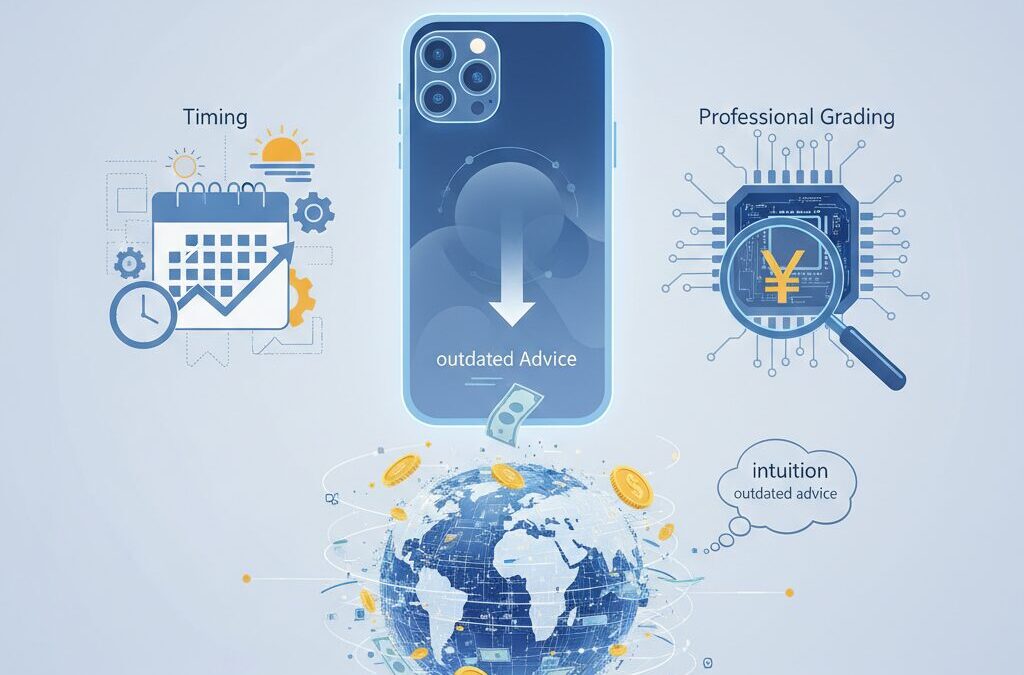
If you are passionate about gadgets, you already know that an iPhone is more than just a smartphone.
For many users, it functions as a highly liquid digital asset that can be converted into real cash at surprisingly high rates.
However, most people still sell their iPhone based on intuition, convenience, or outdated advice, and leave a significant amount of value on the table.
This article is designed for readers who want to approach iPhone ownership strategically and rationally.
By understanding how global resale markets work, how timing affects prices, and how professional grading decisions are made, you can dramatically improve your return when it is time to sell.
You will learn why Japanese-market iPhones are especially valued worldwide, how seasonal demand cycles influence buyback prices, and which technical details can make or break a high appraisal.
Instead of treating resale as a simple afterthought, this guide helps you view your iPhone through the lens of long-term value optimization.
If you want to make smarter upgrade decisions, reduce total ownership cost, and align your gadget habits with real market dynamics, this article will give you a clear and practical advantage.
- Why iPhones Function as Semi‑Financial Assets in the Global Tech Economy
- The Explosive Growth of the Used and Refurbished Smartphone Market
- Why Japanese iPhones Command Premium Prices Worldwide
- Seasonal Demand Cycles That Create Resale Price Peaks
- The September Product Launch Effect and Sudden Value Drops
- Battery Health, Cosmetic Grading, and the Hidden Rules of Appraisal
- Carrier Trade‑In Programs vs Independent Buyback Stores
- Preparing Your iPhone for Sale: Technical and Security Essentials
- Long‑Term Ownership Strategies in the Era of the Circular Economy
- 参考文献
Why iPhones Function as Semi‑Financial Assets in the Global Tech Economy
In the global tech economy, iPhones increasingly function not just as consumer devices but as semi‑financial assets with measurable liquidity, depreciation curves, and cross‑border demand. This perception is not driven by hype but by observable market behavior. According to long‑term market research on used and refurbished smartphones, global secondary shipments are projected to grow from roughly 376 million units in 2025 to over 540 million units by 2030, a growth rate that exceeds many mature technology sectors. Within this expanding ecosystem, iPhones occupy a uniquely stable and tradeable position.
The core reason iPhones behave like semi‑financial assets is the predictability of their residual value. Unlike most consumer electronics, Apple devices exhibit relatively slow and transparent depreciation, supported by long software support cycles, standardized model naming, and globally recognized quality benchmarks. Financial analysts often compare this behavior to durable goods with established resale markets, where price discovery is efficient and information asymmetry is limited.
This asset‑like quality becomes especially visible in Japan. A prolonged weak yen has pushed new iPhone prices upward, while simultaneously making Japanese used devices more attractive to overseas buyers. Industry observers note that Japanese‑sourced iPhones, often described in the trade as “Japan‑grade,” command premiums in hubs such as Hong Kong, Dubai, and Southeast Asia due to consistently better cosmetic condition. This creates a feedback loop in which domestic buyback prices are indirectly supported by foreign currency demand.
| Characteristic | Typical Electronics | iPhone |
|---|---|---|
| Global resale demand | Limited, regional | Strong, multi‑regional |
| Depreciation visibility | Opaque | Highly transparent |
| Liquidity speed | Slow | Fast |
| Price floor support | Weak | Strong |
Another factor reinforcing this semi‑financial role is the presence of institutional price floors. In Japan, major mobile network operators such as NTT Docomo, KDDI, and SoftBank offer structured trade‑in programs designed to retain customers. These programs often set minimum guaranteed values that function similarly to floor prices in commodity markets. During promotional periods, such as fiscal year‑end campaigns, trade‑in values have been observed to temporarily exceed open‑market cash prices, effectively distorting supply and demand in favor of sellers.
This interaction between carriers and independent resellers creates a dynamic pricing mechanism rather than a static resale market. When carrier trade‑in values rise, specialist buyback shops must respond with higher offers to secure inventory. Conversely, when global demand surges due to currency movements or supply shortages, carriers are pressured to revise their internal valuations. The result is a constantly arbitraged environment, where informed users can choose the most advantageous exit channel.
From a macroeconomic perspective, selling an iPhone in such conditions resembles participating in a simplified export transaction. The device may never leave the country in the seller’s hands, yet its valuation reflects overseas willingness to pay, currency differentials, and logistics efficiency. Economists studying circular economy models often cite smartphones, particularly iPhones, as prime examples of consumer products that retain embedded value far beyond first ownership.
Apple’s own ecosystem further stabilizes this asset‑like behavior. Long‑term iOS update support reduces functional obsolescence, while official refurbishment and trade‑in programs provide trusted reference prices. Academic research on secondary electronics markets has shown that the presence of a dominant manufacturer‑led buyback program reduces volatility and increases consumer confidence, both hallmarks of functioning asset markets.
Importantly, none of this implies that iPhones are investment instruments in the traditional sense. They do not generate yield, nor are they immune to technological disruption. However, within the global tech economy, they operate in a gray zone between consumption and capital. Users who understand this positioning can treat ownership decisions less like sunk costs and more like managed asset lifecycles, aligning personal upgrade timing with broader economic signals.
In this context, the iPhone stands apart as a rare example of a mass‑market technology product whose value is continuously negotiated on a global stage. Its role as a semi‑financial asset is not theoretical but observable in daily pricing behavior, cross‑border flows, and institutional support structures that mirror those found in more formalized markets.
The Explosive Growth of the Used and Refurbished Smartphone Market

The global smartphone economy is undergoing a structural shift, and the used and refurbished segment is no longer a niche alternative but a core growth engine. According to aggregated market research cited by major industry analysts, shipments of used and refurbished smartphones are projected to expand from approximately 375 million units in 2025 to over 540 million units by 2030. **This growth rate outpaces many mature consumer electronics categories**, reflecting longer device lifecycles and a redefinition of value in premium hardware.
One of the most powerful drivers behind this expansion is price inflation in the new-device market. As flagship smartphones continue to rise in price due to advanced components, AI-related hardware, and currency fluctuations, a growing share of consumers is opting for refurbished models that deliver near-flagship performance at a significantly lower cost. Research firms such as IDC and Counterpoint Research have repeatedly noted that value-conscious buyers are not trading down in experience, only in novelty.
| Factor | Impact on Used Market | Long-term Implication |
|---|---|---|
| Rising new device prices | Increased demand for refurbished units | Structural demand stability |
| Longer software support | Extended resale lifespan | Higher residual values |
| Circular economy policies | Improved supply of quality devices | Mainstream adoption |
Another critical but often overlooked factor is software longevity. Apple’s extended iOS update policy means that iPhones remain secure and fully functional for five to six years or more. **This software support effectively transforms older devices into reliable secondary assets**, making them attractive in both domestic resale and international redistribution markets. Economists studying circular technology markets have highlighted that software support is now as important as hardware durability in sustaining resale demand.
Environmental considerations are also reshaping consumer behavior. The European Commission and other policy bodies have emphasized reuse and refurbishment as key tools in reducing electronic waste. This policy direction has encouraged retailers, carriers, and manufacturers to invest heavily in certified refurbishment programs. As a result, consumer trust in used devices has risen sharply, supported by warranties, standardized grading systems, and transparent battery health disclosures.
Japan occupies a particularly influential position within this ecosystem. Due to meticulous user habits and high adoption rates of protective accessories, devices sourced from Japan are widely regarded by international wholesalers as premium inventory. **These so-called “Japan-grade” smartphones command higher prices in global hubs such as Hong Kong and Dubai**, reinforcing upward pressure on domestic buyback prices. Industry participants often describe this dynamic as a rare alignment of consumer culture and global arbitrage.
From a market-design perspective, the used and refurbished smartphone segment has evolved into a liquidity-driven system rather than a simple second-hand exchange. Devices move rapidly across borders, price signals respond to currency movements, and resale values are increasingly predictable. For informed consumers and investors alike, this explosive growth is not temporary demand but evidence of a durable, financially rational market structure.
Why Japanese iPhones Command Premium Prices Worldwide
Japanese iPhones consistently command premium prices in the global secondary market, and this phenomenon is not driven by brand alone. It is the result of a unique combination of user behavior, market structure, and macroeconomic conditions that collectively elevate Japanese devices into a distinct asset class.
One of the most decisive factors is the physical condition of devices originating from Japan. Industry analyses of the refurbished smartphone trade note that Japanese users apply protective cases and screen protectors at exceptionally high rates. This everyday habit translates into a disproportionate supply of A-grade and near-mint devices. According to market participants active in Hong Kong and Southeast Asian redistribution hubs, Japanese stock is often categorized separately as “Japan-grade,” reflecting its consistently superior exterior quality.
| Factor | Japanese Market | Typical Overseas Market |
|---|---|---|
| Use of cases and screen protectors | Very high | Moderate to low |
| A-grade share in used supply | High | Lower |
| Export demand from hubs | Strong and stable | Selective |
Currency dynamics further amplify this advantage. The prolonged weakness of the yen has made Japanese-sourced iPhones structurally attractive to overseas buyers. Each depreciation cycle effectively discounts Japanese inventory for exporters, increasing procurement appetite at domestic auctions and buyback counters. Economists tracking electronics trade flows point out that this mechanism functions much like an export subsidy, even though it is purely market-driven.
Another often-overlooked element is trust. Japan’s tightly regulated carrier ecosystem and clear IMEI-based network restriction system reduce uncertainty for international buyers. Devices with a confirmed “no restriction” status are perceived as low-risk inventory, especially in regions where payment defaults and gray-market sourcing are common. As a result, buyers are willing to pay a premium for Japanese units with clean histories, knowing that resale friction will be minimal.
The structure of Japan’s domestic buyback market also supports higher global prices. Major carriers set relatively high trade-in values during competitive sales periods, effectively establishing a price floor. Independent refurbishers must price above this threshold to secure inventory, and those costs are passed through the export chain. This feedback loop keeps Japanese resale prices elevated even when global demand softens, a pattern confirmed by longitudinal pricing data from multiple market research firms.
Finally, alignment with the circular economy strengthens international demand. Policy discussions by organizations such as the OECD and leading sustainability researchers emphasize device longevity and reuse as key levers for reducing electronic waste. Japanese iPhones, known for careful use and high residual performance, fit this narrative precisely. For overseas distributors marketing refurbished devices as reliable and sustainable alternatives, Japan has become one of the most credible sourcing origins.
These elements together explain why Japanese iPhones are not merely used smartphones, but globally traded assets with built-in premiums. They combine predictable quality, currency-driven pricing advantages, and institutional trust, creating a value proposition that competitors in other regions struggle to replicate.
Seasonal Demand Cycles That Create Resale Price Peaks
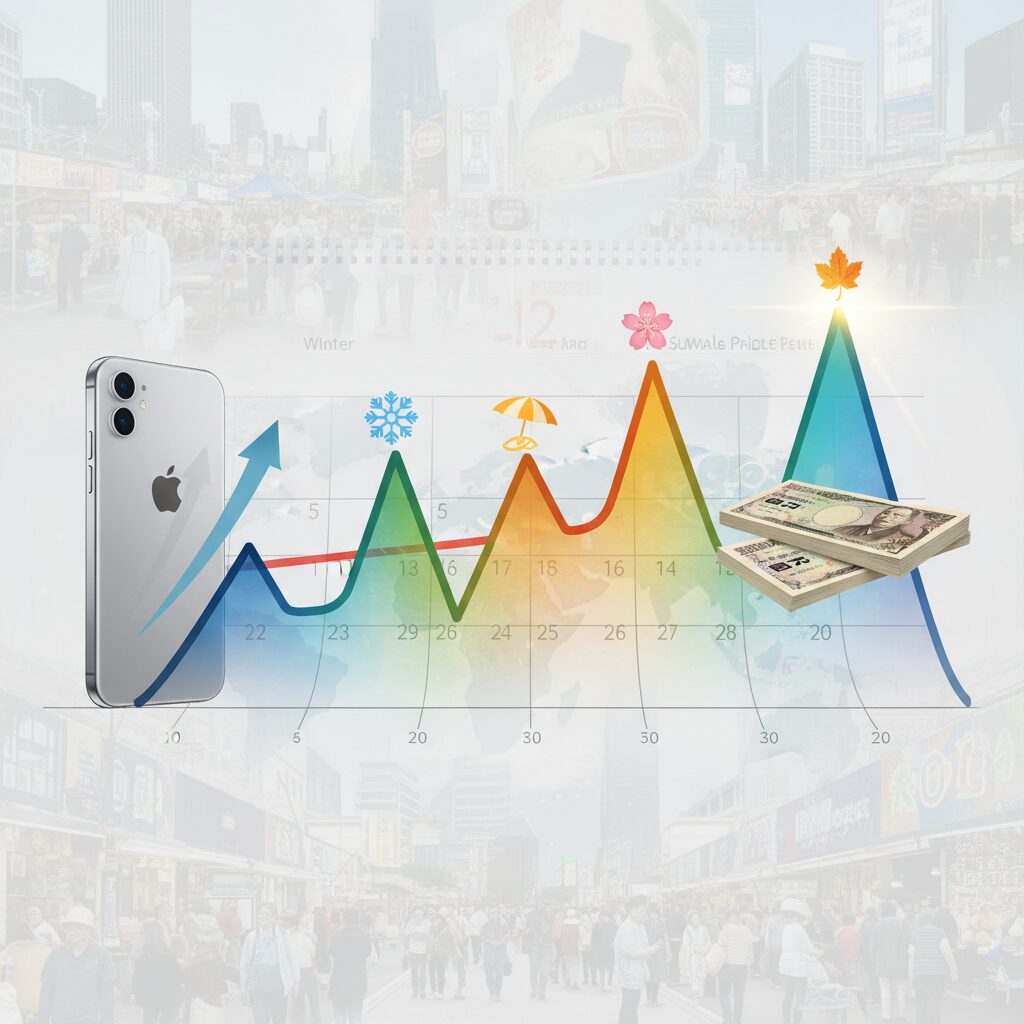
Seasonal demand cycles play a decisive role in creating temporary resale price peaks for iPhones, and understanding these rhythms allows owners to convert timing into tangible monetary gains. Unlike linear depreciation models often cited in consumer electronics, the iPhone resale market behaves more like a cyclical asset market, where demand shocks and supply bottlenecks periodically override gradual value decline.
In Japan, the most pronounced demand-driven price surges occur when social and institutional calendars align. **New academic years, corporate hiring cycles, and fiscal deadlines collectively amplify short-term demand for reliable, high-quality smartphones**, particularly refurbished iPhones that offer cost efficiency without functional compromise.
| Season | Primary Demand Driver | Resale Price Impact |
|---|---|---|
| Feb–Apr | New students, job transfers, fiscal year-end | Strong upward pressure |
| Aug | Pre–new model uncertainty | Temporary stabilization |
| Sep–Oct | New iPhone release, oversupply | Sharp downward correction |
| Jan | Apple New Year promotions | Mild downward pressure |
The February to April window consistently generates the highest resale premiums. According to analyses of Japanese buyback campaigns and Apple Trade In adjustments, resale offers during this period often exceed off-season levels by 5–15 percent for the same model and condition. This phenomenon is reinforced by corporate fiscal year endings in March, when carriers and retailers are incentivized to boost transaction volumes, sometimes accepting thinner margins to meet internal targets.
From a market microstructure perspective, this period represents a rare convergence where **demand urgency outpaces supply elasticity**. Many buyers require immediate device availability for school enrollment or employment onboarding, making refurbished iPhones preferable to waiting for discounted new models. Resellers anticipate this urgency and proactively raise acquisition prices to secure inventory.
In contrast, late summer introduces a deceptive calm. August resale prices often appear stable, but this stability reflects hesitation rather than strength. Industry observers, including analysts tracking Apple’s annual product cadence, note that both buyers and sellers delay decisions ahead of the September keynote. While prices have not yet fallen, liquidity thins, and the probability of sudden post-announcement declines increases sharply.
The most dramatic seasonal effect emerges immediately after new iPhone models are unveiled. Empirical resale price tracking cited by major Japanese comparison platforms shows that older flagship models can lose 10 percent or more of their resale value within weeks of the announcement. This is not purely perception-driven; it is a textbook case of supply shock, as early adopters release large volumes of prior-generation devices into the secondary market.
January represents a subtler seasonal distortion. Apple’s annual New Year sales, which typically include gift card incentives rather than direct discounts, stimulate new purchases and indirectly increase resale listings of older devices. While the price impact is milder than in autumn, **short-term oversupply can still soften buyback offers**, particularly from independent refurbishers sensitive to inventory turnover.
Economists studying circular economy dynamics emphasize that such seasonal volatility is not a market inefficiency but a rational response to predictable behavioral patterns. By aligning resale actions with peak demand cycles rather than personal upgrade impulses, iPhone owners effectively arbitrage time. In practical terms, this means that selling a device just weeks earlier or later can translate into differences of thousands of yen, even when the hardware itself remains unchanged.
The September Product Launch Effect and Sudden Value Drops
Every September, the iPhone resale market experiences a uniquely sharp correction that seasoned sellers closely monitor. This phenomenon is widely known among professionals as the September Product Launch Effect, and it consistently triggers sudden and sometimes severe value drops for existing models.
According to longitudinal price tracking data compiled by major Japanese buyback aggregators and market analysts, resale prices for iPhones typically begin to soften immediately after Apple’s September keynote. The reason is not speculation but structural: once a new generation is officially announced, the current model is instantly reclassified as “previous generation,” regardless of its actual performance or condition.
This psychological reclassification has a measurable financial impact. Market data cited by Nikkei and other industry observers shows that, on average, resale prices decline by 10–15% within two to three weeks after the announcement, even before the new devices reach consumers.
| Timing | Market Behavior | Typical Price Movement |
|---|---|---|
| Late August | Pre-launch stability, cautious buyers | Price plateau |
| Mid-September | Model becomes officially outdated | 5–10% decline |
| Late September–October | Oversupply from early adopters | 10–20% decline |
The most severe phase begins after the first shipment of new iPhones reaches customers. Early adopters, who statistically replace devices more frequently, tend to sell their previous models almost simultaneously. This synchronized behavior causes a short-term oversupply in the secondary market, which forces buyback prices downward regardless of underlying global demand.
Industry insiders often refer to this as the “September cliff.” Interviews with refurbishment operators in Akihabara indicate that warehouses can receive two to three times their normal intake volume during the two weeks following launch. Even with strong export demand, absorption cannot keep pace.
Storage-heavy configurations are particularly exposed. A 1TB model may lose the same percentage as a 256GB version, but the absolute loss in yen is significantly larger. Analysts at used-device logistics firms have repeatedly noted that high-capacity models see the fastest nominal depreciation during this window.
Importantly, this drop is not driven by technical obsolescence. Battery health, camera quality, and processor performance remain unchanged overnight. The decline is driven by expectation, perception, and inventory dynamics rather than utility. Research on consumer electronics depreciation published by the Harvard Business Review supports this pattern, showing that announcement events alone can materially shift secondary market pricing.
For sellers aiming to preserve asset value, the implication is clear and consistently supported by historical data. Completing a sale before Apple’s September announcement functions as risk management, not speculation. Waiting even a few weeks after the keynote often results in irreversible value erosion that cannot be recovered later in the cycle.
Understanding this September effect transforms resale timing from guesswork into a strategic decision. In a market where information asymmetry is shrinking, timing remains one of the few levers that individual owners can still fully control.
Battery Health, Cosmetic Grading, and the Hidden Rules of Appraisal
In resale appraisal, battery health and cosmetic grading quietly function as hard currency, and understanding their hidden rules allows value to be preserved rather than negotiated away. Many buyers appear flexible, but in reality they follow strict internal matrices that leave little room for discretion once certain thresholds are crossed.
Battery health is the single most binary variable in iPhone appraisal. Apple publicly states that batteries are designed to retain up to 80 percent of original capacity under normal conditions, and major refurbishers align their criteria with this guidance. Once an iPhone falls below that level, it is no longer treated as a retail-ready asset but as a refurbishment candidate.
| Battery Health | Appraisal Interpretation | Typical Impact |
|---|---|---|
| 90–100% | Near-new usability | Full market price |
| 80–89% | Normal wear | Minor or no deduction |
| Below 80% | Mandatory replacement zone | Sharp value drop |
Industry interviews and refurbishment disclosures from Apple’s certified partners indicate that battery replacement costs are automatically priced into offers below 80 percent. This creates a cliff effect where a one-point decline can translate into a double-digit percentage loss, making timing more important than continued use.
Cosmetic grading follows a similarly rigid logic, though it feels subjective to sellers. Inspection manuals used by large resale platforms emphasize visibility under direct light, not casual daily appearance. Micro-scratches that disappear when the screen is off are often ignored, while dents on corners or frame deformation signal possible internal stress and trigger downgrades.
The hidden rule is consistency, not generosity. To maintain buyer trust in global secondary markets, especially in Asia and Europe, graders must apply the same deductions every time. This explains why cleaning, careful lighting checks, and honest self-assessment before submission frequently outperform last-minute negotiation attempts.
Authoritative studies on circular electronics markets published by organizations such as the OECD highlight that predictable grading standards are essential for liquidity. For individual owners, aligning with these standards rather than fighting them is the most reliable way to protect resale value.
Carrier Trade‑In Programs vs Independent Buyback Stores
When choosing where to resell an iPhone, the decision often comes down to carrier trade‑in programs or independent buyback stores, and the difference is more than just convenience. **These two channels are driven by fundamentally different economic incentives**, which directly shape the value you can extract from your device.
Carrier trade‑ins are designed primarily as retention tools. Major Japanese carriers such as NTT Docomo, KDDI, and SoftBank structure their programs to keep users inside their ecosystem, rather than to reflect pure market value. According to publicly disclosed campaign data, trade‑in offers in peak periods have reached the equivalent of 45,000 to 53,000 yen, but these are almost always paid as bill credits or device discounts, not cash.
This structure creates a predictable pattern: **the headline value can look generous, but the liquidity is low**. Credits are locked to future usage, and switching carriers immediately after a trade‑in often nullifies part of the benefit. From a financial perspective, this resembles a conditional rebate rather than a true resale.
| Aspect | Carrier Trade‑In | Independent Buyback Store |
|---|---|---|
| Payment form | Credits or discounts | Cash or bank transfer |
| Pricing logic | Customer acquisition cost | Secondary market demand |
| Flexibility | Low | High |
Independent buyback stores operate under a completely different logic. Their pricing is anchored in real‑time secondary market demand, including overseas resale channels. Research on the global refurbished smartphone market shows shipments growing from roughly 376 million units in 2025 toward over 540 million by 2030, a trend that directly benefits cash buyers who can arbitrage international demand.
Japan‑sourced iPhones, often referred to by traders as “Japan grade,” are especially valued for their cosmetic condition. Analysts cited by Nikkei and other industry observers note that overseas wholesalers are willing to pay a premium for devices with minimal wear, which allows independent stores in Akihabara or online platforms to offer aggressive cash prices, particularly during yen depreciation.
Another key difference lies in evaluation criteria. Carrier programs typically use coarse grading buckets and may ignore positive attributes such as popular colors or larger storage tiers. **Independent stores, by contrast, frequently price these factors explicitly**, sometimes adding several thousand yen for high‑capacity models that are in demand in Southeast Asia or the Middle East.
That said, carrier trade‑ins are not irrational choices. During limited campaigns tied to fiscal year‑end or aggressive MNP promotions, carriers occasionally price trade‑ins above prevailing cash market rates by subsidizing the gap with marketing budgets. Industry comparisons in recent spring campaigns show cases where damaged devices, normally graded C or lower by buyback shops, received unexpectedly high carrier credits when bundled with insurance programs.
The practical implication is timing and condition sensitivity. **Well‑maintained, SIM‑free iPhones with strong battery health tend to achieve superior outcomes at independent buyback stores**, while heavily worn devices or users already planning a contract renewal may find carriers economically acceptable despite lower transparency.
Understanding this distinction transforms resale from a passive chore into an active optimization problem. Rather than asking which option is easier, informed users ask which channel is currently mispricing risk or demand, and then choose accordingly.
Preparing Your iPhone for Sale: Technical and Security Essentials
When preparing an iPhone for resale, technical and security steps directly affect both transaction success and final valuation, so careful execution is essentialです。This phase is not about appearance alone, but about ensuring the device is trusted, transferable, and legally usable by the next owner without frictionです。
The single most critical requirement is the complete removal of Activation Lock. Apple’s security architecture ties an iPhone to an Apple ID through the Find My feature, and according to Apple’s official device security documentation, a device with Activation Lock enabled cannot be reactivated by a third partyです。From a reseller’s perspective, this renders the device unsellable, regardless of cosmetic conditionです。
Before erasing data, signing out of iCloud must be done while the device is still operational and connected to the internetです。Industry guidelines used by Apple Trade In and major Japanese buyback operators emphasize that post-reset Apple ID prompts are a primary cause of rejected transactionsです。
Data erasure alone is insufficient. Only a full iCloud sign-out combined with Find My deactivation guarantees that ownership is technically transferableです。
Another often underestimated factor is SIM and network statusです。Although most iPhones sold after late 2021 are SIM-free by default, earlier models may still carry carrier locks depending on purchase timingです。Carrier documentation from NTT Docomo and KDDI confirms that unlocked devices are categorized separately in resale channels, typically commanding higher liquidity and faster turnoverです。
Network payment status should also be verified via the IMEI before saleです。A device marked as fully paid poses no downstream risk for buyers, whereas unresolved balances introduce uncertainty that many resellers price conservativelyです。This risk-based pricing logic mirrors practices seen in global secondary markets, as noted in circular economy analyses published by international telecom research firmsです。
| Preparation Item | Technical Purpose | Impact on Resale |
|---|---|---|
| iCloud Sign-Out | Removes Apple ID linkage | Prevents rejection |
| Find My Disabled | Clears Activation Lock | Enables reactivation |
| SIM Unlock | Carrier independence | Higher buyer demand |
| IMEI Status Check | Confirms payment status | Avoids risk discount |
Finally, a factory reset should be performed only after all accounts are removedです。Apple’s own refurbishment standards describe this sequence as mandatory to ensure cryptographic keys tied to personal data are fully discardedです。From a security standpoint, this protects the seller, while from a market standpoint, it reassures buyers that the device is ready for immediate deploymentです。
In an era where iPhones function as globally traded digital assets, these technical and security preparations act as trust signalsです。Executing them correctly does not merely prevent trouble; it positions the device as a low-risk, high-quality unit within an increasingly sophisticated resale ecosystemです。
Long‑Term Ownership Strategies in the Era of the Circular Economy
In a circular economy, long-term ownership strategies are designed to extend product life while preserving residual value, and iPhone ownership fits this model particularly well. Instead of frequent replacement, users are encouraged to manage devices as durable assets that circulate through multiple life stages, from primary use to secondary markets.
Research by the Ellen MacArthur Foundation emphasizes that extending the active life of consumer electronics by even one year can significantly reduce total lifecycle emissions. For iPhones, this means careful maintenance, timely battery replacement, and software support awareness are not just cost-saving measures, but value-preserving actions.
Apple’s own environmental reports explain that refurbished and resold devices play a key role in reducing demand for virgin materials such as cobalt and rare earth elements. This reinforces the idea that holding an iPhone for three to four years, rather than upgrading annually, often results in a better balance between usability and resale potential.
The table below summarizes how ownership decisions influence long-term outcomes within a circular framework.
| Ownership Approach | Average Use Period | Impact on Resale Value | Circular Economy Effect |
|---|---|---|---|
| Short-term replacement | 1–2 years | High but volatile | Limited reuse benefit |
| Managed long-term use | 3–4 years | Stable and predictable | Strong reuse and refurbishment |
| Extended use with repair | 5 years or more | Lower but maximized utility | Maximum resource efficiency |
According to analyses cited by the OECD, markets that support repairability and resale tend to reward owners who maintain product condition over time. For iPhone users, this translates into choosing protective accessories, monitoring battery health thresholds, and timing exit points before functional obsolescence.
By adopting these practices, owners participate in a system where economic rationality and sustainability reinforce each other. Long-term strategies are therefore not about holding devices indefinitely, but about managing ownership cycles intelligently so that value, usability, and environmental responsibility remain aligned.
参考文献
- Global Information, Inc.:Used & Refurbished Smartphone Market Share Analysis and Growth Forecast
- Uridoki:iPhone Buyback Price Trends and Historical Data
- Shiromcom Blog:iPhone Trade‑In and Buyback Market Prices in March 2025
- Sofmap Raku‑uru:Official iPhone Buyback Evaluation Criteria
- TSUTAYA Mobile:Smartphone Cosmetic Grading Standards for Buyback
- NTT Docomo:Network Usage Restriction Status Check