
Have you ever felt that your gadgets are supposed to make life easier, yet somehow leave you more exhausted than before? Many tech enthusiasts around the world share this contradiction, especially as screens, notifications, and algorithms compete endlessly for attention.
In 2026, digital wellbeing has entered a new phase where technology no longer simply tracks screen time or blocks apps, but actively supports healthier mental and physical states. Devices, operating systems, and AI assistants are now designed to reduce cognitive overload, protect focus, and help users regain control over how and when they connect.
This article explores how the latest gadgets, operating systems, and AI-driven tools are reshaping digital wellbeing at a structural level. By understanding these trends, readers can discover how cutting-edge technology is evolving from a source of stress into a partner for balance, productivity, and long-term wellness.
- The 2026 Shift From Screen Control to Cognitive Support
- Why Digital Stress Has Become a Global Tech Problem
- Foldable Devices and the Psychology of Physical Interaction
- Smart Glasses and XR as Tools for Visual and Mental Relief
- iOS 26 and the Rise of Interface-Driven Wellbeing
- Android 16 and Smarter Notification Management
- Short-Form Content and the Attention Crisis
- AI Assistants as Digital Buffers for the Human Brain
- Workplace and Education Examples of Wellbeing-Focused Tech
- What the Future Holds for Human-Centered Technology
- 参考文献
The 2026 Shift From Screen Control to Cognitive Support
In 2026, digital wellbeing undergoes a decisive shift from screen control to cognitive support, and this change fundamentally redefines how gadgets relate to human attention. Instead of asking users to restrain themselves by checking screen time or manually blocking apps, modern systems now intervene earlier and more intelligently. **Technology is no longer a referee that blows the whistle after overuse, but a cognitive assistant that quietly prevents overload before it happens**.
This shift is driven by mounting evidence that constant self-regulation is unsustainable. Research cited by AsianScientist, including work from Nanyang Technological University, shows that a majority of young users report declining concentration and compulsive checking behaviors linked to short-form content. These findings have accelerated a design philosophy in which devices assume partial responsibility for protecting attention, rather than placing that burden entirely on the user.
At the OS and device level, this philosophy manifests as proactive mediation. AI systems now infer context from calendars, activity patterns, and even biometric signals, then decide when information should surface or stay hidden. According to Apple’s accessibility and OS design disclosures, this approach aims to preserve what cognitive scientists call “finite attentional resources,” a concept long emphasized by researchers at institutions such as Stanford and MIT.
| Approach | User Role | Cognitive Impact |
|---|---|---|
| Screen-time limits (pre-2024) | User enforces rules | High decision fatigue |
| AI-mediated delivery (2026) | System assists automatically | Reduced attentional load |
| Context-aware summaries | User reviews essentials only | Improved focus continuity |
Smart notifications illustrate this evolution clearly. Rather than pushing every alert equally, modern platforms evaluate urgency and relevance in real time. Google’s Android design documentation emphasizes that staggered or muted alerts are not about silence, but about rhythm. By aligning information flow with human cognitive cycles, devices reduce micro-interruptions that fragment thought and elevate stress.
Equally important is the rise of summarization as a default behavior. Long messages, dense articles, and multilingual content are increasingly condensed before reaching the user. Experts in human-computer interaction note that summarization acts as a “cognitive buffer,” allowing users to grasp meaning without engaging in exhaustive processing. **This preserves mental energy for creative or relational tasks that machines cannot replace**.
In Japan, where consumer surveys report that over 60 percent of respondents experience moderate to severe daily stress, this cognitive-first approach resonates strongly. Industry analysts observing domestic gadget adoption point out that products promising mental clarity and calm decision-making outperform those focused solely on raw performance. The market signal is clear: users value devices that think with them, not just faster screens.
Ultimately, the 2026 shift marks a philosophical realignment. Digital wellbeing is no longer framed as resistance against technology, but as collaboration with it. By embedding cognitive science into everyday devices, the industry acknowledges a simple truth long supported by academic research: **protecting attention is the most direct way technology can protect human wellbeing**.
Why Digital Stress Has Become a Global Tech Problem

Digital stress has escalated into a global tech problem because modern technologies are no longer passive tools but environments that continuously compete for human attention. Smartphones, social platforms, and AI-driven services are designed around engagement optimization, which often prioritizes time spent and frequency of interaction over mental well-being. As a result, users across cultures experience a persistent sense of cognitive overload, even when technology is used for work, learning, or social connection.
According to large-scale consumer research cited by international firms such as Ipsos, concerns related to mental health have risen sharply worldwide, especially among younger generations. This shift reflects not only increased awareness but also structural changes in how digital information is consumed. Short-form video, real-time notifications, and algorithmic feeds expose users to rapid context switching, fragmenting attention and exhausting cognitive resources. Researchers at Nanyang Technological University have linked this phenomenon to measurable declines in sustained focus and increased reports of anxiety and sleep disruption.
| Factor | Global Impact | Underlying Mechanism |
|---|---|---|
| Short-form content | Reduced attention span | Instant reward cycles overstimulate the brain |
| Notification overload | Chronic stress | Frequent interruptions prevent mental recovery |
| Always-on connectivity | Burnout risk | Lack of psychological boundaries between roles |
Digital stress has also become global because work and private life now share the same devices and platforms. Email, messaging apps, and collaboration tools blur temporal boundaries, making it difficult for users to disengage. The World Health Organization has previously emphasized that prolonged exposure to work-related digital demands can contribute to burnout, a condition now formally recognized as an occupational phenomenon.
Another critical driver is the rapid globalization of platform design. A notification system or recommendation algorithm built in Silicon Valley is deployed worldwide with minimal cultural adaptation. While adoption rates differ by region, the psychological effects remain strikingly similar. **Users report feeling pressured to respond instantly, stay informed continuously, and compare themselves constantly**, creating a shared digital stress experience that transcends national borders.
In this sense, digital stress is not a personal failure of self-control but a systemic outcome of how technology ecosystems are engineered. Recognizing it as a global tech problem is the first step toward redesigning digital environments that respect human cognitive limits and restore a healthier balance between connection and recovery.
Foldable Devices and the Psychology of Physical Interaction
Foldable devices are not only redefining form factors, but they are also quietly reshaping how users psychologically engage with digital information. From a digital wellbeing perspective in 2026, the act of physically opening or closing a device functions as a cognitive switch, helping users consciously transition between connection and disconnection. According to research trends discussed by cognitive ergonomics scholars at institutions such as MIT Media Lab, physical interaction cues reduce impulsive behavior compared to always-on flat displays.
The key insight is that physical motion creates intentionality. When users must unfold a device to access full content, they are less likely to fall into habitual, unconscious scrolling. This aligns with behavioral psychology findings that friction, even minimal, can meaningfully alter attention patterns and decision-making quality.
| Physical Interaction | Psychological Effect | Wellbeing Outcome |
|---|---|---|
| Sub-display glance | Information triage | Reduced cognitive overload |
| Folding action | Ritualized start and end | Clear work-life boundaries |
| Crease-free display | Visual consistency | Lower eye strain during focus |
Industry observers, including analysts cited by Apple’s human-interface research community, note that foldable phones encourage users to treat digital engagement as a deliberate activity rather than a default state. This physical boundary contrasts sharply with traditional smartphones, which expose users to a constant stream of stimuli the moment the screen lights up.
From a neuroscience standpoint, the folding gesture also reinforces memory encoding. Studies referenced by the American Psychological Association suggest that tactile actions paired with digital tasks improve contextual awareness, making it easier for users to remember why they opened a device in the first place.
In practical terms, foldable devices act as a psychological gatekeeper. By embedding intention into hardware design, they support healthier digital habits without relying solely on self-control or software restrictions. This is why, even at premium price points, foldables are increasingly perceived as tools for focus and mental clarity rather than mere luxury gadgets.
Smart Glasses and XR as Tools for Visual and Mental Relief
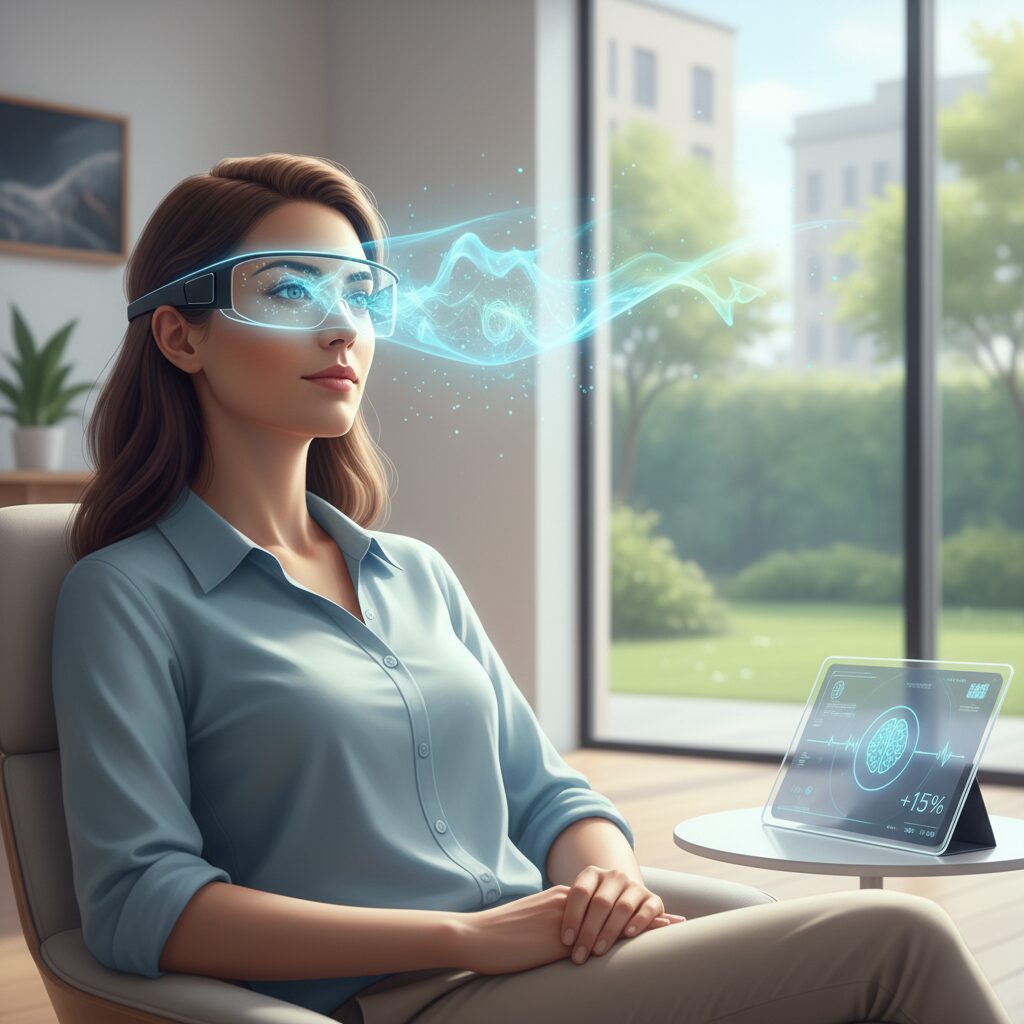
Smart glasses and XR technologies in 2026 are increasingly recognized not as productivity boosters, but as tools designed to gently reduce visual strain and mental fatigue in everyday life. Unlike smartphones that demand sustained downward gaze and continuous attention, these devices aim to integrate digital information into natural sightlines, allowing users to remain physically relaxed and mentally present.
According to analyses frequently cited by institutions such as Lifehacker Japan and reports referencing ergonomic research in human–computer interaction, prolonged smartphone use contributes to neck strain, eye dryness, and cognitive overload. Smart glasses address this by enabling information access while keeping the head upright, which helps mitigate what clinicians commonly refer to as text neck and visually induced stress.
Devices such as the XREAL Air 2 Pro exemplify this shift. With a lightweight design of approximately 72 grams and a 120Hz refresh rate, the glasses are engineered to reduce eye fatigue and motion discomfort during extended use. TÜV Rheinland-certified flicker-free displays and blue light reduction further support visual comfort, an aspect ophthalmologists increasingly emphasize when discussing long-term screen exposure.
Equally important is the psychological dimension. See-through displays allow digital content to coexist with the physical environment, rather than replacing it. This means notifications, navigation cues, or media consumption can occur without isolating the user from surrounding people or spaces. Cognitive scientists have noted that maintaining environmental awareness reduces mental tension compared to fully immersive screens.
| Design Element | Visual Effect | Mental Impact |
|---|---|---|
| See-through optics | Reduced contrast stress | Lower sense of isolation |
| Electronic dimming | Adaptive brightness control | Improved relaxation in mixed lighting |
| Lightweight frame | Minimal pressure on face and neck | Less subconscious physical tension |
The electronic dimming function found in advanced models deserves special attention. By switching lens opacity between transparent and shaded modes, users can smoothly transition from open, ambient awareness to semi-immersive viewing. Researchers in visual ergonomics point out that such gradual transitions are less taxing on the brain than abrupt changes in brightness, which often trigger discomfort or irritability.
XR is also beginning to play a role in mental decompression. Light AR overlays for breathing guidance, posture correction, or short mindfulness sessions are being explored as alternatives to phone-based wellness apps. Because the content appears spatially anchored rather than confined to a handheld screen, users report feeling guided rather than instructed, which subtly lowers resistance and stress.
Importantly, these benefits are realized when XR is used intentionally and sparingly. Industry observers, including commentators at MacRumors and Google’s developer briefings, emphasize that the success of smart glasses depends on restraint in information density. When the display shows only what is contextually necessary, cognitive load decreases, and the technology fades into the background.
In this sense, smart glasses in 2026 are evolving into restorative interfaces. They aim to protect vision, ease posture, and calm the mind by respecting human limits. For users already sensitive to digital fatigue, XR offers a promising middle ground between complete disconnection and constant screen immersion.
iOS 26 and the Rise of Interface-Driven Wellbeing
iOS 26 marks a clear turning point where wellbeing is no longer treated as a set of optional controls, but as a property of the interface itself. Apple’s design philosophy in this release assumes that **how information appears is as important as what information appears**, and that assumption directly shapes users’ mental load throughout the day.
At the center of this shift is the Liquid Glass interface. By introducing semi‑transparent layers that subtly refract background context, iOS 26 reduces the sharp visual boundaries that previously competed for attention. According to Apple’s own accessibility disclosures and analyses reported by MacRumors, this approach is intended to help the eye prioritize foreground content without fully disconnecting from environmental cues, a balance that cognitive scientists have long associated with lower attentional stress.
Unlike earlier flat UI trends that maximized contrast and stimulation, Liquid Glass intentionally softens transitions. This matters because research cited by accessibility experts at Apple has consistently shown that abrupt visual changes increase cognitive switching costs. iOS 26 addresses this not by limiting screen time, but by **lowering the mental effort required to stay engaged with a task**.
| Interface Element | Design Intention | Wellbeing Effect |
|---|---|---|
| Liquid Glass layers | Context-aware translucency | Reduced visual tension and smoother focus |
| Accessibility Nutrition Labels | Pre-use transparency | Informed app choice aligned with user needs |
| Sleep-aware media control | Passive intervention | Protection of sleep onset and quality |
Another quietly transformative feature is the Accessibility Nutrition Label. Modeled after food labeling standards, it reframes accessibility from a hidden setting into a visible interface signal. This allows users to evaluate apps before installation, which Apple frames as a form of preventative wellbeing. Experts in human–computer interaction have long argued that **anticipatory design reduces decision fatigue**, and iOS 26 operationalizes this idea at the OS level.
Wellbeing in iOS 26 is also reinforced through automation that respects human rhythms. When AirPods pause media playback as sleep is detected, the interface recedes instead of demanding action. This aligns with sleep research frequently cited by institutions such as the National Sleep Foundation, which emphasizes minimizing cognitive prompts during pre‑sleep phases.
What makes iOS 26 distinctive is that it does not ask users to be disciplined. Instead, the interface absorbs that burden. By embedding wellbeing into visual hierarchy, transparency, and timing, Apple demonstrates that **the future of digital wellbeing is interface-driven, not willpower-driven**.
Android 16 and Smarter Notification Management
In Android 16, notification management has evolved from a passive filter into an active system that protects users’ attention in real time. Google positions notifications not as a right of apps, but as a limited cognitive resource, and this shift is deeply aligned with current digital wellbeing research. According to analyses cited by Google and Android Authority, constant notification bursts are a primary driver of attention fragmentation, especially in messaging-heavy environments.
Android 16 directly addresses this problem by redesigning how urgency, frequency, and context are interpreted at the OS level, rather than leaving the burden on individual users to tweak complex settings.
The flagship feature is Notification Cooldown, which dynamically reduces sound and vibration intensity when multiple notifications arrive in quick succession from the same app. Instead of abruptly muting alerts, the system applies a gradual attenuation over up to one minute, allowing genuinely urgent messages to remain perceptible while suppressing psychological overload.
| Feature | System Behavior | Wellbeing Impact |
|---|---|---|
| Notification Cooldown | Progressive reduction of sound and haptics | Prevents stress spikes from message floods |
| Forced Grouping | Automatic bundling by app | Reduces visual clutter and scanning fatigue |
| Live Updates | Status shown as compact system chips | Minimizes unnecessary app launches |
| Sensitive Content Masking | AI hides OTPs on lock screen | Protects privacy without user action |
What makes this approach notable is its context awareness. Android 16 evaluates the user’s current activity, such as navigation, focused work, or rest periods, before deciding how aggressively notifications should be softened. This reflects findings from cognitive science, including research referenced by academic institutions like Nanyang Technological University, showing that unpredictable interruptions amplify mental fatigue far more than predictable ones.
Another critical improvement is Live Updates, Android’s system-level answer to continuous information needs. Delivery tracking, sports scores, or navigation progress are displayed as minimal, glanceable elements on the lock screen or status bar. By eliminating the need to open apps for routine checks, Android 16 structurally prevents the “just checking” behavior that often escalates into prolonged scrolling.
This design choice is particularly relevant in Japan, where SNS usage exceeds 80 percent of the population and messaging apps such as LINE dominate daily communication. Consumer surveys cited in national ICT reports indicate that frequent notifications are perceived as useful, yet simultaneously ranked among the top stressors. Android 16 resolves this contradiction by preserving informational value while stripping away unnecessary urgency.
Privacy-conscious users also benefit from AI-driven sensitive notification handling. One-time passwords and verification codes are automatically concealed on the lock screen, reducing anxiety around shoulder surfing without forcing users into blanket notification hiding. Google emphasizes that this processing occurs within the system’s secure framework, reinforcing trust in automated decision-making.
Importantly, these features are not optional add-ons buried deep in menus. Notification grouping and Live Updates are enforced at the OS level, with standardized APIs for developers. This ensures consistency across apps and prevents aggressive notification strategies from bypassing user intent, a point frequently raised by usability experts and digital wellbeing advocates.
In practice, Android 16’s notification strategy reflects a broader philosophical shift. Rather than demanding stronger self-control from users, the OS assumes responsibility for shaping a calmer informational environment. By translating behavioral research into system defaults, Android 16 demonstrates how operating systems can act as guardians of attention, not just conduits of information.
Short-Form Content and the Attention Crisis
Short-form content has become the most visible symbol of the modern attention crisis, and its impact is no longer anecdotal but increasingly supported by academic research. Platforms such as TikTok and Instagram Reels are designed around rapid reward cycles, delivering novelty every few seconds and conditioning the brain to expect constant stimulation. According to a white paper published by researchers at Nanyang Technological University in Singapore, 68% of young people report a noticeable decline in their ability to concentrate, and 52% admit they are frequently distracted even during classes.
This pattern is not merely a change in media preference, but a structural shift in how attention is trained. The same study notes that around 15% of respondents routinely watch videos at double speed, reinforcing a cognitive bias toward speed over depth. Neuroscientists involved in the research explain that such habits overstimulate the brain’s reward system, making slower, effortful tasks feel disproportionately exhausting.
| Observed Behavior | Reported Effect | Research Insight |
|---|---|---|
| Continuous short-video scrolling | Reduced sustained focus | Attention becomes fragmented |
| 2x playback as a norm | Impatience with long tasks | Reward thresholds increase |
Psychologists warn that this attention fragmentation creates a negative feedback loop: diminished focus leads to lower achievement and self-esteem, which in turn drives further escapism into short-form media. The attention crisis, therefore, is not about weak willpower, but about environments optimized to overwhelm cognitive limits. Understanding this distinction is essential for designing technologies that protect, rather than exploit, human attention.
AI Assistants as Digital Buffers for the Human Brain
In 2026, AI assistants are increasingly positioned as digital buffers that gently protect the human brain from cognitive overload. Rather than reacting to explicit commands, these assistants are designed to anticipate mental fatigue and intervene before attention collapses. This shift reframes AI from a productivity accelerator into a cognitive shock absorber, filtering information so that the user does not have to constantly self-regulate.
According to findings summarized by Apple and Google in their OS-level wellbeing disclosures, continuous notification exposure fragments attention and elevates stress markers such as heart rate variability. Modern AI assistants now integrate biometric signals, calendars, and task context to decide not only what to show, but also what to withhold. This intentional silence is increasingly recognized by cognitive scientists as essential for sustained focus.
| Function | Human Cost Without AI | Buffer Effect in 2026 |
|---|---|---|
| Notification triage | Constant attentional switching | Deferred and summarized delivery |
| Information intake | Cognitive fatigue | Context-aware summarization |
| Language processing | High mental translation load | Real-time AI interpretation |
Research cited by institutions such as the Massachusetts Institute of Technology emphasizes that working memory is sharply limited, and overload directly degrades decision quality. AI-based summarization in assistants like Siri or ChatGPT therefore acts as a protective membrane, condensing complexity into manageable insight. Users are no longer forced to read everything to understand what matters.
Equally important is the emotional buffering role. By smoothing abrupt information spikes and reducing compulsive checking behavior, AI assistants help stabilize mood and reduce anxiety. The digital buffer does not replace human judgment, but preserves the mental space required for it. This balance defines the most meaningful contribution of AI to digital wellbeing in 2026.
Workplace and Education Examples of Wellbeing-Focused Tech
In workplaces and educational settings, wellbeing-focused technology in 2026 is no longer treated as a perk but as essential infrastructure that directly affects performance, retention, and learning outcomes. Companies and schools are moving beyond generic screen-time limits and are instead adopting systems that gently shape daily behavior while respecting individual autonomy. This shift reflects a growing consensus among organizational psychologists and education researchers that sustainable productivity depends on psychological safety and cognitive recovery, not constant connectivity.
In corporate environments, AI-powered engagement and wellbeing platforms are being integrated into everyday workflows. Tools such as RECOG and Wevox are widely cited by HR researchers as representative of this trend. These platforms analyze patterns of peer recognition, short pulse surveys, and stress indicators to visualize organizational health in near real time. According to analyses shared by workplace wellbeing specialists in Japan, teams that actively exchange appreciation messages show higher perceived psychological safety and lower early turnover risk. The key innovation is not surveillance but feedback loops that make positive behavior visible and repeatable.
| Context | Technology Used | Wellbeing Impact |
|---|---|---|
| Corporate teams | AI engagement analytics | Early detection of burnout and disengagement |
| Remote work | Focus sessions with AI prompts | Reduced cognitive overload and fatigue |
| Education | Adaptive learning platforms | Lower stress through personalized pacing |
On the desktop side, Windows 11 has become a practical example of wellbeing-aware work design. Focus Sessions, combined with AI assistance from Copilot, structure work into manageable intervals while actively encouraging breaks. Microsoft’s own learning resources emphasize that uninterrupted deep work followed by intentional rest reduces error rates and emotional exhaustion. When the system itself suggests stepping away from the screen, rest becomes normalized rather than a sign of low commitment.
Educational institutions are applying similar principles but with an added emphasis on self-regulation skills. Rather than banning devices, schools are teaching students how to manage digital distance. Programs developed with major education providers show that students who understand the relationship between attention, screen habits, and mental health are more likely to self-adjust their usage. Surveys conducted among secondary school students indicate that around 60 percent feel that light online connections with peers support motivation during exam preparation, highlighting that wellbeing is optimized by balance, not isolation.
AI-driven personalized learning is another major pillar. Adaptive platforms adjust difficulty and pacing based on comprehension signals, reducing frustration and excessive workload. Education researchers point out that this approach aligns with cognitive load theory, which warns against overwhelming learners with uniform instruction. By minimizing unnecessary struggle, these systems protect motivation and mental resilience over long study periods.
Across both workplaces and schools, a shared design philosophy is emerging. Wellbeing-focused technology works best when it operates quietly in the background, intervening only when necessary and empowering users to make informed choices. As organizational studies and educational research consistently suggest, environments that respect human limits while supporting growth are the ones where technology truly enhances wellbeing rather than competing with it.
What the Future Holds for Human-Centered Technology
Looking ahead, human-centered technology is moving beyond the idea of controlling screen time and toward designing systems that actively protect human attention and emotional balance. In 2026, this shift is no longer theoretical. According to analyses by organizations such as Ipsos and leading academic institutions, users increasingly expect technology to adapt to their mental state, not the other way around.
The future lies in anticipatory design, where AI predicts cognitive overload before it becomes stress. Operating systems and devices already analyze usage patterns, sleep signals, and context, but the next stage focuses on restraint. Technology will intentionally do less, surface less, and interrupt less, creating what researchers describe as a “cognitive safety margin.”
| Design focus | Past approach | Future direction |
|---|---|---|
| User control | Manual limits and settings | AI-mediated, context-aware restraint |
| Information flow | Maximized engagement | Selective, purpose-driven delivery |
| Wellbeing role | User responsibility | System-level protection |
Research from institutions such as Nanyang Technological University highlights that attention fragmentation has measurable impacts on learning and emotional regulation. In response, future interfaces will increasingly hide complexity, presenting only what is actionable in the moment, while deferring everything else.
Another defining trend is ethical personalization. Rather than optimizing for engagement, human-centered systems will optimize for recovery, focus, and self-efficacy. This includes transparency features that explain why information is shown or withheld, reinforcing trust and user autonomy.
Experts from Apple, Google, and Microsoft consistently emphasize that the goal is not digital abstinence but harmony. Human-centered technology in the coming years will feel quieter, calmer, and more respectful, functioning less like an attention engine and more like an intelligent environment that supports how people actually want to live.
参考文献
- Gizmodo Japan:Rumored Gadgets Expected to Launch in 2026
- Lifehacker Japan:Why 2026 Could Be the First Year of Smart Glasses
- MacRumors:iOS 26: Everything We Know
- Android Authority:Android 16: Confirmed Features for the Next Platform Update
- Ipsos:Health Service Report 2025: Generational Perspectives
- Microsoft Windows Blog:New Experiences Rolling Out for Windows 11