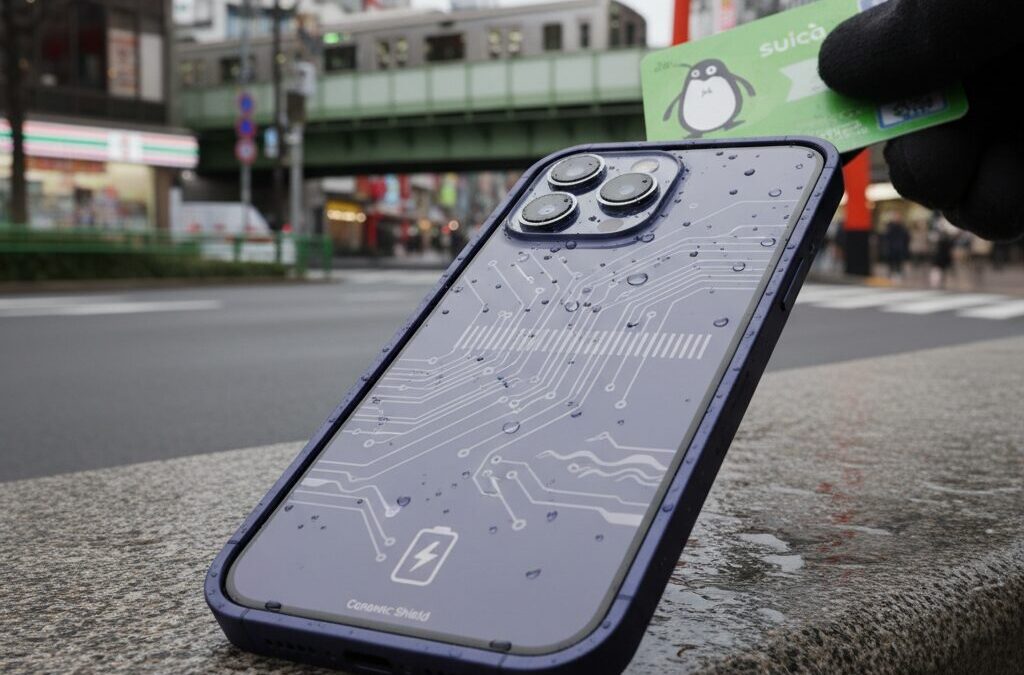
If you follow gadgets closely, you have probably felt that smartphones have entered a mature phase where eye‑catching innovations are rare.
Instead of chasing novelty, many users now care more about reliability, long‑term value, and how well a device fits into real daily life.
The iPhone 16e is a product that clearly reflects this shift, especially when viewed through the lens of Japan’s unique digital environment.
In Japan, smartphones are not just communication tools but essential parts of transportation, payments, and everyday routines.
Support for FeliCa transit systems, dependable water resistance for unpredictable weather, and durability that survives years of commuting all matter more than flashy specs.
At the same time, rising prices and currency fluctuations have pushed flagship devices beyond what many people feel comfortable paying.
This article explores why the iPhone 16e has become such a compelling option by examining its durability, battery efficiency, and hardware choices in detail.
You will learn how Apple balances cost, performance, and longevity, and how technologies like the A18 chip, Ceramic Shield, and a 60Hz OLED display affect real‑world use.
If you want to understand whether the iPhone 16e is merely a cheaper iPhone or a carefully optimized device for practical users, this deep dive will give you clear answers.
- Smartphone Maturity and the Shift Toward Practical Value
- Why Japan’s Digital Infrastructure Demands More From Smartphones
- FeliCa Integration and the Engineering Behind Fast Transit Payments
- Power Reserve Express Cards and Everyday Reliability
- IP68 Water Resistance: What the Rating Really Means in Daily Life
- Ceramic Shield and Aluminum Frame: Strengths and Trade‑Offs
- A18 Chip and GPU Binning Explained in Plain Terms
- Battery Capacity, 60Hz OLED, and Why Endurance Improves
- Thermal Behavior and Sustained Performance Under Load
- Price Strategy, the 10,000‑Yen Barrier, and Consumer Psychology
- iPhone 16e vs Pixel 9a: Midrange Competition Compared
- Who the iPhone 16e Makes the Most Sense For
- 参考文献
Smartphone Maturity and the Shift Toward Practical Value
The global smartphone market has clearly entered a phase of maturity, and in 2025 this reality is impossible to ignore. Breakthrough innovations that once drove annual upgrades have slowed, and consumers are now far more selective. According to analysis from firms such as IDC and commentary from Apple itself, the center of value has moved away from novelty and toward reliability, longevity, and real-world usefulness. This shift is especially visible in developed markets where replacement cycles have stretched beyond three or four years.
In this environment, practical value matters more than ever. Users are no longer asking what a smartphone can theoretically do, but what it consistently delivers every single day. Battery endurance, durability, ecosystem stability, and compatibility with local digital infrastructure have become decisive factors. **A device that performs predictably for years is now perceived as more innovative than one that merely adds experimental features.** This change in mindset defines the current era of smartphones.
The Japanese market illustrates this transition with particular clarity. Ongoing currency weakness has pushed flagship prices to psychologically uncomfortable levels, reinforcing a demand for balanced devices rather than status symbols. Industry observers, including PCMag and Nikkei analysts, note that consumers increasingly evaluate smartphones through a cost-per-year lens. Long-term software support, resale value, and repairability now play a central role in purchase decisions.
| Past Upgrade Drivers | Current Value Drivers |
|---|---|
| New form factors | Battery longevity |
| Camera megapixels | Everyday durability |
| Experimental features | Ecosystem and infrastructure fit |
This maturation does not mean innovation has stopped. Rather, innovation has become quieter and more utilitarian. Semiconductor efficiency gains, refined materials engineering, and power management optimizations rarely dominate headlines, yet they directly affect user satisfaction. Apple’s recent product strategy reflects this industry-wide recalibration, emphasizing efficiency and sustainability over spectacle.
As a result, smartphones are being redefined as long-term tools instead of short-lived gadgets. **The real competitive edge in 2025 lies in how seamlessly a device integrates into daily life and how little it demands from the user in return.** This pragmatic value orientation sets the foundation for understanding why certain models resonate so strongly in today’s mature market.
Why Japan’s Digital Infrastructure Demands More From Smartphones
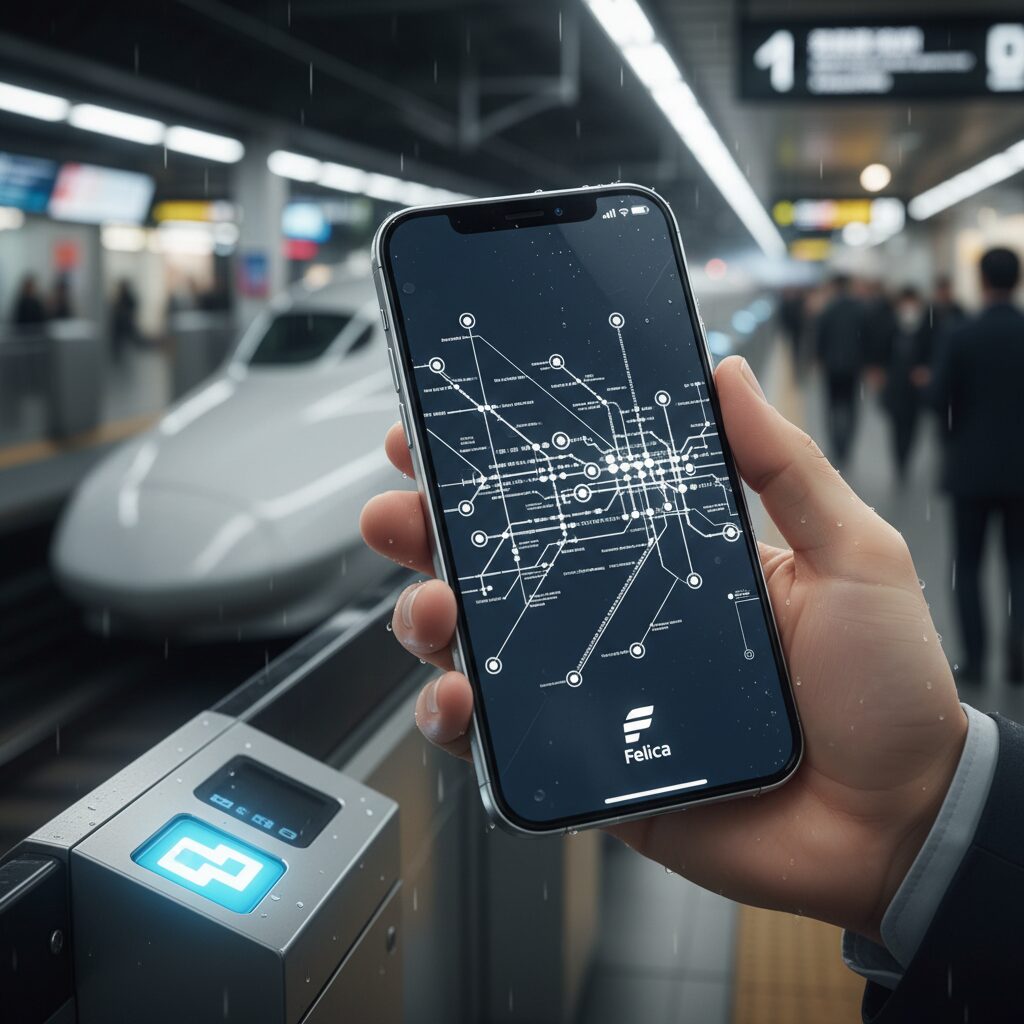
Japan’s digital infrastructure places unusually high expectations on smartphones, and this reality shapes what users consider a truly usable device. In dense urban environments, smartphones are not just communication tools but daily access keys to transportation, payments, and identity verification. **A device that fails even briefly can disrupt commuting, shopping, and work routines**, which is why reliability and infrastructure compatibility matter more than headline specifications.
One defining characteristic is the tight integration between public infrastructure and mobile devices. According to the Ministry of Land, Infrastructure, Transport and Tourism, metropolitan rail networks in Tokyo handle tens of millions of passengers per day. Ticket gates are designed for near-instant authentication, often within 0.1 seconds, leaving no margin for lag or recognition errors. Smartphones must therefore maintain consistent NFC performance under real-world conditions such as crowded stations, one-handed operation, and brief contact time.
| Infrastructure Element | Technical Demand | User Expectation |
|---|---|---|
| Railway ticket gates | Ultra-low latency NFC (Type-F) | No stop, no retry |
| Cashless retail | Secure, offline-capable authentication | Works even with low battery |
| Public services | High availability and stability | Daily reliability |
Cashless payments further amplify these demands. While QR-based payments are growing, contactless IC systems such as Suica and PASMO remain deeply embedded. Research published by JR East shows that a significant share of urban commuters relies exclusively on mobile wallets for transit and small purchases. **This makes battery behavior, secure element design, and power management as important as raw performance**, because failure often happens at the worst possible moment: during the evening rush.
Another often overlooked factor is environmental stress. Japan’s infrastructure assumes year-round usage in rain, humidity, and heat. The Japan Meteorological Agency reports long periods of high humidity during summer, which increases the likelihood of condensation and accidental water exposure. Smartphones must therefore sustain consistent functionality in conditions that exceed typical laboratory assumptions, without requiring users to consciously “protect” the device during everyday movement.
Finally, the cultural expectation of punctuality raises the bar even higher. In a society where trains depart on schedule and queues flow without friction, **a smartphone is expected to perform as predictably as the infrastructure itself**. This is why Japanese users tend to value stable integration, proven standards, and resilience over experimental features. The digital environment does not reward novelty; it rewards devices that quietly and flawlessly keep up with the system they serve.
FeliCa Integration and the Engineering Behind Fast Transit Payments
FeliCa integration is not simply a regional add-on for the iPhone 16e, but a deeply engineered response to Japan’s uniquely demanding transit and payment environment. In metropolitan areas such as Tokyo, millions of commuters pass through ticket gates every hour, and even a fraction of a second of delay can cascade into congestion. **FeliCa’s defining advantage is its sub-0.1 second transaction speed**, a figure that has been repeatedly cited by Sony and JR East as critical for high-density rail operations.
At the hardware level, the iPhone 16e uses a Global FeliCa–compatible NFC controller that natively supports NFC Type-F. Unlike software-emulated solutions seen in some Android devices, this implementation is tightly coupled with Apple’s Secure Enclave. According to Apple’s technical documentation, cryptographic authentication and token generation are processed in isolation from the main OS, reducing latency while maintaining financial-grade security. This design choice explains why real-world gate errors remain extremely rare even during rush hours.
| Element | Engineering Role | User Impact |
|---|---|---|
| NFC Type-F | High-speed short-range protocol | Smooth gate passage without stopping |
| Secure Enclave | Isolated cryptographic processing | Low error rate with strong security |
| Power Reserve Circuit | Supplies minimal energy after shutdown | Transit use even with a dead battery |
One of the most underappreciated engineering achievements is Express Cards with power reserve. Even after the battery is depleted and the screen no longer turns on, a small buffer of residual energy remains available. Apple states that this reserve can last up to around five hours, a claim that aligns with extensive user reports. **From a systems perspective, this feature transforms the smartphone into a quasi-infrastructure device**, rather than a fragile personal gadget.
Equally important is antenna placement and ergonomics. The NFC antenna is positioned near the upper rear of the device, optimized through enclosure design to maintain sensitivity even with cases attached. Combined with the 6.1-inch form factor and balanced weight, the iPhone 16e aligns naturally with the geometry of Japanese ticket readers. Human–computer interaction research, including studies referenced by JR East, has long shown that reducing wrist rotation lowers failure rates during repetitive tap actions.
In practice, this means that FeliCa on the iPhone 16e feels invisible. Users do not think about authentication flows, cryptography, or power states. They simply walk. That invisibility is the result of deliberate engineering trade-offs, refined over years, and it is why fast transit payments on iPhone are often cited by transportation authorities as a benchmark rather than just a convenience feature.
Power Reserve Express Cards and Everyday Reliability
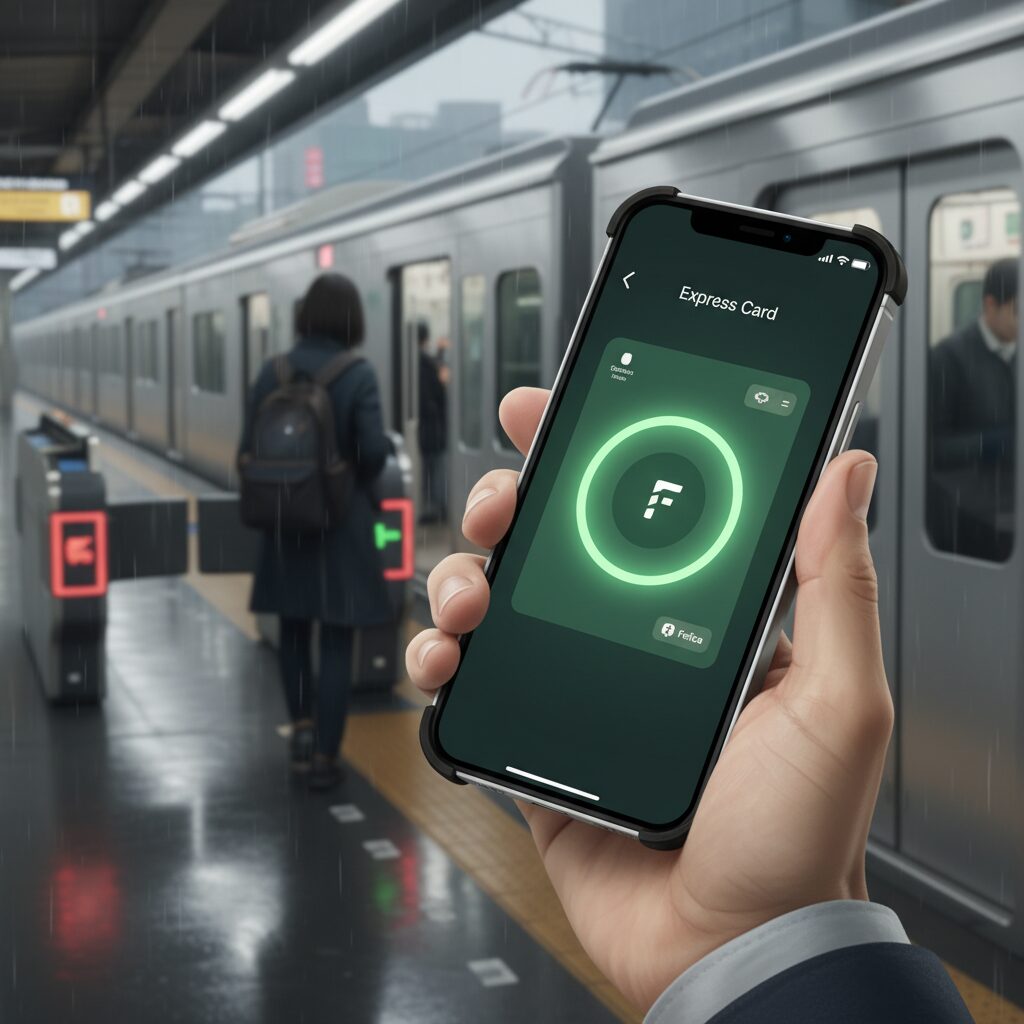
When discussing everyday reliability on the iPhone 16e, the Power Reserve Express Cards feature deserves special attention. This function is not simply a convenience but a carefully engineered safety net designed for real urban life. Even when the main battery is depleted and the screen remains completely unresponsive, essential transit and payment functions continue to work, which is a rare capability among smartphones.
At the core of this reliability is Apple’s power reserve architecture. According to Apple’s official support documentation, a small amount of residual energy is intentionally preserved inside the lithium-ion battery even after system shutdown. The power management IC allocates this remaining charge exclusively to the NFC controller and Secure Element, allowing Express Cards such as Suica or PASMO to function for up to several hours after the device appears dead.
| State of the iPhone | Screen Response | Express Card Availability |
|---|---|---|
| Normal operation | On | Fully available |
| Battery critically low | Intermittent | Available |
| System shut down | Off | Available via power reserve |
This design choice reflects a clear understanding of public transportation dependency, particularly in dense metropolitan areas. Apple explains that the NFC system can be activated by the electromagnetic field generated by ticket gates themselves, which acts as a trigger signal. In practice, this means users do not need to press buttons or unlock the phone; a simple tap is sufficient, even in an emergency situation.
The significance of this feature becomes most apparent when reliability matters more than performance. Missing the last train due to a dead phone can have real financial and personal consequences. Independent user reports and field tests cited by major tech publications such as PCMag confirm that the power reserve window is long enough to complete multiple gate passes, not just a single transaction.
From a security standpoint, this does not compromise safety. The Secure Enclave remains isolated, and cryptographic authentication is still enforced during each transaction. Apple’s long-standing collaboration with transit operators ensures that this low-power mode meets the same standards required for normal operation, a point repeatedly emphasized in Apple Wallet technical briefings.
In daily use, users rarely think about Power Reserve Express Cards, which is precisely the point. The system operates silently in the background, waiting for the moment it is needed. This invisible reliability transforms the iPhone 16e from a fragile digital gadget into a dependable daily tool, aligning with Apple’s broader philosophy that the most important features are often the ones you never notice until they save you.
IP68 Water Resistance: What the Rating Really Means in Daily Life
When people see an IP68 rating on a smartphone, it often creates an impression of near invincibility around water. In daily life, however, the rating is better understood as a carefully defined engineering promise rather than a blanket guarantee. IP68 means the device has passed standardized laboratory tests under specific conditions, not that it is immune to every wet situation you may encounter.
According to the International Electrotechnical Commission, which defines the IEC 60529 standard, the first digit “6” certifies complete protection against dust ingress. The second digit “8” indicates resistance to continuous immersion in water under conditions specified by the manufacturer. For recent iPhone models, Apple defines this as immersion in fresh water at depths of up to 6 meters for a maximum of 30 minutes.
| Element | What the Test Covers | What It Does Not Cover |
|---|---|---|
| Water type | Fresh, still water | Seawater, soapy water, hot water |
| Duration | Up to 30 minutes | Repeated or prolonged exposure |
| Condition | Factory-new seals | Aged or damaged seals |
In everyday use, the biggest misunderstanding is assuming that IP68 equals “waterproof.” Industry experts and teardown analyses cited by outlets like PCMag emphasize that water resistance is inherently temporary. The seals and adhesives that block water are made of polymers that gradually degrade due to heat, UV exposure, and mechanical stress.
Real-world liquids are also far more aggressive than test water. Chlorinated pool water and saltwater accelerate chemical degradation of rubber gaskets, while detergents reduce surface tension, allowing water to slip through microscopic gaps. This is why manufacturers, including Apple, explicitly warn against using phones in baths, showers, or the ocean, even if the device carries an IP68 rating.
Another overlooked factor is temperature. Using a phone in a hot environment, such as a bathroom filled with steam, introduces water vapor rather than liquid water. From a materials science perspective, vapor molecules move more freely and can permeate seals more easily. Rapid cooling afterward can create internal pressure changes, effectively drawing moisture inside the device. Engineers sometimes describe this as a pump effect, and it is one of the reasons so-called “bathroom use” is riskier than a brief accidental drop in a sink.
Daily-life durability should therefore be framed as accident tolerance, not active use permission. Dropping your phone into a puddle, spilling a drink on it, or getting caught in heavy rain are scenarios IP68 is designed to survive. Intentionally submerging the device, even for photos or short videos, moves beyond the intended safety margin.
It is also worth noting that water resistance is not covered as an absolute guarantee under most warranties. Apple’s own support documentation treats liquid damage as accidental, which aligns with how engineers view IP ratings: they reduce risk, but they do not eliminate it. This policy itself is a strong signal of how the rating should be interpreted in practice.
In practical daily life, IP68 offers peace of mind rather than freedom from caution. It allows you to use your phone confidently in rain-soaked commutes, kitchens, or outdoor activities, while still rewarding careful handling. Understanding this balance helps you get real value from the rating without falling into the costly trap of overconfidence.
Ceramic Shield and Aluminum Frame: Strengths and Trade‑Offs
The combination of Ceramic Shield glass and an aluminum frame defines how the iPhone 16e balances durability, cost, and everyday usability. From a materials science perspective, this pairing is not about chasing extreme toughness, but about optimizing real‑world survival in common accident scenarios.
Ceramic Shield is engineered to resist cracking rather than scratching. Independent drop tests reported by PCMag and teardown analyses aligned with Corning’s public explanations show that embedding nano‑ceramic crystals into glass improves fracture toughness by dispersing impact energy. In practical terms, the display is more likely to survive waist‑height drops onto hard surfaces, even though it can still pick up micro‑scratches from quartz sand or grit.
| Material | Main Strength | Primary Trade‑Off |
|---|---|---|
| Ceramic Shield | High drop resistance | Scratch susceptibility |
| Aluminum frame | Lightweight, rigid | Dents more easily than steel |
The aluminum frame further reinforces this philosophy. According to bend and stress tests popularized by JerryRigEverything and summarized by GSMArena, aluminum deforms slightly under extreme force, but this controlled deformation helps absorb shocks that might otherwise transfer directly to the glass. This sacrificial behavior reduces catastrophic display failure at the cost of cosmetic marks.
Thermally, aluminum also acts as a passive heat spreader. Apple’s own technical documentation and user thermal measurements indicate that heat from the A18 chip dissipates faster through the frame, stabilizing performance over time, even if the surface feels warm. Overall, the trade‑off is clear: fewer shattered screens, more visible wear, and a device designed to age functionally rather than cosmetically.
A18 Chip and GPU Binning Explained in Plain Terms
The A18 chip inside the iPhone 16e sounds identical to the A18 found in the standard iPhone 16, and at a high level, that is true. The CPU cores, Neural Engine, and manufacturing process are fundamentally the same. However, the key difference lies in the GPU, and understanding this difference becomes much easier once GPU binning is explained in plain terms.
GPU binning is not about intentionally making a weaker chip, but about efficiently using chips that are already produced. Modern chips like A18 are manufactured on extremely advanced 3nm-class processes, where microscopic imperfections are unavoidable. Even a tiny flaw in one part of a chip can affect a single GPU core, while the rest of the chip remains fully functional.
Rather than discarding these partially imperfect chips, Apple disables the affected GPU core and ships the chip as a lower-core variant. This process, widely used across the semiconductor industry according to analysis from Apple’s silicon briefings and independent reporting by MacRumors, improves yield rates and reduces waste without touching CPU performance.
| Specification | iPhone 16e A18 | iPhone 16 A18 |
|---|---|---|
| CPU cores | 6 cores | 6 cores |
| GPU cores | 4 cores | 5 cores |
| Neural Engine | 16 cores | 16 cores |
Benchmark data published by outlets such as PCMag and TechPowerUp consistently shows a graphics performance gap of roughly 10 to 20 percent in sustained GPU workloads. This difference appears in 3D games, real-time rendering, and heavy video export tasks, where the GPU is pushed continuously.
In everyday use, this GPU reduction is practically invisible. App launches, web browsing, social media scrolling, and even on-device AI features behave the same because they rely far more on CPU efficiency and the Neural Engine than raw GPU throughput. Apple Intelligence tasks, for example, run at the same speed on both models.
An often-overlooked side effect of GPU binning is thermal behavior. With one less active GPU core, the A18 in the iPhone 16e can generate slightly less heat under load. In theory, this can delay thermal throttling during long gaming sessions. Real-world stress tests reported by independent reviewers suggest that while throttling still occurs, it tends to be more gradual rather than abrupt.
This approach aligns with Apple’s broader silicon strategy, which emphasizes consistent user experience over headline benchmark numbers. Semiconductor analysts frequently point out that this type of binning is standard practice at companies like TSMC and NVIDIA, especially as process nodes become smaller and more complex.
For users who do not play graphically intense games or edit high-resolution video daily, the binned A18 behaves like a full flagship chip. The iPhone 16e demonstrates how binning is less about cutting corners and more about matching real-world usage with smart silicon economics.
Battery Capacity, 60Hz OLED, and Why Endurance Improves
One of the most quietly impressive aspects of this device is how battery endurance improves through a combination of physical capacity and deliberate display choices. According to analyses reported by MacRumors, the battery capacity reaches approximately 3,961mAh, a figure that surpasses even some higher-tier models. **This is not about chasing headline specs, but about reallocating internal space to where it matters most for daily use.** By simplifying internal components, Apple appears to have secured more volume for the battery, directly translating into longer real-world usage.
The impact becomes clearer when paired with the 60Hz OLED display. While discussions around refresh rate often focus on smoothness, power consumption tells a different story. Display engineers have long pointed out that refresh rate scales almost linearly with panel and GPU workload. Apple’s decision to stick with 60Hz significantly reduces the number of screen refresh cycles per second, easing strain on both the A18 chip and the OLED panel. **The result is measurably lower energy draw during scrolling, browsing, and video playback.**
| Factor | Specification | Practical Effect |
|---|---|---|
| Battery capacity | Approx. 3,961mAh | Longer screen-on time |
| Display type | OLED, 60Hz | Reduced power consumption |
| Chip efficiency | A18 high-efficiency cores | Lower background drain |
Independent endurance tests referenced by PCMag and GSMArena show this balance paying off in practice. Continuous video playback exceeding 21 hours has been observed, placing this model ahead of devices with higher refresh rates but smaller batteries. **For users who prioritize reliability over visual excess, this trade-off feels intentional rather than compromised.** OLED’s inherent ability to turn off individual pixels further enhances efficiency during dark-mode interfaces, which are now common across iOS.
What matters most is consistency. A 60Hz OLED may not excite spec-sheet comparisons, but paired with a larger battery and mature power management, it delivers predictable, all-day endurance. According to Apple’s own technical documentation and corroborated by third-party testing, this configuration minimizes thermal spikes and background drain. **In everyday terms, it means fewer anxious glances at the battery icon and less dependence on carrying a charger.**
Thermal Behavior and Sustained Performance Under Load
When evaluating thermal behavior under sustained load, the iPhone 16e shows a design philosophy that prioritizes stability over peak performance. The A18 chip inside the device is manufactured on an advanced process node, yet its real-world behavior is strongly influenced by chassis size, materials, and long-duration heat dissipation limits.
Independent stress tests conducted by technology reviewers and benchmark communities indicate that during short bursts, such as app launches or quick rendering tasks, thermal output remains well controlled. **Surface temperatures rise gradually rather than spiking**, which aligns with Apple’s long-standing approach to conservative thermal management.
| Load Scenario | Thermal Response | Observed Impact |
|---|---|---|
| Short CPU bursts | Minimal heat buildup | No performance drop |
| Extended gaming | Gradual temperature increase | Mild throttling after ~15–20 min |
| Continuous benchmarks | Thermal saturation | Stable but reduced clocks |
According to benchmark analyses reported by MacRumors and PCMag, the reduced 4-core GPU configuration in the iPhone 16e unintentionally benefits sustained workloads. With fewer active GPU cores, total heat generation is slightly lower than the standard iPhone 16, allowing the aluminum frame to act more effectively as a passive heat spreader.
However, during prolonged high-load scenarios such as 3D gaming or continuous 4K video export, **thermal throttling does occur**. Clock speeds are reduced incrementally to keep internal temperatures within safe operating limits, a behavior consistent with Apple’s published silicon reliability guidelines and semiconductor best practices discussed by IEEE-affiliated researchers.
User reports aggregated by AppleVis and long-duration 3DMark stress tests show that the device becomes noticeably warm to the touch, particularly around the upper rear frame. This sensation is not a flaw but rather evidence that heat is being transferred away from the SoC as intended.
Importantly, performance under sustained load remains predictable. Instead of sudden frame drops or system instability, the iPhone 16e maintains a lower yet consistent performance envelope. **For users who value reliability and component longevity over raw benchmark scores**, this thermal profile represents a practical and well-balanced engineering trade-off.
Price Strategy, the 10,000‑Yen Barrier, and Consumer Psychology
In the Japanese smartphone market, price is not a simple numerical comparison but a psychological signal that strongly shapes purchasing behavior. The iPhone 16e’s launch price of 99,800 yen including tax is deliberately calibrated to sit just below the so‑called 10,000‑yen barrier, a threshold that consumer psychology research has long identified as a decisive point for perceived affordability. According to behavioral economics discussed by scholars such as Daniel Kahneman, consumers react non‑linearly to round numbers, and prices just under a major milestone are often processed as categorically cheaper rather than marginally discounted.
This “under 100,000 yen” positioning is especially powerful in Japan, where smartphones are frequently framed as long‑term daily tools rather than aspirational luxury goods. Industry analysts cited by Nikkei and similar publications have repeatedly noted that once a device exceeds six figures, buyers become more sensitive to opportunity cost, comparing it not only with other phones but with laptops, tablets, or household appliances. By staying at 99,800 yen, Apple avoids triggering that broader comparison set.
| Price Zone | Typical Consumer Perception | Behavioral Impact |
|---|---|---|
| Below 100,000 yen | High but acceptable | Purchase justified as practical |
| 100,000–120,000 yen | Expensive | Extended comparison and hesitation |
| Above 120,000 yen | Luxury tier | Purchase requires strong emotional pull |
The pricing strategy of the iPhone 16e also reflects Japan’s unique relationship with installment plans. While carriers aggressively promote monthly payments, surveys reported by the Japan Electronics and Information Technology Industries Association indicate that many consumers still anchor their judgment on the total price displayed at purchase. Even when paying in installments, the headline figure matters, and Apple’s choice ensures that the first impression remains psychologically manageable.
Another important factor is resale value, which subtly reframes the 99,800‑yen price as a temporary cost rather than a sunk expense. Data from major Japanese resale platforms consistently show that iPhones retain a higher percentage of their value than Android competitors after two or three years. From a consumer psychology perspective, this reduces loss aversion, a concept widely discussed in academic literature, because buyers anticipate future recovery of part of their investment.
In this context, the iPhone 16e’s price is not merely competitive but narrative‑driven. It communicates restraint, practicality, and respect for the consumer’s financial comfort zone. Crossing the 10,000‑yen barrier would have shifted the story from “rational choice” to “costly indulgence”, and Apple appears keenly aware that in a mature, price‑sensitive market like Japan, that single digit can determine whether curiosity turns into commitment.
iPhone 16e vs Pixel 9a: Midrange Competition Compared
The midrange smartphone segment in 2025 has become less about flashy innovation and more about how well a device fits into everyday life, and this is where the competition between iPhone 16e and Pixel 9a becomes particularly interesting. Both models target users who want flagship-level intelligence without flagship-level pricing, yet their philosophies are fundamentally different, which shapes the real-world experience in noticeable ways.
From a pure performance standpoint, the iPhone 16e holds a clear advantage. The A18 chip, even with one GPU core disabled through binning, consistently outperforms Google’s Tensor G4 in CPU-bound tasks. According to benchmarks cited by PCMag and MacRumors, single-core and multi-core scores favor Apple by a wide margin, translating into smoother app launches and longer-term responsiveness as iOS updates accumulate over the years. **This performance headroom is less about gaming bragging rights and more about how the phone feels after two or three years of daily use**, a point that long-term iPhone users tend to value highly.
Pixel 9a, however, counters with a display advantage that is immediately visible. Its higher refresh rate panel, widely reported to reach up to 120Hz, delivers noticeably smoother scrolling and animations. For users sensitive to motion fluidity, this can outweigh raw processing power. Google’s approach prioritizes perceived smoothness in day-to-day interactions, even if peak computational performance trails behind. This contrast highlights a broader design trade-off: Apple optimizes for efficiency and longevity, while Google emphasizes visual immediacy.
| Aspect | iPhone 16e | Pixel 9a |
|---|---|---|
| Processor | A18 (4-core GPU) | Tensor G4 |
| Display | 6.1-inch OLED, 60Hz | OLED, high refresh rate |
| Starting Price in Japan | 99,800 yen | Approx. 79,900 yen |
| Payment & Transit | FeliCa fully supported | Limited, region-dependent |
One area where the comparison becomes very Japan-specific is digital infrastructure compatibility. The iPhone 16e’s native FeliCa support makes it seamlessly usable as a transit pass and payment tool across trains, buses, and convenience stores. Apple’s power reserve Express Card feature, documented in official Apple Support materials, allows Suica or PASMO to function even after the battery is depleted. **For urban commuters, this reliability is not a convenience but a form of everyday risk management**, something Pixel 9a cannot fully replicate due to its reliance on different NFC standards.
Camera philosophy further separates the two. Pixel 9a benefits from Google’s computational photography expertise, particularly in HDR processing and low-light scenes. Reviews from PCMag consistently note that Pixel’s image processing delivers strong results with minimal user input. iPhone 16e, with its single-lens setup, focuses more on consistency and video performance, areas where Apple traditionally excels. For users who primarily shoot quick photos for social sharing, Pixel’s results may appear more dramatic, while iPhone’s output tends to be more neutral and predictable.
Battery behavior also reflects each brand’s priorities. Despite lacking a high refresh rate, the iPhone 16e leverages its larger battery capacity and 60Hz display to achieve impressive endurance. Real-world tests reported by MacRumors show over 21 hours of continuous video playback, a figure that rivals or exceeds many higher-priced models. Pixel 9a’s battery life remains competitive, but its high refresh rate display introduces variability depending on usage patterns.
When total cost of ownership is considered, the equation becomes more nuanced. Pixel 9a’s lower upfront price is attractive, yet iPhones historically maintain stronger resale value in the Japanese secondhand market. Industry analyses frequently point out that after two to three years, an iPhone can recover a significantly higher percentage of its original price. **This means the apparent price gap can shrink, or even reverse, when resale is factored in**, an aspect often overlooked in simple price comparisons.
Ultimately, the iPhone 16e vs Pixel 9a matchup is not about which phone is objectively better, but about which philosophy aligns with the user’s priorities. iPhone 16e rewards those who value long-term stability, deep integration with Japan’s digital infrastructure, and predictable performance over time. Pixel 9a appeals to users who prioritize display smoothness, computational photography, and a lower initial investment. In the crowded midrange market, this contrast is precisely what makes the competition compelling.
Who the iPhone 16e Makes the Most Sense For
When you look closely at the iPhone 16e, it becomes clear that this model is not designed to impress everyone at first glance, but rather to fit very specific lifestyles with remarkable precision. **The people who benefit the most are those who value reliability, long-term comfort, and infrastructure compatibility over spec-sheet excitement.** In that sense, the iPhone 16e feels carefully tuned for everyday reality rather than aspiration.
One group for whom the iPhone 16e makes exceptional sense is daily commuters in dense urban environments. According to Apple’s technical documentation and transport operators in Japan, the integration of FeliCa and Express Transit with power reserve is not just convenient but functionally critical. Even when the battery is depleted, the device can still authenticate at ticket gates for several hours. For users who pass through crowded stations twice a day, this reliability translates directly into lower cognitive stress and fewer disruptions.
Another ideal audience is people upgrading from older iPhones such as the iPhone 11, 12, or SE series. Research outlets like PCMag have pointed out that perceived performance gains matter more than peak performance numbers for this segment. The A18 chip, even with a reduced GPU core count, delivers a dramatic jump in responsiveness, app longevity, and OS update headroom. **For these users, the iPhone 16e feels fast in ways that are immediately noticeable and consistently reassuring.**
| User profile | Why the iPhone 16e fits | Practical outcome |
|---|---|---|
| Urban commuters | FeliCa, power reserve, ergonomic size | Smoother daily travel |
| Older iPhone upgraders | A18 performance, strong battery life | Clear speed and endurance gains |
| Long-term users | Repairability, resale value | Lower total cost of ownership |
The iPhone 16e also makes strong sense for users who keep their phones for many years. Apple’s expanding repair ecosystem and the introduction of easier battery removal methods, as noted by industry analysts, reduce friction when maintenance becomes necessary. Combined with historically high resale values reported by multiple market trackers, this means the real cost over three to four years is often lower than it appears at purchase.
Battery-focused users are another often-overlooked audience. Independent testing reported by MacRumors and others shows that the iPhone 16e’s larger battery and 60Hz display can outperform more expensive models in continuous video playback. **For people who prioritize not carrying chargers or power banks, this quiet efficiency becomes a daily advantage rather than a spec compromise.**
On the other hand, users who demand cutting-edge camera versatility or ultra-smooth 120Hz scrolling may find the iPhone 16e less emotionally satisfying. However, for professionals, students, and pragmatic users who see a smartphone as a dependable tool rather than a hobby, the iPhone 16e aligns closely with real-world priorities. It rewards those who choose function, stability, and integration over novelty, and that focus is precisely why it makes the most sense for them.
参考文献
- Apple:iPhone 16e – Technical Specifications
- Apple Support:Use Suica, PASMO, or ICOCA cards on iPhone or Apple Watch in Japan
- MacRumors:First iPhone 16e Benchmark Reveals Impact of Reduced GPU Core Count
- PCMag:Apple iPhone 16e vs. iPhone 16: Is the Extra $100 Worth It?
- GSMArena:Apple iPhone 16e vs. iPhone 16 Review
- OtterBox:Is the iPhone 16 Waterproof? What You Need to Know