
Have you ever picked up your smartphone for a quick check, only to realize that an hour has quietly disappeared? Many tech-savvy readers experience this daily, and it is no longer just a matter of weak self-control. In 2026, our attention has become one of the most valuable resources in the global digital economy, and powerful platforms are competing fiercely to capture it.
As screens become more immersive and algorithms more intelligent, design choices are increasingly optimized to keep you engaged for as long as possible. Features like infinite scroll, hyper-personalized feeds, and relentless notifications are not accidental conveniences—they are carefully engineered systems that interact directly with human psychology. These mechanisms shape how we think, sleep, and even how we feel, often without us noticing.
This article helps you understand what is really happening behind your screen time in 2026. By exploring real data, scientific findings, and the latest operating system features from Android and iOS, you can gain practical insight into how attention is monetized and how digital well-being tools are evolving. If you care about gadgets and want to use technology without being controlled by it, this deep dive offers clear value and actionable perspective.
- Why Attention Became the Scarcest Resource in the Digital Age
- Global Screen Time Trends in 2026: What the Data Reveals
- The Psychology Behind Addictive Design and Infinite Scroll
- Dark Patterns Explained: Interfaces That Quietly Manipulate Users
- Measurable Impacts on Sleep, Vision, and Mental Health
- How Algorithms Affect Teenagers, Adults, and Older Users Differently
- Android 16 and AI-Based Attention Management Features
- iOS 26 and the Rise of the AI Wellness Coach
- Wearables, Smart Glasses, and the Future Without Screens
- Legal and Regulatory Shifts Targeting Addictive Digital Design
- 参考文献
Why Attention Became the Scarcest Resource in the Digital Age
In the digital age, attention has become the scarcest resource because information itself is no longer limited. Instead, what is limited is the human capacity to process, evaluate, and consciously choose where to focus. By 2026, daily online time has reached an unprecedented level, with global averages already exceeding five to seven hours per day according to large-scale international surveys. This means that digital platforms are no longer competing on content quality alone, but on how effectively they can capture and retain human attention.
What makes this scarcity more severe is that modern platforms are not passive tools. Research published in journals such as Frontiers in Psychology explains that today’s services are built on behavioral science and cognitive psychology, systematically exploiting predictable weaknesses in human decision-making. **Attention is treated as an extractable asset**, monetized through advertising, subscriptions, and data, rather than respected as a finite mental resource.
| Factor | Then | Now |
|---|---|---|
| Information volume | Limited, periodic | Continuous, infinite |
| User control | High | Algorithm-mediated |
| Stopping cues | Clear endings | Removed by design |
The removal of natural stopping points is particularly critical. Infinite scroll, autoplay, and algorithmic feeds eliminate moments where users would normally reassess their behavior. According to cognitive scientists, these designs stimulate the brain’s reward system in a way similar to variable-ratio gambling mechanisms, making disengagement cognitively costly. As a result, attention is consumed incrementally, often without conscious awareness.
Empirical data reinforces this shift. Large-scale analyses involving hundreds of thousands of participants show that even a one-hour increase in daily screen time measurably erodes sleep duration and quality. **This demonstrates that attention loss is not abstract, but physiologically and mentally consequential**, affecting rest, emotional regulation, and next-day cognitive performance.
Importantly, the scarcity of attention is not evenly distributed. Younger users, whose self-regulation systems are still developing, and older adults, who may face declining cognitive flexibility, are disproportionately affected. Studies cited by public health researchers indicate significantly higher engagement and dependency indicators within these groups, highlighting that attention scarcity has become a structural issue rather than a matter of individual discipline.
In this environment, attention functions much like a non-renewable resource within a single day. Once fragmented across notifications, feeds, and alerts, it cannot be fully recovered. This is why, in the digital age, attention has surpassed data and time as the most contested currency, shaping not only markets but also cognition, behavior, and well-being.
Global Screen Time Trends in 2026: What the Data Reveals
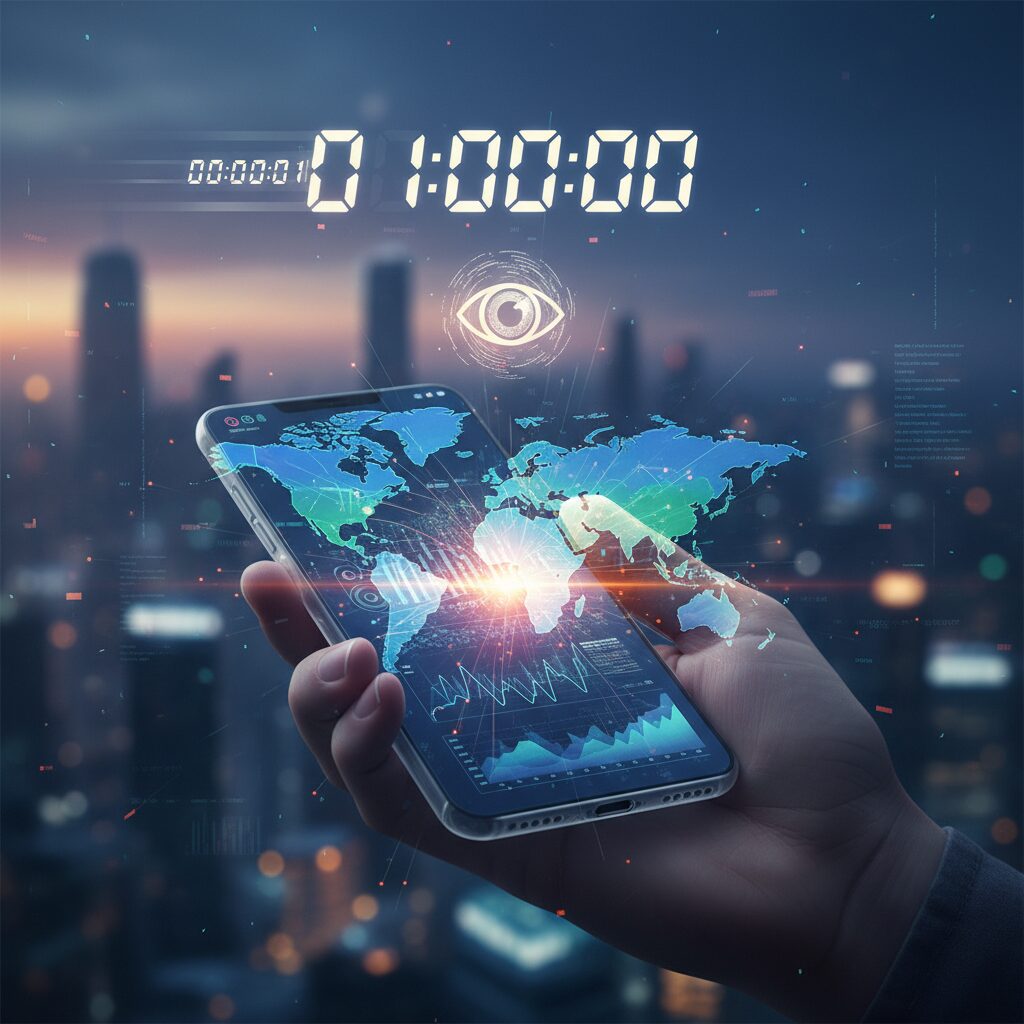
By 2026, global screen time has continued its steady rise, and the data clearly shows that this is no longer a marginal lifestyle issue but a structural shift in how people allocate attention. According to large-scale surveys synthesized by organizations such as the OECD and academic journals in digital psychology, **daily online time of five to seven hours has become the global baseline**, not the exception. This trend is consistent across North America, Europe, and parts of Asia, with mobile devices accounting for the majority of growth.
What is particularly striking in the 2026 data is the widening gap between active and passive screen use. Time spent on productivity tools and purposeful communication has remained relatively stable, while **passive consumption driven by algorithmic feeds has expanded disproportionately**. Researchers writing in Frontiers in Psychology point out that this shift aligns with the maturation of attention-optimized platforms that minimize stopping cues, such as infinite scroll and autoplay.
| Region | Avg. Daily Screen Time | Dominant Growth Driver |
|---|---|---|
| North America | 6.8 hours | Short-form video platforms |
| Europe | 6.2 hours | Messaging and social feeds |
| East Asia | 7.1 hours | Mobile-first ecosystems |
Another global pattern revealed in 2026 is demographic polarization. Adolescents and young adults remain the heaviest users, but recent studies highlight a **rapid acceleration among older adults**, a group previously considered digitally moderate. Peer-reviewed analyses note that more than half of users over 60 now display high engagement levels, driven by social connection features and recommendation systems.
From a data perspective, the message is consistent and sobering. **Screen time growth in 2026 is less about necessity and more about engineered attention capture**, a conclusion echoed by scholars at the Weizenbaum Institute. Understanding these trends is essential for interpreting not only personal habits, but also the broader trajectory of the global attention economy.
The Psychology Behind Addictive Design and Infinite Scroll
Addictive digital design works because it aligns uncannily well with how the human brain is wired, and infinite scroll is its most refined expression. Cognitive psychology has long shown that humans are highly sensitive to variable rewards, a mechanism first formalized by B.F. Skinner and later validated in neuroscience. **When outcomes are unpredictable, the brain releases dopamine more persistently**, reinforcing the behavior even without conscious enjoyment.
According to research published in Frontiers in Psychology, modern platforms intentionally mimic this variable reward loop. Each swipe or scroll carries the promise of something slightly better than the last, bypassing rational decision-making and shifting behavior into an automatic mode. Users often continue scrolling not because of interest, but because stopping feels cognitively unresolved.
| Design Element | Psychological Trigger | User Impact |
|---|---|---|
| Infinite scroll | Loss of stopping cues | Extended, unplanned use |
| Variable rewards | Dopamine anticipation | Compulsive repetition |
| Personalized feeds | Self-relevance bias | Reduced self-control |
Behavioral economist Herbert Simon famously warned that an abundance of information consumes attention, and this insight has become the blueprint of the attention economy. Infinite scroll removes natural friction, such as page endings or loading pauses, that once gave the brain a chance to reassess. **Without these micro-boundaries, users lose temporal awareness**, a phenomenon confirmed by large-scale observational studies on screen behavior.
Neuroscientists also note that this design disproportionately affects adolescents and older adults, whose self-regulation systems are either still developing or gradually declining. What appears as convenience is, in practice, a carefully tuned psychological lever. Understanding this mechanism does not instantly restore control, but it reframes infinite scroll not as a neutral feature, but as a deliberate behavioral intervention embedded in everyday technology.
Dark Patterns Explained: Interfaces That Quietly Manipulate Users
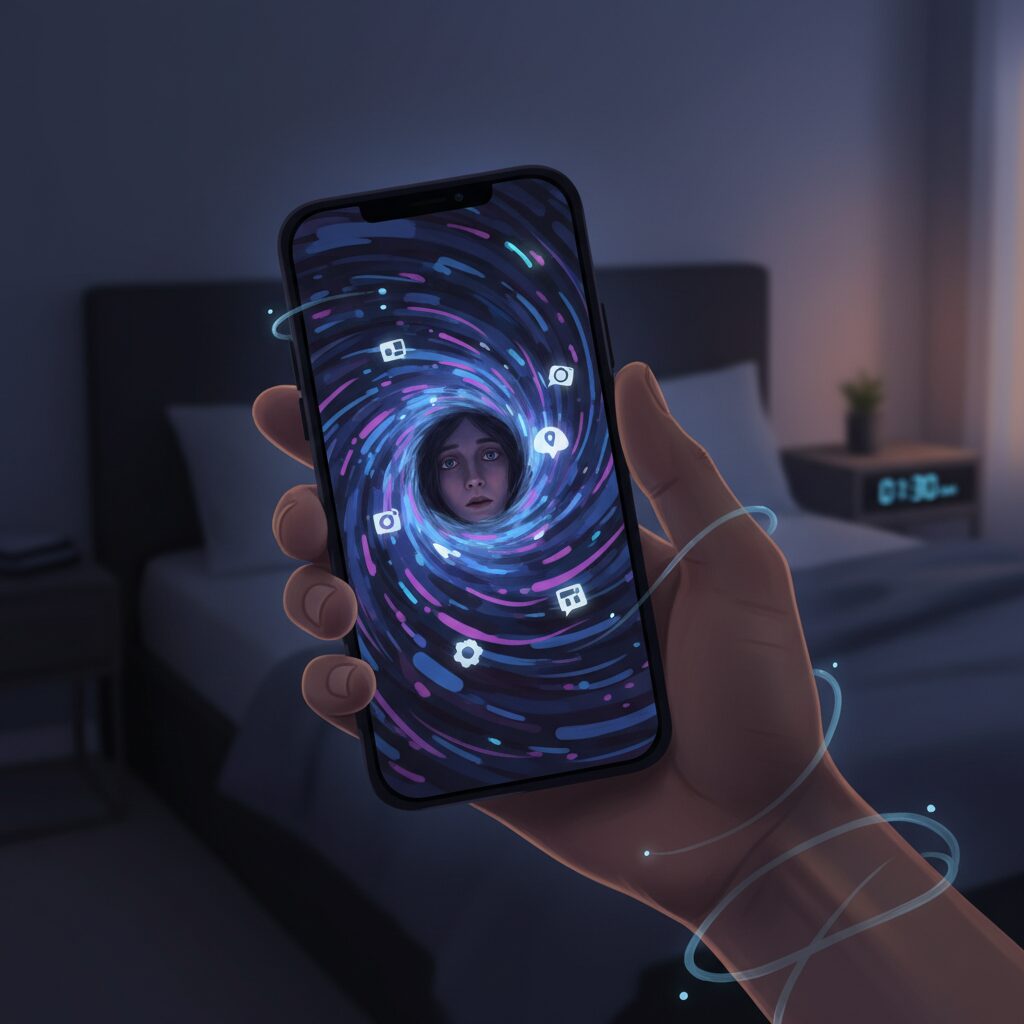
Dark patterns are interface designs that quietly steer users toward actions they did not consciously intend to take, and by 2026 they have become a central mechanism of the attention economy. These designs do not rely on overt deception but instead exploit predictable cognitive biases, making manipulation feel like a natural choice. **The most problematic aspect is that users often believe they are acting freely, while their autonomy is subtly bypassed**.
According to analyses published in the Weizenbaum Journal of the Digital Society, modern dark patterns are closely intertwined with addictive design systems that optimize for engagement time rather than user benefit. Infinite scroll, default opt-ins, and emotionally charged notifications are not isolated tricks but parts of an integrated behavioral pipeline. Each interaction is tested and refined through large-scale A/B experiments, allowing platforms to identify which interface variations most effectively delay disengagement.
| Pattern Type | Interface Tactic | Psychological Lever |
|---|---|---|
| Interface Interference | Pre-selected consent options | Status quo bias |
| Nagging | Repeated prompts and alerts | Decision fatigue |
| Obstruction | Complex cancellation flows | Loss aversion |
| Sneaking | Hidden fees or auto-renewals | Inattentional blindness |
Research in Frontiers in Psychology explains that these tactics work because they align with the brain’s reward-learning system. Variable rewards, similar to slot machines, trigger dopamine responses that encourage continued interaction even when the informational value declines. **Users are not persuaded through reason but conditioned through repetition**, which makes resistance increasingly difficult over time.
Dark patterns are particularly effective on mobile devices, where small screens and gesture-based navigation reduce cognitive friction. For example, declining tracking permissions may require multiple taps and scrolling through dense text, while acceptance is presented as a single prominent button. Legal scholars at Indiana University describe this as “disloyal design,” emphasizing that the interface serves corporate goals at the expense of user welfare.
By 2025, consumer protection groups in Japan documented widespread exposure to such designs, noting that even digitally literate users failed to recognize manipulation in real time. The issue is not a lack of intelligence but a mismatch between human cognitive limits and machine-optimized persuasion systems. **When every pixel is engineered to capture attention, vigilance alone is insufficient**.
This growing awareness has fueled regulatory scrutiny, but the technical sophistication of dark patterns continues to evolve faster than policy. As long as attention remains a monetizable asset, interfaces will be incentivized to blur the line between guidance and coercion. Understanding how these patterns operate is therefore not merely academic; it is a prerequisite for maintaining agency in a digital environment designed to quietly decide on the user’s behalf.
Measurable Impacts on Sleep, Vision, and Mental Health
Excessive screen time no longer remains a vague concern but shows measurable and quantifiable impacts on sleep, vision, and mental health. By 2026, large-scale epidemiological and clinical studies have clarified how even incremental increases in daily screen exposure translate into physiological and psychological costs that accumulate silently over time.
Sleep is the most extensively documented domain. A large-scale analysis covering more than 540,000 participants demonstrated a clear dose–response relationship between screen time and sleep duration. According to this research, every additional hour of daily screen use shortens total sleep by approximately three to five minutes, while simultaneously increasing the risk of short sleep duration by about 25 percent. These effects are not limited to total hours but also extend to sleep architecture, with delayed sleep onset and fragmented rest becoming significantly more common.
| Indicator | Observed Effect | Evidence Source |
|---|---|---|
| Daily screen time +1 hour | Sleep duration −3 to −5 minutes | Large-scale population analysis |
| Evening device use | Longer sleep onset latency | Pediatric and adolescent sleep studies |
| Chronic high usage | Increased insomnia risk | Clinical sleep research |
Sleep researchers emphasize that this erosion compounds over weeks and months. Harvard Medical School sleep specialists have noted that blue-light exposure alone cannot explain the full effect; cognitive arousal caused by infinite scroll and variable rewards keeps the brain in a heightened anticipatory state. As a result, users often fall asleep later and experience less restorative deep sleep, even when total time in bed appears unchanged.
Vision health represents another domain where the impact is numerically visible. In Japan, surveys conducted by the Ministry of Education reported that nearly 20 percent of sixth-grade students and roughly 30 percent of ninth-grade students now have unaided visual acuity below 0.3. Ophthalmologists increasingly associate this trend with prolonged near-focus work on digital displays, especially in educational environments where one-device-per-student programs have normalized multi-hour daily usage.
The concern is not only myopia progression but also digital eye strain. Reduced blink rates, accommodative stress, and chronic dryness have been documented across both youth and adult populations. Clinical associations such as the American Academy of Ophthalmology have repeatedly warned that sustained close-range viewing without adequate breaks accelerates visual fatigue and may worsen long-term refractive outcomes.
Mental health outcomes show equally compelling correlations. Data from the Adolescent Brain Cognitive Development study reveal that among children aged nine to ten, higher screen time is significantly associated with depressive symptoms, attention-deficit tendencies, and behavioral dysregulation. Activities such as video streaming, messaging, and gaming exhibit particularly strong links, suggesting that emotionally immersive or socially comparative content amplifies vulnerability.
Complementary findings from U.S. and international surveys indicate that nearly half of adolescents report losing awareness of how much time they spend on their phones. About one quarter admit to using social platforms explicitly to escape negative emotions, while a notable proportion report unsuccessful attempts to reduce usage despite perceived harm to academic performance.
These findings suggest a common mechanism across sleep, vision, and mental health: diminished self-regulation driven by attention-capturing design. Rather than isolated symptoms, the data point to a systemic load on cognitive and biological recovery processes.
Neuroscientists have cautioned that during critical developmental periods, persistent overexposure may interfere with the maturation of executive control networks. This aligns with observations that poorer sleep quality, visual fatigue, and emotional instability often reinforce one another, creating feedback loops that are difficult to break without structural intervention.
By grounding the discussion in measurable outcomes rather than abstract fears, the evidence makes one conclusion unavoidable: screen time exerts real, countable pressure on core human functions. Understanding these metrics is essential for evaluating not only personal habits but also the responsibility of platforms and device ecosystems shaping daily attention.
How Algorithms Affect Teenagers, Adults, and Older Users Differently
Algorithms do not affect all users in the same way. Their impact differs markedly depending on age, cognitive development, social roles, and vulnerability to psychological triggers. In 2026, research across psychology and public health increasingly shows that **the same recommendation system can produce fundamentally different outcomes for teenagers, adults, and older users**, even when screen time appears similar on the surface.
For teenagers, algorithms intersect with an ongoing phase of brain development, particularly in areas related to impulse control and emotional regulation. According to findings discussed in large-scale adolescent studies such as the ABCD project in the United States, algorithmically curated video, messaging, and gaming content is strongly associated with depressive symptoms and attention difficulties. **Variable reward mechanisms, such as infinite scroll and unpredictable content feeds, exploit a still-maturing self-regulation system**, making it harder for teens to disengage voluntarily.
Japanese data from 2025–2026 further reinforces this risk profile. High school students now average more than six hours of daily internet use, with one in three exceeding seven hours. Researchers and education authorities note that algorithm-driven entertainment blurs the boundary between learning and leisure, particularly under one-device-per-student environments. The result is not only sleep reduction but also increased eye strain and reduced face-to-face social interaction.
| Age Group | Primary Algorithmic Trigger | Main Documented Risk |
|---|---|---|
| Teenagers | Variable rewards, social validation | Mental health strain, sleep loss |
| Adults | Efficiency optimization, habit loops | Time displacement, burnout |
| Older users | Repetition, trust-based cues | Addictive use, digital exploitation |
Adults, by contrast, tend to experience algorithmic influence through optimization rather than overt addiction. Recommendation systems prioritize relevance, speed, and continuity, aligning with work, news consumption, and daily logistics. Studies cited by sleep researchers analyzing over 540,000 participants show that **each additional hour of screen time reduces total sleep by several minutes**, a pattern particularly visible among working-age adults who extend device use late into the night.
While adults generally possess stronger cognitive control than teenagers, they are not immune. Algorithms gradually normalize constant availability and fragmented attention, leading to chronic fatigue and reduced productivity. Behavioral scientists note that adults often underestimate cumulative impact, perceiving algorithmic assistance as neutral convenience rather than a structured attention capture system.
Older users face a different, often under-discussed risk. Research published in peer-reviewed journals focusing on digital exploitation highlights that **more than half of older adults exhibit unusually high engagement with algorithm-driven platforms**, and a measurable percentage meet criteria associated with addictive use. Cognitive aging, combined with lower digital literacy and social isolation, increases susceptibility to dark patterns and persuasive design.
Experts in gerontology and digital ethics emphasize that trust plays a central role here. Older users are more likely to accept prompts, notifications, and recommendations at face value, especially when framed as helpful or urgent. This makes them disproportionately vulnerable to manipulative interface choices, even when total screen time is lower than that of younger generations.
Across all age groups, the key difference lies not in exposure but in **how algorithms align with age-specific psychological and social conditions**. Understanding these distinctions is essential for designing effective digital well-being strategies that protect users without assuming a one-size-fits-all solution.
Android 16 and AI-Based Attention Management Features
Android 16 marks a decisive shift in how mobile operating systems address the attention crisis, moving from passive tracking toward proactive, AI-driven intervention. At the core of this evolution is Google’s integration of Gemini AI, which reframes notifications and usage control not as after-the-fact reports, but as real-time cognitive filters designed to protect user focus. In an era where average daily screen time often exceeds five hours, this OS-level approach has significant implications.
The most visible change is AI-based notification summarization. Instead of delivering dozens of fragmented alerts from group chats, social platforms, and apps, Android 16 compresses them into concise, context-aware summaries. According to Google’s own feature briefings and coverage by major tech media, this reduces the frequency of compulsive screen checking, a behavior closely linked to dopamine-driven reward loops identified in cognitive psychology research.
| Feature | AI Function | Attention Impact |
|---|---|---|
| Notification Summary | Semantic clustering and prioritization | Fewer unlocks, lower interruption cost |
| Spam Prevention | Behavioral pattern detection | Reduced coercive engagement |
| Parental Controls | Policy-based time enforcement | Restored temporal boundaries |
Another critical element is Android 16’s AI-assisted spam and dependency prevention. When users are added to unfamiliar group chats or receive repeated prompts from unknown sources, the system actively recommends blocking or exiting. This design choice aligns with findings published in journals such as Frontiers in Psychology, which argue that reducing exposure to manipulative triggers is more effective than relying solely on user willpower.
Parental controls have also been re-architected at the system level. Time limits, app restrictions, and PIN-based locks are now unified within core settings, rather than scattered across auxiliary apps. This integration lowers configuration friction for guardians and reflects growing consensus among digital well-being researchers that consistency and enforceability are essential for habit formation, particularly among adolescents.
Importantly, Android 16 does not claim to eliminate addictive design outright. Instead, it acknowledges the structural imbalance of the attention economy and introduces AI as a counterweight. As scholars from institutions studying digital ethics have noted, when algorithms already shape what users see, using AI to defend autonomy is a logical, if imperfect, response.
For gadget enthusiasts and power users, the significance lies beyond convenience. Android 16 demonstrates how operating systems can intervene upstream, before distraction translates into hours lost. This approach suggests a future where attention management is not an optional wellness feature, but a foundational layer of mobile computing.
iOS 26 and the Rise of the AI Wellness Coach
With iOS 26, Apple clearly signals a strategic shift from passive restriction tools toward an active, AI-driven wellness companion. Instead of simply showing how long users stare at their screens, the system now interprets behavior and intervenes at meaningful moments. **This evolution reflects a deeper understanding that attention management is no longer a matter of willpower, but of intelligent support built into the OS itself.**
The core of this change is the AI Wellness Coach embedded in the revamped Health app. According to Apple’s official documentation summarized by Macworld, the coach analyzes screen time alongside sleep duration, heart rate variability, and daily activity patterns. By correlating these signals, iOS 26 can suggest concrete actions such as delaying late-night notifications after consecutive short-sleep days or recommending earlier media cutoffs when physiological stress markers rise.
| Signal Integrated | AI Interpretation | User Outcome |
|---|---|---|
| Screen Time Peaks | Late-night overuse detected | Gentle prompts to wind down |
| Heart Rate Variability | Elevated cognitive stress | Reduced notification intensity |
| Sleep Consistency | Chronic sleep debt trend | Personalized bedtime guidance |
What makes this approach distinctive is its emphasis on coaching rather than policing. Traditional screen limits often triggered resistance, especially among heavy users already caught in the attention economy. In contrast, **the AI coach frames its guidance as health optimization**, drawing on patterns the user can intuitively recognize. Behavioral scientists have long argued that reflective feedback is more effective than hard constraints, a position supported by large-scale sleep studies cited by medical research platforms.
Another subtle but impactful feature is automatic media control through wearable integration. When AirPods or Apple Watch detect sleep onset, playback can stop without user input. This addresses a well-documented issue: studies involving hundreds of thousands of participants show that even one additional hour of screen exposure shortens sleep by several minutes and degrades sleep quality. iOS 26 operationalizes this evidence at the system level, translating abstract health risks into immediate action.
There is also a psychological dimension to Apple’s Battery Intelligence feature. By predicting charging completion times and optimizing power management, the OS reduces compulsive battery checking, a micro-behavior that keeps users tethered to their devices. Experts in human-computer interaction have noted that anxiety around battery life often fuels unnecessary screen interactions, making this an indirect yet meaningful wellness intervention.
Overall, iOS 26’s AI Wellness Coach represents a maturation of digital well-being philosophy. Rather than assuming users must fight the attention economy alone, Apple embeds a form of continuous, personalized guidance into everyday use. **For tech-savvy users who recognize the health costs of constant connectivity, this marks a critical step toward reclaiming attention without abandoning technology itself.**
Wearables, Smart Glasses, and the Future Without Screens
Wearables and smart glasses are often introduced as tools of convenience, but in 2026 they are increasingly framed as a potential exit from the screen-dominated attention economy. Smartphones concentrate attention into a single glowing rectangle, whereas wearables distribute information across the body and environment, reducing the need for repetitive, compulsive screen checks. This shift is not merely aesthetic; it directly responds to growing evidence that excessive screen exposure erodes sleep quality, autonomy, and mental well-being.
Smartwatches and rings already demonstrate how less screen-centric interaction can work in practice. Health-focused wearables surface only high-priority signals such as heart rate anomalies, sleep stages, or urgent notifications, while suppressing infinite feeds and algorithmic distraction. According to analyses cited by major medical journals, even small reductions in daily screen exposure can measurably improve sleep duration and continuity, making passive, glanceable interfaces particularly valuable.
| Device Category | Primary Interaction | Attention Impact |
|---|---|---|
| Smartwatch | Haptics, short text, biometrics | Interruptions are brief and task-focused |
| Smart Ring | Sensor-driven, no visual feed | Zero visual scrolling, background awareness |
| Smart Glasses | Contextual AR overlays | Hands-free access, risk of constant exposure |
The most radical change comes from smart glasses, widely described by technology analysts as reaching a turning point in 2026. Instead of pulling users into apps, smart glasses promise contextual overlays: navigation cues only when walking, translation only when hearing a foreign language, and summaries instead of full message streams. Researchers in human–computer interaction note that this “context-first” design can reduce the cognitive load that fuels compulsive engagement.
However, this future is not automatically humane. If visual overlays are persistent and ad-driven, smart glasses could eliminate the very act of putting the screen away. Scholars discussing addictive design warn that attention capture does not disappear when screens shrink or move closer to the eyes; it merely changes form. An always-on display risks creating a state where digital prompts continuously compete with the physical world for cognitive priority.
The key question is not whether screens disappear, but whether attention regains clear boundaries.
Major platform providers are acutely aware of this tension. Industry briefings referenced by outlets such as Lifehacker Japan emphasize privacy LEDs, manual “visual silence” modes, and AI-driven filtering that limits overlays to moments of explicit user intent. These design choices echo findings from behavioral psychology, which show that predictable stopping points and reduced novelty cues weaken compulsive behavior.
From a digital well-being perspective, wearables and smart glasses represent a fork in the road. Used conservatively, they can compress digital interaction into short, purposeful moments and help counter the attention economy’s demand for endless presence. Used carelessly, they risk dissolving the last remaining boundary between online stimuli and human perception. In 2026, the future without screens is less about removing displays and more about redesigning how, when, and why information enters our field of attention.
Legal and Regulatory Shifts Targeting Addictive Digital Design
As addictive digital design has moved from a UX concern to a public health issue, legal and regulatory frameworks in 2026 are shifting from voluntary guidelines to enforceable obligations. Governments now recognize that infinite scroll, manipulative defaults, and coercive notification systems are not neutral design choices but structural drivers of excessive screen time. This shift reframes the problem as one of consumer protection, autonomy, and mental health rather than personal self-control.
In Japan, the most notable change is the Consumer Affairs Agency’s move to regulate so-called dishonest or misleading user interfaces. Building on discussions initiated in late 2025, regulatory bodies have begun to explicitly classify dark patterns as violations of fair digital transactions. According to policy documents released by the agency, interfaces that distort user decision-making, such as intentionally obscured cancellation flows or emotionally coercive prompts, are now subject to administrative correction orders.
| Regulatory Target | Design Practice | Legal Rationale |
|---|---|---|
| Subscription services | Cancellation friction | Violation of informed consent |
| SNS platforms | Persistent nudging messages | Psychological coercion |
| E-commerce | Preselected options | Distortion of free choice |
These measures align with international academic discourse. Legal scholars publishing in journals affiliated with institutions such as the Weizenbaum Institute argue that addictive interfaces constitute disloyal design, where systems systematically privilege platform revenue over user welfare. This concept is increasingly influential in regulatory language, allowing authorities to intervene without proving individual psychological harm in each case.
Another critical development is the expansion of regulatory focus beyond children. While early debates centered on youth protection, recent research highlighted in Frontiers in Psychology demonstrates that older adults show disproportionately high vulnerability to engagement-maximizing algorithms. As a result, policymakers are adopting an age-inclusive framework, treating addictive design as a population-wide risk factor similar to misleading financial products.
Complementing government action, civil certification schemes have gained practical influence. Independent organizations now audit websites for manipulative design elements, and by 2026 many Japanese companies actively display certification marks as signals of trust. This creates a reputational incentive structure where ethical UI design becomes a competitive advantage rather than a cost.
Importantly, these regulatory shifts do not ban engagement outright. Instead, they establish a boundary between persuasion and exploitation. The emerging legal consensus is that design may guide users, but must not trap them. In the context of the attention economy, this marks a decisive transition: digital platforms are no longer judged solely by innovation speed, but by how responsibly they handle human attention.
参考文献
- Weizenbaum Journal of the Digital Society:Dark Patterns and Addictive Designs
- Frontiers in Psychology:Regulating Addictive Algorithms and Designs: Protecting Users’ Autonomy
- PubMed:Beyond Screen Time: Addictive Screen Use Patterns and Adolescent Mental Health
- Mashable:December Android 16 Update Is Live: What’s New from Google?
- Macworld:iOS 26 Guide: New Features and What’s Changed
- Lifehacker Japan:Why 2026 Could Be the Breakout Year for Smart Glasses