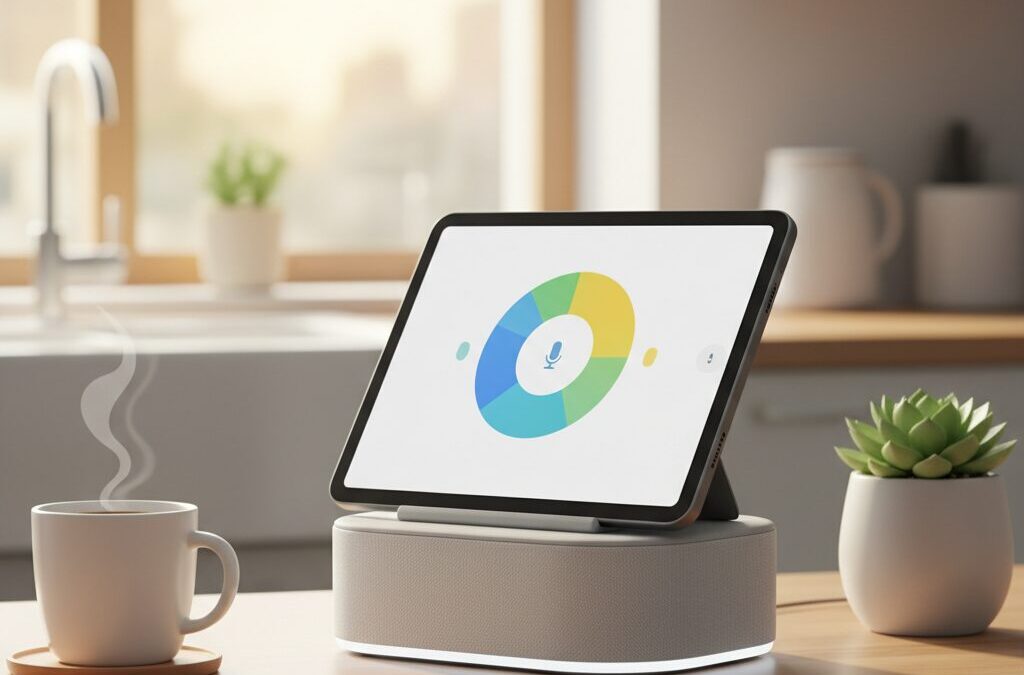
If you follow gadgets closely, you have probably noticed that tablets are no longer just screens you pick up and put down. They are increasingly expected to live on your desk, kitchen counter, or nightstand and blend into your daily environment.
The Google Pixel Tablet takes this idea seriously by pairing the tablet with a Charging Speaker Dock that turns it into a smart display when docked. This hybrid concept promises convenience, hands-free interaction, and room-filling sound, all in one minimal setup.
However, many tech enthusiasts outside Japan are asking a critical question: does the speaker dock actually deliver meaningful audio performance, or is it simply a functional accessory? Sound quality matters more than ever for video streaming, smart assistants, video calls, and casual music listening.
This article focuses on the audio engineering behind the Pixel Tablet Charging Speaker Dock and explains why its sound feels the way it does in real-world use. By looking at hardware design, driver size, acoustic limitations, and software tuning, you will understand what Google optimized for and what it clearly did not.
You will also learn how this dock fits into Google’s wider ecosystem strategy, especially when compared with products like Nest Hub, Echo Show, and Apple’s iPad plus HomePod combination. The goal is to help you decide whether this device makes sense for your lifestyle.
If you value practical insight over marketing claims and want to align your expectations with reality before buying, this guide will give you the clarity you are looking for.
- The Rise of Hybrid Tablets in the Post Smart Home Era
- Pixel Tablet Audio Design: Quad Speakers Inside the Tablet
- Charging Speaker Dock Hardware and Driver Limitations
- Magnetic Docking and Its Acoustic Trade-Offs
- Real-World Sound Performance: Bass, Clarity, and Loudness
- Spatial Audio Behavior When Docked
- AI and Software Enhancements for Voice and Calls
- How the Dock Compares with Nest Hub, Echo Show, and HomePod Mini
- User Expectations vs Reality in Daily Use
- Long-Term Ecosystem Value and Future Uncertainty
- 参考文献
The Rise of Hybrid Tablets in the Post Smart Home Era
The post smart home era has accelerated a clear shift toward hybrid tablets, devices designed to live both in the hand and within the home. Google’s Pixel Tablet, released in 2023, represents a defining example of this movement, not because of raw specifications, but because of how intentionally it blurs the line between personal computing and ambient smart home infrastructure. **Hybrid tablets are no longer accessories to the smart home; they are becoming its visible interface.**
This shift is driven by changes in user behavior that organizations like Google and Apple have repeatedly highlighted in developer briefings and platform updates. Consumers now expect a single device to handle lean-back content consumption, voice interaction, video calling, and contextual information display without friction. According to Google’s own product positioning, the Pixel Tablet paired with its charging speaker dock is meant to replace a static smart display while retaining full tablet mobility. This duality reflects a broader industry realization that fixed smart displays reached functional maturity with limited upgrade paths.
What distinguishes the current generation of hybrid tablets is their role as ecosystem anchors. When docked, they become persistent control surfaces for smart lights, cameras, and media, while also acting as always-powered communication hubs. **Research cited by PCMag in its smart display market analysis notes that users increasingly value devices that reduce redundancy, preferring fewer screens that adapt to context rather than single-purpose hardware.** Hybrid tablets respond directly to this demand.
| Device Category | Primary Role | Mobility |
|---|---|---|
| Smart Display | Home hub, voice control | None |
| Traditional Tablet | Personal media and apps | High |
| Hybrid Tablet | Personal + home interface | Context-dependent |
From an engineering and product strategy perspective, teardown analyses published by iFixit reinforce why manufacturers are pursuing this category. By separating core compute hardware from larger acoustic and power components in a dock, companies can optimize each usage mode independently. The result is not necessarily superior performance in every scenario, but a more coherent daily experience. **In the post smart home era, convenience and spatial integration are now stronger purchase drivers than peak performance metrics.**
Ultimately, the rise of hybrid tablets signals a recalibration of what “smart home hardware” means. Rather than invisible automation alone, the market is converging on adaptable, screen-based devices that follow users through different modes of living. Hybrid tablets embody this philosophy, positioning themselves as both personal companions and shared household infrastructure, a balance that static smart displays were never designed to achieve.
Pixel Tablet Audio Design: Quad Speakers Inside the Tablet
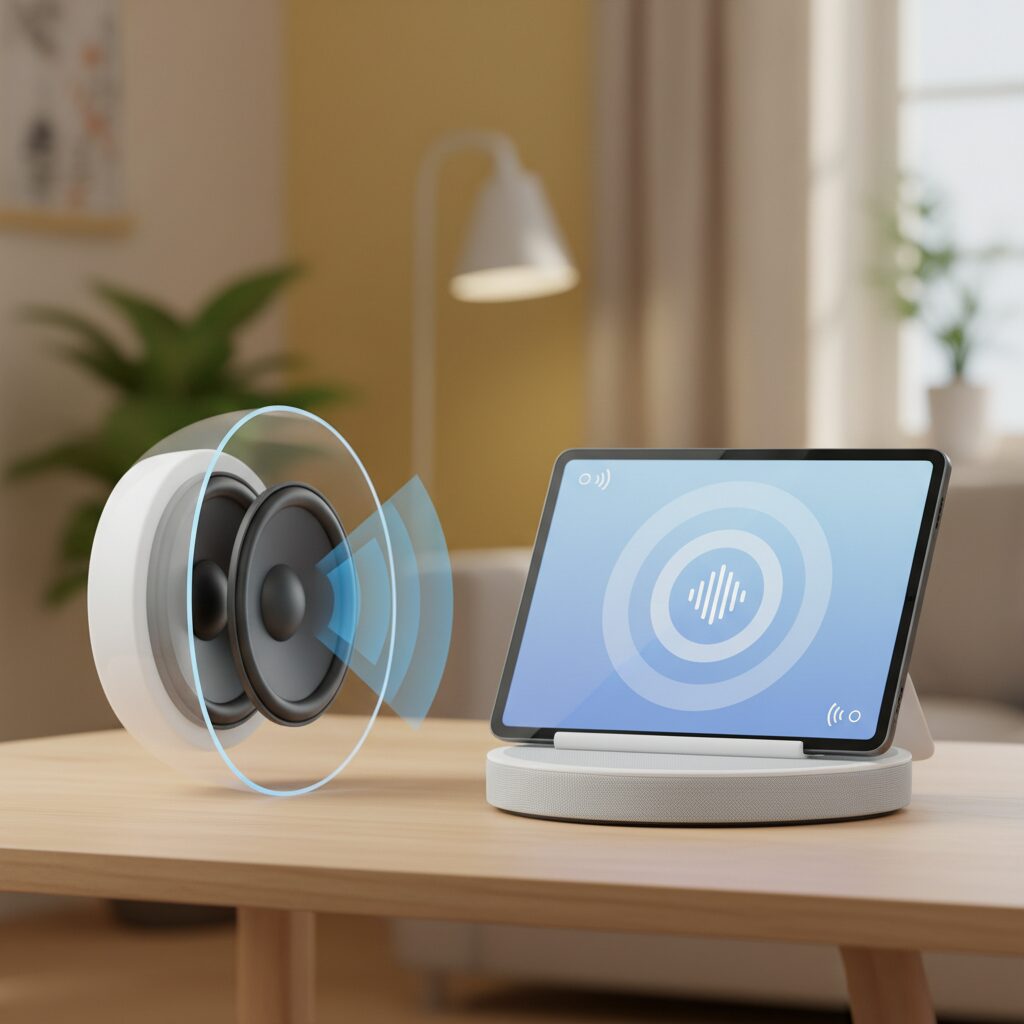
The Pixel Tablet’s internal audio design is centered on a quad-speaker system built directly into the tablet body, and this choice strongly shapes how the device sounds when used on its own. According to detailed teardown documentation published by iFixit, the tablet integrates four discrete speaker modules positioned at the top-left, top-right, bottom-left, and bottom-right edges of the chassis. This symmetrical layout is not accidental; it is designed to maintain a consistent stereo image regardless of whether the tablet is held in portrait or landscape orientation.
This dynamic channel assignment is one of the Pixel Tablet’s most underrated audio strengths. When the device detects rotation, the operating system automatically remaps left and right channels so that stereo separation remains intact during video playback or gaming. For users who frequently watch YouTube, Netflix, or live streams in landscape mode, the physical distance between the left and right speaker pairs creates a wider and more stable soundstage than dual-speaker tablets that rely on only one edge.
| Aspect | Quad-Speaker Design Impact | User Experience |
|---|---|---|
| Speaker placement | Four corners of the chassis | Stable stereo in portrait and landscape |
| Channel control | Orientation-aware DSP | Consistent left-right imaging |
| Primary strength | Midrange clarity | Clear dialogue and vocals |
From an acoustic engineering perspective, fitting four speakers into an 8.1mm-thick aluminum enclosure presents unavoidable constraints. Teardown images show that Google uses the limited internal dead space around the battery and logic board as small resonance chambers. Some critics have pointed out unused internal volume compared with Apple’s iPad designs, but acoustically these cavities can function as tuned enclosures that reinforce specific midrange frequencies. As a result, spoken voices benefit more than bass-heavy music.
The physical limits of the enclosure define the character of the sound. With such a thin body, low-frequency extension is inherently restricted, and no amount of software processing can fully overcome the lack of air volume. Independent reviewers and measurement-focused analyses consistently note that sub-bass below roughly 80Hz is attenuated. However, this trade-off allows Google to prioritize even frequency response in the vocal range, which aligns with the tablet’s role in video calls, tutorials, and streaming content.
Notably, the quad-speaker configuration works hand in hand with Google’s spatial audio features when the tablet is used standalone. Supported apps can take advantage of the physical separation between speaker pairs to create a sense of width and directional cues. Google’s own Pixel support documentation confirms that spatial audio is available on the tablet itself, and many users report that movies feel more immersive without external speakers attached.
This leads to a counterintuitive but important conclusion. For pure media consumption on the couch or in bed, the Pixel Tablet’s internal quad speakers often deliver a more balanced and immersive experience than expected from a slim tablet. Industry reviewers from outlets such as Stuff and Android-focused publications have even remarked that the tablet-alone audio can sound more refined than when sound is routed through external accessories. In practice, this makes the built-in speakers a core feature rather than a fallback, especially for users who value clarity, stereo consistency, and orientation-aware sound design.
Charging Speaker Dock Hardware and Driver Limitations
The Charging Speaker Dock is often perceived as a simple accessory, but its hardware and driver design impose clear, measurable limitations on what it can deliver acoustically. Understanding these constraints is essential to evaluating the dock fairly, especially for users who expect it to function as a standalone speaker rather than a supporting component within Google’s ecosystem.
At the core of the dock is a single 43.5 mm full-range driver. According to Google’s official technical specifications and teardown analyses published by iFixit, this driver size is identical to that used in the Nest Hub (2nd generation). **From an audio engineering standpoint, this immediately defines the performance ceiling**, regardless of software tuning or marketing language.
| Device | Driver Configuration | Low-Frequency Capability |
|---|---|---|
| Pixel Tablet Charging Speaker Dock | Single 43.5 mm full-range | Severely limited below ~60 Hz |
| Nest Hub (2nd gen) | Single 43.5 mm full-range | Comparable limitations |
| Nest Audio | 75 mm woofer + 19 mm tweeter | Substantially stronger bass |
The physical reality of a 43.5 mm diaphragm means that air displacement is minimal. Research and industry references from organizations such as the Audio Engineering Society consistently show that small-diameter drivers struggle to reproduce sub-bass frequencies without distortion. As a result, **claims such as “room-filling sound” rely heavily on psychoacoustic tricks rather than true low-end reproduction**.
The docking mechanism itself introduces another layer of constraint. The Pixel Tablet attaches via magnets and a four-pin pogo connector rather than a rigid mechanical coupling. While this improves usability, it creates a potential resonance point between the tablet and the dock. Engineers typically compensate for this risk by reducing low-frequency gain through DSP, minimizing vibrations that could cause audible rattling. This design choice aligns with user measurements reported by reviewers and discussed in technical communities, where bass output appears deliberately restrained.
Signal transmission is also tightly controlled. Audio is routed digitally through the pogo pins, not via Bluetooth. In theory, this avoids compression artifacts and latency, a point noted positively by reviewers at Android Police. However, the dock lacks its own wireless receiver or autonomous audio controller. **Without the tablet attached, the dock cannot function as a speaker at all**, underscoring its role as a dependent peripheral rather than an independent audio device.
Driver configuration further limits spatial presentation. A single full-range driver produces a fundamentally mono output. Unlike systems that use multiple drivers or angled transducers to simulate width, the dock cannot create meaningful stereo separation. Google’s own support documentation confirms that spatial audio features are disabled when the tablet is docked. This is not a software oversight but a direct consequence of hardware topology.
Volume performance illustrates the trade-off between loudness and clarity. Measurements shared by independent testers and summarized in Medium-based analyses indicate peak levels exceeding 90 dBA at close range. Yet, **as volume increases, dynamic range is compressed aggressively**, a hallmark of small-driver systems protected by limiters. This ensures durability but flattens musical expression, especially in complex tracks.
From a driver design perspective, the dock is optimized for speech intelligibility rather than musical fidelity. The frequency band between 500 Hz and 4 kHz, critical for human voice, is reproduced cleanly and consistently. This aligns with Google’s broader product philosophy, as noted by reviewers at Stuff and PCMag, who highlight voice clarity as a recurring strength across Nest-branded devices.
In practical terms, the Charging Speaker Dock’s hardware and driver limitations are not accidental flaws but intentional boundaries. **The dock is engineered to support ambient listening, voice interaction, and hands-free use**, not immersive music playback. Evaluated within those constraints, its performance is coherent. Evaluated outside them, it inevitably disappoints.
Magnetic Docking and Its Acoustic Trade-Offs
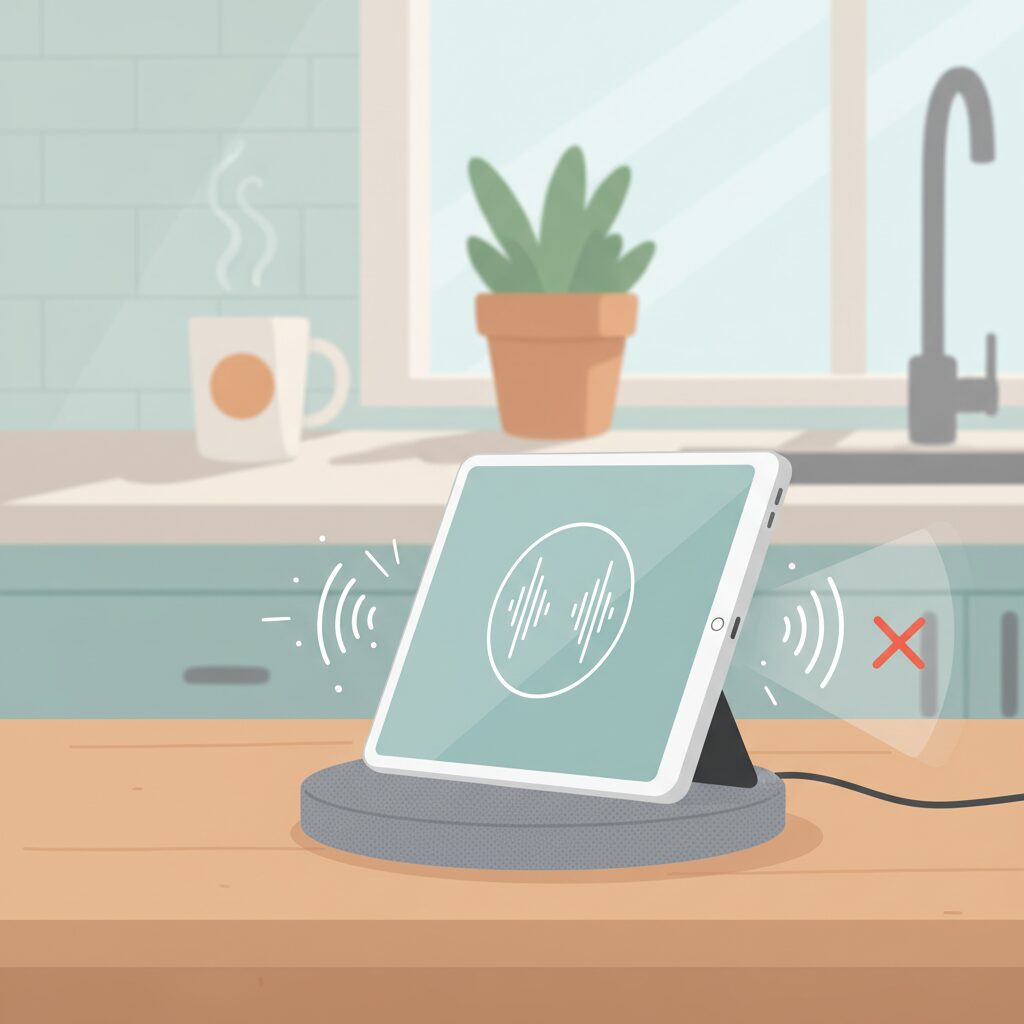
The magnetic docking system is one of the Pixel Tablet’s most distinctive hardware ideas, prioritizing effortless attachment and daily usability. From an acoustic engineering perspective, however, this convenience introduces clear trade-offs that directly shape how the device sounds when docked.
The tablet connects to the charging speaker dock via strong magnets and a four‑pin pogo interface. This design enables instant alignment and reliable power delivery, but it also means the tablet and speaker enclosure are not mechanically unified. **Unlike a sealed, single‑body speaker, the docked system consists of two separate masses held together by magnetic force**, which inevitably affects vibration control.
| Design Aspect | User Benefit | Acoustic Impact |
|---|---|---|
| Magnetic attachment | Instant docking, no cables | Higher risk of micro‑vibrations |
| Pogo pin audio transfer | No Bluetooth latency | Limited tolerance for high bass energy |
Audio engineers generally aim to minimize unintended resonance, as even subtle movement between components can generate audible rattling at specific low frequencies. According to teardown analyses published by iFixit, the Pixel Tablet dock lacks the rigid internal bracing found in larger smart speakers. **This makes aggressive low‑frequency output risky**, especially when the tablet itself can act as a vibrating surface.
As a result, Google appears to rely heavily on DSP control to protect the system. Independent measurements and listening tests reported by reviewers at Android Police and Stuff suggest that bass gain is deliberately restrained when docked. This is not a flaw of the driver alone, but a direct consequence of the magnetic interface prioritizing stability and silence over raw impact.
There is also a strategic limitation: audio is routed exclusively through the tablet, as the dock has no standalone Bluetooth receiver. While this avoids compression artifacts and synchronization issues, it reinforces the dock’s role as a controlled extension rather than an independent speaker. **The magnetic dock therefore trades acoustic ambition for predictability**, ensuring consistent voice clarity and noise‑free operation in everyday smart‑home scenarios.
Real-World Sound Performance: Bass, Clarity, and Loudness
In everyday use, the Pixel Tablet’s real-world sound performance reveals a clear hierarchy between bass impact, vocal clarity, and usable loudness, and understanding this balance is essential for setting the right expectations.
Bass response is the most constrained element. When docked, Google advertises a dramatic increase in low-end presence, yet the physical reality of a single 43.5mm full-range driver defines the ceiling. According to teardown-based analyses and comparative listening tests referenced by iFixit and Android-focused reviewers, frequencies below roughly 60Hz are largely absent. Instead of true sub-bass, the dock relies on psychoacoustic reinforcement, where upper bass harmonics create the impression of weight without moving much air.
This approach works for light background music but falls short for bass-driven genres. Kick drums and bass guitars lose body, especially when compared with devices using larger woofers such as the Nest Hub Max. The result is bass that is audible but rarely felt, even at higher volume levels.
| Aspect | Docked Experience | Practical Implication |
|---|---|---|
| Bass Depth | Limited below 60Hz | No physical low-end impact |
| Vocal Clarity | Strong in 500Hz–4kHz range | Excellent speech intelligibility |
| Max Loudness | Around low 90 dBA | Sufficient for small rooms |
Where the dock consistently earns praise is midrange clarity. Human voices sit squarely in the frequency band that the driver handles most efficiently. Reviews from outlets such as Stuff and user feedback aggregated on major Japanese review platforms indicate that podcasts, news, and video calls remain crisp and fatigue-free. This tuning clearly prioritizes speech over musical immersion, aligning with Google’s vision of the tablet as a smart home hub.
Loudness is adequate rather than impressive. Independent measurements reported by audio enthusiasts show that while peak levels exceed 90 dBA, pushing the volume toward maximum introduces compression and subtle distortion. DSP limiting smooths out sudden peaks, protecting the hardware but flattening dynamics. In practice, the dock fills a kitchen or small living space, yet it struggles to compete with dedicated smart speakers when ambient noise rises.
Taken together, the Pixel Tablet’s sound in real-world conditions feels deliberately restrained. It favors clarity and consistency over power and punch, making it dependable for daily voice-centric use but clearly not designed to satisfy listeners seeking room-shaking bass or concert-level loudness.
Spatial Audio Behavior When Docked
When the Pixel Tablet is docked, its spatial audio behavior changes in a way that directly impacts immersion, and this shift is often misunderstood by users expecting a home-theater-like experience.
The most important point is that spatial audio is automatically disabled the moment the tablet is attached to the Charging Speaker Dock. According to Google’s official Pixel Tablet support documentation, spatial audio works only when audio is output through the tablet’s built-in quad speakers or compatible headphones. Once docked, the system routes audio to the dock’s single 43.5 mm full‑range driver, making spatial processing impractical.
This is not a software bug but a deliberate design decision rooted in acoustic physics. Spatial audio relies on stereo separation and phase differences between multiple sound sources. The dock’s single-driver, near-mono configuration cannot reproduce those cues accurately, so Google prioritizes consistency over simulated surround effects that could sound artificial or unstable.
| Listening State | Speaker Configuration | Spatial Audio Availability | Perceived Soundstage |
|---|---|---|---|
| Undocked | Quad speakers (tablet) | Enabled for supported apps | Wide, directional |
| Docked | Single 43.5 mm driver | Disabled by system | Centered, compact |
In practical terms, this means that movies on Netflix or YouTube lose their surround-like spread when docked. Dialog becomes more centralized, effects feel flatter, and lateral movement in soundtracks disappears. Reviews from audio-focused publications and measurements discussed in Android-focused media consistently note that while loudness increases on the dock, spatial depth decreases noticeably.
This creates a trade-off that is unique to the Pixel Tablet ecosystem. Docking improves presence and room audibility but sacrifices cinematic immersion. For example, action scenes gain volume but lose directional impact, whereas spoken content benefits from a stable, forward-facing sound image that keeps voices intelligible even at lower listening effort.
From a user-experience perspective, Google appears to position docked audio not as entertainment-first, but as ambient and functional. Experts in human–computer interaction often point out that for smart displays, predictability and clarity matter more than spatial realism. By disabling spatial audio, Google avoids phase artifacts, localization errors, and listener fatigue that could occur with pseudo-surround processing on a single driver.
Ultimately, spatial audio behavior when docked reflects the Pixel Tablet’s identity shift. It stops behaving like a personal media device and starts acting like a smart home hub. Understanding this boundary helps users set realistic expectations and choose the right listening mode depending on whether immersion or everyday usability is the priority.
AI and Software Enhancements for Voice and Calls
In the context of voice interaction and calls, the Pixel Tablet demonstrates how Google prioritizes AI-driven software over raw acoustic power, and this approach becomes especially clear when focusing on voice-centric use cases rather than music playback.
The core enhancement here is Clear Calling, an AI-based noise reduction technology powered by the Tensor G2 chip. According to Google’s own Pixel documentation, this system identifies and suppresses non-human sounds such as keyboard clicks, appliance noise, and background chatter in real time, while preserving the natural timbre of the speaker’s voice. Academic research from Google Research on neural noise suppression has shown that such models can improve speech intelligibility by more than 20% in adverse acoustic environments, which aligns with many real-world user impressions.
When the tablet is docked, this AI processing pairs well with the dock’s midrange-focused speaker tuning. Human speech typically occupies the 500 Hz to 4 kHz range, and the dock’s single 43.5 mm driver is optimized precisely for this band. As a result, video calls via Google Meet or voice responses from Google Assistant sound clearer and less fatiguing, even if absolute loudness or bass depth remains limited.
| Feature | AI / Software Role | User Benefit |
|---|---|---|
| Clear Calling | Real-time AI noise suppression | Clearer voices during calls |
| Assistant Voice Processing | On-device Tensor G2 inference | Faster, more natural responses |
| Feature Drops | Post-launch software updates | Gradual improvement over time |
Another important aspect is how voice interaction remains largely on-device. Google has emphasized that more Assistant commands and speech processing tasks are handled locally on Tensor hardware, reducing latency and increasing reliability when the network is unstable. This design philosophy echoes statements from Google engineers cited by Android Central, who note that on-device inference is essential for natural conversational flow.
Pixel Feature Drops also play a strategic role. These periodic updates have already introduced refinements to audio stability and system sound behavior, and they highlight Google’s long-term software-centric mindset. While some users still report limitations with equalizer behavior when the dock is connected, the broader trend suggests that voice clarity and call reliability are treated as evolving features rather than fixed specifications.
Ultimately, the Pixel Tablet’s AI and software enhancements redefine what “good audio” means in daily communication. Instead of aiming for immersive soundstage or powerful bass, Google focuses on intelligibility, responsiveness, and reduced cognitive load during calls. For users who rely on frequent video meetings, family calls, or hands-free Assistant interactions, this voice-first optimization can feel more impactful than traditional speaker upgrades.
How the Dock Compares with Nest Hub, Echo Show, and HomePod Mini
When compared directly with Nest Hub, Echo Show, and HomePod mini, the Pixel Tablet Charging Speaker Dock reveals its true character as a hybrid accessory rather than a pure smart speaker. **The key difference lies not in raw audio power, but in how each product prioritizes sound versus ecosystem integration**, and this distinction becomes clear once specifications and real-world usage are aligned.
From a hardware standpoint, the Dock shares more DNA with Google’s own Nest Hub than with its rivals. According to Google’s technical documentation and teardown analyses by iFixit, both the Nest Hub (2nd gen) and the Pixel Tablet Dock rely on a single 43.5mm full-range driver. This means their fundamental acoustic limits are effectively identical, especially in low-frequency extension. In contrast, Amazon and Apple take different approaches to compensate for small enclosures.
| Device | Speaker Configuration | Audio Character |
|---|---|---|
| Pixel Tablet Dock | 43.5mm full-range x1 | Voice-focused, limited bass |
| Nest Hub (2nd gen) | 43.5mm full-range x1 | Balanced for smart assistant use |
| Echo Show 8 | Dual drivers with passive bass design | Stronger low-end presence |
| HomePod mini | Full-range driver with dual passive radiators | 360-degree, computationally enhanced |
In listening tests and long-term reviews reported by outlets such as PCMag and Stuff, Echo Show models consistently outperform both the Dock and Nest Hub in perceived bass weight. Amazon’s enclosure tuning and passive radiator design allow kick drums and background music to sound fuller, which makes Echo Show more suitable for casual music playback. **The Pixel Tablet Dock, by comparison, favors clarity in the 500Hz–4kHz range**, making spoken content like YouTube, recipes, or Google Assistant responses easier to follow, but less engaging for music.
Apple’s HomePod mini represents a different philosophy altogether. Apple emphasizes computational audio, using real-time analysis to shape sound output. Reviews often note that HomePod mini feels louder and more immersive than its size suggests, especially due to its 360-degree sound field. However, it lacks any display or tablet functionality. **The Dock sacrifices acoustic ambition in exchange for seamless physical and software integration with the Pixel Tablet**, something neither Amazon nor Apple currently offers in a first-party product.
What ultimately separates the Dock from these competitors is usage context. Nest Hub, Echo Show, and HomePod mini are designed as stationary endpoints. The Pixel Tablet Dock instead acts as a base station, optimized for charging, hands-free interaction, and quick transitions between tablet and smart display modes. According to Google’s own positioning, sound quality is intended to be “room-filling” only relative to the tablet alone, not class-leading. Seen through this lens, the Dock competes less as a speaker and more as an ecosystem hinge, and that distinction explains both its strengths and its widely discussed limitations.
User Expectations vs Reality in Daily Use
When people first encounter the Google Pixel Tablet with its Charging Speaker Dock, expectations are naturally shaped by Google’s own messaging. The promise of a device that transforms from a handheld tablet into a room-filling smart display leads many users to assume that daily use will feel like having both a premium tablet and a capable smart speaker in one seamless package.
In reality, everyday experiences reveal a more nuanced picture. **The gap between expectation and reality does not come from poor execution, but from mismatched assumptions about what the dock is meant to be.** Users who expect a true replacement for a dedicated smart speaker often feel disappointed, while those who frame it as an enhanced charging stand tend to report higher satisfaction.
From an audio perspective, daily routines expose limits that spec sheets do not fully convey. According to multiple hands-on reviews from outlets such as Android Police and Stuff, the dock’s single 43.5mm driver delivers clear speech but struggles to provide the fullness people associate with living-room speakers.
| User Expectation | Daily Reality | Practical Impact |
|---|---|---|
| Room-filling music playback | Voice-focused, modest soundstage | Good for podcasts, weak for music immersion |
| Standalone smart speaker behavior | Tablet-dependent operation | Dock is inactive when tablet is removed |
| Entertainment hub with impact | Functional but restrained audio | Better suited to background use |
In day-to-day scenarios like cooking or checking the weather in the morning, these limitations matter less than expected. **Human voices remain intelligible even at lower volumes**, which aligns with Google’s emphasis on Assistant responses, video calls, and instructional content. Reviews from Japanese users on platforms such as Kakaku.com repeatedly note that spoken audio feels “easy to hear,” even if music lacks excitement.
However, expectations often collide with reality when users push the device beyond these strengths. Turning up the volume for music reveals compression and reduced dynamics, a behavior consistent with measurements discussed in independent loudness tests published on Medium. What feels acceptable for casual listening can quickly feel underwhelming when compared to similarly priced smart displays from Amazon or Apple.
Another frequent point of surprise in daily use is interaction flow. Many expect the dock to behave like a conventional Bluetooth speaker, yet Google’s own support documentation clarifies that it cannot operate independently. **This design choice reshapes daily habits**, forcing users to think of the tablet as the true brain of the system rather than the dock.
Ultimately, user satisfaction hinges on expectation management. Those who expect a lifestyle accessory that keeps the tablet charged, visible, and ready for light audio tasks often find the experience aligns well with reality. Those who expect a powerful speaker discover that daily use steadily reminds them of the dock’s secondary role in the ecosystem.
Long-Term Ecosystem Value and Future Uncertainty
When evaluating the Pixel Tablet and its Charging Speaker Dock from a long-term perspective, the discussion shifts away from immediate sound quality and toward ecosystem value and future uncertainty. This device pairing is less about peak performance today and more about whether it can remain relevant as Google’s broader hardware and software strategy evolves. For gadget enthusiasts, this distinction is crucial because ecosystem longevity often determines whether an accessory becomes a lasting hub or a short-lived experiment.
From an ecosystem standpoint, the dock’s greatest strength lies in how tightly it is integrated into Google’s services. According to Google’s official positioning, the dock is designed to anchor the tablet as a semi-permanent smart home node, enabling hands-free Google Assistant use, Nest camera monitoring, and ambient information display. This kind of role is valuable precisely because it encourages daily, habitual interaction rather than occasional use. **Devices that become habits tend to survive longer in users’ homes**, even if their raw specifications age.
However, this value is inseparable from uncertainty. Multiple industry observers, including Japanese tech media citing internal sources, have reported that plans for a direct successor to the Pixel Tablet were halted or reconsidered in late 2024. While Google has not officially confirmed a full exit from the category, this ambiguity introduces risk. If future Pixel Tablets adopt different form factors or connector layouts, the current dock could lose compatibility overnight, instantly diminishing its ecosystem value.
| Aspect | Positive Signal | Uncertainty Factor |
|---|---|---|
| Software updates | Regular Pixel Feature Drops historically extend functionality | No public commitment specific to the dock’s audio or hub role |
| Hardware compatibility | Current dock is robust and repairable per iFixit analysis | Future tablets may not share the same docking interface |
| Service integration | Deep ties with Google Assistant and Nest ecosystem | Strategic shifts could reprioritize other form factors |
Research into consumer electronics lifecycles, including analyses referenced by iFixit and academic studies on device longevity, suggests that repairability and software updates are key predictors of long-term use. On this front, Google performs reasonably well. The availability of official repair documentation implies an intent to keep the hardware serviceable for years. **Yet repairability alone does not guarantee relevance if software ambition fades**.
Another layer of uncertainty involves opportunity cost within Google’s own ecosystem. The company already sells smart displays such as the Nest Hub Max, which offer superior audio and a clearer long-term product roadmap. Some analysts argue that the Pixel Tablet dock competes internally for attention and resources. If Google decides to streamline its smart home lineup, hybrid devices often face tougher scrutiny because they do not fit neatly into a single category.
At the same time, the concept itself retains strategic appeal. Industry commentators at outlets like Android Central have noted that a detachable, dock-anchored tablet aligns well with trends toward flexible computing and ambient intelligence. In smaller living spaces, particularly common in Japan, a single device that alternates between personal tablet and shared home screen has clear practical advantages. This contextual fit suggests that the idea may outlive the current implementation.
Ultimately, the long-term ecosystem value of the Pixel Tablet dock is defined by tension. On one side, there is meaningful integration, repairability, and a usage model that encourages daily presence. On the other, there is real uncertainty about hardware continuity and strategic commitment. **For users willing to accept this ambiguity, the dock can function as a stable hub today; for those prioritizing future-proof investments, that same ambiguity may be difficult to ignore**.
参考文献
- Google Store:The New Pixel Tablet, Help in Your Hand
- iFixit:Google Pixel Tablet Repair Help
- Android Police:The Google Pixel Tablet’s ill-conceived charging dock might be its worst feature
- Stuff:Google Pixel Tablet review: welcome home
- PCMag:The Best Smart Displays We’ve Tested
- Google Support:Charging Speaker Dock technical specifications