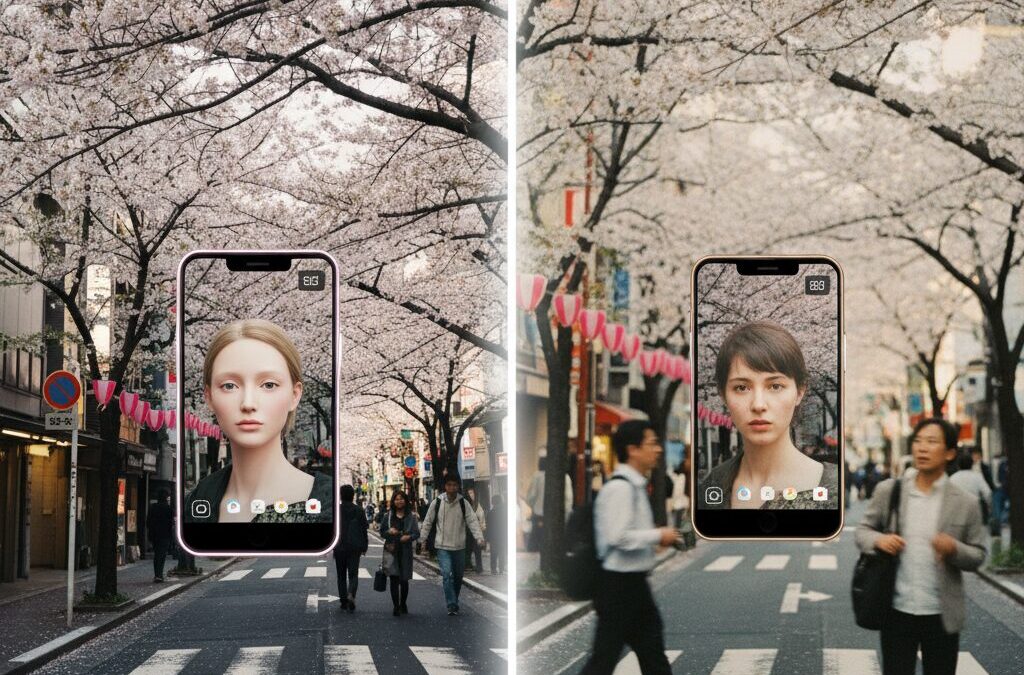
Have you ever looked at a photo taken with the latest iPhone and felt that something was off, even though it was technically flawless? Many gadget enthusiasts around the world are starting to notice that modern smartphone photos can feel overly perfect, overly sharp, and strangely artificial.
With the iPhone 16 Pro and the upcoming iPhone 17 generation, Apple’s computational photography has reached an unprecedented level of sophistication. At the same time, dissatisfaction is quietly growing among creators and photography lovers who crave texture, imperfection, and emotional realism rather than algorithmic perfection.
This article explores why that gap has emerged, how cultural trends—especially those influenced by Japan’s retro and “emotional” aesthetics—are reshaping photographic values, and what this shift means for the future of mobile imaging. By reading on, you will gain a deeper understanding of the technology inside your pocket and discover why natural-looking photos are becoming more desirable than ever.
- The Paradox of Peak Image Quality in Modern Smartphones
- Inside the iPhone Imaging Pipeline: How Computational Photography Works
- Multi-Frame HDR and Tone Mapping: Benefits and Visual Side Effects
- The Oil Painting Effect: Why Texture Gets Lost
- Cultural Shifts Driving the Demand for Natural-Looking Photos
- Japan’s Retro Aesthetic and the Global Appeal of Imperfection
- Rethinking iPhone Photography Styles for More Authentic Results
- Bypassing AI Processing with Third-Party Camera Apps
- What the Natural Photography Movement Means for Future iPhones
- 参考文献
The Paradox of Peak Image Quality in Modern Smartphones
Modern smartphones have reached what many engineers describe as a technical peak, yet user satisfaction does not always rise alongside specifications. As of early 2026, devices such as the iPhone 16 Pro and the iPhone 17 series achieve class-leading resolution, dynamic range, and noise control through advanced computational photography. According to Apple’s own disclosures and independent reviews from Lux Camera, trillions of calculations per second now shape a single image. **On paper, this is the highest image quality ever delivered by a consumer camera.**
At the same time, a paradox has emerged. Many enthusiasts feel that photos look too perfect, overly smooth, or emotionally distant. Research in computational imaging published by SIAM and Google explains why this happens: aggressive multi-frame fusion and local tone mapping maximize measurable clarity, but often flatten light hierarchy and suppress natural texture. The result can be images that are technically accurate, yet visually synthetic.
| Metric | Technical Outcome | Perceived Effect |
|---|---|---|
| Noise Reduction | Lower S/N floor | Loss of fine texture |
| HDR Tone Mapping | Expanded dynamic range | Flattened depth |
| Sharpening | Edge clarity | Artificial outlines |
Imaging experts at ISO and MDPI have long noted that human perception values subtle imperfection. **A small amount of grain, shadow, and ambiguity signals realism to the brain.** When algorithms erase these cues, photos may diverge from memory and emotion. This gap between objective quality and subjective realism defines the paradox of peak image quality in modern smartphones, and it explains why progress now feels less obvious to many passionate users.
Inside the iPhone Imaging Pipeline: How Computational Photography Works
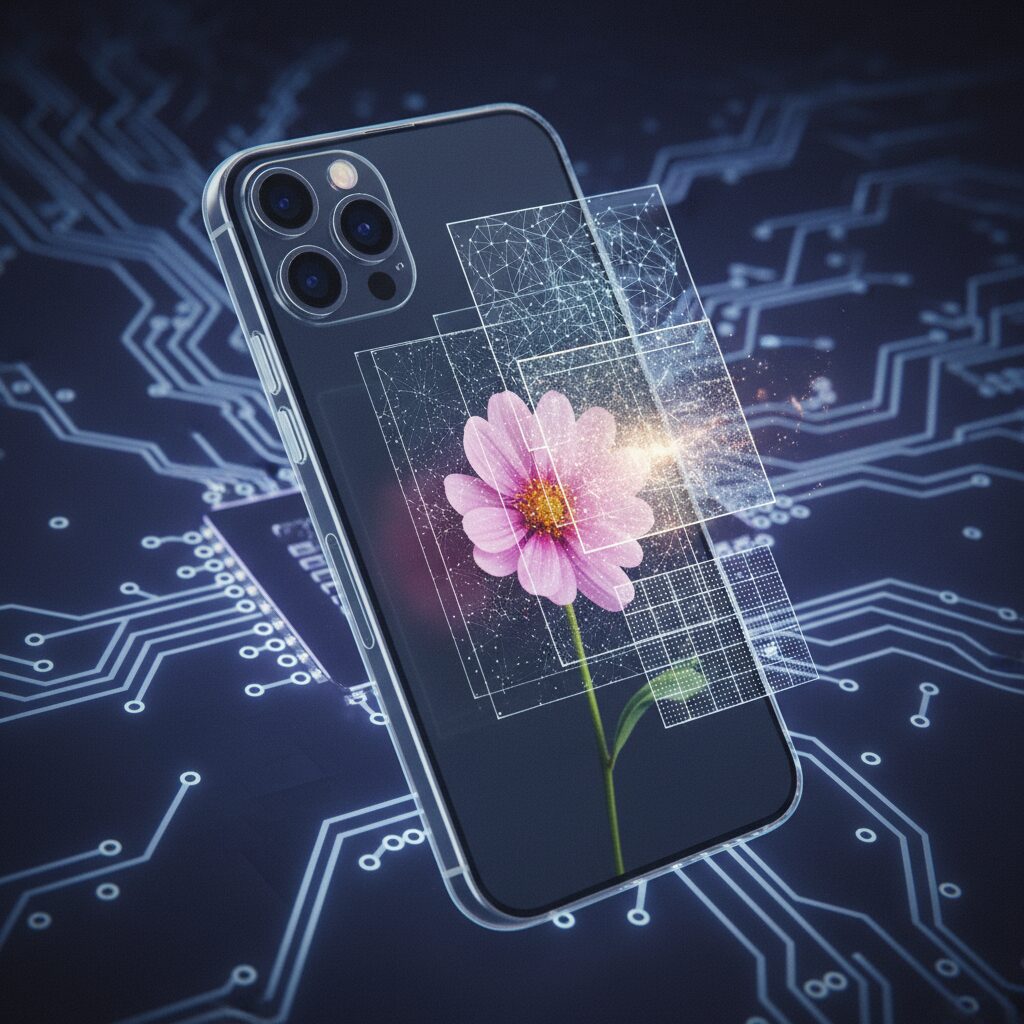
When you press the shutter on a modern iPhone, the camera does not simply record a single frame. **It activates a tightly orchestrated imaging pipeline that blends optics, silicon, and machine learning in real time**, a process Apple refers to as computational photography. According to Apple’s own engineering disclosures and independent academic reviews from institutions such as the University of Minnesota, this pipeline exists to overcome the fundamental physics of a very small image sensor.
Even before the shutter is fully pressed, the camera continuously buffers multiple frames at different exposure levels. At the moment of capture, several of these frames are selected and passed to the image signal processor on the A18 or A19 chip. There, motion alignment compensates for hand shake and subject movement, and statistically correlated pixels are merged. **Because real image detail is consistent across frames while noise is random, stacking images measurably improves the signal-to-noise ratio**, a principle also documented in Google’s HDR+ research.
| Pipeline Stage | What Happens | Why It Matters |
|---|---|---|
| Multi-frame capture | Several images recorded in milliseconds | Reduces noise beyond sensor limits |
| Frame alignment | Pixel-level motion correction | Prevents blur and ghosting |
| Tone mapping | Local contrast adjustment | Preserves highlights and shadows |
After merging, the image undergoes local tone mapping and semantic rendering. Faces, skies, foliage, and text are identified by neural networks trained on vast datasets, a technique widely discussed in computational photography literature published by SIAM. **Each region is optimized separately to match what the system predicts humans find “pleasing.”** This is why faces remain bright against a sunset sky, even when physics would normally dictate deep shadows.
The result is an image that is technically impressive but clearly constructed. Understanding this pipeline helps explain why iPhone photos look consistent across conditions, and why their aesthetic reflects algorithmic decisions as much as the scene itself.
Multi-Frame HDR and Tone Mapping: Benefits and Visual Side Effects
Multi-frame HDR and advanced tone mapping sit at the very core of modern smartphone imaging, and they deliver clear, measurable benefits. By capturing and merging multiple frames with different exposures, the camera effectively increases dynamic range beyond what a single small sensor can record. According to research published by Google’s HDR+ team and later refined by Apple’s imaging engineers, stacking frames improves the signal-to-noise ratio roughly in proportion to the square root of the number of images used, which directly translates into cleaner shadows and more stable color reproduction in difficult lighting.
In practical terms, this means faces remain visible in backlit scenes, skies retain color instead of blowing out, and night photos show far less chroma noise. Apple’s implementation is especially aggressive, often combining frames captured before and after the shutter press. This temporal buffer allows the system to select optimal data even if the user’s timing is imperfect, which is a major usability win for casual photography.
| Aspect | With Multi-Frame HDR | Single Frame Capture |
|---|---|---|
| Dynamic range | Extended highlights and lifted shadows | Clipped highlights or crushed shadows |
| Noise level | Statistically reduced through averaging | Directly tied to sensor size and ISO |
| Exposure tolerance | High, forgiving of user error | Low, precise exposure required |
However, these benefits come with visual side effects that many enthusiasts now recognize instantly. The most discussed issue is the flattening of light hierarchy caused by local tone mapping. By optimizing contrast independently in small regions, the algorithm often brightens areas that would naturally fall into shadow. As documented in imaging literature from SIAM and MDPI, this process can undermine global contrast cues that the human visual system uses to perceive depth.
The result is an image that looks evenly lit but perceptually shallow. Scenes lose the natural separation between foreground and background, and surfaces begin to appear more like textures pasted onto a plane. This is what many users describe as the “HDR look,” even when they cannot articulate the underlying cause.
Another side effect emerges from the interaction between HDR merging and noise suppression. Once multiple frames are combined, the system applies spatial denoising to remove residual noise, especially in flat areas such as skies or skin. Standards like ISO/TS 19567 describe how excessive noise reduction leads to texture loss, and smartphones are particularly vulnerable because their algorithms must be conservative across many scenes. Fine details that vary subtly from pixel to pixel are easily mistaken for noise and smoothed away.
To compensate, sharpening is then applied to edges, which restores apparent clarity but introduces halos and a synthetic crispness. This sequence—merge, smooth, then sharpen—explains why images can look both clean and strangely artificial at the same time. The technology succeeds brilliantly at maximizing measurable image quality, yet it sometimes diverges from what viewers perceive as natural, revealing the delicate trade-off at the heart of multi-frame HDR and tone mapping.
The Oil Painting Effect: Why Texture Gets Lost
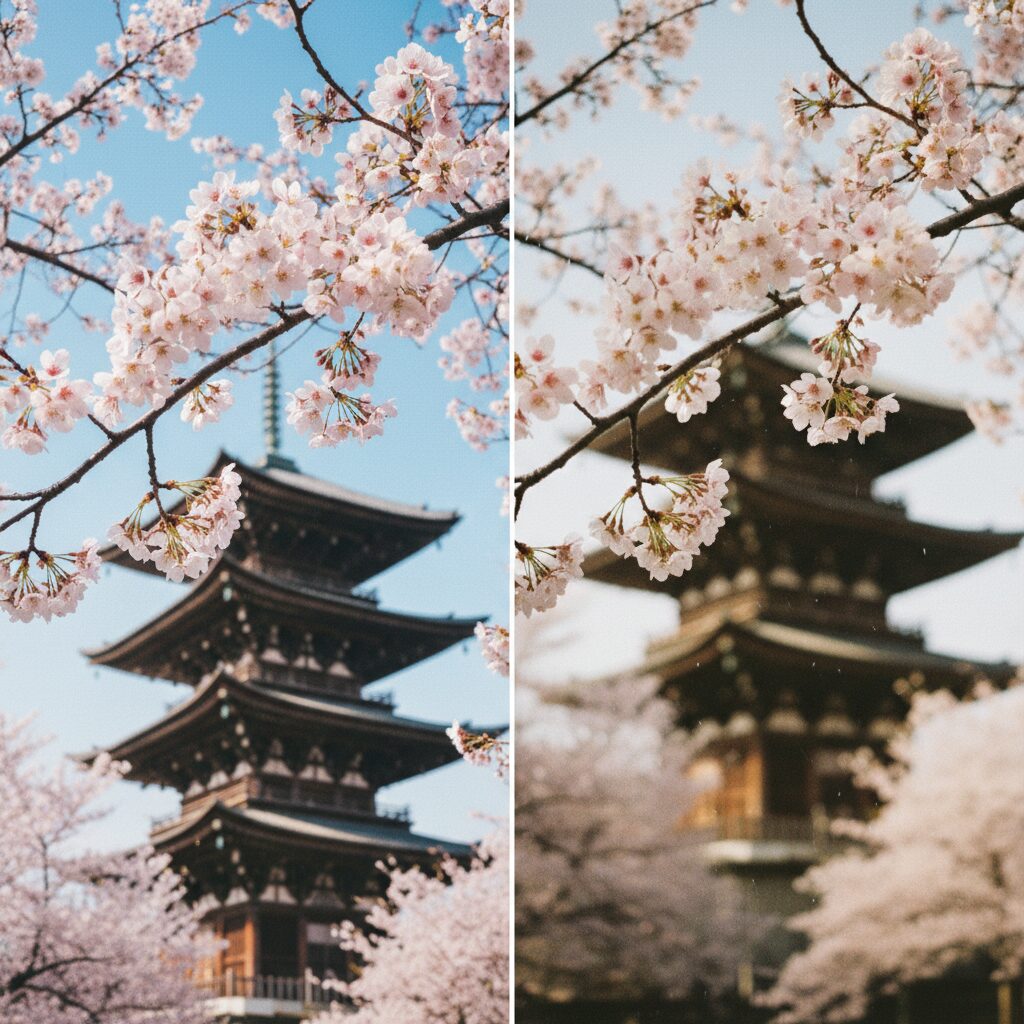
The so-called oil painting effect refers to a specific kind of texture collapse that occurs when computational photography pushes noise reduction and edge enhancement too far. It is often described by users as skin looking waxy, foliage turning into blobs, or walls appearing unnaturally smooth, and this perception is not imaginary. According to image quality research summarized by Image Engineering and ISO texture-loss definitions, excessive spatial denoising directly reduces micro-contrast, which is the visual cue our eyes rely on to recognize surface detail.
In modern iPhones, this effect is amplified by the combination of multi-frame fusion and aggressive pixel-level smoothing. Multiple frames are merged to statistically cancel noise, which is effective from a signal-to-noise perspective. However, once the algorithm begins classifying pixels as noise versus detail, it often misidentifies fine textures such as skin pores, fabric fibers, or distant leaves as unwanted artifacts. These elements are then averaged out, producing a flat, painterly surface that resembles brush strokes rather than photographic grain.
| Processing Stage | Intended Benefit | Unintended Visual Result |
|---|---|---|
| Multi-frame denoising | Lower visible noise | Loss of micro-texture |
| Local tone mapping | Balanced highlights and shadows | Flattened depth and lighting |
| Edge sharpening | Restored clarity | Halos and artificial outlines |
What makes the oil painting effect particularly noticeable is the follow-up sharpening stage. After textures have been smoothed away, the image signal processor attempts to recover perceived sharpness by boosting contrast along edges. Research discussed in SIAM’s overview of smartphone camera history explains that this unsharp masking approach increases local contrast without restoring real detail. As a result, contours appear crisp while interiors remain mushy, which the human visual system interprets as unnatural.
This phenomenon becomes more severe in low-light scenes. Higher ISO levels force the system to prioritize noise suppression, and studies from Google’s HDR+ research show that denoising strength often scales nonlinearly with darkness. Users notice that night portraits or indoor photos suffer the most, with faces losing texture while eyelashes and jawlines are overemphasized. **The contradiction is that the image measures cleaner, yet looks less real**, highlighting the gap between engineering metrics and aesthetic perception.
Apple’s own design philosophy reinforces this behavior. Because Smart HDR and related processing stages are deeply embedded in the imaging pipeline, users cannot fully disable them in the default camera app. Apple Support documentation confirms that recent iOS versions removed manual HDR toggles, meaning the algorithm’s definition of beauty is always applied. Community feedback on Apple Discussions and Reddit repeatedly links this lack of control to frustration among photography enthusiasts.
From a perceptual science standpoint, this reaction is understandable. Vision researchers have long noted that a small amount of luminance noise and irregular texture helps the brain interpret images as natural. When those cues are stripped away, photos drift into an uncanny valley where they are technically impressive but emotionally unconvincing. **The oil painting effect is therefore not a bug in isolation, but a systemic outcome of prioritizing numerical image quality over human visual psychology.**
Cultural Shifts Driving the Demand for Natural-Looking Photos
The growing demand for natural-looking photos is not simply a reaction to technology fatigue but a deeper cultural shift in how people define value, memory, and trust in images. As smartphone cameras reached a point of technical saturation, visual perfection stopped functioning as a differentiator. Instead, subtle imperfection has become a new signal of authenticity, especially among users with a strong interest in photography and visual culture.
According to long-term visual culture analysis published by organizations such as SIAM and academic research on computational photography, images that preserve noise, uneven tones, and minor exposure flaws are perceived as closer to human vision and memory. **This aligns with cognitive psychology findings showing that people recall emotionally imperfect images more vividly than technically optimized ones.** In other words, realism is no longer measured by pixel accuracy but by emotional plausibility.
Social media platforms have accelerated this shift. Trend analyses referenced by Trend Hunter and similar global research bodies indicate that highly processed HDR imagery is increasingly associated with advertising, automation, and corporate messaging. In contrast, flatter tones, muted colors, and visible grain are read as personal and trustworthy. For many users, a photo that looks “too good” now raises suspicion rather than admiration.
| Era | Dominant Aesthetic | Cultural Meaning |
|---|---|---|
| 2015–2019 | High saturation, strong HDR | Aspiration and visibility |
| 2020–2022 | Clean, sharp, AI-enhanced | Technical credibility |
| 2023–2026 | Muted tones, visible texture | Authenticity and intimacy |
In Japan, this transformation is particularly pronounced. Cultural commentators cited in regional trend reports note that the concept of emo has evolved from dramatic expression to quiet resonance. A slightly underexposed street photo or a softly blurred portrait is valued because it feels observational rather than declarative. **The image does not insist on being seen; it invites being felt.** This sensibility strongly influences how natural-looking photos are perceived as more respectful to reality.
The renewed popularity of old digital cameras and film-inspired aesthetics further reinforces this mindset. Market coverage by established photography media has shown that younger users intentionally choose devices with limited dynamic range or unpredictable color output. These tools externalize chance, allowing the photographer to relinquish some control. Culturally, this is interpreted as honesty rather than incompetence.
What ultimately drives the demand for natural-looking photos is a reevaluation of authorship. When an image feels heavily processed, credit is subconsciously assigned to algorithms. When texture and tonal ambiguity remain, authorship returns to the human behind the camera. **In an age saturated with AI-generated visuals, natural imperfection functions as proof of presence.** This cultural recalibration explains why demand continues to grow, even as technology becomes ever more capable of removing flaws.
Japan’s Retro Aesthetic and the Global Appeal of Imperfection
Japan’s retro aesthetic has long embraced imperfection as a form of beauty, and this sensibility is increasingly resonating with global audiences interested in photography and gadgets. Rather than pursuing technical perfection, Japanese visual culture values traces of time, unpredictability, and subtle flaws, an approach often described through concepts such as wabi-sabi. In the context of modern smartphone photography, this perspective offers a compelling counterpoint to hyper-processed images.
According to analyses published by institutions such as SIAM and MDPI, computational photography systems are optimized for measurable accuracy, yet they often diverge from how humans emotionally perceive realism. **Japanese creators have been particularly vocal in highlighting this gap**, arguing that emotional truth can be lost when noise, blur, or color shifts are algorithmically erased.
| Aspect | Modern AI Imaging | Japanese Retro Preference |
|---|---|---|
| Texture | Smooth, noise-free | Visible grain, tactility |
| Color | Neutral, corrected | Slightly faded or shifted |
| Outcome | Technically accurate | Emotionally evocative |
This aesthetic is not limited to Japan’s domestic market. International trend reports, including those by Trend Hunter, note a growing fascination with Japanese-style “imperfect” visuals among Gen Z creators in Europe and North America. Old digital cameras, disposable film looks, and deliberately constrained tools are adopted to escape what is perceived as the sterile uniformity of AI-generated perfection.
Japanese photographers such as Rinko Kawauchi have been cited in academic and curatorial contexts for demonstrating how softness, underexposure, and muted tones can communicate intimacy more effectively than clarity alone. This philosophy now influences app design, filter aesthetics, and even hardware discussions worldwide.
For gadget enthusiasts, this means that Japan’s retro aesthetic is no longer a niche taste but a global design language. By valuing imperfection, it reframes technological progress not as the elimination of flaws, but as the ability to choose when and how those flaws remain.
Rethinking iPhone Photography Styles for More Authentic Results
Rethinking iPhone Photography Styles begins with a simple but critical realization: the default look is not neutral. Apple’s Photographic Styles are often described as creative presets, but according to Apple’s own technical documentation, they intervene directly in the tone-mapping and color-rendering stages of the image pipeline, before JPEG or HEIF compression is finalized. This means they shape the photo’s structural character, not just its surface appearance. **Treating these styles as aesthetic decisions rather than convenience options is the first step toward more authentic results.**
In practice, the problem many users experience is not that iPhone photos are inaccurate, but that they are overly resolved. Research in computational photography published by SIAM and MDPI has shown that aggressive local tone mapping improves perceived detail at first glance, yet reduces depth cues and material realism when viewed longer. This aligns with user feedback describing images as flat or synthetic. Photographic Styles provide one of the few official ways to counteract this tendency without abandoning the stock Camera app.
What makes Photographic Styles uniquely powerful is their persistence. Unlike filters applied after capture, a chosen style affects every frame consistently, including Live Photos and video stills. This consistency mirrors the logic of shooting a fixed film stock, a concept long emphasized by documentary photographers. **By committing to a restrained style, users reduce cognitive friction and allow moments, not processing, to define the image.**
| Design Intent | Typical Adjustment | Perceptual Effect |
|---|---|---|
| HDR suppression | Lower Tone values | Restored shadow depth and contrast hierarchy |
| Color neutrality | Slight Warmth increase | More lifelike skin tones and ambient light |
| Detail realism | Reduced default contrast | Less edge haloing and plastic textures |
Developers and imaging researchers, including teams referenced in Google’s HDR+ papers, have long noted that realism is not achieved by maximizing every metric simultaneously. Noise-free shadows and hyper-sharp edges may score well in lab tests, yet human vision associates subtle grain and imperfect transitions with authenticity. Photographic Styles can be understood as a user-facing compromise layer, allowing slight imperfection to survive Apple’s otherwise rigid automation.
Another overlooked benefit is temporal coherence. When styles are kept stable over weeks or months, a personal visual archive emerges. Japanese photography critics have pointed out that emotional resonance often comes from continuity rather than technical excellence. **An iPhone configured with a thoughtfully chosen style becomes less of a measuring instrument and more of a visual diary.** This shift reflects the broader cultural move away from spectacle and toward memory preservation.
Ultimately, rethinking Photographic Styles is about reclaiming authorship. Apple defines a global default designed to satisfy billions of users, but authenticity is inherently individual. By intentionally dialing back tone aggression and embracing gentler color responses, users align their images more closely with human perception. The result is not nostalgia for its own sake, but a quieter, more believable photographic language that invites longer viewing and deeper emotional trust.
Bypassing AI Processing with Third-Party Camera Apps
Bypassing Apple’s aggressive AI-driven image processing has become a practical and increasingly popular strategy among photographers who value texture, tonal hierarchy, and unpredictability. Third-party camera apps allow users to step outside the default iPhone imaging pipeline and regain a level of control that closely resembles dedicated cameras.
At the core of this approach is the idea of intercepting or redefining how sensor data is captured and developed. Apple’s standard Camera app applies multi-frame fusion, heavy denoising, and local tone mapping automatically, with no true off switch. **Third-party apps work around this by changing the capture philosophy itself**, either by limiting computation or by redefining how it is applied.
| App Category | Processing Strategy | Resulting Image Character |
|---|---|---|
| Pure RAW Capture | Single-frame sensor readout | High texture, visible grain |
| Natural Computational | Multi-frame fusion with minimal smoothing | Clean yet organic detail |
| Simulation-Based | Look-oriented post-rendering | Emotionally driven aesthetics |
Halide’s Process Zero mode is often cited by imaging researchers and professional reviewers as a milestone in mobile photography. According to Lux.camera, this mode captures a single RAW frame without AI fusion, noise reduction, or sharpening. The result is noisier but structurally honest, preserving micro-contrast in skin, foliage, and concrete that is usually lost to overprocessing.
Adobe’s experimental Project Indigo takes a different path. Instead of rejecting computation, it re-engineers it. By merging up to 32 frames while deliberately avoiding aggressive smoothing, Indigo follows principles long discussed in academic literature on burst photography, including work published by Google Research and SIAM. **Noise is reduced statistically, not cosmetically**, which allows fine texture to survive.
However, these benefits come with trade-offs. In regions such as Japan, system-level shutter sound requirements affect RAW-based burst apps like Indigo, creating usability challenges. This highlights an important reality: bypassing AI is not only a technical choice, but also a regulatory and cultural one.
For enthusiasts who prefer immediacy over technical rigor, simulation-focused apps such as Dazz Cam or OldRoll offer another form of bypass. While they do not alter the capture pipeline at a low level, they effectively overwrite Apple’s visual decisions with clearly defined, intentional looks. This approach aligns with the growing preference for emotional realism over technical perfection noted by trend analysts and cultural observers.
Ultimately, third-party camera apps function as pressure valves in an over-optimized ecosystem. They restore variability, imperfection, and authorship to mobile photography, allowing users to decide how much AI they want in their images, rather than accepting a single, pre-defined answer.
What the Natural Photography Movement Means for Future iPhones
The rise of the natural photography movement sends a clear signal about what users will expect from future iPhones, and it goes far beyond nostalgia or retro aesthetics.
At its core, this movement reflects a growing mismatch between computational perfection and human perception. Research from institutions such as SIAM and MDPI has repeatedly shown that excessive local tone mapping and spatial denoising reduce perceived depth and texture, even when objective image quality metrics improve.
For future iPhones, this implies a shift from maximizing technical correctness to optimizing emotional realism. Apple’s current pipeline prioritizes noise-free, evenly exposed images, but the backlash against “oil painting” textures suggests that users increasingly value controlled imperfection.
| Current iPhone Philosophy | Natural Photography Direction |
|---|---|
| Multi-frame fusion with aggressive smoothing | Selective fusion that preserves micro-texture |
| Uniform brightness via local tone mapping | Respect for light hierarchy and shadow depth |
| Predictable, repeatable output | Context-aware variation and subtle randomness |
This does not mean abandoning computational photography. Studies by Google Research on burst photography demonstrate that multi-frame capture can dramatically improve signal-to-noise ratios without destroying detail, if smoothing is restrained. Adobe’s Project Indigo, according to Adobe Research, represents an early prototype of this philosophy: heavy computation, but lighter aesthetic intervention.
Future iPhones are therefore likely to offer more user-controlled processing layers rather than a single “Apple look.” The evolution of Photographic Styles already hints at this, acting deeper in the pipeline instead of applying surface-level filters.
Another implication is hardware-software co-design focused on texture retention. As sensor resolution has reached diminishing returns, academic image-quality frameworks such as ISO/TS 19567 emphasize texture loss as a critical failure mode. Addressing this could involve larger effective pixel areas, smarter semantic denoising, or even dedicated “natural render” modes.
Ultimately, the natural photography movement reframes the iPhone camera from an automated image optimizer into a responsive creative instrument. If Apple aligns future models with this expectation, the iPhone may no longer chase flawless images, but instead help users capture scenes as they actually felt.
参考文献
- Lux.camera:iPhone 17 Pro Camera Review: Rule of Three
- Apple Support:Use Photographic Styles with your iPhone camera
- University of Minnesota Morris Digital Well:Recent Advances in Smartphone Computational Photography
- Trend Hunter:Top 100 Photography Trends in 2025
- Digital Camera World:The best-selling compact camera brand in Japan right now isn’t Fujifilm or Canon
- MacStories:Manual Camera App Halide Introduces Process Zero, a New Unprocessed Image Capture Mode